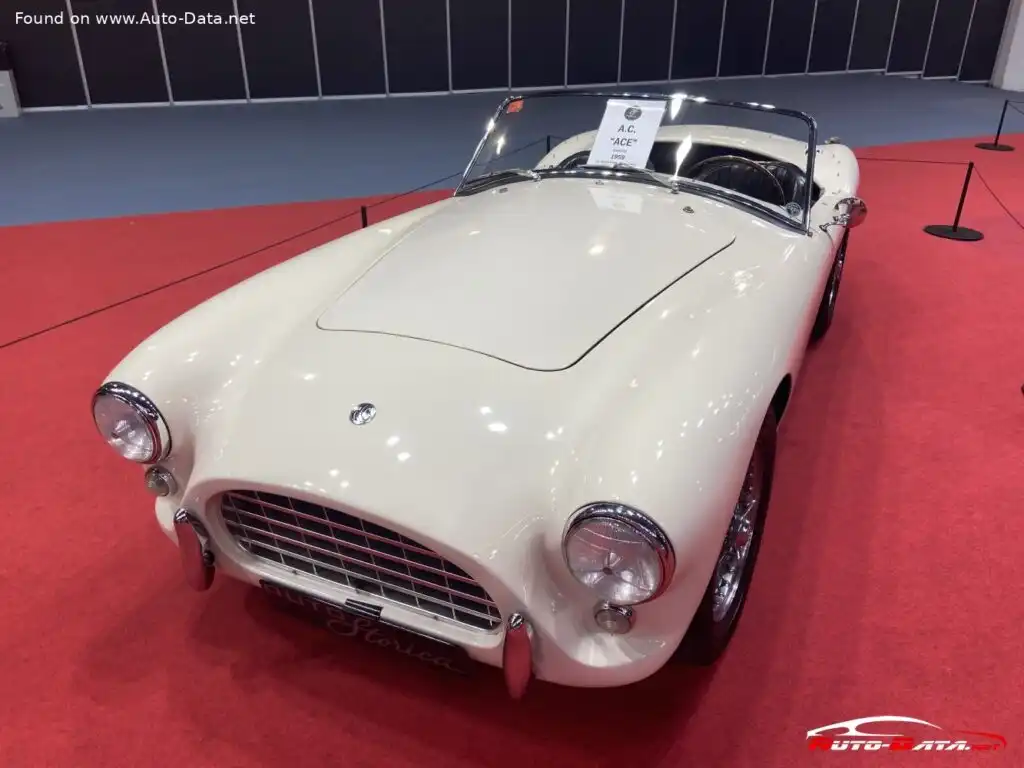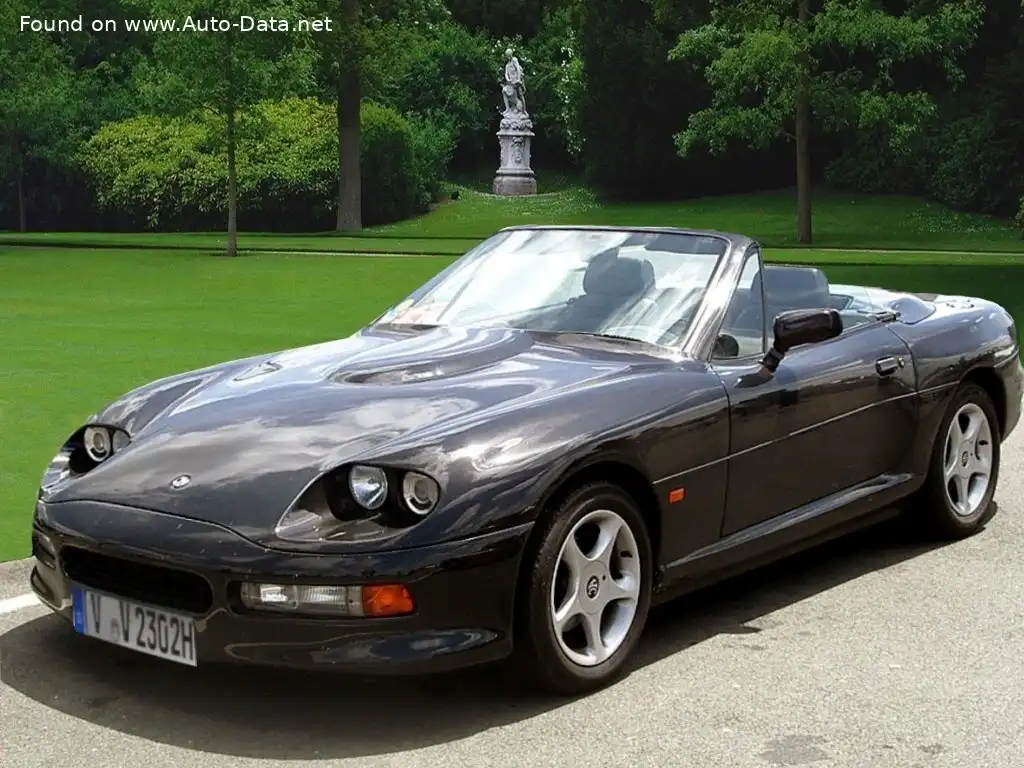
The AC Ace, a nameplate with a storied history in the British automotive landscape, was resurrected in the early 1990s for a new generation of grand touring roadster. The AC Ace 2.9 i V6 24V, produced between 1992 and 1996, represented the initial iteration of this modern revival, blending classic British sports car ethos with contemporary engineering. Powered by a reliable Ford V6 engine and wrapped in a curvaceous aluminum body, this second-generation Ace aimed to capture the spirit of its legendary predecessor while offering the comforts and performance expected of a modern luxury convertible. It served as a crucial transitional model for AC Cars, bridging the gap between its classic Cobras and the more powerful sports cars that would follow.
History and Development
The journey to the second-generation AC Ace began in the late 1980s, a period of significant change for AC Cars. After the company was acquired by Ford and the Autokraft company, led by Brian Angliss, there was a strong desire to introduce a new model that could carry the brand forward. The goal was to create a vehicle that was uniquely AC but could leverage the resources of its new parent company, Ford. The project, initially codenamed the Ace of Spades, was intended to be a modern interpretation of the classic AC roadster.
The initial design and engineering work was heavily influenced by International Automotive Design (IAD), a British design consultancy. A concept car was unveiled at the 1991 London Motor Show, showcasing a sleek, modern design with a rigid chassis and an all-wheel-drive system, powered by a Ford Scorpio Cosworth engine. However, as the project moved towards production, significant changes were made to manage complexity and cost. The complex all-wheel-drive system was abandoned in favor of a more traditional and driver-focused rear-wheel-drive layout.
The production model, which debuted in 1992, was officially christened the AC Ace. The choice of the name was deliberate, evoking the heritage of the lightweight 1950s roadster that formed the basis for the legendary AC Cobra. This new car, however, was a different proposition. It was larger, more luxurious, and designed more as a comfortable grand tourer than an outright track weapon. The initial powertrain chosen for this new era was the Ford Cologne 2.9-litre V6 engine, making the first production models officially the AC Ace 2.9. This decision provided a reliable and widely-serviced engine, allowing AC to focus on chassis dynamics and build quality. Production took place at AC’s historic Brooklands factory in Surrey, England, with each car being largely hand-assembled, ensuring a level of exclusivity and craftsmanship.
Design and Styling
The AC Ace of the 1990s presented a muscular yet elegant silhouette, a clear departure from the raw, minimalist lines of its 1950s namesake. The body, constructed from hand-formed aluminum panels over a stainless steel spaceframe chassis, featured soft, rounded curves characteristic of early 90s automotive design. The front end was dominated by distinctive projectile-style headlamps housed under flush-fitting covers, giving it a unique and assertive face. The long bonnet, short rear deck, and prominent wheel arches paid homage to classic roadster proportions.
As a two-seater cabriolet, the fabric soft-top was electrically operated, a nod to the luxury market it targeted. When stowed, the roof folded neatly away beneath a solid tonneau cover, maintaining the car’s clean and uncluttered lines. The overall design prioritized aerodynamic efficiency and stability at speed, while its wide stance and substantial dimensions gave it a confident and planted presence on the road. It was less a lithe sports car and more a substantial, open-top grand tourer, designed for crossing continents in style and comfort.
The interior of the AC Ace was crafted to match its premium positioning. The cabin was swathed in high-quality materials, with Connolly leather upholstery covering the seats, dashboard, and door cards, complemented by polished wood veneer accents on the center console and dashboard fascia. The driver-focused cockpit featured a comprehensive set of analog gauges set into the wooden dash, providing clear and classic instrumentation. Despite its two-seat configuration, the cabin offered a generous amount of space for its occupants, emphasizing long-distance comfort. Standard amenities for the time, such as air conditioning, electric windows, and a premium sound system, further reinforced its grand touring credentials.
The Powertrain of the AC Ace 2.9
At the heart of the early second-generation model was the Ford 2.9i V6 24V engine. This specific powertrain defined the character of the AC Ace 2.9, offering a blend of smooth power delivery and reliability. The engine was a member of Ford’s well-regarded Cologne V6 family, a unit known for its durability and widespread use across the Ford Europe lineup, most notably in the Ford Scorpio.
The naturally aspirated 2.9-litre (2935 cc) V6 engine featured a 24-valve, dual overhead camshaft (DOHC) configuration, which allowed for better breathing and a higher redline compared to its 12-valve predecessor. In the AC Ace, it was tuned to produce 195 horsepower (145 kW) and a healthy torque figure, providing ample performance for spirited driving. While not overwhelmingly powerful by modern standards, the engine’s smooth power curve and responsive nature were well-suited to the car’s grand touring purpose.
Power was sent to the rear wheels through a standard 5-speed manual transmission, offering an engaging and traditional sports car driving experience. The combination of the rear-wheel-drive layout and the V6 engine’s placement resulted in a balanced weight distribution, contributing to predictable and enjoyable handling dynamics. The performance of the AC Ace 2.9 was respectable for its era, capable of accelerating from 0 to 60 mph in under seven seconds and reaching a top speed of over 130 mph.
Chassis, Suspension, and Handling
Underpinning the AC Ace was a sophisticated and robust chassis designed to provide both sporting agility and ride comfort. The foundation was a rigid stainless steel spaceframe, which offered excellent torsional strength—a crucial element for an open-top car to minimize scuttle shake and ensure precise handling. This strong core was then clothed in the lightweight aluminum body panels.
The suspension was a fully independent setup at all four corners, featuring double wishbones, coil springs, and telescopic dampers. This configuration, common in high-performance vehicles, allowed for excellent wheel control and a fine balance between a comfortable ride over uneven surfaces and sharp, responsive handling during dynamic driving. The suspension was tuned specifically for the Ace’s grand touring role, absorbing road imperfections effectively while still communicating feedback to the driver. The car was equipped with power-assisted rack-and-pinion steering, providing direct and accurate inputs. Braking was handled by large, ventilated disc brakes on all four wheels, ensuring confident and fade-free stopping power commensurate with the car’s performance capabilities.
Production and Legacy
The AC Ace 2.9 was produced in very limited numbers from 1992 until 1996. It is estimated that fewer than 60 examples of the 2.9-litre V6 model were built before AC transitioned to offering more powerful Ford V8 engines in the subsequent Ace models. This scarcity makes the V6 version a particularly rare and interesting chapter in the company’s history.
Upon its release, the Ace was met with a mixed reception. While praised for its high-quality construction, comfortable interior, and competent handling, it faced stiff competition from established players in the luxury sports car market, such as the Porsche 968 Cabriolet, Mercedes-Benz SL, and Jaguar XJS. Its high price point, a result of its hand-built nature, also made it a challenging proposition for many buyers.
Ultimately, the AC Ace 2.9 served as the foundation for the later, more potent V8-powered versions that would bring the model closer in spirit to the fire-breathing Cobras of the past. While not a commercial powerhouse, the second-generation Ace represents a significant effort by AC Cars to modernize and carve out a new niche in the evolving automotive world of the 1990s. Today, it is regarded as a handsome, rare, and well-engineered British grand tourer, offering a unique blend of classic craftsmanship and modern usability.
Full Specifications: AC Ace 2.9 i V6 24V (1992-1996)
| Specification | Detail |
| ————————— | —————————————————— |
| GENERAL INFORMATION | |
| Brand | AC Cars |
| Model | Ace (Second Generation) |
| Generation | Ace |
| Engine Variant | 2.9 i V6 24V |
| Years of Production | 1992 – 1996 |
| Body Type | Cabriolet / Roadster |
| Seating Capacity | 2 |
| Doors | 2 |
| ENGINE SPECIFICATIONS | |
| Engine Type | Internal Combustion Engine (ICE) |
| Engine Placement | Front, Longitudinal |
| Engine Code/Family | Ford Cologne V6 |
| Displacement | 2935 cm³ (179.1 cu in) |
| Number of Cylinders | 6 |
| Engine Configuration | V-engine |
| Valves per Cylinder | 4 (24 Total) |
| Camshaft Configuration | Dual Overhead Camshaft (DOHC) |
| Aspiration | Naturally Aspirated |
| Fuel System | Multi-point Fuel Injection |
| Max Power | 195 Hp (145 kW) |
| PERFORMANCE | |
| Top Speed | Approx. 217 km/h (135 mph) |
| 0-100 km/h (0-62 mph) | Approx. 6.9 seconds |
| Fuel Type | Petrol (Gasoline) |
| POWERTRAIN & TRANSMISSION | |
| Drivetrain Architecture | Rear-Wheel Drive (RWD) |
| Transmission Type | 5-speed Manual |
| CHASSIS, SUSPENSION & BRAKES | |
| Chassis Type | Stainless Steel Spaceframe |
| Body Material | Aluminum |
| Front Suspension | Independent, Double Wishbones |
| Rear Suspension | Independent, Double Wishbones |
| Steering Type | Power-assisted Rack-and-Pinion |
| Front Brakes | Ventilated Discs |
| Rear Brakes | Ventilated Discs |
| DIMENSIONS & WEIGHT | |
| Length | 4420 mm (174 in) |
| Width | 1880 mm (74 in) |
| Height | 1240 mm (48.8 in) |
| Wheelbase | 2472 mm (97.3 in) |
| Curb Weight | Approx. 1430 kg (3153 lbs) |
| WHEELS & TIRES | |
| Wheel Size | 17 inches |