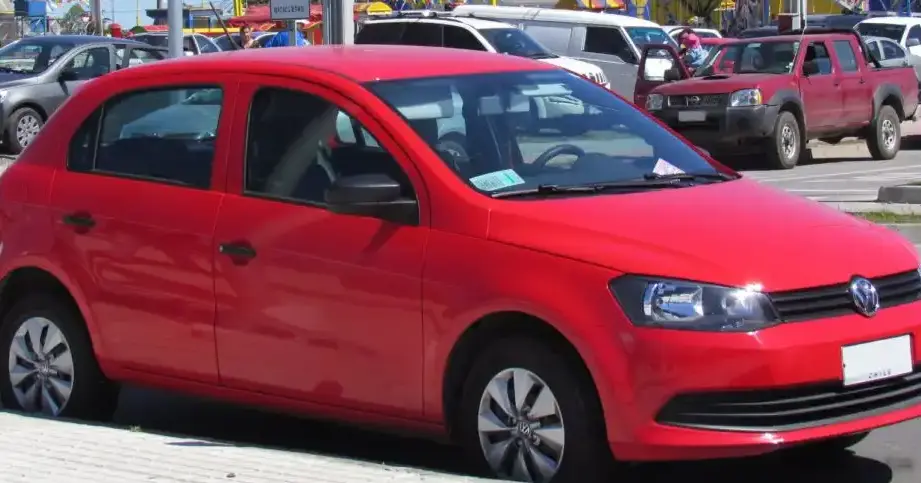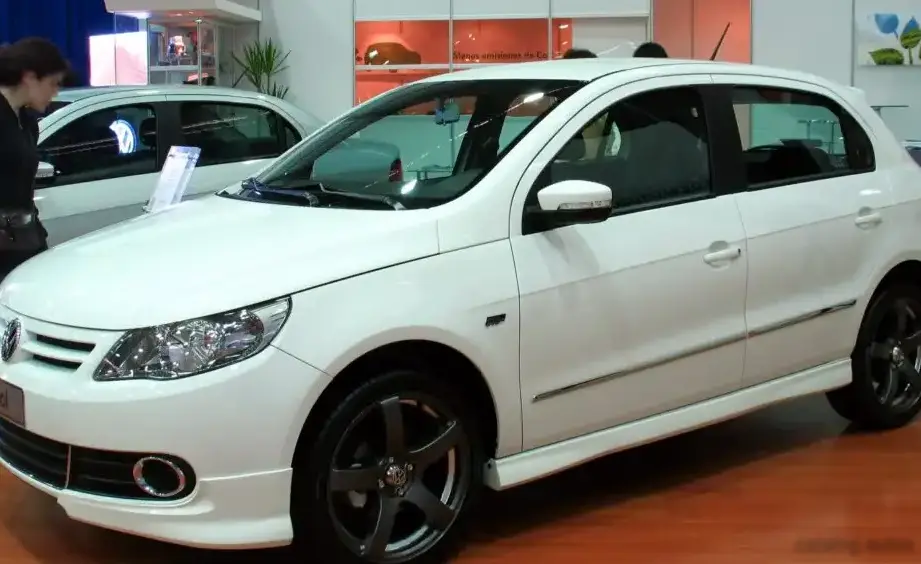
The Volkswagen Gol (G5), produced from 2008 to 2013, represented the third generation of Volkswagen’s popular Gol hatchback. Designed primarily for the South American market, particularly Brazil and Argentina, the G5 was a significant update to the Gol lineage, offering improved safety, space, and a more modern design compared to its predecessors. Within the G5 range, the 1.0-liter 72 horsepower variant occupied the entry-level position, serving as an affordable and economical option for first-time car buyers and urban commuters. This model was a mainstay in Volkswagen’s Latin American lineup, competing directly with other subcompact hatchbacks like the Fiat Palio and Chevrolet Celta.
Technical Specifications
| Brand | Volkswagen |
| Model | Gol |
| Generation | Gol (G5) III |
| Type (Engine) | 1.0 (72 Hp) |
| Start of production | 2008 |
| End of production | 2013 |
| Powertrain Architecture | Internal Combustion engine |
| Body type | Hatchback |
| Seats | 5 |
| Doors | 5 |
| Fuel Type | Petrol (Gasoline) |
| Power | 72 Hp |
| Power per litre | 72.1 Hp/l |
| Torque | 95 Nm @ 3850 rpm / 70.07 lb.-ft. @ 3850 rpm |
| Engine layout | Front, Transverse |
| Engine Model/Code | CPBA |
| Engine displacement | 999 cm3 / 60.96 cu. in. |
| Number of cylinders | 4 |
| Engine configuration | Inline |
| Number of valves per cylinder | 4 |
| Fuel injection system | Multi-port manifold injection |
| Engine aspiration | Naturally aspirated engine |
| Engine oil capacity | 3.3 l / 3.49 US qt | 2.9 UK qt |
| Trunk (boot) space – minimum | 283 l / 9.99 cu. ft. |
| Length | 3800 mm / 149.61 in. |
| Width | 1660 mm / 65.35 in. |
| Height | 1450 mm / 57.09 in. |
| Wheelbase | 2470 mm / 97.24 in. |
| Drivetrain Architecture | The Internal combustion engine (ICE) drives the front wheels of the vehicle. |
| Drive wheel | Front wheel drive |
| Number of gears and type of gearbox | 5 gears, manual transmission |
| Front brakes | Ventilated discs |
| Rear brakes | Drum |
| Assisting systems | ABS (Anti-lock braking system) |
| Tires size | 175/70 R13 |
| Wheel rims size | 13 |
Powertrain & Engine Architecture
The heart of the Gol G5 1.0 was the CPBA engine code, a 999cc inline-four cylinder petrol engine. This engine was a member of Volkswagen’s EA111 family, known for its simplicity and affordability. The CPBA featured a multi-point fuel injection system, delivering fuel to each cylinder individually for improved efficiency and smoother operation. The engine utilized a single overhead camshaft (SOHC) design with four valves per cylinder, contributing to reasonable power output for its displacement. The 72 horsepower peak was achieved at around 5,250 rpm, while the 95 Nm (70.07 lb-ft) of torque was available at 3,850 rpm. The engine’s relatively low compression ratio and simple design prioritized reliability and fuel economy over outright performance. The engine was paired exclusively with a five-speed manual transmission in this configuration, designed to maximize fuel efficiency and provide adequate acceleration for everyday driving.
Driving Characteristics
The 1.0-liter Gol G5 offered modest performance, geared towards practicality rather than spirited driving. Acceleration was adequate for urban environments, but overtaking on highways required careful planning. The five-speed manual transmission allowed drivers to keep the engine in its optimal power band, but the limited horsepower meant that climbing hills or carrying a full load of passengers could strain the engine. The gear ratios were tuned for economy, with a relatively tall fifth gear for highway cruising. Compared to the more powerful 1.6-liter versions of the Gol G5, the 1.0-liter felt noticeably slower, but it offered a more forgiving and fuel-efficient driving experience. The steering was light and easy to maneuver, making it well-suited for city driving, and the suspension provided a comfortable ride on most road surfaces.
Equipment & Trim Levels
The 1.0-liter Gol G5 typically served as the base model, and as such, came with a relatively basic level of equipment. Standard features generally included power steering, a basic audio system (often with AM/FM radio and CD player), and front power windows. Safety features included dual airbags and ABS (Anti-lock Braking System). Interior upholstery was typically cloth, with a simple dashboard layout. Optional extras included air conditioning, central locking, and electric rear windows. Higher trim levels of the Gol G5, such as the Trend and Power versions, added features like alloy wheels, fog lights, and a more sophisticated audio system. The base 1.0-liter model was intentionally stripped down to offer the lowest possible price point.
Chassis & Braking
The Gol G5 1.0 utilized a MacPherson strut front suspension and a semi-independent torsion beam rear suspension. This setup provided a good balance between ride comfort and handling. The front brakes were ventilated discs, offering adequate stopping power, while the rear brakes were drums, a cost-saving measure common in entry-level vehicles. The steering system was a hydraulic power steering system, providing light and easy steering input. The 13-inch wheels were fitted with 175/70 R13 tires, providing a reasonable level of grip. The chassis was designed to be lightweight, contributing to the car’s overall fuel efficiency.
Market Reception & Comparison
The Gol G5 1.0 was well-received in the South American market as an affordable and reliable transportation option. Critics praised its fuel economy and ease of driving, but noted its lack of power and basic interior. Compared to the 1.6-liter Gol G5, the 1.0-liter offered significantly better fuel economy (often exceeding 40 mpg in mixed driving) but lacked the performance needed for highway driving or carrying heavy loads. The 1.0-liter was also more affordable to maintain, due to its simpler engine design and lower parts costs. It directly competed with models like the Fiat Palio 1.0 and Chevrolet Celta, offering a similar level of value and practicality.
Legacy
The Volkswagen Gol G5 1.0, while not known for its performance, proved to be a durable and reliable vehicle. The CPBA engine, despite its simplicity, is generally considered to be a robust and long-lasting unit when properly maintained. In the used car market, these Gols are still relatively common and affordable, making them a popular choice for budget-conscious buyers. However, potential buyers should be aware of the need for regular maintenance, particularly oil changes and timing belt replacements. The Gol G5 1.0 remains a testament to Volkswagen’s ability to produce a practical and economical vehicle for emerging markets, and it continues to be a familiar sight on the roads of South America.