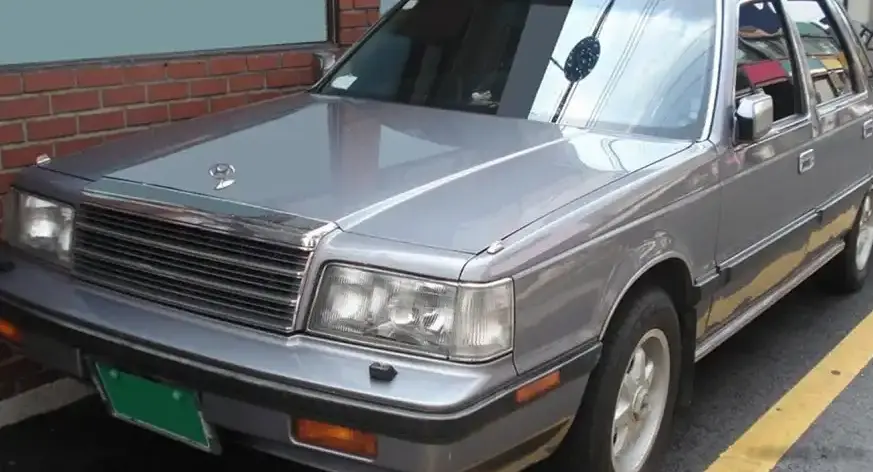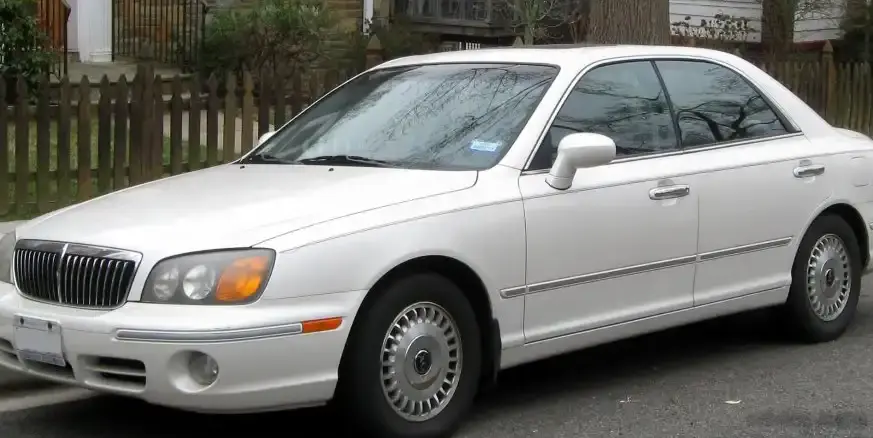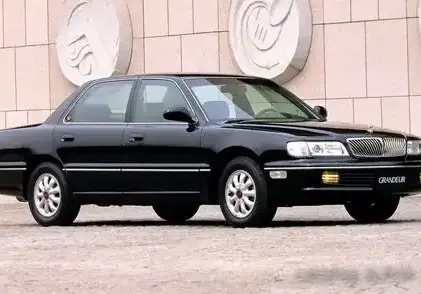
The Hyundai Grandeur II (LX) 2.0i, produced between 1992 and 1996, represented a significant step forward for Hyundai in the mid-size sedan segment. Positioned as a more upscale offering than the Sonata, the Grandeur aimed to compete with established Japanese and American brands. This second generation of the Grandeur (known as the Azera in some markets) built upon the success of the original, offering a larger, more refined package. The 2.0i variant, equipped with a 146 horsepower engine, served as the entry point to the Grandeur lineup, offering a balance of performance and affordability. It was built on the Hyundai’s LX platform.
Technical Specifications
| Brand | Hyundai |
| Model | Grandeur/Azera |
| Generation | Grandeur II (LX) |
| Type (Engine) | 2.0i (146 Hp) |
| Start of production | 1992 |
| End of production | 1996 |
| Powertrain Architecture | Internal Combustion engine |
| Body type | Sedan |
| Seats | 5 |
| Doors | 4 |
| Fuel Type | Petrol (Gasoline) |
| Maximum speed | 185 km/h (114.95 mph) |
| Weight-to-power ratio | 10.4 kg/Hp, 96.1 Hp/tonne |
| Weight-to-torque ratio | 8.1 kg/Nm, 123.7 Nm/tonne |
| Power | 146 Hp @ 6000 rpm |
| Power per litre | 73.1 Hp/l |
| Torque | 188 Nm @ 4000 rpm (138.66 lb.-ft. @ 4000 rpm) |
| Engine layout | Front, Transverse |
| Engine Model/Code | Sigma / G4JP |
| Engine displacement | 1997 cm3 (121.86 cu. in.) |
| Number of cylinders | 4 |
| Engine configuration | Inline |
| Cylinder Bore | 85 mm (3.35 in.) |
| Piston Stroke | 88 mm (3.46 in.) |
| Compression ratio | 9:1 |
| Number of valves per cylinder | 4 |
| Fuel injection system | Multi-port manifold injection |
| Engine aspiration | Naturally aspirated engine |
| Valvetrain | DOHC |
| Engine oil capacity | 4.5 l (4.76 US qt | 3.96 UK qt) |
| Coolant | 8.6 l (9.09 US qt | 7.57 UK qt) |
| Kerb Weight | 1520 kg (3351.03 lbs) |
| Trunk (boot) space – minimum | 460 l (16.24 cu. ft.) |
| Fuel tank capacity | 72 l (19.02 US gal | 15.84 UK gal) |
| Length | 4980 mm (196.06 in.) |
| Width | 1810 mm (71.26 in.) |
| Height | 1435 mm (56.5 in.) |
| Wheelbase | 2745 mm (108.07 in.) |
| Front track | 1540 mm (60.63 in.) |
| Rear (Back) track | 1550 mm (61.02 in.) |
| Ride height (ground clearance) | 160 mm (6.3 in.) |
| Drag coefficient (Cd) | 0.37 |
| Minimum turning circle (turning diameter) | 11.4 m (37.4 ft.) |
| Drivetrain Architecture | The Internal combustion engine (ICE) drives the front wheels of the vehicle. |
| Drive wheel | Front wheel drive |
| Number of gears and type of gearbox | 5 gears, manual transmission |
| Front brakes | Ventilated discs |
| Rear brakes | Disc |
| Steering type | Steering rack and pinion |
| Tires size | 205/65 R15; 205/60 R16 |
| Wheel rims size | 15; 16 |
Powertrain & Engine Architecture
The heart of the Grandeur II 2.0i was the Hyundai Sigma engine, specifically the G4JP code. This 1.997-liter inline-four cylinder engine utilized a multi-port fuel injection system, a relatively common setup for the time, providing adequate fuel atomization for efficient combustion. The engine featured a double overhead camshaft (DOHC) valvetrain, operating four valves per cylinder. This configuration helped to optimize airflow and improve volumetric efficiency, contributing to the engine’s 146 horsepower output. The 9:1 compression ratio was a standard choice for naturally aspirated engines of this era, balancing performance and fuel economy. The engine was transversely mounted in the front of the vehicle, driving the front wheels. The 5-speed manual transmission was the standard offering, providing a direct connection between the engine and the wheels.
Driving Characteristics
The 2.0i Grandeur, with its 146 hp and 138.66 lb-ft of torque, offered adequate, but not exhilarating, performance. Acceleration was respectable for everyday driving, but it wasn’t designed for sporty driving. The 5-speed manual transmission allowed drivers to make the most of the engine’s powerband, but the relatively tall gear ratios prioritized fuel efficiency over outright acceleration. Compared to the later V6 options available on the Grandeur, the 2.0i felt noticeably less powerful, especially when fully loaded with passengers and cargo. However, the 2.0i offered a more economical driving experience, making it a popular choice for those prioritizing fuel costs.
Equipment & Trim Levels
The Grandeur II 2.0i typically came standard with features considered luxurious for its time, including power windows, power locks, and air conditioning. Interior upholstery was typically cloth, with options for upgraded materials available. The dashboard layout was functional and straightforward, with a focus on ease of use. Optional extras included a sunroof, upgraded audio systems, and alloy wheels. The LX trim level generally represented a well-equipped base model, offering a good balance of features and value.
Chassis & Braking
The Grandeur II featured a front-wheel-drive chassis with independent suspension in the front and a semi-independent suspension in the rear. The front suspension utilized MacPherson struts, while the rear employed a torsion beam setup. Braking duties were handled by ventilated discs in the front and solid discs in the rear. The braking system was adequate for normal driving conditions, but lacked the stopping power of more performance-oriented vehicles. Stabilizer bars were included to reduce body roll during cornering, improving handling stability.
Market Reception & Comparison
The Grandeur II 2.0i was generally well-received by critics as a comfortable and spacious sedan offering good value for money. However, its performance was often criticized as being somewhat underwhelming compared to competitors. Fuel economy was a strong point, and the Grandeur’s reliability proved to be competitive with Japanese rivals. Compared to the V6-powered Grandeur models, the 2.0i offered a more affordable entry point, but at the expense of performance. The 2.0i appealed to buyers who prioritized comfort, space, and fuel efficiency over outright speed.
Legacy
The Hyundai Grandeur II 2.0i, while not a performance icon, played a crucial role in establishing Hyundai as a credible automotive manufacturer. The Sigma engine proved to be a relatively reliable unit, and many examples are still on the road today. In the used car market, the 2.0i Grandeur is often sought after for its affordability and practicality. While maintenance costs can be higher than for some Japanese competitors due to parts availability, the Grandeur II 2.0i remains a viable option for those seeking a comfortable and spacious classic sedan.