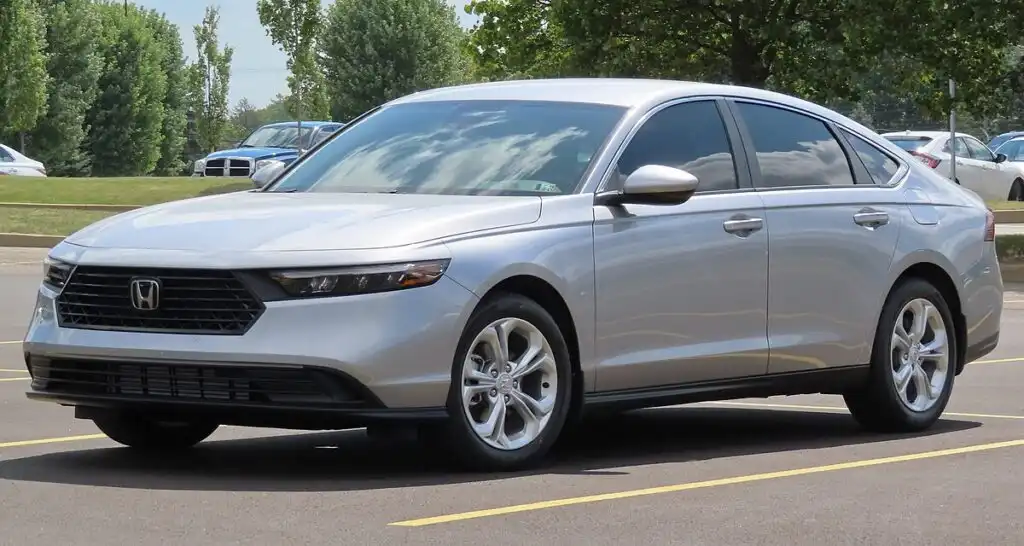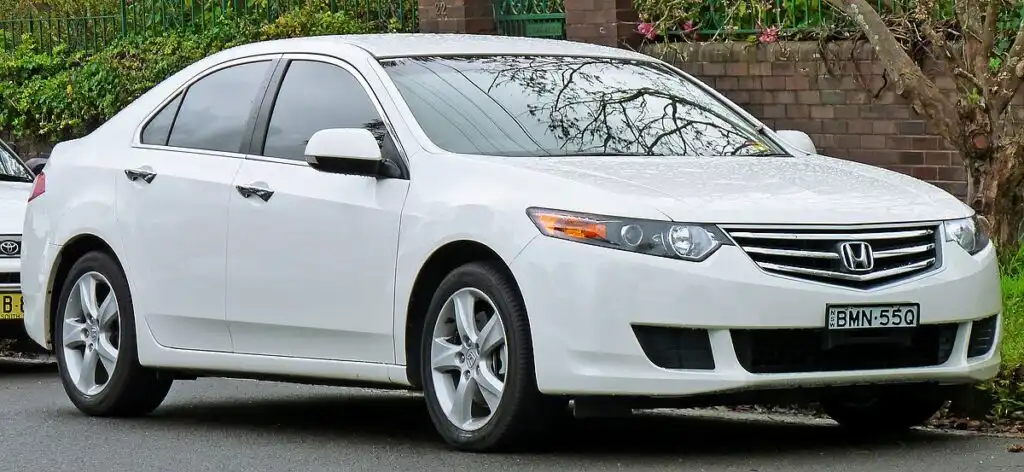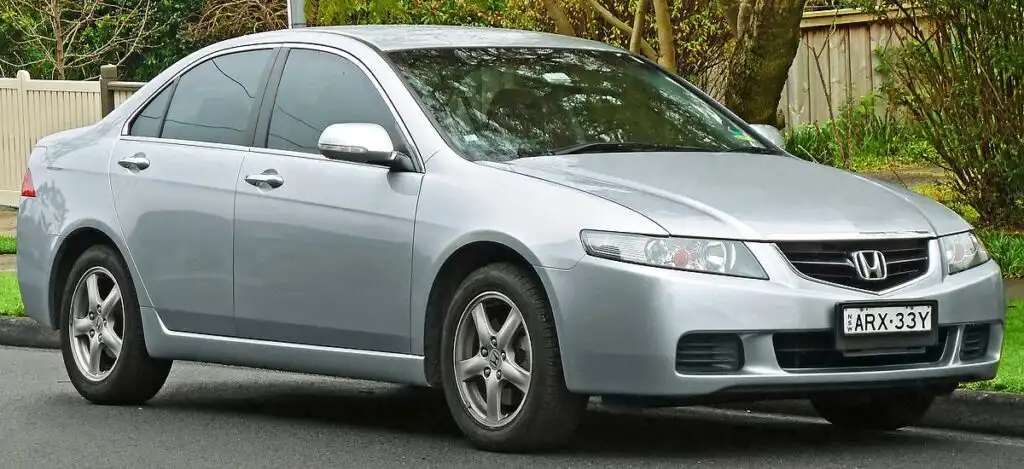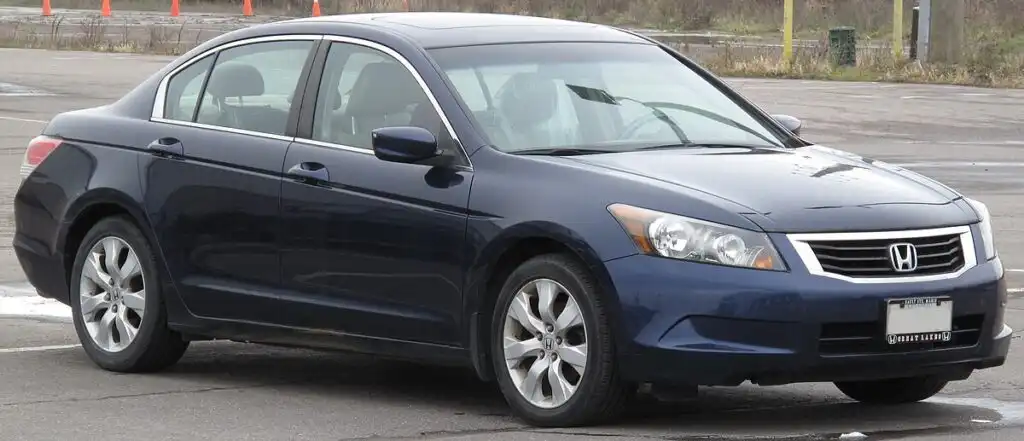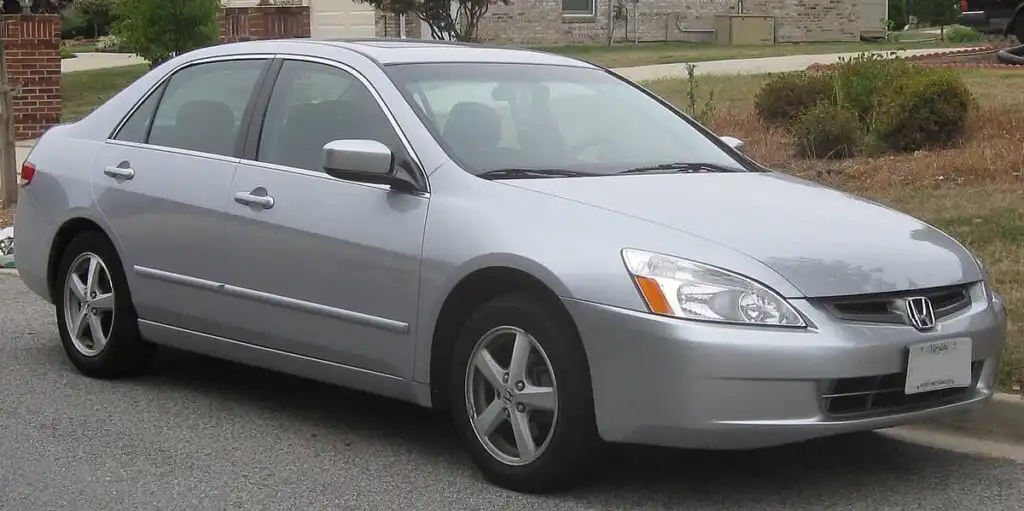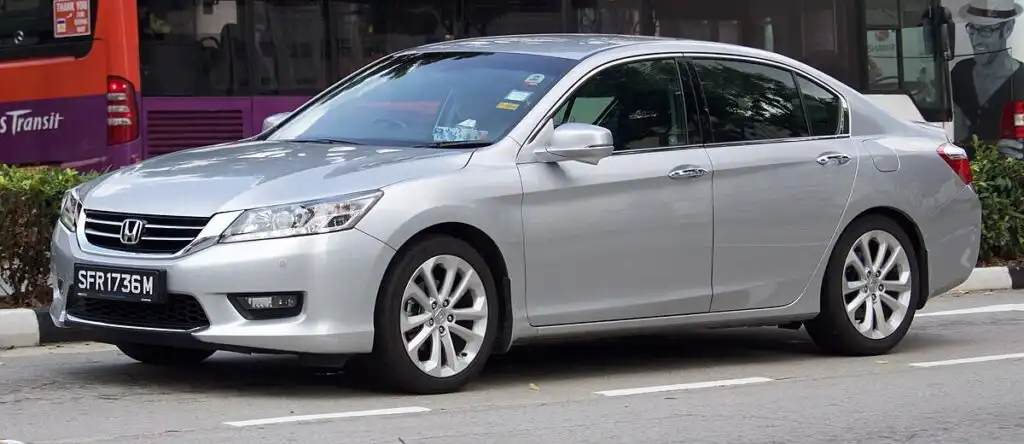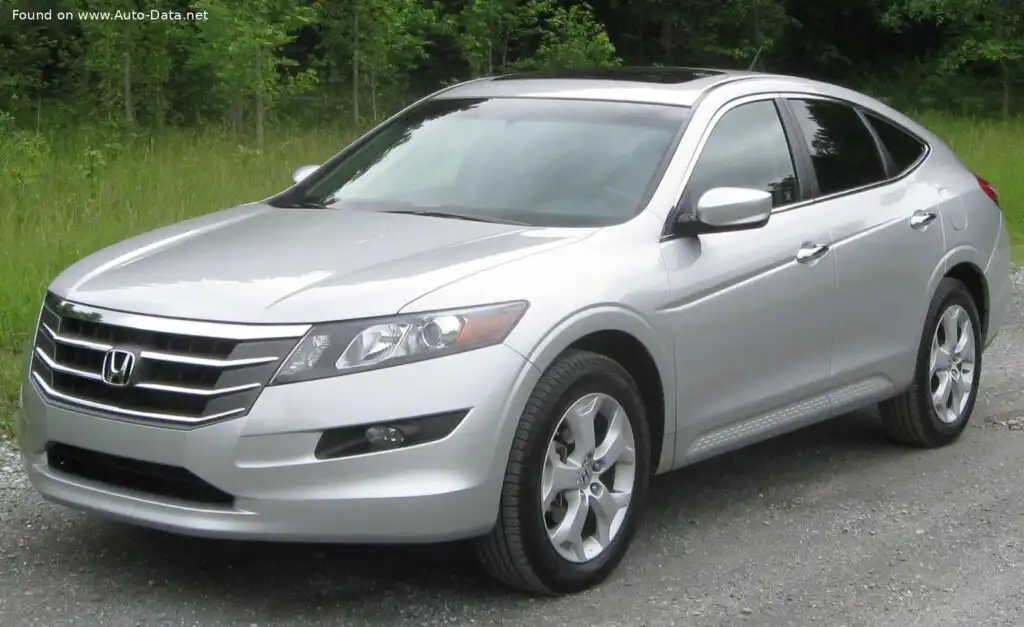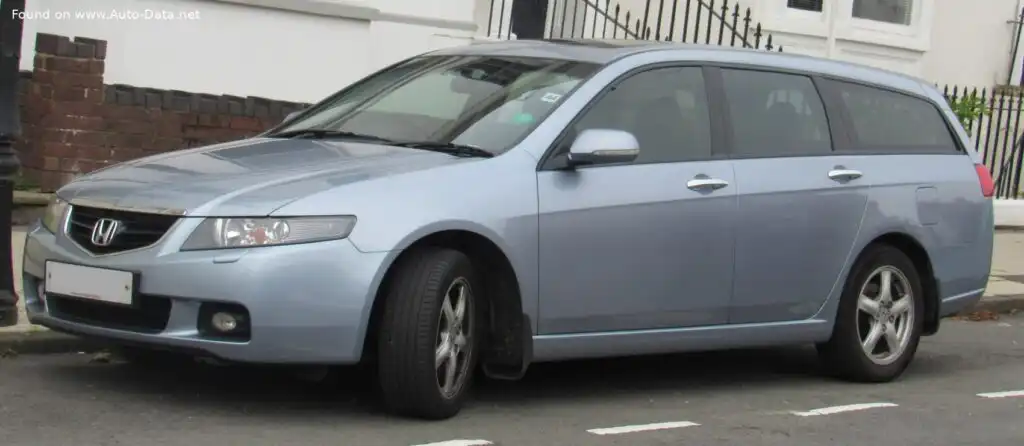
The Honda Accord VII Wagon 2.0 i-VTEC 16V (155 hp) was a station wagon variant produced between 2003 and 2008, forming part of the seventh generation (2003-2008) of the globally successful Honda Accord. This particular configuration, combining a 2.0-liter inline-four engine with Honda’s i-VTEC technology and a five-speed manual transmission, was primarily aimed at the European market, where wagons held a significant share of the family car segment. The Accord Wagon offered a practical alternative to sedans, providing increased cargo capacity without sacrificing the Accord’s reputation for reliability and comfortable driving experience. It sat in the mid-range of the Accord wagon lineup, offering a balance between performance and affordability.
Technical Specifications
| Brand | Honda |
| Model | Accord |
| Generation | Accord VII Wagon |
| Type (Engine) | 2.0 i-VTEC 16V (155 Hp) |
| Start of production | 2003 |
| End of production | 2008 |
| Powertrain Architecture | Internal Combustion engine |
| Body type | Station wagon (estate) |
| Seats | 5 |
| Doors | 5 |
| Fuel consumption (urban) | 10.9 l/100 km (21.6 US mpg) |
| Fuel consumption (extra urban) | 6.8 l/100 km (34.6 US mpg) |
| Fuel Type | Petrol (Gasoline) |
| Acceleration 0 – 100 km/h | 9.9 sec |
| Acceleration 0 – 62 mph | 9.9 sec |
| Acceleration 0 – 60 mph | 9.4 sec |
| Maximum speed | 205 km/h (127.38 mph) |
| Weight-to-power ratio | 9.5 kg/Hp |
| Weight-to-torque ratio | 7.7 kg/Nm |
| Power | 155 Hp @ 6000 rpm |
| Power per litre | 77.6 Hp/l |
| Torque | 190 Nm @ 4500 rpm (140.14 lb.-ft. @ 4500 rpm) |
| Engine layout | Front, Transverse |
| Engine Model/Code | K20 |
| Engine displacement | 1998 cm3 (121.93 cu. in.) |
| Number of cylinders | 4 |
| Engine configuration | Inline |
| Cylinder Bore | 86 mm (3.39 in.) |
| Piston Stroke | 86 mm (3.39 in.) |
| Compression ratio | 9.8:1 |
| Number of valves per cylinder | 4 |
| Fuel injection system | Multi-port manifold injection |
| Engine aspiration | Naturally aspirated engine |
| Valvetrain | DOHC |
| Engine oil capacity | 4.2 l (4.44 US qt | 3.7 UK qt) |
| Coolant capacity | 4.5 l (4.76 US qt | 3.96 UK qt) |
| Kerb Weight | 1465 kg (3229.77 lbs.) |
| Max. weight | 2030 kg (4475.38 lbs.) |
| Max load | 565 kg (1245.61 lbs.) |
| Trunk (boot) space – minimum | 572 l (20.2 cu. ft.) |
| Trunk (boot) space – maximum | 1657 l (58.52 cu. ft.) |
| Fuel tank capacity | 65 l (17.17 US gal | 14.3 UK gal) |
| Length | 4750 mm (187.01 in.) |
| Width | 1760 mm (69.29 in.) |
| Height | 1470 mm (57.87 in.) |
| Wheelbase | 2720 mm (107.09 in.) |
| Front track | 1515 mm (59.65 in.) |
| Rear track | 1530 mm (60.24 in.) |
| Drivetrain Architecture | Front wheel drive |
| Number of gears | 5 gears, manual transmission |
| Front suspension | Double wishbone |
| Rear suspension | Wishbone |
| Front brakes | Ventilated discs |
| Rear brakes | Disc |
| Assisting systems | ABS (Anti-lock braking system) |
| Steering type | Steering rack and pinion |
| Tires size | 195/65 R15 |
| Wheel rims size | 15 |
INTRODUCTION
The Honda Accord VII Wagon 2.0 i-VTEC 16V (155 hp) represented Honda’s commitment to providing practical and reliable vehicles for European families. Introduced in 2003 as part of the seventh-generation Accord, the wagon body style offered a compelling alternative to the sedan, capitalizing on the popularity of estate cars in Europe. Built on the Accord’s solid foundation, this variant aimed to deliver a balance of fuel efficiency, reasonable performance, and ample cargo space. The “i-VTEC” designation signified Honda’s advanced variable valve timing and lift electronic control system, designed to optimize engine performance across a wider range of engine speeds. This model was a key player in Honda’s European sales strategy, competing with established rivals like the Ford Mondeo Estate and Volkswagen Passat Variant.
Powertrain & Engine Architecture
At the heart of the Accord VII Wagon 2.0 i-VTEC was the K20 engine, a 1.998-liter (2.0L) inline-four cylinder powerplant. This engine was a naturally aspirated design, meaning it did not utilize forced induction like a turbocharger or supercharger. The K20 featured Honda’s renowned i-VTEC system, which allowed for variable valve timing and lift. At lower engine speeds, the system operated in an economy mode, optimizing fuel efficiency and smooth operation. As engine speed increased, the i-VTEC system switched to a high-performance mode, increasing valve lift and duration for improved power output. The engine employed multi-point fuel injection for precise fuel delivery. The five-speed manual transmission was chosen for its driver engagement and efficiency. The transmission featured typical gear ratios for a front-wheel-drive vehicle of this class, prioritizing acceleration in the lower gears and comfortable cruising at highway speeds.
Driving Characteristics
The 2.0 i-VTEC engine, producing 155 horsepower, provided adequate performance for everyday driving. Acceleration from 0 to 60 mph took approximately 9.4 seconds, and the car had a top speed of 127.38 mph. While not a sports car, the Accord Wagon offered a responsive driving experience, particularly when compared to diesel-powered alternatives of the time. The manual transmission allowed drivers to fully utilize the engine’s power band, and the i-VTEC system provided a noticeable boost in performance at higher RPMs. The wagon’s suspension was tuned for comfort, providing a smooth ride over most road surfaces. However, the added weight of the wagon body style, compared to the sedan, did result in slightly less agile handling. Compared to the higher-output 2.4L engine available in some markets, the 2.0L offered a more economical driving experience, but at the expense of outright performance.
Equipment & Trim Levels
The Accord VII Wagon 2.0 i-VTEC typically came equipped with a respectable level of standard features. These included power windows, power door locks, air conditioning, a CD player, and ABS brakes. Interior upholstery was typically cloth, with options for leather available on higher trim levels. The dashboard layout was functional and user-friendly, with clearly labeled controls. Optional extras included a sunroof, alloy wheels, and a more advanced audio system. The trim level of this variant generally positioned it as a mid-range offering, appealing to buyers who wanted a well-equipped and practical vehicle without the expense of the top-of-the-line models.
Chassis & Braking
The Accord VII Wagon utilized a front-wheel-drive layout with a double wishbone suspension at the front and a wishbone suspension at the rear. This suspension setup provided a good balance of ride comfort and handling. The car was equipped with ventilated disc brakes at the front and solid disc brakes at the rear, providing adequate stopping power for most driving situations. ABS (Anti-lock Braking System) was standard, enhancing safety by preventing wheel lockup during hard braking. The steering system was a rack and pinion type, offering precise and responsive steering feel.
Market Reception & Comparison
The Honda Accord VII Wagon 2.0 i-VTEC was generally well-received by automotive critics. It was praised for its reliability, spacious interior, and comfortable ride. However, some critics noted that the 2.0-liter engine could feel underpowered when the car was fully loaded with passengers and cargo. Compared to other trims in the Accord lineup, the 2.0L offered a more affordable entry point, but with a trade-off in performance. Fuel economy was a strong point, with the 2.0L engine achieving around 34.6 US mpg on the highway. Compared to diesel-powered rivals, the Accord Wagon offered a quieter and smoother driving experience, but with slightly higher fuel consumption.
Legacy
The Honda Accord VII Wagon 2.0 i-VTEC has proven to be a durable and reliable vehicle over the long term. The K20 engine is known for its longevity and relatively low maintenance costs. In the used car market today, these wagons are often sought after by buyers who appreciate their practicality, reliability, and Honda’s reputation for quality. While not as common as the sedan version, the Accord Wagon 2.0 i-VTEC remains a viable option for those seeking a spacious and dependable family vehicle. Parts availability is generally good, and the car’s relatively simple mechanical design makes it relatively easy to maintain and repair.