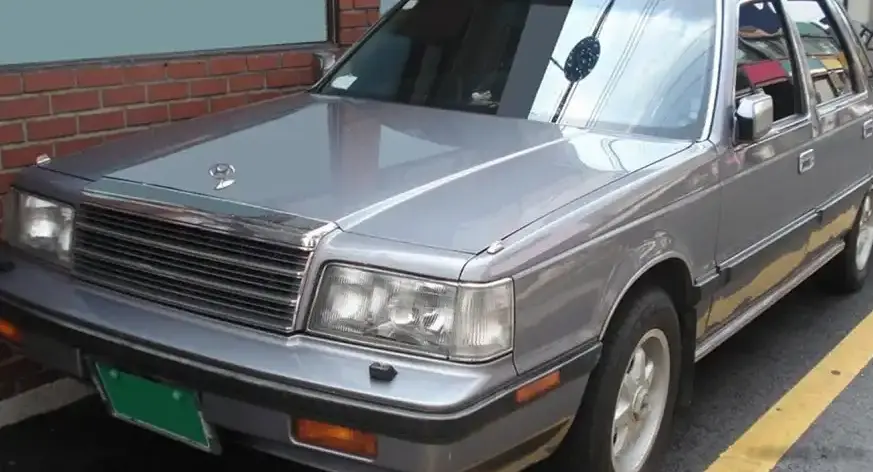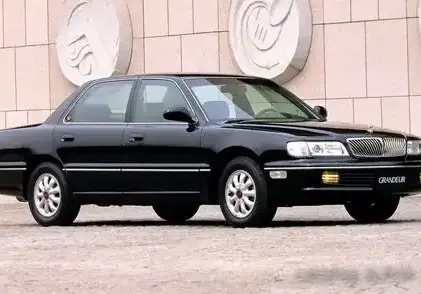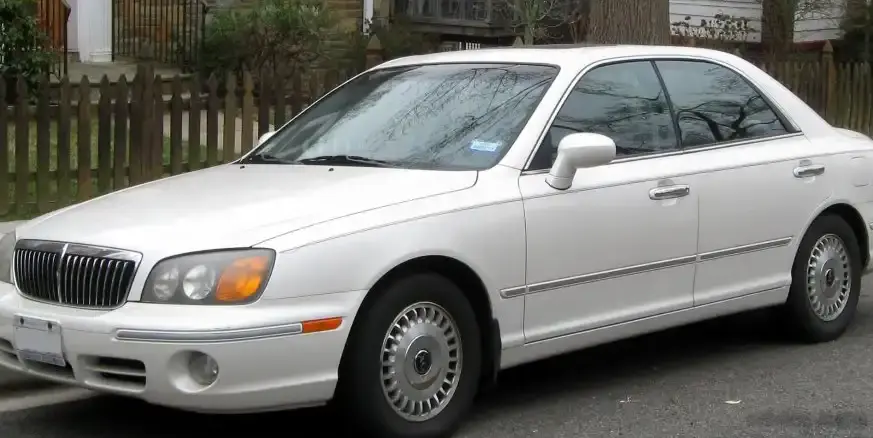
The Hyundai Grandeur III (XG) 2.5i V6 Automatic, produced between 1999 and 2002, represented a significant step forward for Hyundai in the mid-size luxury sedan segment. Positioned as a premium offering, the XG aimed to compete with established Japanese and American brands. This variant, equipped with the Delta 2.5-liter V6 engine and a four-speed automatic transmission, served as a popular choice for buyers seeking a comfortable and well-equipped vehicle. It was part of the XG series, the third generation of the Grandeur, internally designated as the 1HX platform. The XG was sold as the Hyundai Azera in some markets, including the United States.
Technical Specifications
| Brand | Hyundai |
| Model | Grandeur/Azera |
| Generation | Grandeur III (XG) |
| Type (Engine) | 2.5i V6 (180 Hp) Automatic |
| Start of production | 1999 |
| End of production | 2002 |
| Powertrain Architecture | Internal Combustion engine |
| Body type | Sedan |
| Seats | 5 |
| Doors | 4 |
| Fuel Type | Petrol (Gasoline) |
| Maximum speed | 205 km/h (127.38 mph) |
| Weight-to-power ratio | 8.2 kg/Hp, 122 Hp/tonne |
| Weight-to-torque ratio | 6.4 kg/Nm, 155.9 Nm/tonne |
| Power | 180 Hp @ 6200 rpm |
| Power per litre | 72.2 Hp/l |
| Torque | 230 Nm @ 4000 rpm (169.64 lb.-ft. @ 4000 rpm) |
| Engine layout | Front, Transverse |
| Engine Model/Code | Delta / G6BV |
| Engine displacement | 2494 cm3 (152.19 cu. in.) |
| Number of cylinders | 6 |
| Engine configuration | V-engine |
| Cylinder Bore | 84 mm (3.31 in.) |
| Piston Stroke | 75 mm (2.95 in.) |
| Compression ratio | 10:1 |
| Number of valves per cylinder | 4 |
| Fuel injection system | Multi-port manifold injection |
| Engine aspiration | Naturally aspirated engine |
| Valvetrain | DOHC |
| Engine oil capacity | 4.5 l (4.76 US qt | 3.96 UK qt) |
| Coolant | 9.5 l (10.04 US qt | 8.36 UK qt) |
| Kerb Weight | 1475 kg (3251.82 lbs) |
| Trunk (boot) space – minimum | 450 l (15.89 cu. ft.) |
| Fuel tank capacity | 70 l (18.49 US gal | 15.4 UK gal) |
| Length | 4865 mm (191.54 in.) |
| Width | 1825 mm (71.85 in.) |
| Height | 1420 mm (55.91 in.) |
| Wheelbase | 2750 mm (108.27 in.) |
| Front track | 1540 mm (60.63 in.) |
| Rear (Back) track | 1520 mm (59.84 in.) |
| Ride height (ground clearance) | 160 mm (6.3 in.) |
| Drag coefficient (Cd) | 0.32 |
| Minimum turning circle (turning diameter) | 11 m (36.09 ft.) |
| Drivetrain Architecture | The Internal combustion engine (ICE) drives the front wheels of the vehicle. |
| Drive wheel | Front wheel drive |
| Number of gears and type of gearbox | 4 gears, automatic transmission |
| Front suspension | Double wishbone |
| Rear suspension | Independent multi-link suspension |
| Front brakes | Ventilated discs |
| Rear brakes | Disc |
| Assisting systems | ABS (Anti-lock braking system) |
| Steering type | Steering rack and pinion |
| Power steering | Hydraulic Steering |
| Tires size | 205/60 R15 V |
| Wheel rims size | 15 |
Powertrain & Engine Architecture
The heart of the Grandeur III 2.5i is the Hyundai Delta engine, specifically the G6BV variant. This 2.5-liter, 60-degree V6 engine utilizes a cast iron block with an aluminum cylinder head. It features a double overhead camshaft (DOHC) valvetrain with four valves per cylinder, contributing to its relatively high output for its displacement. The engine employs multi-point fuel injection, delivering fuel directly to each intake port. The G6BV engine was known for its smooth operation and reasonable reliability. Paired with this engine is a four-speed automatic transmission, designed for comfortable cruising rather than sporty performance. This transmission was a conventional hydraulic automatic, lacking the more advanced electronic controls found in some contemporary transmissions.
Driving Characteristics
The 180 horsepower and 230 Nm (169.64 lb-ft) of torque provided by the 2.5i V6 and automatic transmission combination resulted in adequate, but not exhilarating, performance. Acceleration from 0 to 60 mph was estimated to be around 9-10 seconds. The automatic transmission, while smooth, had relatively long gear ratios, prioritizing fuel economy and comfort over rapid acceleration. Compared to the later 3.0-liter V6 options, the 2.5i felt noticeably less powerful, especially when fully loaded or climbing hills. However, it offered a more refined and fuel-efficient driving experience than the available four-cylinder options in other markets. The front-wheel-drive configuration provided predictable handling, but lacked the dynamic capabilities of rear-wheel-drive competitors.
Equipment & Trim Levels
The 2.5i V6 Automatic trim typically included features such as air conditioning, power windows and locks, a CD player, and cloth upholstery. Higher trim levels, often denoted with options packages, added features like leather seats, a sunroof, upgraded audio systems, and alloy wheels. Safety features included dual front airbags and ABS (Anti-lock Braking System). The interior design was generally conservative, focusing on comfort and practicality rather than cutting-edge styling. The Grandeur III aimed to provide a luxurious experience at a more accessible price point than its European and American rivals.
Chassis & Braking
The Grandeur III utilized a front-wheel-drive platform with a double wishbone suspension in the front and an independent multi-link suspension in the rear. This suspension setup provided a comfortable ride, absorbing bumps and imperfections in the road effectively. Braking duties were handled by ventilated discs in the front and solid discs in the rear. The ABS system helped to maintain steering control during hard braking. The chassis was designed for stability and comfort, rather than sporty handling. The steering was hydraulically assisted, providing light and easy steering effort.
Market Reception & Comparison
The Hyundai Grandeur III 2.5i V6 Automatic was generally well-received by critics as a comfortable and well-equipped mid-size sedan. It was praised for its smooth ride, spacious interior, and competitive price. However, it was often criticized for its lack of sporty handling and its relatively modest performance compared to some competitors. Fuel economy was considered average for its class. Compared to the higher-output 3.0-liter V6 models, the 2.5i offered a more affordable entry point into the Grandeur lineup, appealing to buyers who prioritized comfort and value over outright performance. It was often seen as a viable alternative to Japanese sedans like the Toyota Camry and Honda Accord.
Legacy
The Hyundai Grandeur III 2.5i V6 Automatic has proven to be a relatively reliable vehicle, with many examples still on the road today. The Delta engine, while not without its quirks, is generally considered durable and capable of high mileage with proper maintenance. Common issues include oil leaks and occasional sensor failures. The four-speed automatic transmission is also generally reliable, but may require servicing as it ages. In the used car market, the Grandeur III 2.5i represents a good value for buyers seeking a comfortable and affordable mid-size sedan. Its relatively simple mechanical design makes it easier and less expensive to maintain than more complex contemporary vehicles.