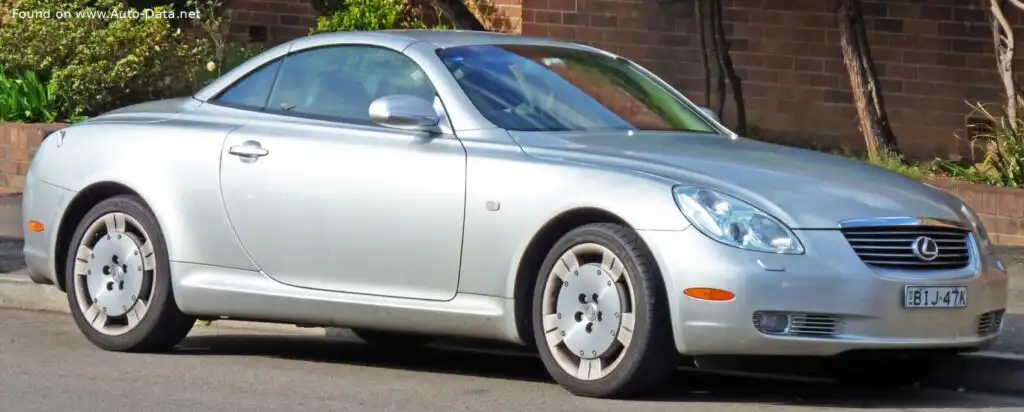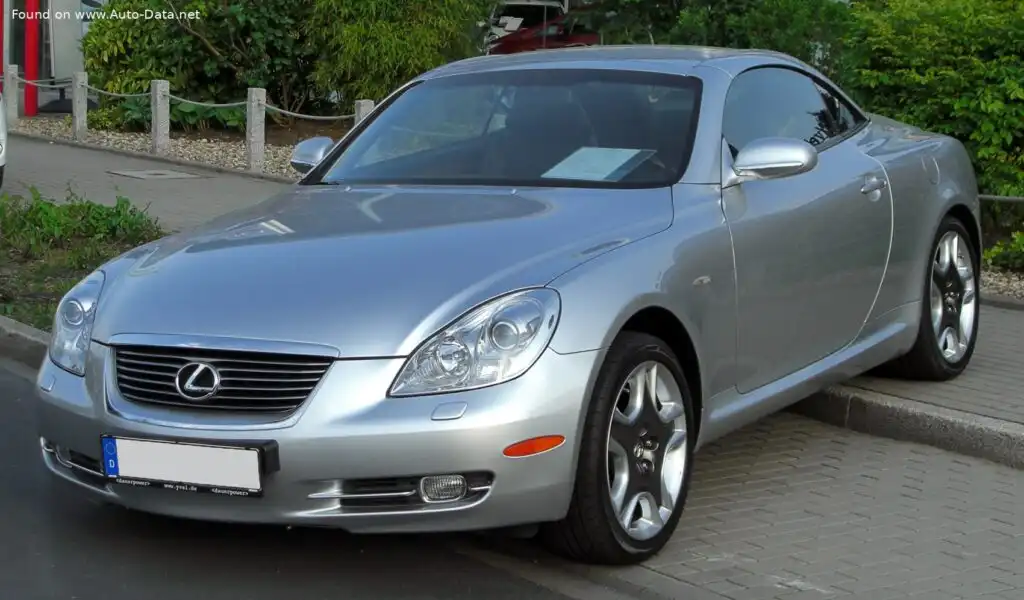
The Lexus SC 300, produced between 1994 and 1999, marked Lexus’s initial foray into the luxury sports coupe segment. As part of the first-generation SC (Z30) platform, it aimed to combine the refinement expected from Lexus with a more engaging driving experience. The SC 300, specifically the version equipped with the 2JZ-GE engine and a four-speed automatic transmission, occupied a middle ground within the SC lineup, balancing performance and comfort. It provided a more accessible alternative to the higher-performance SC 400, while still delivering a luxurious and well-equipped package. This model primarily targeted buyers seeking a stylish grand tourer prioritizing reliability and a smooth driving experience.
Technical Specifications
| Brand | Lexus |
| Model | SC |
| Generation | SC I (Z30) |
| Type (Engine) | 300 (230 Hp) Automatic |
| Start of production | 1994 |
| End of production | 1999 |
| Powertrain Architecture | Internal Combustion engine |
| Body type | Coupe |
| Seats | 4 |
| Doors | 2 |
| Fuel consumption (urban) | 16 l/100 km (14.7 US mpg, 17.7 UK mpg, 6.3 km/l) |
| Fuel Type | Petrol (Gasoline) |
| Acceleration 0 – 100 km/h | 7.5 sec |
| Acceleration 0 – 62 mph | 7.5 sec |
| Acceleration 0 – 60 mph | 7.1 sec |
| Maximum speed | 235 km/h (146.02 mph) |
| Weight-to-power ratio | 6.9 kg/Hp, 144.2 Hp/tonne |
| Weight-to-torque ratio | 5.6 kg/Nm, 178.1 Nm/tonne |
| Power | 230 Hp @ 6000 rpm |
| Power per litre | 76.7 Hp/l |
| Torque | 284 Nm @ 4800 rpm (209.47 lb.-ft. @ 4800 rpm) |
| Engine layout | Front, Longitudinal |
| Engine Model/Code | 2JZ-GE |
| Engine displacement | 2997 cm3 (182.89 cu. in.) |
| Number of cylinders | 6 |
| Engine configuration | Inline |
| Cylinder Bore | 86 mm (3.39 in.) |
| Piston Stroke | 86 mm (3.39 in.) |
| Compression ratio | 10.1:1 |
| Number of valves per cylinder | 4 |
| Fuel injection system | Multi-port manifold injection |
| Engine aspiration | Naturally aspirated engine |
| Valvetrain | DOHC |
| Engine oil capacity | 5.2 l (5.49 US qt | 4.58 UK qt) |
| Coolant | 8.4 l (8.88 US qt | 7.39 UK qt) |
| Kerb Weight | 1595 kg (3516.37 lbs.) |
| Trunk (boot) space – minimum | 265 l (9.36 cu. ft.) |
| Fuel tank capacity | 78 l (20.61 US gal | 17.16 UK gal) |
| Length | 4860 mm (191.34 in.) |
| Width | 1790 mm (70.47 in.) |
| Height | 1330 mm (52.36 in.) |
| Wheelbase | 2690 mm (105.91 in.) |
| Front track | 1520 mm (59.84 in.) |
| Rear (Back) track | 1520 mm (59.84 in.) |
| Drivetrain Architecture | Rear wheel drive |
| Number of gears and type of gearbox | 4 gears, automatic transmission |
| Front suspension | Double wishbone |
| Rear suspension | Coil spring |
| Front brakes | Ventilated discs |
| Rear brakes | Ventilated discs |
| Assisting systems | ABS (Anti-lock braking system) |
| Steering type | Steering rack and pinion |
| Power steering | Hydraulic Steering |
| Tires size | 225/55 R16 V |
| Wheel rims size | 16 |
Powertrain & Engine Architecture
The SC 300 automatic’s core is the 2JZ-GE, a 3.0-liter inline-six engine celebrated for its smoothness and durability. The 2JZ-GE features a cast iron block paired with an aluminum cylinder head, incorporating dual overhead camshafts (DOHC) and four valves per cylinder. A multi-port fuel injection system manages fuel delivery, contributing to efficient combustion and a responsive throttle. The engine generates 230 horsepower at 6000 rpm and 284 Nm (209.47 lb-ft) of torque at 4800 rpm. The automatic transmission is a four-speed unit, engineered for smooth shifts and comfortable cruising. While not as performance-oriented as a manual transmission, it aligned with the SC 300’s grand touring character. The transmission’s gear ratios were optimized for relaxed highway driving, prioritizing fuel efficiency over rapid acceleration.
Driving Characteristics
The SC 300 automatic provides a refined and comfortable driving experience. Acceleration from 0-60 mph takes approximately 7.1-7.5 seconds, respectable for a luxury coupe of its time, but slower than the manual transmission or the SC 400. The automatic transmission, while smooth, can feel somewhat hesitant during quick acceleration, requiring a deliberate kickdown to access the engine’s power. The focus is on effortless cruising and a quiet cabin. The suspension, tuned for comfort, effectively absorbs bumps, delivering a stable and controlled ride. Steering is precise and well-weighted, though it lacks the direct feedback found in some sportier coupes. Overall, the driving experience is geared towards relaxed grand touring rather than aggressive performance.
Equipment & Trim Levels
The SC 300 automatic typically came standard with a comprehensive set of features. Leather upholstery was standard, along with power-adjustable front seats, a premium sound system, and automatic climate control. Power windows, locks, and mirrors were also included. Optional extras included a sunroof, upgraded sound systems (often a Mark Levinson unit), and traction control. The interior design emphasized luxury and comfort, featuring wood trim accents and a well-appointed dashboard. The SC 300’s trim levels were relatively straightforward, with most variations stemming from optional packages rather than distinct model designations.
Chassis & Braking
The SC 300 boasts a robust chassis with a double wishbone suspension at the front and a coil spring setup at the rear. This configuration strikes a good balance between ride comfort and handling. Braking is handled by ventilated disc brakes on all four wheels, providing ample stopping power. An Anti-lock Braking System (ABS) was standard, enhancing safety and control during emergency braking. The SC 300’s weight distribution is relatively balanced, contributing to its stable handling characteristics. The standard tire size was 225/55 R16, offering a good compromise between grip and ride comfort.
Market Reception & Comparison
The SC 300 was generally well-received by automotive critics, who lauded its luxurious interior, smooth ride, and reliable engine. However, the automatic transmission occasionally drew criticism for its lack of responsiveness compared to the manual option. Compared to the SC 400, the SC 300 offered a more affordable entry point into the Lexus coupe range, albeit with some performance compromise. Fuel economy was reasonable for a vehicle of its class, averaging around 16 l/100 km (14.7 US mpg) in city driving. The SC 300 also competed with other luxury coupes, such as the BMW 3 Series Coupe and the Mercedes-Benz CLK, but it distinguished itself through its exceptional reliability and value.
Legacy
The Lexus SC 300, particularly the 2JZ-GE automatic variant, has cultivated a dedicated following among enthusiasts. The 2JZ-GE engine is renowned for its durability and potential for modification, making it a popular choice for engine swaps and performance upgrades. The SC 300’s relatively simple design and robust construction contribute to its long-term reliability. Today, well-maintained examples of the SC 300 are sought after by collectors and enthusiasts, and prices have been steadily increasing in recent years. The car represents a high point in Lexus’s early history, demonstrating the brand’s commitment to luxury, reliability, and a refined driving experience.