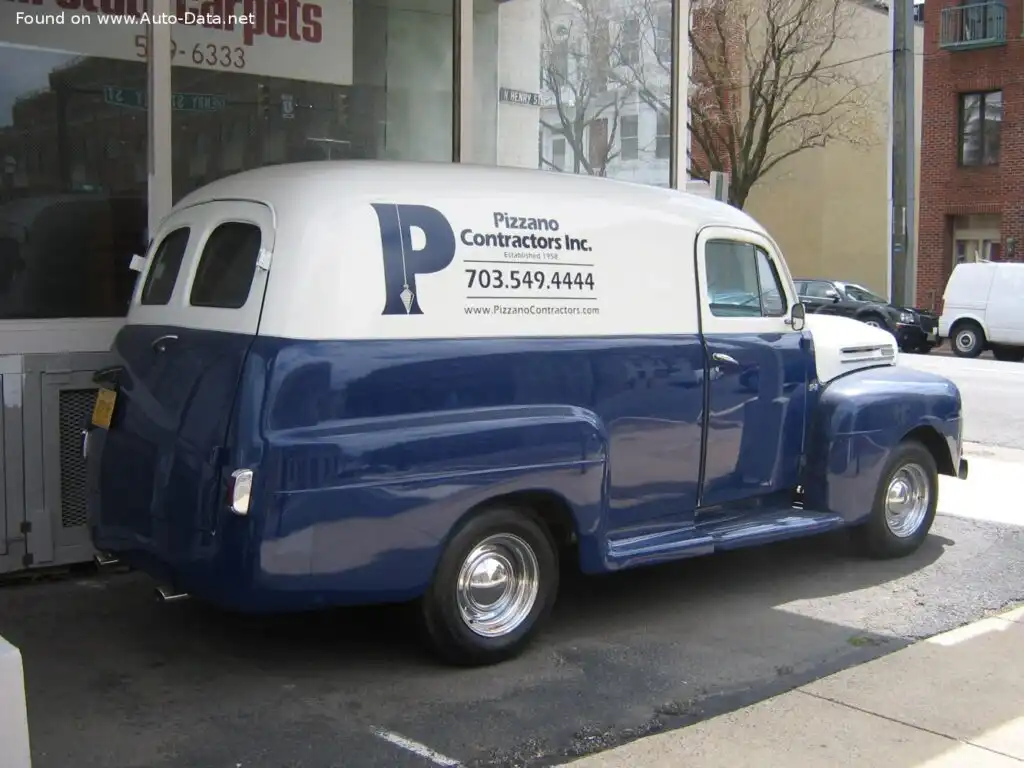
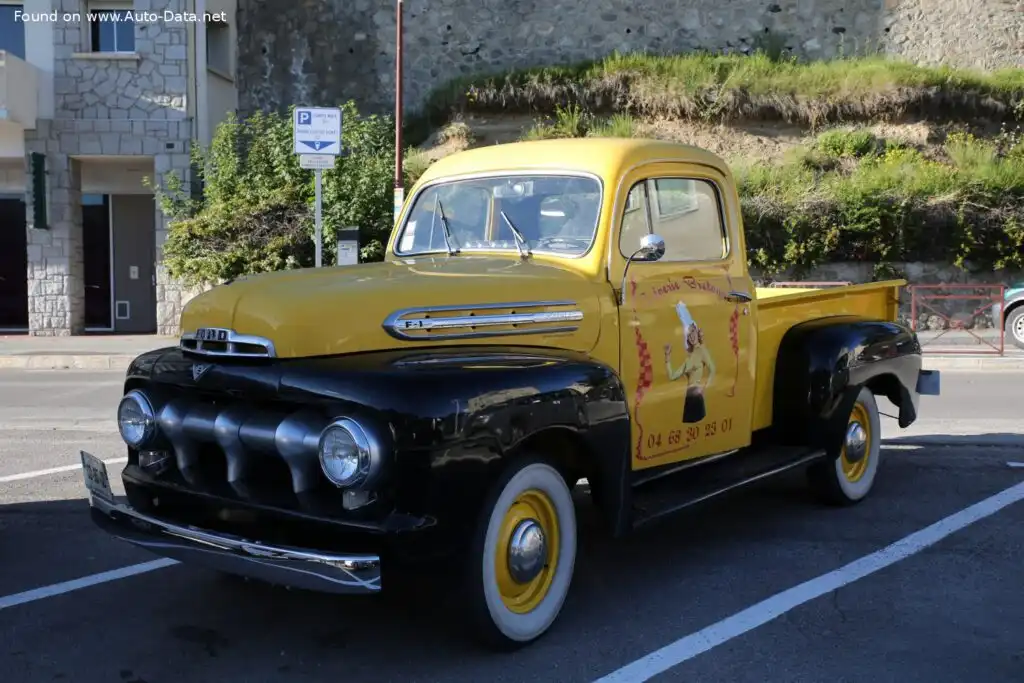
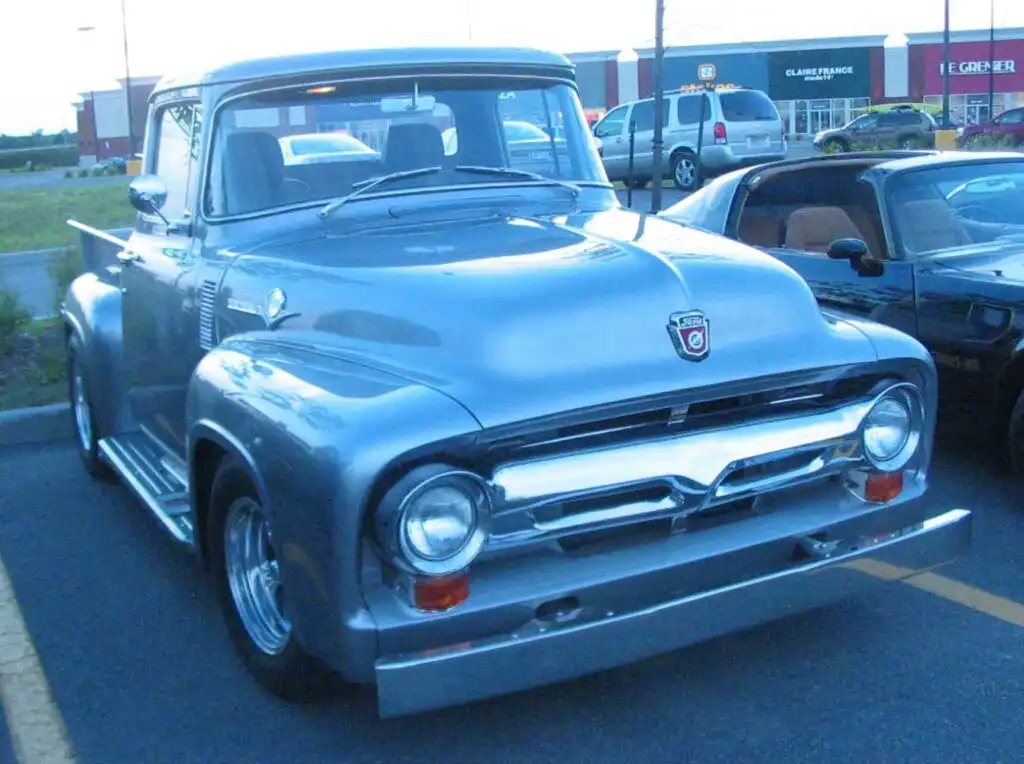
The Ford F-Series F-150 VII Regular Cab, equipped with the 5.8-liter V8 engine producing 150 horsepower and paired with an automatic transmission, represents a significant iteration in Ford’s long-running and immensely popular F-Series pickup truck lineage. Produced from 1983 through 1985, this configuration occupied a middle ground within the seventh generation (1980-1986) F-Series lineup, offering a balance between capability and affordability. It was a workhorse aimed at buyers needing substantial towing and hauling capacity without the expense of the higher-output engine options. This variant played a crucial role in maintaining the F-Series’ dominance in the full-size pickup truck market in North America.
Technical Specifications
| Brand | Ford |
| Model | F-Series F-100/F-150 |
| Generation | F-Series F-150 VII Regular Cab |
| Type (Engine) | 5.8 V8 (150 Hp) Automatic |
| Start of production | 1983 |
| End of production | 1985 |
| Powertrain Architecture | Internal Combustion engine |
| Body type | Pick-up |
| Seats | 2-3 |
| Doors | 2 |
| Fuel Type | Petrol (Gasoline) |
| Power | 150 Hp |
| Power per litre | 26.1 Hp/l |
| Torque | 380 Nm / 280.27 lb.-ft. |
| Engine layout | Front, Longitudinal |
| Engine displacement | 5752 cm3 / 351.01 cu. in. |
| Number of cylinders | 8 |
| Engine configuration | V-engine |
| Fuel injection system | Multi-port manifold injection |
| Engine aspiration | Naturally aspirated engine |
| Max. weight | 2767 kg / 6100.19 lbs. |
| Fuel tank capacity | 62-72 l / 16.38 – 19.02 US gal | 13.64 – 15.84 UK gal |
| Length | 4770-5291 mm / 187.8 – 208.31 in. |
| Width | 1372-1778 mm / 54.02 – 70 in. |
| Height | 1775-1778 mm / 69.88 – 70 in. |
| Wheelbase | 2967-3378 mm / 116.81 – 132.99 in. |
| Wading depth | 726-732 mm / 28.58 – 28.82 in. |
| Drivetrain Architecture | The Internal combustion engine (ICE) drives the rear wheels of the vehicle. |
| Drive wheel | Rear wheel drive |
| Number of gears and type of gearbox | 4 gears, automatic transmission |
| Front suspension | Independent coil spring |
| Front brakes | Disc |
| Rear brakes | Drum |
| Power steering | Electric Steering |
| Tires size | 215/75 R15; 235/75 R15 |
| Wheel rims size | 15 |
Powertrain & Engine Architecture
The heart of this F-150 variant is the 5.8-liter (351 cubic inch) Ford Windsor V8 engine. This engine, designated within Ford’s nomenclature as the 351W, is a robust and relatively simple design, known for its durability and ease of maintenance. The 1983-1985 iteration featured multi-port fuel injection, a significant upgrade from the carburetor-equipped engines of earlier years. This system, while not as sophisticated as later electronic fuel injection systems, provided improved fuel efficiency and throttle response compared to its predecessors. The engine utilizes a cast iron block and cylinder heads, contributing to its longevity. The automatic transmission employed was typically a Ford C6 three-speed automatic, a heavy-duty unit designed to handle the substantial torque output of the 5.8L V8. The C6 was known for its simplicity and reliability, though it lacked the fuel efficiency of more modern automatic transmissions.
Driving Characteristics
The 150 horsepower and 280 lb-ft of torque delivered by the 5.8L V8 and C6 automatic combination provided adequate, but not exhilarating, performance. Acceleration was modest, particularly when heavily loaded. The C6 transmission’s relatively wide gear ratios prioritized torque multiplication over outright speed. This made it well-suited for towing and hauling, but resulted in higher engine RPMs at highway speeds. Compared to the available 302 cubic inch (5.0L) V8, the 5.8L offered noticeably more low-end torque, making it a better choice for demanding tasks. However, the smaller engine provided slightly better fuel economy. Against the larger 460 cubic inch (7.5L) V8, the 5.8L was significantly down on power, but also considerably more economical to operate.
Equipment & Trim Levels
The F-150 Regular Cab with the 5.8L V8 and automatic transmission typically fell into the mid-range of available trim levels. Standard features generally included a basic vinyl bench seat, a simple dashboard with essential gauges, and manual windows and locks. Options included upgraded interior trim, air conditioning, a radio, and various towing packages. The Regular Cab configuration offered a no-frills, utilitarian interior focused on functionality rather than luxury. The exterior typically featured minimal brightwork, reflecting its work-oriented nature. Buyers could choose from a range of paint colors, but the emphasis was on durability and practicality.
Chassis & Braking
The F-150’s chassis was a traditional body-on-frame construction, providing a robust and durable platform. The front suspension utilized independent coil springs, offering a reasonable ride quality for a heavy-duty truck. The rear suspension employed leaf springs, designed to handle heavy loads. Braking was accomplished via front disc brakes and rear drum brakes. Power steering was standard, making maneuvering the large truck easier. Tire sizes typically ranged from 215/75R15 to 235/75R15, providing a balance between ride comfort and load-carrying capacity. The braking system, while adequate for the truck’s weight, lacked the stopping power of more modern braking systems.
Market Reception & Comparison
The 5.8L V8/automatic F-150 was generally well-received by buyers seeking a capable and reliable work truck. Critics noted its adequate power and torque for most tasks, but also pointed out its relatively modest fuel economy compared to smaller engine options. It was often praised for its durability and ease of maintenance. Compared to the Chevrolet C/K series and Dodge Ram trucks of the same era, the F-150 was considered competitive in terms of capability and reliability. The Ford’s reputation for build quality and parts availability contributed to its strong market position.
Legacy
The 5.8L Windsor V8 engine, in all its iterations, has earned a reputation as a durable and reliable powerplant. The C6 automatic transmission is also known for its longevity. Today, these F-150s are increasingly sought after by collectors and enthusiasts, particularly those looking for a classic American pickup truck. While not the fastest or most fuel-efficient option, the 5.8L/automatic combination offers a compelling blend of capability, simplicity, and affordability. Parts availability remains good, making these trucks relatively easy to maintain and restore. The 1983-1985 F-150 with this powertrain represents a sweet spot for many, offering a classic truck experience without the complexities of more modern vehicles.