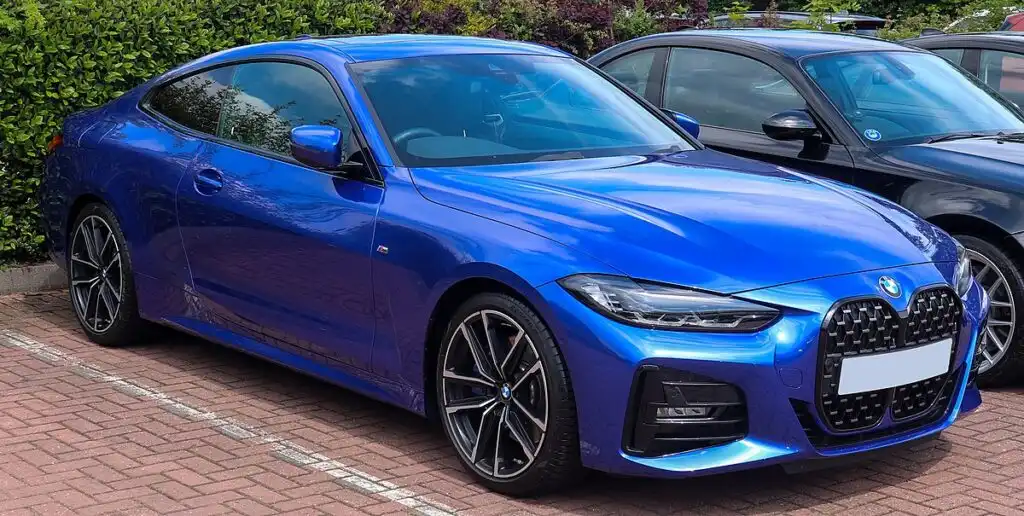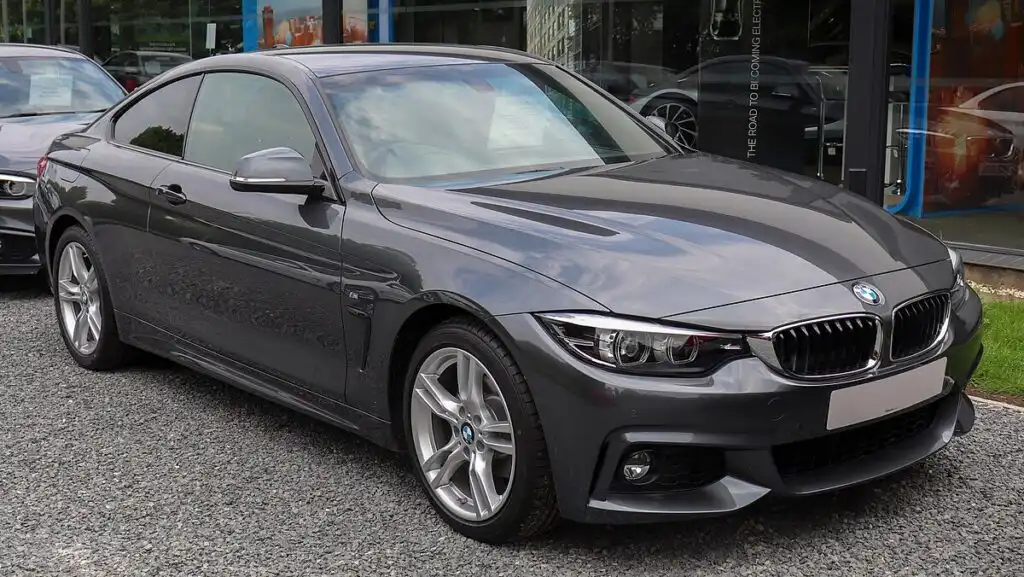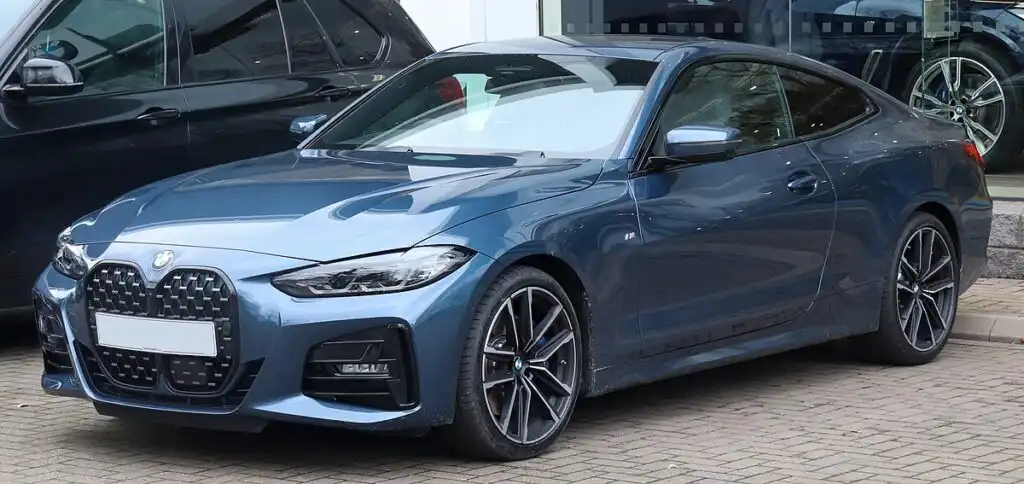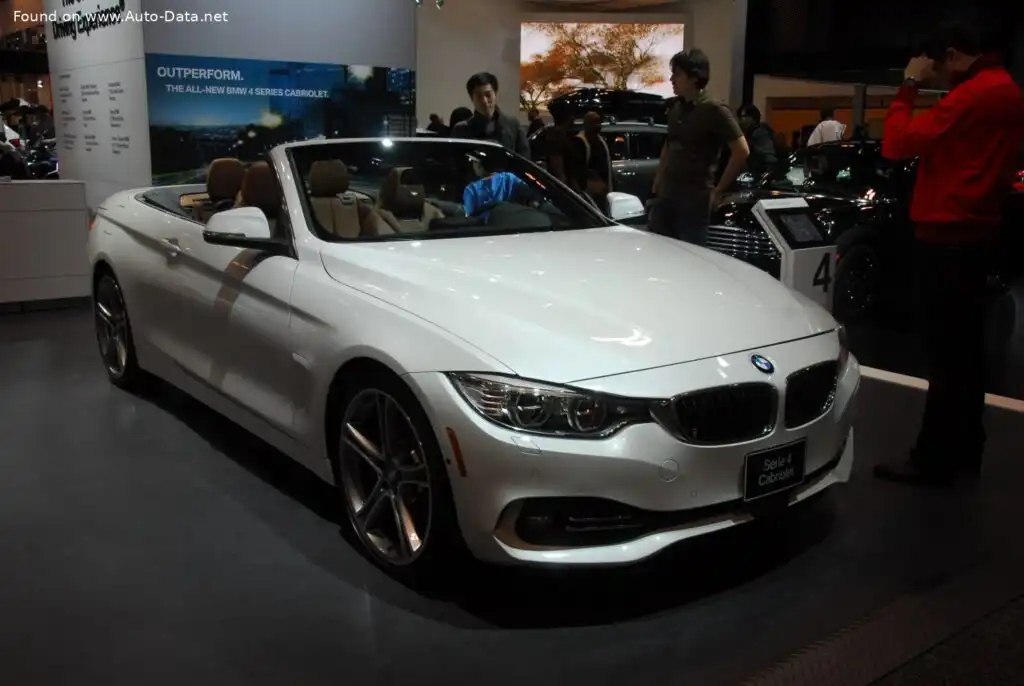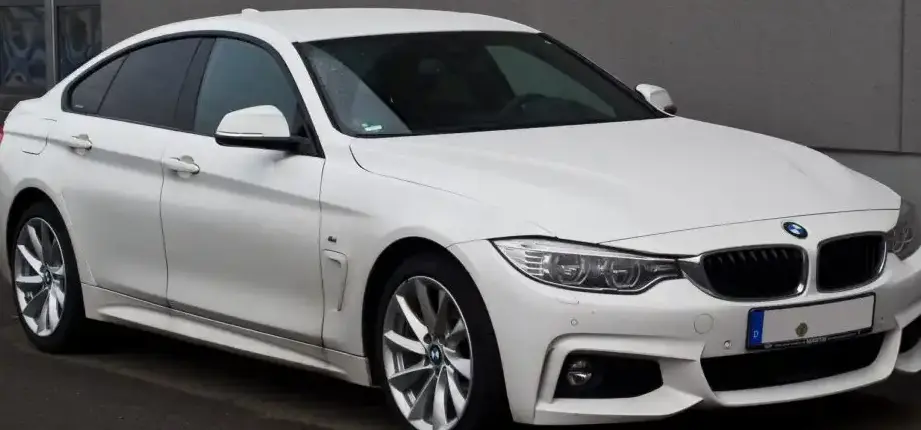
The BMW 4 Series Gran Coupe (F36) 425d, produced primarily during the 2016 model year, represents a compelling blend of practicality and performance within the BMW 4 Series lineup. Positioned as a mid-range offering, the 425d Gran Coupe aimed to deliver a more efficient and refined driving experience compared to its higher-powered siblings, while still maintaining the sporty character associated with the BMW brand. Built on the F36 chassis, this variant combined the sleek coupe styling with the added versatility of four doors and a larger trunk, appealing to buyers seeking a premium vehicle suitable for both daily commutes and longer journeys. It was primarily marketed in Europe and other regions where diesel engines were favored for their fuel economy.
Technical Specifications
| Brand | BMW |
| Model | 4 Series |
| Generation | 4 Series Gran Coupe (F36) |
| Type (Engine) | 425d (224 Hp) |
| Start of production | 2016 |
| End of production | 2016 |
| Powertrain Architecture | Internal Combustion engine |
| Body type | Coupe |
| Seats | 5 |
| Doors | 5 |
| Fuel consumption (urban) | 5.8-6.1 l/100 km (40.6 – 38.6 US mpg) |
| Fuel consumption (extra urban) | 4.1-4.5 l/100 km (57.4 – 52.3 US mpg) |
| Fuel consumption (combined) | 4.7-5.1 l/100 km (50 – 46.1 US mpg) |
| CO2 emissions | 125-133 g/km |
| Fuel Type | Diesel |
| Acceleration 0 – 100 km/h | 6.7 sec |
| Acceleration 0 – 62 mph | 6.7 sec |
| Acceleration 0 – 60 mph | 6.4 sec |
| Maximum speed | 247 km/h (153.48 mph) |
| Emission standard | Euro 6 |
| Weight-to-power ratio | 6.9 kg/Hp, 144.5 Hp/tonne |
| Weight-to-torque ratio | 3.4 kg/Nm, 290.3 Nm/tonne |
| Power | 224 Hp @ 4400 rpm |
| Torque | 450 Nm @ 1500-3000 rpm (331.9 lb.-ft. @ 1500-3000 rpm) |
| Engine layout | Front, Longitudinal |
| Engine Model/Code | B47D20B |
| Engine displacement | 1995 cm3 (121.74 cu. in.) |
| Number of cylinders | 4 |
| Engine configuration | Inline |
| Cylinder Bore | 84 mm (3.31 in.) |
| Piston Stroke | 90 mm (3.54 in.) |
| Compression ratio | 16.5:1 |
| Number of valves per cylinder | 4 |
| Fuel injection system | Diesel Commonrail |
| Engine aspiration | Twin-power turbo, Intercooler |
| Engine oil capacity | 5 l (5.28 US qt | 4.4 UK qt) |
| Coolant | 7 l (7.4 US qt | 6.16 UK qt) |
| Kerb Weight | 1550 kg (3417.17 lbs.) |
| Max. weight | 2110 kg (4651.75 lbs.) |
| Max load | 560 kg (1234.59 lbs.) |
| Trunk (boot) space – minimum | 480 l (16.95 cu. ft.) |
| Trunk (boot) space – maximum | 1300 l (45.91 cu. ft.) |
| Fuel tank capacity | 57 l (15.06 US gal | 12.54 UK gal) |
| Max. roof load | 75 kg (165.35 lbs.) |
| Permitted trailer load with brakes (12%) | 1600 kg (3527.4 lbs.) |
| Permitted trailer load without brakes | 750 kg (1653.47 lbs.) |
| Permitted towbar download | 75 kg (165.35 lbs.) |
| Length | 4638 mm (182.6 in.) |
| Width | 1825 mm (71.85 in.) |
| Height | 1389 mm (54.69 in.) |
| Wheelbase | 2810 mm (110.63 in.) |
| Front track | 1545 mm (60.83 in.) |
| Rear (Back) track | 1594 mm (62.76 in.) |
| Ride height (ground clearance) | 130 mm (5.12 in.) |
| Drag coefficient (Cd) | 0.29 |
| Minimum turning circle (turning diameter) | 11.3 m (37.07 ft.) |
| Drivetrain Architecture | The Internal combustion engine (ICE) drives the rear wheels of the vehicle. |
| Drive wheel | Rear wheel drive |
| Number of gears and type of gearbox | 6 gears, manual transmission |
| Front suspension | Independent coil spring |
| Rear suspension | Independent multi-link suspension |
| Front brakes | Ventilated discs |
| Rear brakes | Ventilated discs |
| Assisting systems | ABS (Anti-lock braking system) |
| Steering type | Steering rack and pinion |
| Power steering | Electric Steering |
| Tires size | 225/50 R17 98W; 225/45 R18; 255/40 R18; 225/40 R19; 255/35 R19 |
| Wheel rims size | 7.5J x 17; 8J x 18; 8.5J x 18; 8J x 19; 8.5J x 19 |
Powertrain & Engine Architecture
The heart of the 425d Gran Coupe is the BMW B47D20B, a 2.0-liter inline-four diesel engine. This engine is a member of BMW’s modular engine family, known for its efficiency and refinement. The B47 utilizes a sophisticated diesel commonrail fuel injection system, delivering fuel at extremely high pressures for optimized combustion. A twin-scroll turbocharger with intercooling further enhances performance, providing a broad torque curve. The engine produces 224 horsepower at 4400 rpm and a substantial 450 Nm (331.9 lb-ft) of torque between 1500 and 3000 rpm. This torque output is a key characteristic of the engine, providing strong acceleration in everyday driving situations. The 6-speed manual transmission was standard, offering precise gear changes and a direct connection to the engine. While an 8-speed automatic transmission was available as an option, the manual was often preferred by driving enthusiasts.
Driving Characteristics
The 425d Gran Coupe, equipped with the manual transmission, offered a balanced driving experience. Acceleration from 0 to 60 mph took approximately 6.4 seconds, making it reasonably quick for a diesel-powered vehicle. The engine’s strong low-end torque meant that overtaking maneuvers were executed with ease, and the car felt responsive even at lower speeds. Compared to the more powerful 435i or 440i models, the 425d prioritized fuel efficiency and relaxed cruising. The gear ratios in the 6-speed manual were well-matched to the engine’s characteristics, providing good acceleration in each gear. The automatic transmission, while offering convenience, could sometimes feel less engaging and slightly dulled the engine’s responsiveness.
Equipment & Trim Levels
The 425d Gran Coupe typically came standard with features such as automatic climate control, a BMW iDrive infotainment system with a central display screen, power-adjustable front seats, and a leather-wrapped steering wheel. Interior upholstery was typically a combination of cloth and leatherette, with full leather options available as an upgrade. Common optional extras included a sunroof, navigation system, premium sound system, and advanced driver-assistance systems like lane departure warning and adaptive cruise control. Trim levels varied depending on the market, but generally offered packages that bundled together popular options for convenience.
Chassis & Braking
The F36 Gran Coupe featured a sophisticated chassis design, incorporating independent suspension at all four wheels. The front suspension utilized coil springs and struts, while the rear employed a multi-link setup. This configuration provided a good balance between ride comfort and handling precision. Brakes consisted of ventilated discs on all four wheels, providing ample stopping power. ABS (Anti-lock Braking System) was standard, enhancing safety in emergency braking situations. The 425d Gran Coupe’s weight of approximately 1550 kg (3417.17 lbs) was relatively moderate, contributing to its agile handling characteristics.
Market Reception & Comparison
The 425d Gran Coupe was generally well-received by automotive critics, who praised its fuel efficiency, refined driving experience, and practical hatchback-like trunk access. It was often seen as a sensible alternative to the more expensive and performance-focused 4 Series variants. Compared to the 435i, the 425d offered significantly better fuel economy, making it a more attractive option for drivers covering long distances. However, it lacked the outright performance and sporty character of its petrol-powered sibling. The 420d, a lower-powered diesel variant, offered even greater fuel economy but at the expense of performance. The 425d struck a good balance between the two.
Legacy
The B47 engine family, including the B47D20B found in the 425d, has proven to be relatively reliable, although some early models experienced issues with timing chain wear. Proper maintenance, including regular oil changes and adherence to BMW’s service schedule, is crucial for long-term reliability. On the used car market, the 425d Gran Coupe remains a popular choice for buyers seeking a stylish, practical, and fuel-efficient premium vehicle. Its combination of performance, comfort, and practicality continues to appeal to a wide range of drivers, and well-maintained examples can still provide years of reliable service.