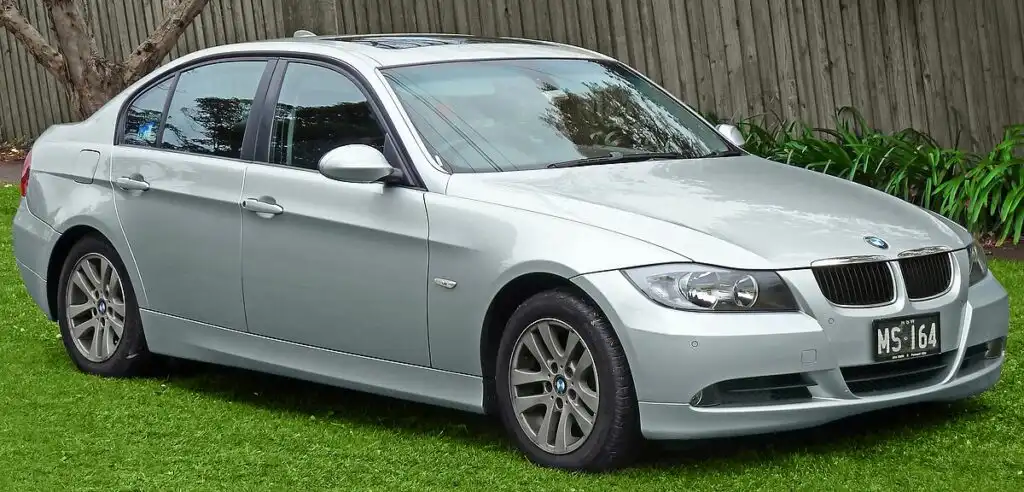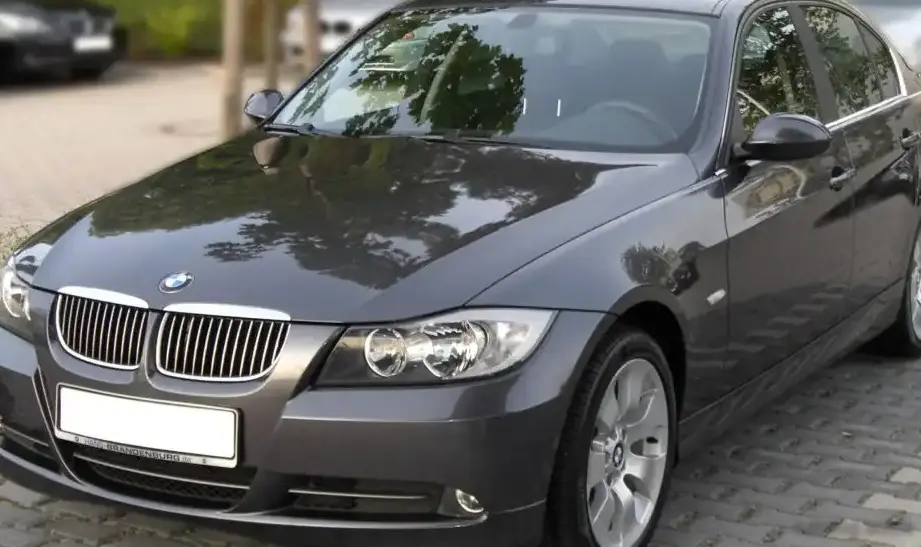
The BMW 3 Series Sedan (E90) 320d with the Steptronic automatic transmission, produced from 2007 to 2008, represented a significant entry point into the premium compact executive car segment. This variant, powered by the N47D20C engine, was positioned as a fuel-efficient and comfortable option within the broader E90 lineup, appealing to buyers prioritizing economy and ease of driving over outright performance. It served as a key model in the European market, where diesel engines held a substantial share, and began to gain traction in North America as BMW expanded its diesel offerings.
Technical Specifications
| Brand | BMW |
| Model | 3 Series |
| Generation | 3 Series Sedan (E90) |
| Type (Engine) | 320d (177 Hp) DPF Steptronic |
| Start of production | 2007 |
| End of production | 2008 |
| Powertrain Architecture | Internal Combustion engine |
| Body type | Sedan |
| Seats | 5 |
| Doors | 4 |
| Fuel consumption (urban) | 7.3 l/100 km (32.2 US mpg) |
| Fuel consumption (extra urban) | 4.6 l/100 km (51.1 US mpg) |
| Fuel consumption (combined) | 5.6 l/100 km (42 US mpg) |
| Fuel Type | Diesel |
| Acceleration 0 – 100 km/h | 8.3 sec |
| Acceleration 0 – 62 mph | 8.3 sec |
| Acceleration 0 – 60 mph | 7.9 sec |
| Maximum speed | 226 km/h (140.43 mph) |
| Emission standard | Euro 4 |
| Weight-to-power ratio | 9 kg/Hp |
| Weight-to-torque ratio | 4.6 kg/Nm |
| Power | 177 Hp @ 4000 rpm |
| Torque | 350 Nm @ 1750 rpm (258.15 lb.-ft. @ 1750 rpm) |
| Engine layout | Front, Longitudinal |
| Engine Model/Code | N47D20C |
| Engine displacement | 1995 cm3 (121.74 cu. in.) |
| Number of cylinders | 4 |
| Engine configuration | Inline |
| Cylinder Bore | 84 mm (3.31 in.) |
| Piston Stroke | 90 mm (3.54 in.) |
| Compression ratio | 17:1 |
| Number of valves per cylinder | 4 |
| Fuel injection system | Diesel Commonrail |
| Engine aspiration | Turbocharger, Intercooler |
| Engine oil capacity | 5.2 l (5.49 US qt | 4.58 UK qt) |
| Coolant capacity | 7.9 l (8.35 US qt | 6.95 UK qt) |
| Kerb Weight | 1595 kg (3516.37 lbs.) |
| Max. weight | 2060 kg (4541.52 lbs.) |
| Max load | 465 kg (1025.15 lbs.) |
| Trunk (boot) space – minimum | 460 l (16.24 cu. ft.) |
| Trunk (boot) space – maximum | 1385 l (48.91 cu. ft.) |
| Fuel tank capacity | 61 l (16.11 US gal | 13.42 UK gal) |
| Length | 4520 mm (177.95 in.) |
| Width | 1817 mm (71.54 in.) |
| Height | 1418 mm (55.83 in.) |
| Wheelbase | 2760 mm (108.66 in.) |
| Front track | 1506 mm (59.29 in.) |
| Rear track | 1525 mm (60.04 in.) |
| Drivetrain Architecture | Rear wheel drive |
| Number of gears | 6 |
| Gearbox type | Automatic transmission |
| Front suspension | Spring Strut |
| Rear suspension | Coil spring |
| Front brakes | Ventilated discs |
| Rear brakes | Disc |
| Assisting systems | ABS (Anti-lock braking system) |
| Tires size | 205/55 R16 |
| Wheel rims size | 16 |
Powertrain & Engine Architecture
The heart of the E90 320d Steptronic is the N47D20C, a 2.0-liter inline-four diesel engine. This engine was a cornerstone of BMW’s EfficientDynamics strategy, focusing on maximizing fuel economy and reducing emissions. The N47 featured second-generation common rail direct injection, operating at pressures up to 1,600 bar, for precise fuel delivery and optimized combustion. A variable geometry turbocharger (VGT) with an intercooler further enhanced performance and efficiency. The engine also incorporated four valves per cylinder and a chain-driven double overhead camshaft. The Steptronic transmission is a 6-speed automatic gearbox known for its smooth shifts and adaptive learning capabilities. It offered both fully automatic operation and a manual shift mode, allowing drivers to exert more control when desired.
Driving Characteristics
The 177 horsepower and 350 Nm (258 lb-ft) of torque delivered by the N47D20C in the 320d Steptronic provided adequate performance for everyday driving. Acceleration from 0 to 60 mph took approximately 7.9 seconds, and the car had a top speed of 140 mph. While not as quick as the 335i or even the 325i models, the 320d offered a more relaxed and fuel-efficient driving experience. The automatic transmission, while smooth, did slightly diminish the sense of urgency compared to the available manual gearbox. Gear ratios were tuned for fuel economy, with taller gearing in higher gears to reduce engine speed at cruising speeds. The engine’s torque peak, available from 1750 rpm, provided good responsiveness in most driving situations.
Equipment & Trim Levels
The 320d Steptronic typically came standard with features such as automatic climate control, power windows and mirrors, a multi-function steering wheel, and a basic audio system. Upholstery was usually cloth, although leather options were available. Common optional extras included a sunroof, upgraded audio systems (often from Harman Kardon), navigation, parking sensors, and sport seats. The trim level could vary depending on the market, but generally, the 320d was positioned as a well-equipped but not overly luxurious variant. It served as a stepping stone to the more premium trims like the 325i and 335i.
Chassis & Braking
The E90 320d Steptronic utilized a MacPherson strut front suspension and a multi-link rear suspension, providing a good balance between comfort and handling. The suspension was tuned to be slightly softer than the sportier models, prioritizing ride quality. Braking systems consisted of ventilated discs at the front and solid discs at the rear. Anti-lock Braking System (ABS) was standard, along with Electronic Brake-force Distribution (EBD). The car’s weight of approximately 3516 lbs was relatively moderate, contributing to its manageable handling characteristics.
Market Reception & Comparison
The 320d Steptronic was generally well-received by automotive critics as a practical and efficient option. It was praised for its fuel economy, comfortable ride, and smooth-shifting transmission. However, some reviewers noted that the engine lacked the outright performance of its gasoline-powered siblings. Compared to the 325i and 335i, the 320d offered significantly better fuel economy but less exhilarating acceleration. Against other diesel competitors, such as the Audi A4 TDI and Mercedes-Benz C-Class CDI, the 320d held its own in terms of performance and refinement. Reliability was generally good, although early N47 engines were known to have potential issues with timing chain tensioners, which were addressed in later revisions.
Legacy
The E90 320d Steptronic remains a popular choice in the used car market, particularly for buyers seeking a fuel-efficient and reliable premium sedan. The N47 engine, despite its early teething problems, proved to be a durable and long-lasting powerplant when properly maintained. The Steptronic transmission is also known for its reliability. Today, these cars can be found with relatively high mileage and still offer a comfortable and economical driving experience. The E90 320d represents a pivotal moment in BMW’s embrace of diesel technology and its commitment to fuel efficiency.