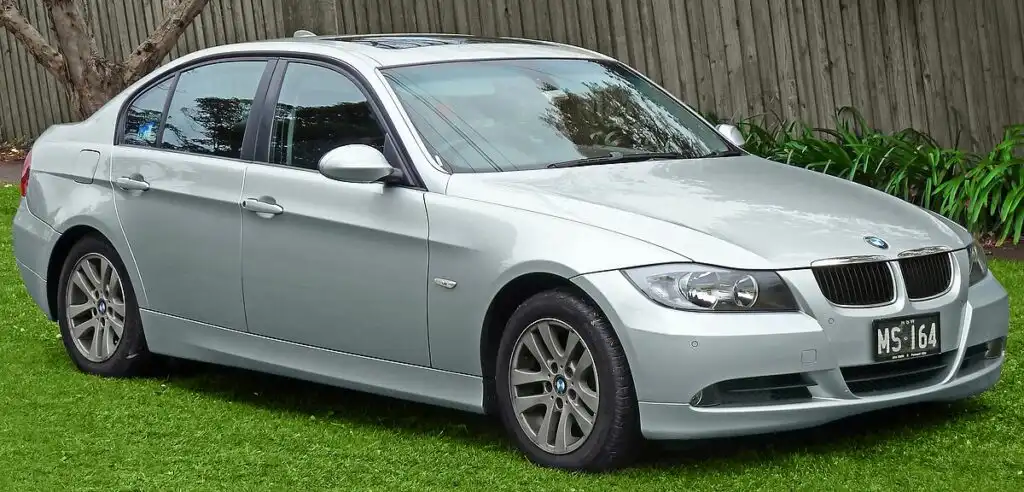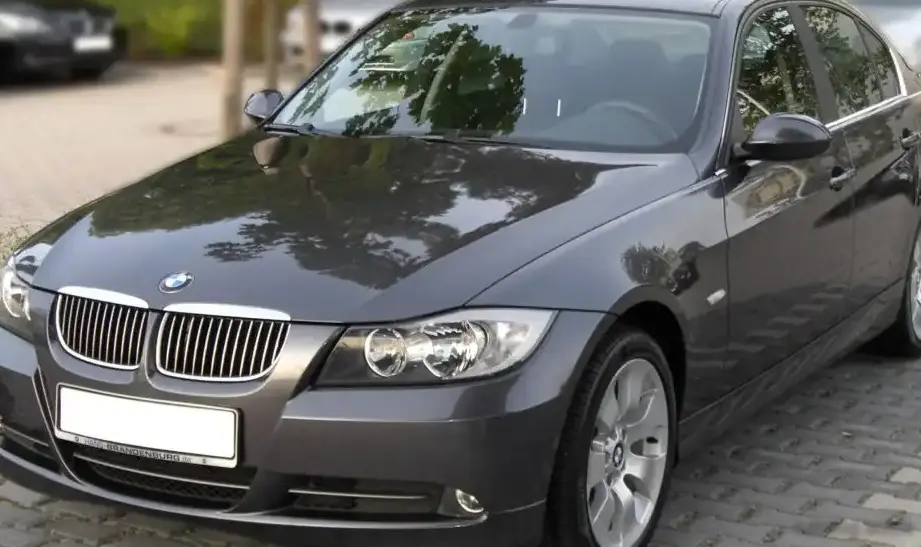
The BMW 3 Series Sedan (E90) 320i, produced from 2005 to 2007, represented the entry point into the sixth generation of BMW’s iconic sports sedan. Positioned as the base model within the E90 range, the 320i offered a balance of BMW’s renowned driving dynamics and relative affordability. It served as a crucial volume seller, attracting buyers who desired the 3 Series experience without the higher price tags associated with the 325i, 328i, or the performance-oriented 335i models. The E90 generation marked a significant departure from its predecessor (E46) with a more angular design, increased dimensions, and a greater emphasis on technology and refinement.
| Brand | BMW |
| Model | 3 Series |
| Generation | 3 Series Sedan (E90) |
| Type (Engine) | 320i (150 Hp) |
| Start of production | 2005 |
| End of production | 2007 |
| Powertrain Architecture | Internal Combustion engine |
| Body type | Sedan |
| Seats | 5 |
| Doors | 4 |
| Fuel consumption (urban) | 10.7 l/100 km (22 US mpg) |
| Fuel consumption (extra urban) | 5.6 l/100 km (42 US mpg) |
| Fuel consumption (combined) | 7.4 l/100 km (31.8 US mpg) |
| Fuel Type | Petrol (Gasoline) |
| Acceleration 0 – 100 km/h | 8.5 sec |
| Acceleration 0 – 62 mph | 8.5 sec |
| Acceleration 0 – 60 mph | 8.1 sec |
| Maximum speed | 220 km/h (136.7 mph) |
| Weight-to-power ratio | 9.3 kg/Hp |
| Weight-to-torque ratio | 7 kg/Nm |
| Power | 150 Hp @ 6200 rpm |
| Torque | 200 Nm @ 3600 rpm (147.51 lb.-ft. @ 3600 rpm) |
| Engine layout | Front, Longitudinal |
| Engine Model/Code | N46B20B |
| Engine displacement | 1995 cm3 (121.74 cu. in.) |
| Number of cylinders | 4 |
| Engine configuration | Inline |
| Cylinder Bore | 84 mm (3.31 in.) |
| Piston Stroke | 90 mm (3.54 in.) |
| Compression ratio | 10.5:1 |
| Number of valves per cylinder | 4 |
| Fuel injection system | Multi-port manifold injection |
| Engine oil capacity | 4.25 l (4.49 US qt | 3.74 UK qt) |
| Coolant capacity | 7.2 l (7.61 US qt | 6.34 UK qt) |
| Kerb Weight | 1395 kg (3075.45 lbs.) |
| Max. weight | 1840 kg (4056.51 lbs.) |
| Max load | 445 kg (981.06 lbs.) |
| Trunk (boot) space – minimum | 460 l (16.24 cu. ft.) |
| Fuel tank capacity | 60 l (15.85 US gal | 13.2 UK gal) |
| Length | 4520 mm (177.95 in.) |
| Width | 1817 mm (71.54 in.) |
| Height | 1421 mm (55.94 in.) |
| Wheelbase | 2760 mm (108.66 in.) |
| Front track | 1500 mm (59.06 in.) |
| Rear track | 1513 mm (59.57 in.) |
| Drivetrain Architecture | Rear wheel drive |
| Number of gears | 6 |
| Gearbox type | Manual transmission |
| Front suspension | Spring Strut |
| Rear suspension | Coil spring |
| Front brakes | Ventilated discs |
| Rear brakes | Disc |
| Tires size | 205/55 R16 V |
| Wheel rims size | 7J x 16 |
Powertrain & Engine Architecture
The heart of the E90 320i was the N46B20B, a 2.0-liter naturally aspirated inline-four cylinder engine. This engine was a significant evolution of BMW’s previous four-cylinder designs, featuring double VANOS (variable valve timing) on both the intake and exhaust camshafts. This technology, along with a refined fuel injection system, contributed to improved efficiency and a broader torque curve. The N46 utilized multi-port fuel injection, delivering fuel directly into the intake ports. The engine produced 150 horsepower at 6200 rpm and 200 Nm (147.51 lb-ft) of torque at 3600 rpm. The 320i was typically equipped with a six-speed manual transmission, but a six-speed automatic transmission was also available, and was a popular choice for buyers prioritizing comfort and ease of use. The automatic transmission featured adaptive shift programs, adjusting shift points based on driving style.
Driving Characteristics
The 320i, particularly with the automatic transmission, offered a comfortable and refined driving experience. While not as overtly sporty as the higher-powered 3 Series variants, it still delivered the engaging handling characteristics BMW was known for. Acceleration from 0-60 mph took approximately 8.1 seconds, which was respectable for the time, but noticeably slower than the 325i or 328i. The automatic transmission, while smooth, did slightly diminish the sense of driver involvement compared to the manual. Gear ratios were tuned for fuel efficiency and everyday drivability, rather than outright performance. The engine felt responsive enough for typical commuting and highway cruising, but required more aggressive throttle input for quicker overtaking maneuvers.
Equipment & Trim Levels
The 320i came standard with a respectable array of features, including power windows, power locks, air conditioning, and a basic audio system. Interior upholstery was typically cloth, although leatherette or full leather options were available. The dashboard layout was typical BMW, with a driver-focused design and logically arranged controls. Optional extras included a premium sound system, sunroof, navigation system, sport seats, and various cosmetic enhancements. The 320i was often seen as a blank canvas for customization, allowing buyers to tailor the car to their specific preferences.
Chassis & Braking
The E90 320i utilized a MacPherson strut front suspension and a multi-link rear suspension, providing a good balance of ride comfort and handling precision. The chassis was relatively lightweight, contributing to the car’s agility. Braking duties were handled by ventilated discs at the front and solid discs at the rear. Anti-lock brakes (ABS) were standard, enhancing safety and control. The 320i’s suspension was tuned to be slightly softer than the higher-performance models, prioritizing ride comfort over ultimate handling prowess. Stabilizer bars were fitted front and rear to reduce body roll during cornering.
Market Reception & Comparison
The E90 320i was generally well-received by automotive critics, who praised its comfortable ride, refined interior, and fuel efficiency. However, some reviewers noted that the engine lacked the punch of its larger counterparts. Compared to the 325i and 328i, the 320i offered a more affordable entry point into the 3 Series range, but at the expense of performance. Fuel economy was a strong point, with the 320i achieving around 31.8 US mpg in combined driving. Reliability was generally good, although the N46 engine was known to be susceptible to oil leaks and cooling system issues if not properly maintained.
Legacy
The E90 320i remains a popular choice in the used car market today, particularly for buyers seeking a reliable and affordable BMW sedan. The N46 engine, while not without its quirks, is generally considered to be durable and relatively easy to maintain. Parts availability is good, and a wealth of aftermarket support exists. The 320i’s blend of comfort, refinement, and BMW’s signature driving dynamics continues to appeal to a wide range of drivers. While it may not be the fastest or most technologically advanced 3 Series variant, it represents a solid value proposition and a gateway into the BMW brand.