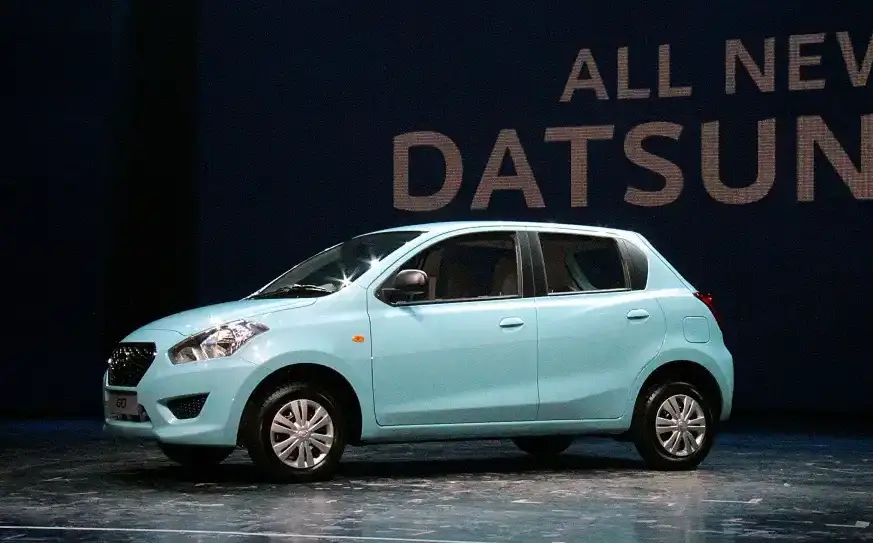
The Datsun GO I (facelift 2018) 1.2, producing 68 horsepower, represents an entry-level offering within the broader Datsun GO lineup. Introduced as part of the facelift for the first-generation GO in 2018, this variant was primarily targeted at price-sensitive markets, particularly in developing countries where Datsun aimed to re-establish its brand presence. The GO, and this 1.2L variant specifically, was designed as an affordable and practical city car, offering basic transportation with a focus on fuel efficiency. It slots into the lineup as the base model, offering a more accessible price point compared to potentially higher-trim levels that may have been offered in some markets.
Technical Specifications
| Brand | Datsun |
| Model | GO |
| Generation | GO I (facelift 2018) |
| Type (Engine) | 1.2 (68 Hp) |
| Start of production | 2018 |
| Powertrain Architecture | Internal Combustion engine |
| Body type | Hatchback |
| Seats | 5 |
| Doors | 5 |
| Fuel Type | Petrol (Gasoline) |
| Weight-to-power ratio | 12.4 kg/Hp, 80.4 Hp/tonne |
| Weight-to-torque ratio | 8.1 kg/Nm, 122.9 Nm/tonne |
| Power | 68 Hp @ 5000 rpm |
| Power per litre | 56.8 Hp/l |
| Torque | 104 Nm @ 4000 rpm (76.71 lb.-ft. @ 4000 rpm) |
| Engine layout | Front, Transverse |
| Engine Model/Code | HR12DE |
| Engine displacement | 1198 cm3 (73.11 cu. in.) |
| Number of cylinders | 3 |
| Engine configuration | Inline |
| Cylinder Bore | 78 mm (3.07 in.) |
| Piston Stroke | 83.6 mm (3.29 in.) |
| Number of valves per cylinder | 4 |
| Engine aspiration | Naturally aspirated engine |
| Valvetrain | DOHC |
| Engine oil capacity | 3.4 l (3.59 US qt | 2.99 UK qt) |
| Kerb Weight | 846 kg (1865.11 lbs.) |
| Trunk (boot) space – minimum | 265 l (9.36 cu. ft.) |
| Fuel tank capacity | 35 l (9.25 US gal | 7.7 UK gal) |
| Length | 3788 mm (149.13 in.) |
| Width | 1636 mm (64.41 in.) |
| Height | 1507 mm (59.33 in.) |
| Wheelbase | 2450 mm (96.46 in.) |
| Ride height (ground clearance) | 180 mm (7.09 in.) |
| Minimum turning circle (turning diameter) | 9.2 m (30.18 ft.) |
| Drivetrain Architecture | The Internal combustion engine (ICE) drives the front wheels of the vehicle. |
| Drive wheel | Front wheel drive |
| Number of gears and type of gearbox | 5 gears, manual transmission |
| Front suspension | Independent type McPherson |
| Rear suspension | Semi-independent, coil spring |
| Front brakes | Ventilated discs |
| Rear brakes | Drum |
| Assisting systems | ABS (Anti-lock braking system) |
| Tires size | 165/70 R14 |
| Wheel rims size | 5.5J x 14 |
Powertrain & Engine Architecture
The heart of the Datsun GO 1.2 is the HR12DE, a 1.2-liter inline-three cylinder gasoline engine. This engine utilizes a naturally aspirated configuration, meaning it doesn’t employ turbocharging or supercharging. The HR12DE features a double overhead camshaft (DOHC) valvetrain, operating four valves per cylinder. This design contributes to improved breathing and, consequently, better engine efficiency and power output for its size. Fuel delivery is managed by a multi-point fuel injection system, optimizing the air-fuel mixture for combustion. The engine is transversely mounted at the front of the vehicle, driving the front wheels. The 5-speed manual transmission is a standard feature, chosen for its simplicity and cost-effectiveness. The transmission’s gear ratios are tuned for urban driving, prioritizing acceleration from a standstill and reasonable fuel economy rather than high-speed cruising.
Driving Characteristics
The 68 horsepower output of the 1.2-liter engine translates to modest, but adequate, performance for city driving. Acceleration is not brisk, and overtaking maneuvers require careful planning. The 104 Nm (76.71 lb-ft) of torque, available at 4000 rpm, provides sufficient pulling power for everyday driving situations. Compared to potential higher-output variants (if offered), this version prioritizes fuel efficiency over outright speed. The 5-speed manual transmission allows drivers to keep the engine in its optimal power band, but the relatively long gearing contributes to a somewhat relaxed driving experience. The lightweight nature of the GO (846 kg / 1865.11 lbs) helps to mitigate the effects of the modest power output, making it feel more nimble than its specifications might suggest.
Equipment & Trim Levels
The Datsun GO 1.2, as the base model, typically came equipped with essential features. Standard equipment generally included manual air conditioning, power steering, and basic audio system with AM/FM radio. Safety features were kept to a minimum, often including only driver and passenger airbags and the ABS anti-lock braking system. Interior upholstery was typically a durable, easy-to-clean cloth material. Optional extras, depending on the market, might have included power windows, central locking, and a more advanced audio system. The dashboard layout was functional and straightforward, prioritizing practicality over aesthetic appeal.
Chassis & Braking
The Datsun GO utilizes a McPherson strut independent suspension system at the front, providing a reasonable level of ride comfort and handling. The rear suspension employs a semi-independent coil spring setup, which is a cost-effective solution for compact cars. The front brakes are ventilated discs, offering adequate stopping power, while the rear brakes are drums, a common feature in entry-level vehicles to reduce manufacturing costs. The relatively small 165/70 R14 tires and 5.5J x 14 inch steel wheels contribute to the car’s affordability. The ground clearance of 180 mm (7.09 in) is relatively high, making it suitable for navigating poorly maintained roads.
Market Reception & Comparison
The Datsun GO 1.2 was generally well-received in its target markets as an affordable and reliable city car. Critics often praised its fuel efficiency and low running costs. However, the engine’s modest power output and basic interior were frequently cited as drawbacks. Compared to other vehicles in its class, the GO offered a competitive price point, but often lacked the refinement and features of more established competitors. Its fuel economy was generally comparable to other small displacement gasoline engines, and its reliability proved to be acceptable for its price range.
Legacy
The Datsun GO 1.2, while not a performance icon, served as a crucial model for Datsun’s re-entry into several emerging markets. The HR12DE engine, while simple in design, proved to be reasonably durable and reliable. In the used car market, these models are often sought after by first-time car buyers or those seeking an inexpensive and economical means of transportation. Maintenance costs are generally low, and spare parts are readily available in many regions. While it may not be a collector’s item, the Datsun GO 1.2 represents a significant chapter in Datsun’s modern history, demonstrating their commitment to providing affordable mobility to a wider audience.