Technical Specifications
| Brand | Citroen |
| Model | C4 |
| Generation | C4 III (Phase I, 2020) |
| Type (Engine) | 1.2 PureTech (130 Hp) |
| Start of production | December, 2020 |
| End of production | October, 2024 |
| Powertrain Architecture | Internal Combustion engine |
| Body type | Coupe, SUV |
| Seats | 5 |
| Doors | 5 |
| Fuel consumption (urban) | 5.7 l/100 km (41.3 US mpg, 49.6 UK mpg, 17.5 km/l) |
| Fuel consumption (extra urban) | 4.2 l/100 km (56 US mpg, 67.3 UK mpg, 23.8 km/l) |
| Fuel consumption (combined) | 4.8 l/100 km (49 US mpg, 58.9 UK mpg, 20.8 km/l) |
| CO2 emissions | 108 g/km |
| Fuel Type | Petrol (Gasoline) |
| Acceleration 0 – 100 km/h | 9.9 sec |
| Acceleration 0 – 62 mph | 9.9 sec |
| Acceleration 0 – 60 mph | 9.4 sec |
| Maximum speed | 208 km/h (129.25 mph) |
| Emission standard | Euro 6d-ISC-FCM |
| Weight-to-power ratio | 9.6 kg/Hp, 104.3 Hp/tonne |
| Weight-to-torque ratio | 5.4 kg/Nm, 184.4 Nm/tonne |
| Power | 130 Hp @ 5500 rpm |
| Power per litre | 108.4 Hp/l |
| Torque | 230 Nm @ 1750 rpm (169.64 lb.-ft. @ 1750 rpm) |
| Engine layout | Front, Transverse |
| Engine Model/Code | HNS EB2ADTS |
| Engine displacement | 1199 cm3 (73.17 cu. in.) |
| Number of cylinders | 3 |
| Engine configuration | Inline |
| Cylinder Bore | 75 mm (2.95 in.) |
| Piston Stroke | 90.5 mm (3.56 in.) |
| Number of valves per cylinder | 4 |
| Fuel injection system | Direct injection |
| Engine aspiration | Turbocharger, Intercooler |
| Engine oil capacity | 3.5 l (3.7 US qt | 3.08 UK qt) |
| Kerb Weight | 1247-1340 kg (2749.16 – 2954.19 lbs.) |
| Max. weight | 1735 kg (3825.02 lbs.) |
| Max load | 395-488 kg (870.83 – 1075.86 lbs.) |
| Trunk (boot) space – minimum | 380 l (13.42 cu. ft.) |
| Trunk (boot) space – maximum | 1250 l (44.14 cu. ft.) |
| Fuel tank capacity | 50 l (13.21 US gal | 11 UK gal) |
| Permitted trailer load with brakes (12%) | 1200 kg (2645.55 lbs.) |
| Permitted trailer load without brakes | 660 kg (1455.05 lbs.) |
| Permitted towbar download | 55 kg (121.25 lbs.) |
| Length | 4355 mm (171.46 in.) |
| Width | 1800 mm (70.87 in.) |
| Width with mirrors folded | 1834 mm (72.2 in.) |
| Width including mirrors | 2032 mm (80 in.) |
| Height | 1520 mm (59.84 in.) |
| Wheelbase | 2670 mm (105.12 in.) |
| Front track | 1545-1560 mm (60.83 – 61.42 in.) |
| Rear (Back) track | 1545-1560 mm (60.83 – 61.42 in.) |
| Drivetrain Architecture | Front wheel drive |
| Number of gears and type of gearbox | 6 gears, manual transmission |
| Front suspension | Independent, type McPherson with coil spring and anti-roll bar |
| Rear suspension | Semi-independent, coil spring |
| Front brakes | Ventilated discs |
| Rear brakes | Disc |
| Assisting systems | ABS (Anti-lock braking system) |
| Steering type | Steering rack and pinion |
| Tires size | 215/60 R17 96; 195/60 R18 96H |
| Wheel rims size | 17; 18 |
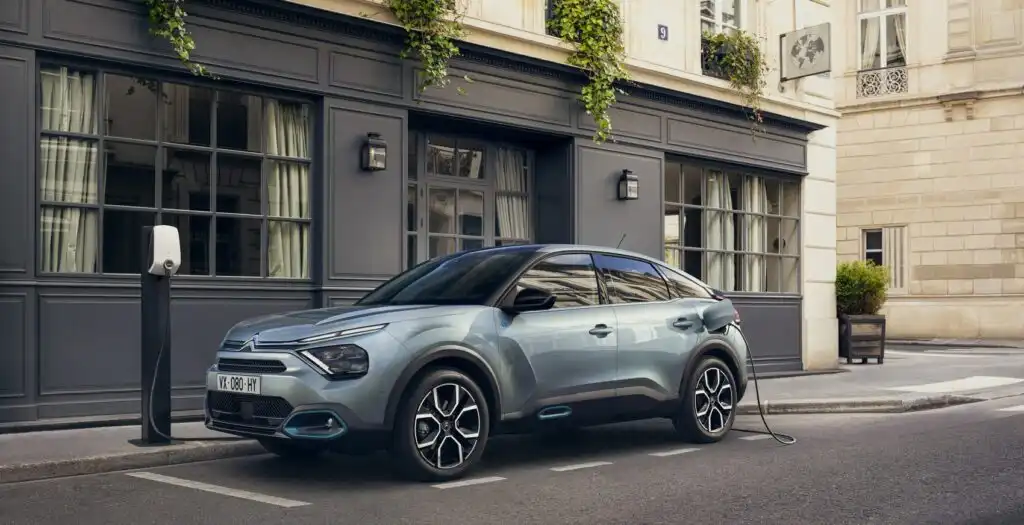
The Citroen C4 III, specifically the 1.2 PureTech 130 horsepower variant, represents a significant evolution in Citroen’s compact car lineage. Introduced in December 2020 as part of the Phase I update of the third-generation C4, this model aimed to blend comfort, practicality, and modern technology. Positioned as a mid-range offering within the C4 lineup, it served as a step up from the base engine options while remaining more accessible than the plug-in hybrid or higher-trim petrol variants. Production continued through October 2024, solidifying its place as a popular choice in the European market, where the C4 competes with vehicles like the Volkswagen Golf, Peugeot 308, and Ford Focus. The C4 III moved away from traditional hatchback categorization, adopting a more crossover-inspired design, blurring the lines between hatchback and SUV.
Powertrain & Engine Architecture
The heart of this C4 variant is the 1.2-liter PureTech engine, specifically the HNS EB2ADTS code. This is a three-cylinder, turbocharged gasoline engine, part of Citroen’s PureTech family known for its efficiency and responsiveness. The engine utilizes direct fuel injection, a technology that improves combustion efficiency and reduces emissions. The turbocharger, coupled with an intercooler, provides a boost in power and torque, mitigating the typical power deficit often associated with smaller displacement engines. The engine produces 130 horsepower at 5500 rpm and 230 Nm (169.64 lb-ft) of torque at 1750 rpm. This torque figure is particularly noteworthy, providing good low-end grunt for everyday driving. The engine is paired with a 6-speed manual transmission, delivering power to the front wheels. While an automatic transmission was offered on other C4 III models, the 1.2 PureTech 130 hp was primarily available with the manual gearbox.
Driving Characteristics
The 1.2 PureTech 130 hp C4 offers a balanced driving experience. Acceleration from 0 to 100 km/h (0-62 mph) takes approximately 9.9 seconds, which is respectable for a vehicle in this class. The engine feels lively and responsive, particularly in the mid-range, making overtaking maneuvers relatively effortless. The manual transmission is well-matched to the engine, with smooth gear changes and a well-defined clutch feel. Compared to the lower-powered 1.2 PureTech variants, the 130 hp version provides a noticeable increase in performance. However, it doesn’t offer the same level of outright speed as the more expensive petrol or plug-in hybrid options. The C4’s suspension prioritizes comfort, absorbing bumps and imperfections in the road effectively. This makes it a pleasant vehicle for long journeys, although it may exhibit some body roll during spirited cornering.
Equipment & Trim Levels
The 1.2 PureTech 130 hp C4 typically came equipped with a generous amount of standard features. These included a 10-inch touchscreen infotainment system with Apple CarPlay and Android Auto compatibility, automatic climate control, rear parking sensors, and a suite of safety features such as lane departure warning and automatic emergency braking. Higher trim levels added features like a digital instrument cluster, adaptive cruise control, and a panoramic sunroof. Interior upholstery typically consisted of cloth seats, although leather options were available. The dashboard design is modern and minimalist, with a focus on user-friendliness.
Chassis & Braking
The C4 III utilizes a McPherson strut front suspension and a semi-independent coil spring rear suspension. This setup provides a good balance between comfort and handling. The front brakes are ventilated discs, while the rear brakes are solid discs. ABS (Anti-lock Braking System) is standard, providing enhanced braking performance in emergency situations. The steering is electrically assisted, offering a light and precise feel.
Market Reception & Comparison
The Citroen C4 III 1.2 PureTech 130 hp received generally positive reviews from automotive critics. It was praised for its comfortable ride, efficient engine, and stylish design. However, some critics noted that the interior materials could be of higher quality. Compared to other trims in the C4 lineup, the 1.2 PureTech 130 hp offered a compelling blend of performance and fuel economy. It was more affordable than the plug-in hybrid variant, while providing more power than the lower-powered petrol engines. Fuel economy figures of around 4.8 l/100 km (49 US mpg) were considered competitive for its class.
Legacy
The 1.2 PureTech engine, while generally reliable, has been subject to some reports of timing chain issues in certain model years. Regular maintenance, including oil changes and adherence to Citroen’s recommended service intervals, is crucial for ensuring the longevity of this powertrain. In the used car market, the C4 III 1.2 PureTech 130 hp represents a good value proposition, offering a comfortable and well-equipped vehicle at a reasonable price. Its blend of practicality, efficiency, and style continues to appeal to buyers looking for a versatile and modern compact car.