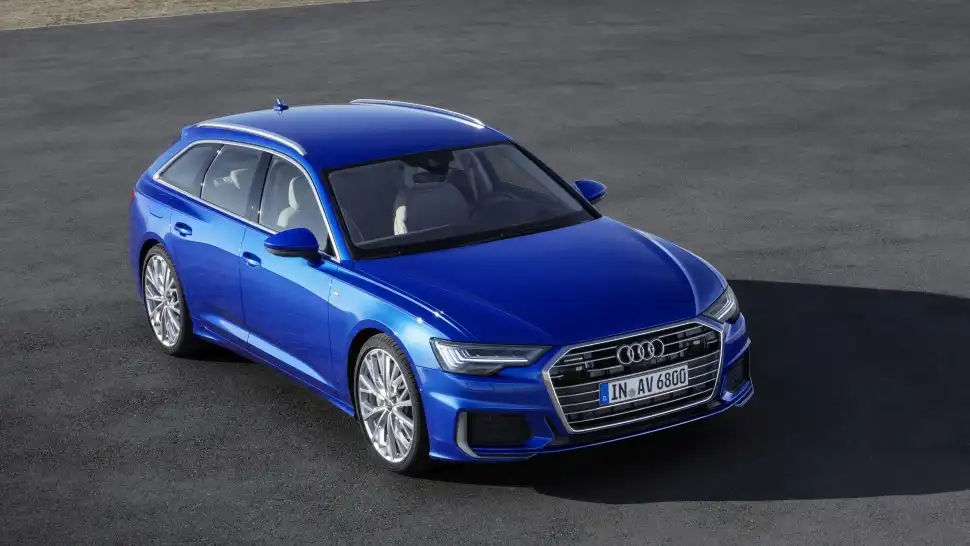
The Audi A6 Avant (C8) 50 TFSI e, produced from February 2021 to May 2023, represents Audi’s foray into plug-in hybrid technology within the executive wagon segment. Positioned as a mid-to-high range offering within the C8 A6 Avant lineup, it combines a 2.0-liter turbocharged four-cylinder gasoline engine with an electric motor and a lithium-ion battery pack, delivering a combined system output of 299 horsepower. This variant aimed to provide a balance of performance, efficiency, and practicality, appealing to buyers seeking a premium wagon with reduced emissions and the capability of all-electric driving. It’s built on the MLB Evo platform, shared with other Volkswagen Group vehicles like the Porsche Macan and Audi Q7.
Technical Specifications
| Brand | Audi |
| Model | A6 |
| Generation | A6 Avant (C8) |
| Type | 50 TFSI e (299 Hp) Plug-in Hybrid quattro ultra S tronic |
| Start of production | February, 2021 |
| End of production | May, 2023 |
| Powertrain Architecture | PHEV (Plug-in Hybrid Electric Vehicle) |
| Body type | Station wagon (estate) |
| Seats | 5 |
| Doors | 5 |
| Combined fuel consumption (WLTP) | 1.2-1.5 l/100 km (196 – 156.8 US mpg, 235.4 – 188.3 UK mpg, 83.3 – 66.7 km/l) |
| CO2 emissions (WLTP) | 30-36 g/km |
| Fuel consumption (NEDC) – combined | 1.5-1.6 l/100 km (156.8 – 147 US mpg, 188.3 – 176.6 UK mpg, 66.7 – 62.5 km/l) |
| CO2 emissions (NEDC) | 34-37 g/km |
| Fuel Type | Petrol / electricity |
| Acceleration 0 – 100 km/h | 6.3 sec |
| Acceleration 0 – 62 mph | 6.3 sec |
| Acceleration 0 – 60 mph | 6 sec |
| Maximum speed | 250 km/h (155.34 mph), Electronically limited |
| Emission standard | Euro 6d-ISC-FCM |
| Weight-to-power ratio | 6.9 kg/Hp, 144.1 Hp/tonne |
| Weight-to-torque ratio | 4.6 kg/Nm, 216.9 Nm/tonne |
| Gross battery capacity | 17.9 kWh |
| Net (usable) battery capacity | 14.4 kWh |
| Battery technology | Lithium-ion (Li-Ion) |
| Battery location | Under the trunk |
| All-electric range (WLTP) | 60-66 km (37.28 – 41.01 mi) |
| Average Energy consumption (NEDC) | 17.5-18.1 kWh/100 km (28.16 – 29.13 kWh/100 mi, 120 – 116 MPGe, 5.7 – 5.5 km/kWh, 3.6 – 3.4 mi/kWh) |
| Max speed (electric) | 135 km/h (83.89 mph) |
| Electric motor power | 143 Hp |
| Electric motor Torque | 350 Nm (258.15 lb.-ft.) |
| Electric motor location | Between the combustion engine and the transmission |
| System power | 299 Hp |
| System torque | 450 Nm (331.9 lb.-ft.) |
| Power | 265 Hp @ 5250-6500 rpm |
| Torque | 370 Nm @ 1600-4500 rpm (272.9 lb.-ft. @ 1600-4500 rpm) |
| Engine layout | Front, Longitudinal |
| Engine Model/Code | DLGA |
| Engine displacement | 1984 cm3 (121.07 cu. in.) |
| Number of cylinders | 4 |
| Engine configuration | Inline |
| Cylinder Bore | 82.5 mm (3.25 in.) |
| Piston Stroke | 92.8 mm (3.65 in.) |
| Compression ratio | 9.6:1 |
| Number of valves per cylinder | 4 |
| Fuel injection system | Direct injection |
| Engine aspiration | Turbocharger, Intercooler |
| Valvetrain | DOHC |
| Engine oil capacity | 5.2 l (5.49 US qt | 4.58 UK qt) |
| Kerb Weight | 2075 kg (4574.59 lbs.) |
| Max. weight | 2675 kg (5897.37 lbs.) |
| Max load | 600 kg (1322.77 lbs.) |
| Trunk (boot) space – minimum | 405 l (14.3 cu. ft.) |
| Trunk (boot) space – maximum | 1535 l (54.21 cu. ft.) |
| Fuel tank capacity | 52 l (13.74 US gal | 11.44 UK gal) |
| Max. roof load | 100 kg (220.46 lbs.) |
| Permitted trailer load with brakes (12%) | 2000 kg (4409.25 lbs.) |
| Permitted trailer load without brakes | 750 kg (1653.47 lbs.) |
| Permitted towbar download | 95 kg (209.44 lbs.) |
| Length | 4939 mm (194.45 in.) |
| Width | 1886 mm (74.25 in.) |
| Width including mirrors | 2110 mm (83.07 in.) |
| Height | 1467 mm (57.76 in.) |
| Wheelbase | 2924 mm (115.12 in.) |
| Front track | 1630 mm (64.17 in.) |
| Rear (Back) track | 1617 mm (63.66 in.) |
| Front overhang | 920 mm (36.22 in.) |
| Rear overhang | 1095 mm (43.11 in.) |
| Drag coefficient (Cd) | 0.29 |
| Minimum turning circle (turning diameter) | 12.1 m (39.7 ft.) |
| Drivetrain Architecture | The Internal combustion engine (ICE) and the electric motor permanently drive the front wheels of the vehicle, capable of running in full electric or mixed mode, and if necessary through the electrically or mechanically controlled clutch, the rear wheels are driven. |
| Drive wheel | All wheel drive (4×4) |
| Number of gears and type of gearbox | 7 gears, automatic transmission S tronic |
| Front suspension | Independent multi-link suspension, Transverse stabilizer |
| Rear suspension | Independent multi-link suspension, Transverse stabilizer |
| Front brakes | Ventilated discs |
| Rear brakes | Ventilated discs |
| Assisting systems | ABS (Anti-lock braking system) |
| Steering type | Steering rack and pinion |
| Power steering | Electric Steering |
| Tires size | 235/55 R18; 245/45 R19; 255/40 R20 |
| Wheel rims size | 8J x 18; 8.5J x 19; 8.5J x 20 |
Powertrain & Engine Architecture
At the heart of the A6 Avant 50 TFSI e lies a 2.0-liter inline-four cylinder gasoline engine, designated as part of the EA888 engine family and specifically coded as DLGA. This engine utilizes direct fuel injection and is coupled with a single twin-scroll turbocharger and intercooler, producing 265 horsepower at 5250-6500 rpm and 370 Nm (272.9 lb-ft) of torque between 1600-4500 rpm. The engine features a DOHC valvetrain with four valves per cylinder. Integrated with this is a 143 hp electric motor, powered by a 17.9 kWh (gross) / 14.4 kWh (net) lithium-ion battery pack located under the trunk floor. The electric motor delivers 350 Nm (258.15 lb-ft) of torque. The combined system output is 299 hp and 450 Nm (331.9 lb-ft). Power is delivered to all four wheels via Audi’s quattro all-wheel-drive system and a seven-speed S tronic dual-clutch automatic transmission. The transmission is crucial for seamless transitions between electric, hybrid, and gasoline power modes.
Driving Characteristics
The 50 TFSI e offers a distinct driving experience compared to its gasoline-only or diesel counterparts. In electric-only mode, it provides near-silent acceleration and a range of 60-66 km (37-41 miles) WLTP, sufficient for many daily commutes. The electric motor’s instant torque provides brisk off-the-line acceleration. When the battery is depleted or more power is demanded, the gasoline engine seamlessly kicks in. The combined power output results in a 0-62 mph (0-100 km/h) time of 6.3 seconds and a limited top speed of 155 mph (250 km/h). The S tronic transmission provides quick and precise gear changes, enhancing the overall responsiveness. Compared to the A6 45 TFSI (2.0L 261 hp), the 50 TFSI e offers similar overall performance but with the added benefit of electric driving. Compared to the A6 40 TDI (2.0L diesel), the hybrid offers quicker acceleration but may feel slightly less refined at higher speeds due to the gasoline engine’s characteristics.
Equipment & Trim Levels
The A6 Avant 50 TFSI e typically came well-equipped, reflecting its position as a premium offering. Standard features included Audi’s Virtual Cockpit digital instrument cluster, a touchscreen infotainment system with navigation, leather upholstery, three-zone automatic climate control, and a suite of driver-assistance systems such as adaptive cruise control, lane departure warning, and automatic emergency braking. Optional extras included features like a Bang & Olufsen sound system, massaging front seats, and a head-up display. Trim levels varied by market, but generally offered options for upgraded interior materials and exterior styling packages.
Chassis & Braking
The A6 Avant 50 TFSI e utilizes an independent multi-link suspension setup for both the front and rear axles, providing a comfortable and controlled ride. A transverse stabilizer bar is included on both axles to reduce body roll during cornering. The vehicle is equipped with ventilated disc brakes on all four wheels, providing ample stopping power. ABS (Anti-lock Braking System) is standard. Due to the added weight of the battery pack, the suspension was often tuned slightly firmer compared to the standard A6 Avant to maintain handling balance.
Market Reception & Comparison
The A6 Avant 50 TFSI e was generally well-received by automotive critics, who praised its blend of performance, efficiency, and practicality. The ability to drive in electric-only mode was a significant selling point, particularly for urban commuters. Fuel economy figures of 1.2-1.5 l/100 km (WLTP) were impressive, significantly lower than those of comparable gasoline or diesel-powered wagons. However, some critics noted the reduced trunk space due to the battery pack and the higher price compared to non-hybrid A6 variants. Compared to the A6 45 TFSI, the 50 TFSI e offered lower running costs but a higher initial investment. Against competitors like the BMW 530e xDrive Touring and Mercedes-Benz E 300 e Estate, the A6 Avant 50 TFSI e held its own in terms of performance and technology.
Legacy
The Audi A6 Avant 50 TFSI e represents an important step in Audi’s electrification strategy. While production ended in May 2023, these models are now appearing on the used car market. The powertrain has proven to be relatively reliable, with the main concerns revolving around battery degradation over time, as with all plug-in hybrids. The combination of a proven gasoline engine and a well-integrated electric motor has resulted in a durable and efficient powertrain. As demand for plug-in hybrid vehicles continues to grow, the A6 Avant 50 TFSI e is likely to remain a desirable option for buyers seeking a premium wagon with a reduced environmental impact.