
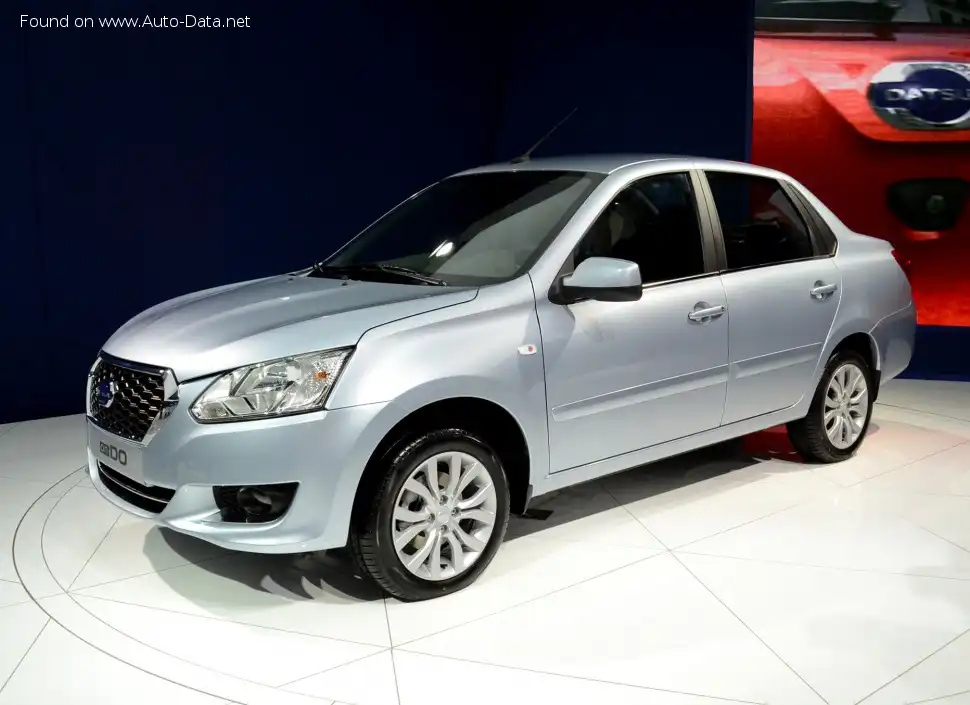
The Datsun on-DO 1.6 (87 hp) Automatic, produced from 2014 onwards, represents a significant entry in the subcompact sedan segment, primarily targeted towards emerging markets. Built by the Russian subsidiary of the Japanese automaker, the on-DO was designed to offer affordable and reliable transportation. This particular variant, featuring a 1.6-liter gasoline engine paired with a four-speed automatic transmission, occupied the mid-range position within the on-DO lineup, offering a balance between cost and convenience. It was based on the B0 platform, shared with other Renault-Nissan Alliance vehicles, and aimed to provide a practical and economical option for families and first-time car buyers.
Technical Specifications
| Brand | Datsun |
| Model | on-DO |
| Generation | on-DO |
| Type (Engine) | 1.6 (87 Hp) Automatic |
| Start of production | 2014 |
| Powertrain Architecture | Internal Combustion engine |
| Body type | Sedan |
| Seats | 5 |
| Doors | 4 |
| Fuel consumption (urban) | 10.4 l/100 km (22.6 US mpg) |
| Fuel consumption (extra urban) | 6.1 l/100 km (38.6 US mpg) |
| Fuel consumption (combined) | 7.7 l/100 km (30.5 US mpg) |
| Fuel Type | Petrol (Gasoline) |
| Acceleration 0 – 100 km/h | 14.4 sec |
| Acceleration 0 – 62 mph | 14.4 sec |
| Acceleration 0 – 60 mph | 13.7 sec |
| Maximum speed | 166 km/h (103.15 mph) |
| Weight-to-power ratio | 13.3 kg/Hp |
| Weight-to-torque ratio | 8.3 kg/Nm |
| Power | 87 Hp @ 5100 rpm |
| Torque | 140 Nm @ 3800 rpm (103.26 lb.-ft. @ 3800 rpm) |
| Engine layout | Front, Transverse |
| Engine displacement | 1596 cm3 (97.39 cu. in.) |
| Number of cylinders | 4 |
| Engine configuration | Inline |
| Cylinder Bore | 82 mm (3.23 in.) |
| Piston Stroke | 75.6 mm (2.98 in.) |
| Compression ratio | 10.6:1 |
| Number of valves per cylinder | 2 |
| Fuel injection system | Multi-port manifold injection |
| Engine aspiration | Naturally aspirated |
| Engine oil capacity | 4.1 l (4.33 US qt | 3.61 UK qt) |
| Coolant capacity | 7.84 l (8.28 US qt | 6.9 UK qt) |
| Kerb Weight | 1160 kg (2557.36 lbs.) |
| Max. weight | 1560 kg (3439.21 lbs.) |
| Max load | 400 kg (881.85 lbs.) |
| Trunk (boot) space – minimum | 530 l (18.72 cu. ft.) |
| Fuel tank capacity | 50 l (13.21 US gal | 11 UK gal) |
| Length | 4337 mm (170.75 in.) |
| Width | 1700 mm (66.93 in.) |
| Height | 1500 mm (59.06 in.) |
| Wheelbase | 2476 mm (97.48 in.) |
| Ride height (ground clearance) | 174 mm (6.85 in.) |
| Drivetrain Architecture | Front wheel drive |
| Number of gears | 4 |
| Gearbox type | Automatic transmission |
| Front brakes | Ventilated discs |
| Rear brakes | Drum |
| Assisting systems | ABS (Anti-lock braking system) |
| Tires size | 185/60 R14 |
| Wheel rims size | 5.5J x 14 ET35 |
Powertrain & Engine Architecture
The heart of the on-DO 1.6 Automatic is the K4M 1.6-liter inline-four cylinder engine. This engine, a product of the Renault-Nissan Alliance, is known for its simplicity and durability. It features a single overhead camshaft (SOHC) design with two valves per cylinder. Fuel delivery is managed by a multi-point fuel injection system, providing adequate, though not exceptional, performance. The engine produces 87 horsepower at 5100 rpm and 140 Nm (103 lb-ft) of torque at 3800 rpm. The four-speed automatic transmission, while providing convenience, is a relatively dated design. It features traditional hydraulic control and lacks the efficiency of more modern transmissions with more gears. The transmission’s gear ratios are tuned for fuel economy and smooth operation rather than sporty acceleration.
Driving Characteristics
The on-DO 1.6 Automatic delivers a comfortable, if uninspiring, driving experience. Acceleration is modest, taking approximately 14.4 seconds to reach 62 mph (100 km/h). The four-speed automatic transmission contributes to this, as it lacks the close ratios needed for quick shifts and optimal engine performance. Compared to the five-speed manual version of the same engine, the automatic is noticeably slower. The automatic transmission prioritizes smooth shifts and ease of use, making it well-suited for city driving. However, on the highway, the engine can feel strained when overtaking or climbing hills. The suspension is tuned for comfort, absorbing bumps and imperfections in the road reasonably well.
Equipment & Trim Levels
The on-DO 1.6 Automatic typically came with a basic level of equipment. Standard features included power steering, central locking, electric front windows, and an audio system with USB connectivity. Air conditioning was often an optional extra, as were features like alloy wheels and fog lights. Interior upholstery was typically cloth, and the dashboard featured a simple, functional design. Higher trim levels offered upgrades such as a more sophisticated audio system, improved interior trim materials, and additional safety features.
Chassis & Braking
The on-DO utilizes a front-wheel-drive layout with a MacPherson strut suspension in the front and a torsion beam suspension in the rear. The front brakes are ventilated discs, providing adequate stopping power, while the rear brakes are drums, a cost-saving measure common in this segment. Anti-lock Braking System (ABS) was standard, enhancing safety. The chassis is relatively lightweight, contributing to the car’s fuel efficiency, but it doesn’t offer particularly sporty handling characteristics. The suspension is tuned for comfort, prioritizing ride quality over precise handling.
Market Reception & Comparison
The Datsun on-DO 1.6 Automatic was generally well-received in its target markets as an affordable and practical sedan. Critics noted its spacious interior and reasonable fuel economy. However, the dated four-speed automatic transmission and relatively low power output were common criticisms. Compared to other trims in the on-DO lineup, the 1.6 Automatic offered a compromise between performance and fuel efficiency. The 1.6 manual version provided better acceleration and fuel economy, while the diesel variants offered even greater fuel efficiency but at a higher initial cost. Competitors in this segment included the Lada Logan and the Hyundai Solaris, both of which offered similar levels of practicality and affordability.
Legacy
The Datsun on-DO, and specifically the 1.6 Automatic variant, has established a reputation for reliability and low running costs. The K4M engine is known for its durability, and the simple automatic transmission, while not particularly sophisticated, is generally reliable if properly maintained. In the used car market, the on-DO 1.6 Automatic remains an attractive option for budget-conscious buyers seeking a dependable and affordable sedan. Parts availability can be a concern in some regions, but the engine’s widespread use in other Renault-Nissan vehicles helps to mitigate this issue. While not a performance car, the on-DO 1.6 Automatic served its purpose as a practical and economical mode of transportation for many drivers.
