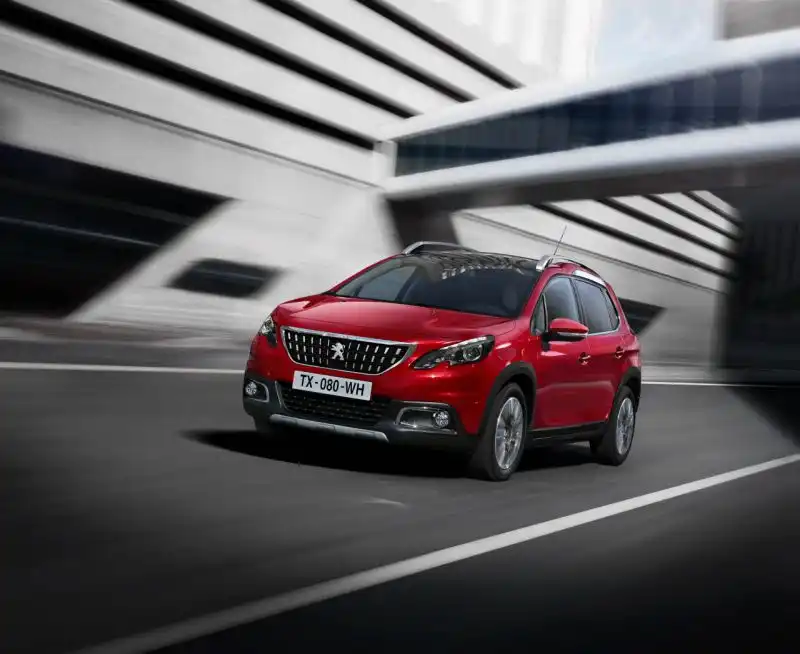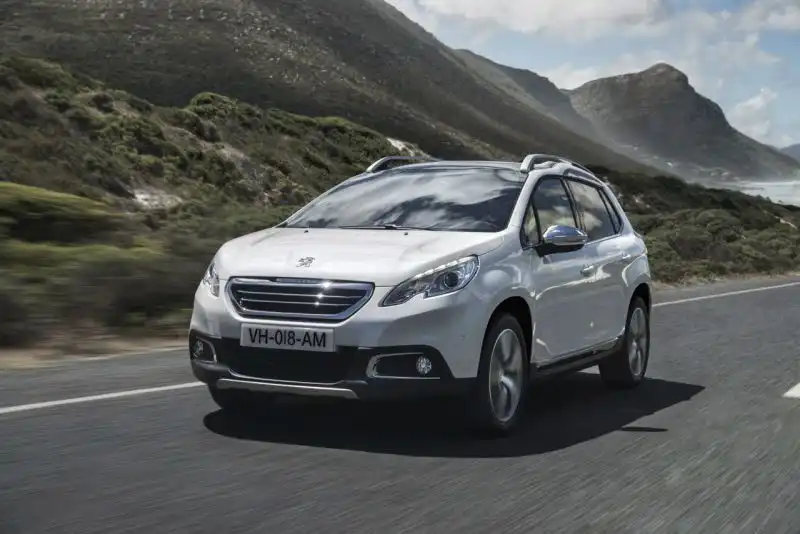
The Peugeot 2008 1.2 VTi, producing 82 horsepower, was an entry-level variant of the first-generation 2008 (T8) model, produced between 2013 and 2015. Positioned as the most affordable option in the 2008 lineup, it aimed to attract buyers seeking a stylish and practical subcompact SUV with reasonable running costs. This model played a significant role in establishing the 2008 as a popular choice in the European market, offering a blend of French design and accessible technology. It was built on the PF1 platform, shared with other Peugeot and Citroën vehicles of the era.
Technical Specifications
| Brand | Peugeot |
| Model | 2008 |
| Generation | 2008 I |
| Type (Engine) | 1.2 VTi (82 Hp) |
| Start of production | 2013 |
| End of production | 2015 |
| Powertrain Architecture | Internal Combustion engine |
| Body type | SUV, Crossover |
| Seats | 5 |
| Doors | 5 |
| Fuel consumption (urban) | 6 l/100 km (39.2 US mpg, 47.1 UK mpg, 16.7 km/l) |
| Fuel consumption (extra urban) | 4.3 l/100 km (54.7 US mpg, 65.7 UK mpg, 23.3 km/l) |
| Fuel consumption (combined) | 4.9 l/100 km (48 US mpg, 57.6 UK mpg, 20.4 km/l) |
| Fuel Type | Petrol (Gasoline) |
| Acceleration 0 – 100 km/h | 13.5 sec |
| Acceleration 0 – 62 mph | 13.5 sec |
| Acceleration 0 – 60 mph | 12.8 sec |
| Maximum speed | 169 km/h (105.01 mph) |
| Emission standard | Euro 5 |
| Weight-to-power ratio | 12.7 kg/Hp, 78.5 Hp/tonne |
| Weight-to-torque ratio | 8.9 kg/Nm, 112.9 Nm/tonne |
| Power | 82 Hp @ 6000 rpm |
| Power per litre | 68.4 Hp/l |
| Torque | 118 Nm @ 2750 rpm (87.03 lb.-ft. @ 2750 rpm) |
| Engine layout | Front, Transverse |
| Engine Model/Code | HMZ EB2F |
| Engine displacement | 1199 cm3 (73.17 cu. in.) |
| Number of cylinders | 3 |
| Engine configuration | Inline |
| Number of valves per cylinder | 4 |
| Fuel injection system | Multi-port manifold injection |
| Engine aspiration | Naturally aspirated engine |
| Engine oil capacity | 3.25 l (3.43 US qt, 2.86 UK qt) |
| Kerb Weight | 1045 kg (2303.83 lbs.) |
| Max. weight | 1582 kg (3487.71 lbs.) |
| Max load | 537 kg (1183.88 lbs.) |
| Trunk (boot) space – minimum | 350 l (12.36 cu. ft.) |
| Trunk (boot) space – maximum | 1194 l (42.17 cu. ft.) |
| Fuel tank capacity | 50 l (13.21 US gal, 11 UK gal) |
| Length | 4159 mm (163.74 in.) |
| Width | 1739 mm (68.46 in.) |
| Height | 1556 mm (61.26 in.) |
| Wheelbase | 2537 mm (99.88 in.) |
| Minimum turning circle | 10.4 m (34.12 ft.) |
| Drivetrain Architecture | The Internal combustion engine (ICE) drives the front wheels of the vehicle. |
| Drive wheel | Front wheel drive |
| Number of gears | 5 gears, manual transmission |
| Front suspension | Independent type McPherson |
| Rear suspension | Elastic beam |
| Front brakes | Ventilated discs |
| Rear brakes | Ventilated discs |
| Assisting systems | ABS (Anti-lock braking system) |
| Steering type | Steering rack and pinion |
INTRODUCTION
The Peugeot 2008 1.2 VTi (82 hp) was introduced as part of Peugeot’s expansion into the burgeoning compact SUV segment. Launched in 2013, the first-generation 2008 aimed to offer a more stylish and versatile alternative to traditional hatchback options. The 1.2 VTi variant served as the entry point to the range, targeting budget-conscious buyers who prioritized fuel efficiency and practicality over outright performance. It was a key model in Peugeot’s strategy to broaden its appeal and attract a new demographic to the brand. The engine, part of Peugeot’s PureTech family, was designed to offer a balance of efficiency and drivability.
Powertrain & Engine Architecture
At the heart of the 2008 1.2 VTi lies the HMZ (EB2F) engine, a 1.2-liter, naturally aspirated three-cylinder petrol engine. This engine utilizes multi-point fuel injection and features four valves per cylinder. The EB2F engine is known for its compact size and lightweight construction, contributing to the 2008’s overall efficiency. The engine produces 82 horsepower at 6000 rpm and 118 Nm (87 lb-ft) of torque at 2750 rpm. This power is delivered to the front wheels through a five-speed manual transmission. The transmission was chosen for its simplicity and cost-effectiveness, aligning with the entry-level positioning of this variant. While not known for rapid acceleration, the engine’s torque curve provides adequate responsiveness for everyday driving situations.
Driving Characteristics
The 2008 1.2 VTi’s driving experience is characterized by its relaxed and economical nature. Acceleration from 0 to 62 mph takes approximately 13.5 seconds, and the top speed is 105 mph. The five-speed manual transmission requires frequent shifting to maintain momentum, particularly when overtaking or climbing hills. The engine’s limited power output is noticeable, especially when fully loaded. However, the light steering and comfortable suspension make it well-suited for urban driving. Compared to higher-powered versions of the 2008, such as those equipped with the 1.6 THP engine, the 1.2 VTi offers a significantly less engaging driving experience, but compensates with improved fuel economy. The gear ratios are optimized for fuel efficiency rather than performance.
Equipment & Trim Levels
The 1.2 VTi variant of the 2008 typically came with a modest level of standard equipment. Features generally included air conditioning, electric front windows, a basic audio system with USB connectivity, and ABS brakes. Safety features such as ESP (Electronic Stability Program) were often included as standard. Interior upholstery was typically cloth, and the dashboard featured a functional, if somewhat basic, design. Optional extras included alloy wheels, a touchscreen infotainment system, rear parking sensors, and cruise control. Trim levels varied slightly depending on the market, but the 1.2 VTi generally represented the base specification.
Chassis & Braking
The 2008 1.2 VTi utilizes a McPherson strut front suspension and an elastic beam rear suspension. This setup provides a comfortable ride quality, absorbing bumps and imperfections in the road surface effectively. The front brakes are ventilated discs, while the rear brakes are also ventilated discs. ABS (Anti-lock Braking System) is standard, providing enhanced braking performance in emergency situations. The steering is a rack and pinion system, offering light and precise control. The relatively low weight of the 1.2 VTi variant (approximately 1045 kg or 2304 lbs) contributes to its nimble handling characteristics.
Market Reception & Comparison
The Peugeot 2008 1.2 VTi was generally well-received by critics as an affordable and practical entry into the compact SUV segment. Its fuel economy, averaging around 48 US mpg, was a key selling point. However, some reviewers criticized its lack of power and the need for frequent gear changes. Compared to other engines in the 2008 lineup, such as the 1.6-liter petrol and diesel options, the 1.2 VTi offered the lowest performance but the best fuel efficiency. It competed with other entry-level compact SUVs like the Renault Captur and Nissan Juke, offering a more stylish alternative to some of its rivals.
Legacy
The Peugeot 2008 1.2 VTi has proven to be a relatively reliable powertrain, with few widespread mechanical issues reported. The EB2F engine, while not known for its longevity compared to some of Peugeot’s older engines, generally provides dependable service with regular maintenance. On the used car market, the 1.2 VTi variant remains an affordable option for buyers seeking a practical and economical SUV. Its low running costs and relatively simple mechanical design make it an attractive choice for first-time car owners or those on a tight budget. However, potential buyers should be aware of the engine’s limited power output and the need for regular servicing to maintain its reliability.