
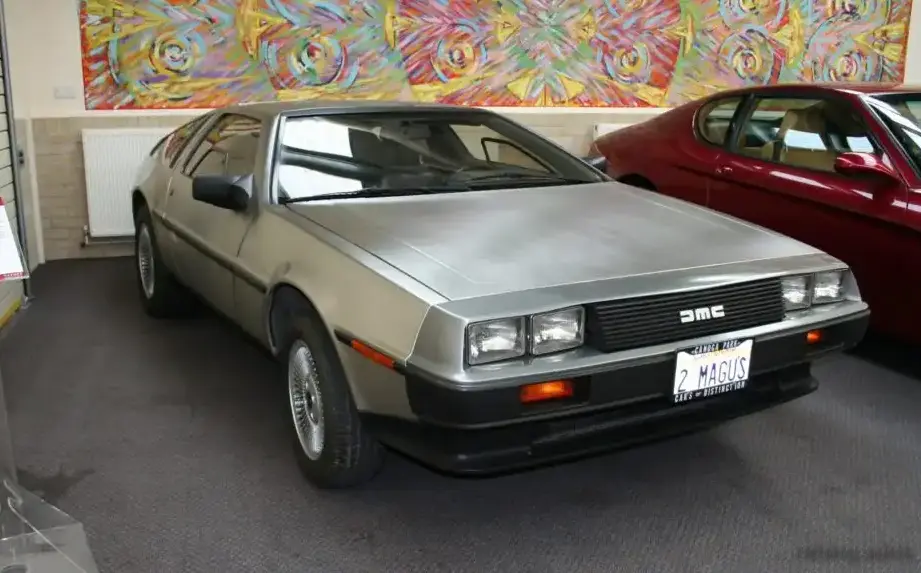
The De Lorean DMC-12, powered by the 2.9-liter V6 engine producing 145 horsepower, represents a unique and often misunderstood chapter in automotive history. Produced between 1981 and 1982, the DMC-12 was the sole model offered by the De Lorean Motor Company, founded by John Z. De Lorean. The car gained notoriety for its stainless steel body panels and gull-wing doors, features intended to emphasize durability and futuristic styling. While the DMC-12 aimed to compete in the sports car market, particularly against European grand tourers, its relatively modest performance and build quality issues ultimately led to the company’s bankruptcy. This specific 145 hp variant, paired exclusively with a five-speed manual transmission, was the standard configuration throughout the car’s brief production run.
Technical Specifications
| Brand | De Lorean |
| Model | DMC-12 |
| Generation | DMC-12 |
| Type (Engine) | 2.9 V6 (145 Hp) |
| Start of production | 1981 |
| End of production | 1982 |
| Powertrain Architecture | Internal Combustion engine |
| Body type | Coupe |
| Seats | 2 |
| Doors | 2 |
| Fuel Type | Petrol (Gasoline) |
| Maximum speed | 210 km/h (130.49 mph) |
| Weight-to-power ratio | 8.5 kg/Hp, 117.6 Hp/tonne |
| Weight-to-torque ratio | 5.5 kg/Nm, 182.5 Nm/tonne |
| Power | 145 Hp @ 5500 rpm |
| Power per litre | 50.9 Hp/l |
| Torque | 225 Nm @ 2750 rpm (165.95 lb.-ft. @ 2750 rpm) |
| Engine layout | Rear, Longitudinal |
| Engine Model/Code | ZMJ-159 |
| Engine displacement | 2849 cm3 (173.86 cu. in.) |
| Number of cylinders | 6 |
| Engine configuration | V-engine |
| Cylinder Bore | 91 mm (3.58 in.) |
| Piston Stroke | 73 mm (2.87 in.) |
| Compression ratio | 8.8:1 |
| Number of valves per cylinder | 2 |
| Fuel injection system | Multi-port manifold injection |
| Engine aspiration | Naturally aspirated engine |
| Engine oil capacity | 6.5 l (6.87 US qt | 5.72 UK qt) |
| Coolant | 11 l (11.62 US qt | 9.68 UK qt) |
| Kerb Weight | 1233 kg (2718.3 lbs) |
| Max. weight | 1471 kg (3243 lbs) |
| Max load | 238 kg (524.7 lbs) |
| Trunk (boot) space – minimum | 396 l (13.98 cu. ft.) |
| Fuel tank capacity | 52 l (13.74 US gal | 11.44 UK gal) |
| Length | 4267 mm (167.99 in.) |
| Width | 1989 mm (78.31 in.) |
| Height | 1140 mm (44.88 in.) |
| Wheelbase | 2408 mm (94.8 in.) |
| Front track | 1590 mm (62.6 in.) |
| Rear (Back) track | 1588 mm (62.52 in.) |
| Drag coefficient (Cd) | 0.34 |
| Minimum turning circle (turning diameter) | 12.8 m (41.99 ft.) |
| Drivetrain Architecture | The Internal combustion engine (ICE) drives the rear wheels of the vehicle. |
| Drive wheel | Rear wheel drive |
| Number of gears and type of gearbox | 5 gears, manual transmission |
| Front suspension | Independent multi-link suspension |
| Rear suspension | Independent multi-link suspension |
| Front brakes | Disc |
| Rear brakes | Disc |
| Steering type | Steering rack and pinion |
| Tires size | 195/60 R14; 235/60 R15 |
| Wheel rims size | 14; 15 |
Powertrain & Engine Architecture
The heart of the DMC-12 was the “PRV” V6 engine, a collaborative effort between Peugeot, Renault, and Volvo. Designated the ZMJ-159 in De Lorean applications, this 2.849-liter (173.86 cubic inch) engine featured a 90-degree V-angle and a single overhead camshaft per cylinder bank operating two valves per cylinder. The engine utilized multi-port fuel injection, a relatively modern feature for the early 1980s, but its 8.8:1 compression ratio was conservative, likely to accommodate lower octane fuels. The engine produced 145 horsepower at 5500 rpm and 166 lb-ft of torque at 2750 rpm. The sole transmission option was a five-speed manual gearbox, sourced from Citroën. The engine was mounted longitudinally in the rear of the vehicle, contributing to a somewhat challenging weight distribution.
Driving Characteristics
The DMC-12’s driving experience was often described as underwhelming, particularly given its futuristic appearance. The 145 hp engine, while adequate, struggled to propel the relatively heavy (2718 lbs) car with any real urgency. Acceleration to 60 mph took around 8.8 seconds, which was slower than many contemporary sports cars. The rear-wheel-drive layout and independent suspension provided decent handling, but the car was prone to oversteer, especially in wet conditions. The five-speed manual transmission offered precise shifts, but the engine’s narrow powerband required frequent gear changes to maintain momentum. Compared to a hypothetical higher-output version, the 145 hp model prioritized usability over outright performance, making it slightly more forgiving for everyday driving.
Equipment & Trim Levels
The DMC-12 was offered with a fairly limited range of options. Standard equipment included power windows, power door locks, and air conditioning. The interior featured leather upholstery, though the quality was often criticized. A premium sound system was available as an option. The dashboard layout was functional but lacked the sophistication of some European competitors. The stainless steel exterior was a defining feature, requiring minimal paint maintenance, but was prone to showing fingerprints and water spots. There were no distinct trim levels; all DMC-12s were essentially equipped to the same specification.
Chassis & Braking
The DMC-12 utilized a space frame chassis constructed from steel tubes, providing a rigid and lightweight structure. The suspension consisted of independent multi-link setups at both the front and rear, offering a relatively comfortable ride. Brakes were disc brakes on all four wheels, providing adequate stopping power, though they lacked the sophistication of more advanced systems found on some contemporary sports cars. The car’s relatively wide track contributed to its stability, but the rear-biased weight distribution could make it challenging to control in extreme situations.
Market Reception & Comparison
The DMC-12 received mixed reviews from automotive critics. While the car’s styling and stainless steel construction were praised, its performance, build quality, and price were frequently criticized. Compared to other sports cars of the era, such as the Porsche 911 or Chevrolet Corvette, the DMC-12 offered less performance for a similar or higher price. Its fuel economy was also relatively poor, averaging around 16 mpg in city driving and 22 mpg on the highway. The car’s reliability was also a concern, with reports of electrical issues and mechanical failures. The 145 hp engine, while sufficient for everyday driving, lacked the excitement and refinement of some of its competitors.
Legacy
Despite its short production run and commercial failure, the De Lorean DMC-12 has achieved a cult following, largely due to its appearance in the Back to the Future film franchise. The car remains a popular subject for restoration and modification. The PRV V6 engine, while not known for its durability, can be rebuilt and maintained with relative ease. Today, well-maintained DMC-12s command high prices in the used car market, driven by nostalgia and the car’s unique place in automotive history. The 145 hp version, being the only configuration produced, represents the definitive DMC-12 experience, embodying both the car’s innovative design and its inherent limitations.
