
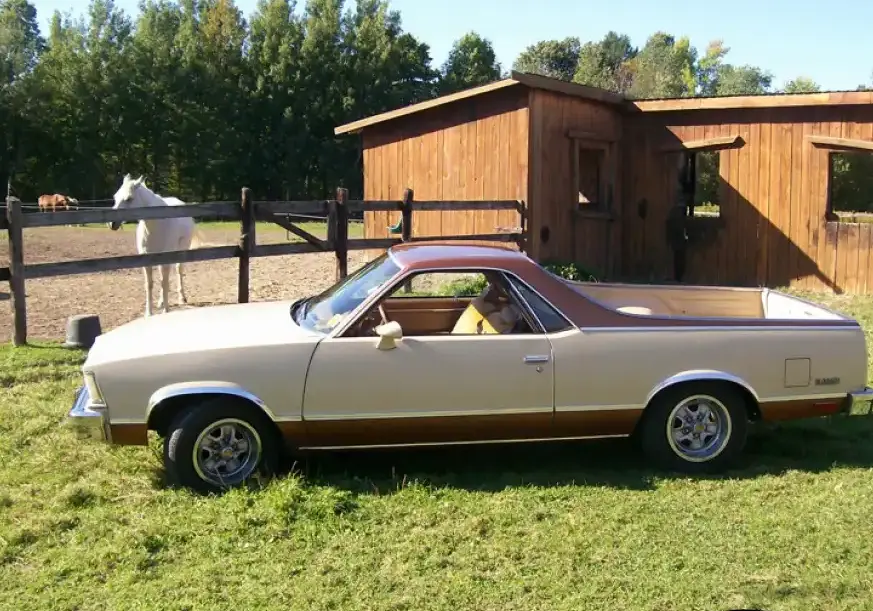
The Chevrolet Malibu El Camino, specifically the 3.8 V6 (115 hp) variant produced between 1980 and 1981, represents a unique chapter in Chevrolet’s history. This model blended the traditional sedan profile with the utility of a pickup truck bed, creating a vehicle often referred to as a “sedan pickup.” It was positioned as a more practical and versatile alternative to traditional coupes, appealing to buyers who needed occasional hauling capabilities without sacrificing passenger comfort. The El Camino shared its platform with the contemporary Chevrolet Malibu, falling within the broader ‘A-body’ family of vehicles produced by General Motors during that era.
Technical Specifications
| Brand | Chevrolet |
| Model | Malibu |
| Generation | Malibu El Camino (Sedan Pickup) |
| Type (Engine) | 3.8 V6 (115 Hp) CAT |
| Start of production | 1980 |
| End of production | 1981 |
| Powertrain Architecture | Internal Combustion engine |
| Body type | Pick-up |
| Seats | 3 |
| Doors | 2 |
| Fuel Type | Petrol (Gasoline) |
| Power | 115 Hp @ 4000 rpm |
| Power per litre | 30.7 Hp/l |
| Torque | 237 Nm @ 2000 rpm / 174.8 lb.-ft. @ 2000 rpm |
| Engine layout | Front, Longitudinal |
| Engine displacement | 3751 cm3 / 228.9 cu. in. |
| Number of cylinders | 6 |
| Engine configuration | V-engine |
| Cylinder Bore | 95 mm / 3.74 in. |
| Piston Stroke | 88.4 mm / 3.48 in. |
| Compression ratio | 8.6:1 |
| Number of valves per cylinder | 2 |
| Fuel injection system | Carburettor |
| Engine aspiration | Naturally aspirated engine |
| Valvetrain | OHV |
| Trunk (boot) space – maximum | 2033 l / 71.79 cu. ft. |
| Fuel tank capacity | 66 l / 17.44 US gal | 14.52 UK gal |
| Length | 5121 mm / 201.61 in. |
| Width | 1826 mm / 71.89 in. |
| Height | 1380 mm / 54.33 in. |
| Wheelbase | 2974 mm / 117.09 in. |
| Front track | 1486 mm / 58.5 in. |
| Rear (Back) track | 1467 mm / 57.76 in. |
| Front overhang | 915 mm / 36.02 in. |
| Rear overhang | 1232 mm / 48.5 in. |
| Ride height (ground clearance) | 136 mm / 5.35 in. |
| Approach angle | 23° |
| Departure angle | 16° |
| Ramp-over (brakeover) angle | 14° |
| Drivetrain Architecture | The Internal combustion engine (ICE) drives the rear wheels of the vehicle. |
| Drive wheel | Rear wheel drive |
| Number of gears and type of gearbox | 3 gears, manual transmission |
| Front suspension | Independent, type McPherson with coil spring and anti-roll bar |
| Rear suspension | dependent spring suspension, Transverse stabilizer, Trailing arm |
| Front brakes | Ventilated discs |
| Rear brakes | Drum |
| Steering type | Steering rack and pinion |
| Tires size | 205/75 R14 |
| Wheel rims size | 6.0J x 14 |
Powertrain & Engine Architecture
The heart of the 1980-1981 Malibu El Camino 3.8 V6 was the Chevrolet 3800 engine, specifically the version equipped with a catalytic converter (CAT). This engine, internally designated with various codes depending on the specific calibration, was a 3.8-liter (231 cubic inch) V6. It featured a 90-degree V-angle and utilized an overhead valve (OHV) valvetrain with two valves per cylinder. Fuel delivery was managed by a two-barrel carburetor, a common setup for the time. The engine’s 8.6:1 compression ratio was a compromise between performance and emissions control, necessitated by the catalytic converter. The 3.8 V6 was known for its relatively smooth operation and decent low-end torque, making it suitable for the El Camino’s intended use as a utility vehicle. The engine was mounted longitudinally in the front of the vehicle, driving the rear wheels.
Driving Characteristics
With 115 horsepower and 175 lb-ft of torque, the 3.8 V6-powered El Camino offered adequate, but not exhilarating, performance. Acceleration was modest, and the three-speed manual transmission, while durable, didn’t allow for particularly quick shifts. Compared to potential V8 options available in other El Camino models, the 3.8 V6 prioritized fuel economy and ease of driving over outright speed. The rear-wheel-drive configuration provided a traditional driving experience, but the El Camino’s relatively long wheelbase and moderate power output meant it wasn’t a particularly sporty vehicle. The suspension, while adequate for everyday use, wasn’t designed for aggressive cornering. The focus was on providing a comfortable ride and sufficient hauling capacity.
Equipment & Trim Levels
The Malibu El Camino 3.8 V6 typically came with a fairly basic level of equipment. Standard features included cloth upholstery, a basic AM radio, and manual windows and locks. Options included upgraded sound systems, air conditioning, and various cosmetic enhancements. The interior was generally functional and utilitarian, reflecting the vehicle’s work-oriented nature. The dashboard layout was typical of early 1980s GM vehicles, with a straightforward design and easy-to-read gauges. The trim level was generally considered entry-level within the El Camino lineup, appealing to buyers who prioritized affordability and practicality.
Chassis & Braking
The El Camino’s chassis was based on the A-body platform, featuring a body-on-frame construction. The front suspension utilized an independent McPherson strut design with coil springs and an anti-roll bar, while the rear suspension employed a traditional leaf spring setup with a transverse stabilizer. This combination provided a reasonable balance between ride comfort and load-carrying capacity. Braking duties were handled by ventilated disc brakes at the front and drum brakes at the rear. The steering system was a rack-and-pinion setup, offering reasonably precise steering feel. The tires were typically 205/75R14, providing adequate grip for everyday driving.
Market Reception & Comparison
The Malibu El Camino 3.8 V6 received mixed reviews from automotive critics. While the vehicle was praised for its unique combination of sedan comfort and pickup truck utility, the 3.8 V6 engine was often criticized for its lack of power. Compared to the more powerful V8 options available in other El Camino models, the 3.8 V6 was seen as a compromise for buyers who prioritized fuel economy and affordability. Fuel economy was respectable for the time, averaging around 18-22 mpg in mixed driving. Reliability was generally good, although the carburetor required periodic maintenance. The 3.8 V6 El Camino appealed to a niche market of buyers who needed occasional hauling capabilities without the expense or complexity of a full-size pickup truck.
Legacy
The Chevrolet Malibu El Camino 3.8 V6, while not a high-performance icon, holds a unique place in automotive history. It represents a creative attempt to blend two popular vehicle types into a single, versatile package. Today, these El Caminos are sought after by collectors and enthusiasts who appreciate their quirky design and classic American styling. The 3.8 V6 engine, while not particularly powerful by modern standards, is known for its durability and relative simplicity. Parts availability is generally good, making these vehicles relatively easy to maintain and restore. The Malibu El Camino 3.8 V6 remains a testament to Chevrolet’s willingness to experiment and cater to a diverse range of customer needs.
