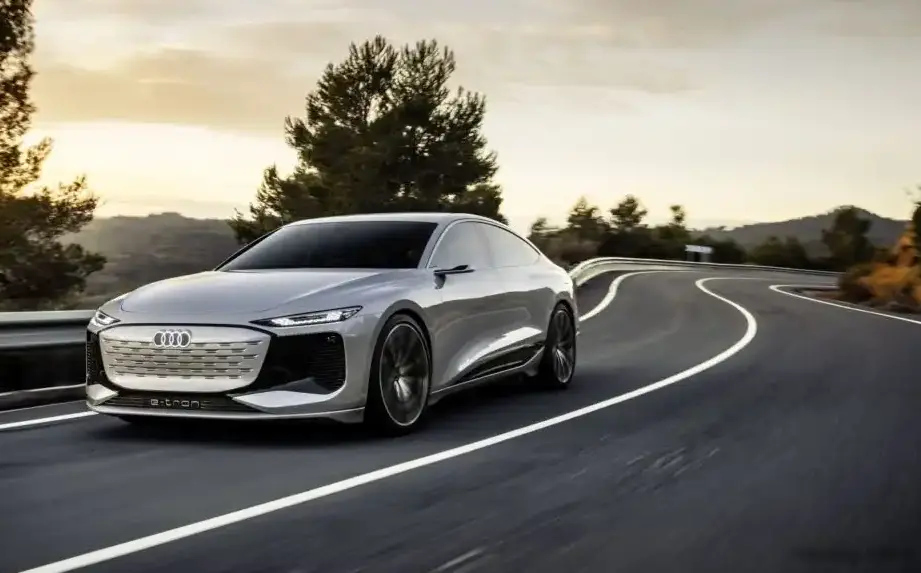
The Audi A6 e-tron concept, unveiled in 2021, represents Audi’s vision for a fully electric luxury sedan. This concept car showcased the potential of the Premium Platform Electric (PPE) architecture, jointly developed with Porsche, and served as a precursor to the production A6 e-tron. The 100 kWh quattro variant, equipped with dual electric motors and a substantial battery pack, aimed to deliver both long-range capability and high performance, positioning itself as a direct competitor to other emerging electric luxury vehicles like the Tesla Model S and Mercedes-Benz EQS. Production of the concept model spanned only the 2021 calendar year, serving primarily as a technology demonstrator and public showcase.
Technical Specifications
| Brand | Audi |
| Model | A6 e-tron |
| Generation | A6 e-tron concept |
| Type (Engine) | 100 kWh (476 Hp) quattro |
| Start of production | 2021 |
| End of production | 2021 |
| Powertrain Architecture | BEV (Electric Vehicle) |
| Body type | Sedan |
| Doors | 4 |
| Fuel Type | Electricity |
| Acceleration 0 – 60 mph (Calculated) | 3.8 sec |
| Gross battery capacity | 100 kWh |
| All-electric range (WLTP) | 700 km (434.96 mi) |
| System power | 476 Hp |
| System torque | 800 Nm (590.05 lb.-ft.) |
| Length | 4960 mm (195.28 in.) |
| Width | 1960 mm (77.17 in.) |
| Height | 1440 mm (56.69 in.) |
| Drag coefficient (Cd) | 0.22 |
| Drivetrain Architecture | One electric motor drives the front wheels, one electric motor drives the rear wheels. |
| Drive wheel | All wheel drive (4×4) |
| Front suspension | Independent multi-link suspension |
| Rear suspension | Independent multi-link suspension |
| Wheel rims size | 22 |
Powertrain & Engine Architecture
The A6 e-tron concept 100 kWh quattro utilizes a dual-motor, all-wheel-drive (quattro) powertrain. Unlike traditional internal combustion engine vehicles, this powertrain consists of two permanently excited synchronous motors – one mounted on the front axle and one on the rear. This configuration allows for precise torque vectoring, enhancing both handling and stability. The 100 kWh battery pack is positioned low in the vehicle floor, contributing to a lower center of gravity and improved dynamics. Audi employed an 800-volt charging architecture, enabling significantly faster charging times compared to the more common 400-volt systems. This allows for the potential to add approximately 300 kilometers (186 miles) of range in just 10 minutes at a compatible DC fast-charging station. The battery management system is crucial for optimizing battery life, performance, and safety, constantly monitoring cell voltages, temperatures, and overall health. The concept car did not detail specific cooling methods, but production versions are expected to employ a sophisticated liquid cooling system for both the battery and motors.
Driving Characteristics
The dual-motor setup delivers a combined output of 476 horsepower and 800 Nm (590.05 lb.-ft.) of torque, resulting in a 0-60 mph acceleration time of approximately 3.8 seconds. The instant torque delivery characteristic of electric motors provides brisk acceleration from a standstill. The quattro all-wheel-drive system distributes power between the front and rear axles dynamically, optimizing traction in various driving conditions. The low center of gravity, thanks to the battery pack’s placement, contributes to stable and confident handling. While the concept car wasn’t subjected to extensive road testing by independent reviewers, simulations and early prototypes suggested a refined and comfortable ride quality. The regenerative braking system captures kinetic energy during deceleration, converting it back into electricity to extend the vehicle’s range. The level of regenerative braking is likely adjustable, allowing drivers to tailor the driving experience to their preferences.
Equipment & Trim Levels
As a concept vehicle, the A6 e-tron showcased a range of advanced technologies and premium features. The interior featured a minimalist design with a focus on sustainable materials. A large, curved OLED display integrated the instrument cluster and infotainment system, providing a seamless user experience. The concept car included advanced driver-assistance systems (ADAS), such as adaptive cruise control, lane keeping assist, and automatic emergency braking. The seats were upholstered in recycled materials, highlighting Audi’s commitment to sustainability. Other notable features included a premium sound system, ambient lighting, and a panoramic sunroof. While the concept didn’t have defined trim levels, the production A6 e-tron is expected to offer various packages and options, allowing customers to customize their vehicles to their liking. These could include upgraded interior materials, advanced audio systems, and enhanced driver-assistance features.
Chassis & Braking
The A6 e-tron concept utilizes an independent multi-link suspension system for both the front and rear axles. This suspension design provides a balance of ride comfort and handling precision. The low vehicle weight, partially due to the absence of a heavy internal combustion engine, contributes to the suspension’s effectiveness. The concept car featured large, 22-inch alloy wheels, enhancing its visual appeal and providing ample grip. The braking system consists of disc brakes on all four wheels, with the potential for carbon-ceramic rotors on higher-performance variants. The electronic stability control (ESC) system works in conjunction with the quattro all-wheel-drive system to maintain vehicle stability during cornering and emergency maneuvers. The steering system is likely to be electrically assisted, providing precise and responsive steering feel.
Market Reception & Comparison
The A6 e-tron concept received positive reception from automotive journalists and enthusiasts, who praised its sleek design, advanced technology, and potential for long-range electric driving. Critics highlighted the importance of the PPE platform and its potential to underpin a range of future electric vehicles from Audi and Porsche. Compared to other electric sedans in the same segment, such as the Tesla Model S and Mercedes-Benz EQS, the A6 e-tron concept aimed to offer a more refined and luxurious driving experience, with a greater emphasis on build quality and interior design. The 800-volt charging architecture was also seen as a significant advantage, potentially reducing charging times compared to competitors. However, some critics noted that the concept car lacked specific details regarding pricing and production timelines.
Legacy
The Audi A6 e-tron concept served as a crucial stepping stone in Audi’s transition to electric mobility. It demonstrated the company’s commitment to developing cutting-edge electric vehicle technology and showcased its vision for the future of luxury sedans. The PPE platform, first previewed by the A6 e-tron concept, is expected to underpin a range of future Audi and Porsche models. While the concept itself was not a production vehicle, its design and technology influenced the development of the upcoming A6 e-tron production model. The long-term reliability of the powertrain components remains to be seen, but Audi’s reputation for engineering excellence suggests that the A6 e-tron will be a durable and dependable electric vehicle. The concept’s impact extends beyond Audi, influencing the broader automotive industry’s shift towards electrification and sustainable mobility.