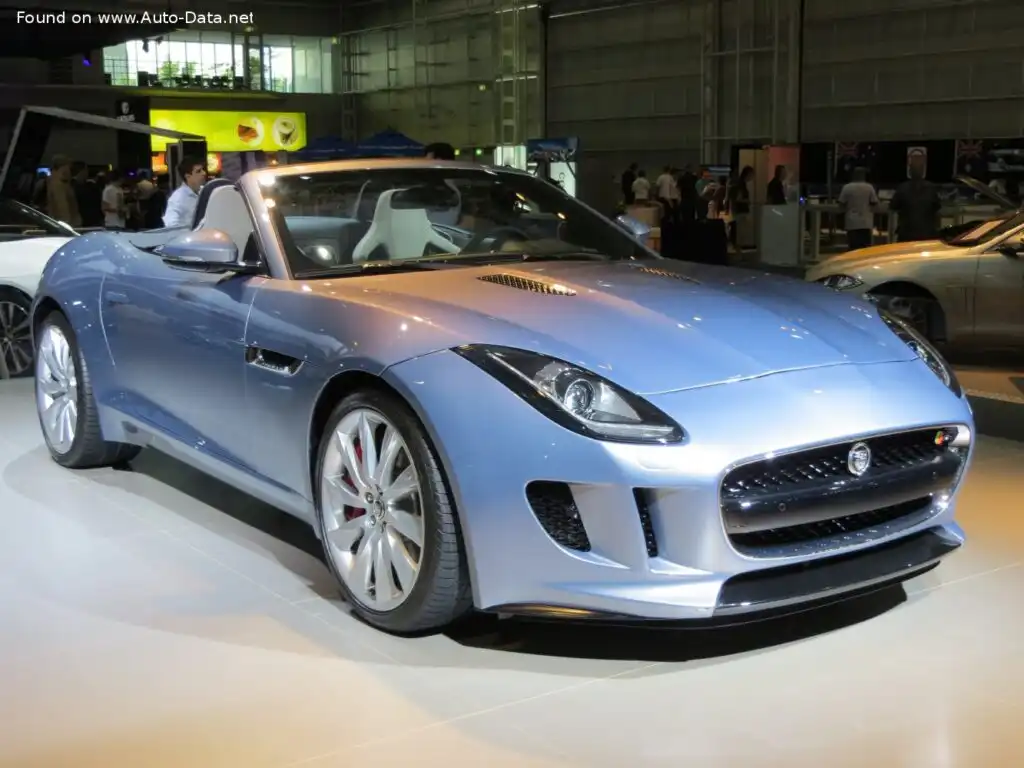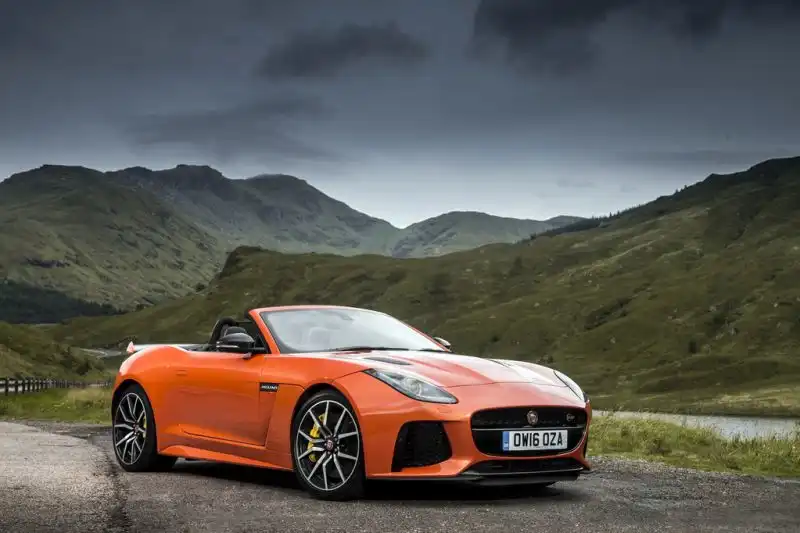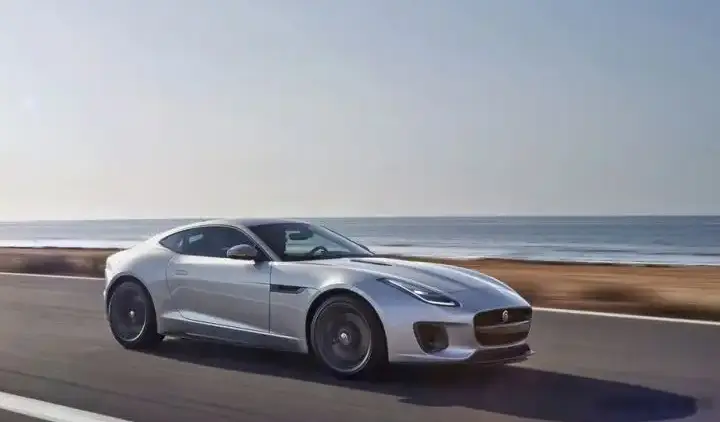
The Jaguar F-Type Coupe P300, introduced with the 2017 facelift and produced through 2020, represents an entry point into the F-Type range, offering a blend of performance and relative affordability. Positioned below the more potent supercharged V6 and V8 models, the P300 utilized Jaguar Land Rover’s Ingenium engine family, marking a shift towards smaller, more efficient powertrains for the iconic sports car. This variant aimed to broaden the F-Type’s appeal, attracting buyers who desired the car’s styling and handling characteristics without the higher price tag and running costs associated with the larger engines. It was a key component of Jaguar’s strategy to modernize the F-Type and maintain its competitiveness in the luxury sports car segment.
Technical Specifications
| Brand | Jaguar |
| Model | F-type |
| Generation | F-type Coupe (facelift 2017) |
| Type (Engine) | P300 (300 Hp) Automatic |
| Start of production | 2019 year |
| End of production | 2020 year |
| Powertrain Architecture | Internal Combustion engine |
| Body type | Coupe |
| Seats | 2 |
| Doors | 2 |
| Fuel consumption (economy) – urban | 10 l/100 km (23.5 US mpg, 28.2 UK mpg, 10 km/l) |
| Fuel consumption (economy) – extra urban | 6.6 l/100 km (35.6 US mpg, 42.8 UK mpg, 15.2 km/l) |
| Fuel consumption (economy) – combined | 7.9 l/100 km (29.8 US mpg, 35.8 UK mpg, 12.7 km/l) |
| CO2 emissions | 179 g/km |
| Fuel Type | Petrol (Gasoline) |
| Acceleration 0 – 100 km/h | 5.7 sec |
| Acceleration 0 – 62 mph | 5.7 sec |
| Acceleration 0 – 60 mph | 5.4 sec |
| Maximum speed | 250 km/h (155.34 mph) |
| Emission standard | Euro 6d-Temp |
| Weight-to-power ratio | 4.8 kg/Hp, 206.9 Hp/tonne |
| Weight-to-torque ratio | 3.6 kg/Nm, 275.9 Nm/tonne |
| Power | 300 Hp @ 5500 rpm |
| Power per litre | 150.2 Hp/l |
| Torque | 400 Nm @ 1500-4500 rpm (295.02 lb.-ft. @ 1500-4500 rpm) |
| Engine Model/Code | Ingenium / PT204 |
| Engine displacement | 1997 cm3 (121.86 cu. in.) |
| Number of cylinders | 4 |
| Engine configuration | Inline |
| Cylinder Bore | 83 mm (3.27 in.) |
| Piston Stroke | 92.3 mm (3.63 in.) |
| Compression ratio | 9.5:1 |
| Number of valves per cylinder | 4 |
| Fuel injection system | Direct injection |
| Engine aspiration | Turbocharger, Intercooler |
| Engine oil capacity | 6.5 l (6.87 US qt | 5.72 UK qt) |
| Kerb Weight | 1450 kg (3196.7 lbs.) |
| Max. weight | 1925 kg (4243.9 lbs.) |
| Max load | 475 kg (1047.2 lbs.) |
| Trunk (boot) space – minimum | 310 l (10.95 cu. ft.) |
| Trunk (boot) space – maximum | 408 l (14.41 cu. ft.) |
| Fuel tank capacity | 63 l (16.64 US gal | 13.86 UK gal) |
| Length | 4482 mm (176.46 in.) |
| Width | 1923 mm (75.71 in.) |
| Width including mirrors | 2042 mm (80.39 in.) |
| Height | 1311 mm (51.61 in.) |
| Wheelbase | 2622 mm (103.23 in.) |
| Front track | 1597 mm (62.87 in.) |
| Rear (Back) track | 1649 mm (64.92 in.) |
| Ride height (ground clearance) | 100 mm (3.94 in.) |
| Minimum turning circle | 11.2 m (36.75 ft.) |
| Drivetrain Architecture | Rear wheel drive |
| Number of gears and type of gearbox | 8 gears, automatic transmission |
| Front brakes | Disc, 355 mm |
| Rear brakes | Disc, 325 mm |
| Tires size | 245/45 R18; 275/40 R18 |
| Wheel rims size | 8.5J x 18; 9.5J x 18 |
Powertrain & Engine Architecture
The heart of the F-Type P300 is Jaguar Land Rover’s 2.0-liter Ingenium turbocharged inline-four cylinder engine, designated PT204. This engine represents a departure from the traditionally larger engines found in the F-Type. It utilizes direct injection and a single twin-scroll turbocharger to produce 300 horsepower at 5500 rpm and 400 Nm (295 lb-ft) of torque between 1500 and 4500 rpm. The engine features a relatively high 9.5:1 compression ratio and four valves per cylinder. The Ingenium engine is known for its efficiency and responsiveness, and in the F-Type, it’s paired exclusively with an eight-speed automatic transmission developed by ZF. This transmission is known for its smooth shifts and quick response times, contributing to the car’s overall driving experience. The transmission is calibrated specifically for the P300, with gear ratios optimized for both performance and fuel economy.
Driving Characteristics
The F-Type P300 offers a distinct driving experience compared to its more powerful siblings. While it doesn’t possess the raw acceleration of the V6 or V8 models, it still delivers a sporty and engaging drive. The 0-60 mph sprint takes approximately 5.4 seconds, and the car has a top speed of 155 mph. The turbocharger provides a noticeable boost in power, but the engine doesn’t have the same immediate throttle response as a naturally aspirated engine. The eight-speed automatic transmission shifts smoothly and efficiently, and the driver can utilize paddle shifters for more control. The P300’s lighter weight compared to the V6 and V8 models contributes to its agility and handling. However, some critics noted that the exhaust note of the four-cylinder engine lacks the character and drama of the larger engines.
Equipment & Trim Levels
The F-Type P300 typically came well-equipped, though it offered fewer standard features than the higher-end models. Standard equipment generally included leather upholstery, a touchscreen infotainment system, navigation, automatic climate control, and LED headlights. Optional extras included a panoramic sunroof, upgraded sound system, adaptive dampers, and various cosmetic enhancements. Trim levels were relatively simple, with buyers able to customize their cars with a range of options packages. Interior color schemes and trim materials were also available to personalize the vehicle.
Chassis & Braking
The F-Type P300 utilizes a lightweight aluminum chassis, contributing to its overall agility. The suspension system consists of double wishbones at the front and a multi-link setup at the rear. The P300 typically featured disc brakes on all four wheels, with 355mm rotors at the front and 325mm rotors at the rear. ABS (Anti-lock Braking System) is standard. The suspension tuning is geared towards providing a balance between comfort and handling, making the car suitable for both everyday driving and spirited performance.
Market Reception & Comparison
The F-Type P300 was generally well-received by critics, who praised its handling, styling, and value proposition. It offered a more accessible entry point into the F-Type range, attracting buyers who were previously priced out of the market. Compared to the V6 and V8 models, the P300 offered better fuel economy, with combined fuel consumption of around 29.8 US mpg. However, it lacked the outright performance and aural excitement of its more powerful siblings. The P300 competed with other entry-level luxury sports cars, such as the Porsche 718 Cayman and the BMW Z4.
Legacy
The Ingenium engine proved to be a reliable and efficient powerplant, and the F-Type P300 has maintained a relatively good reputation for reliability in the used car market. While it may not have the same collector appeal as the V6 or V8 models, the P300 offers a compelling combination of performance, style, and affordability. As the F-Type moves towards an all-electric future, the P300 represents a transitional model, showcasing Jaguar’s commitment to both performance and efficiency.