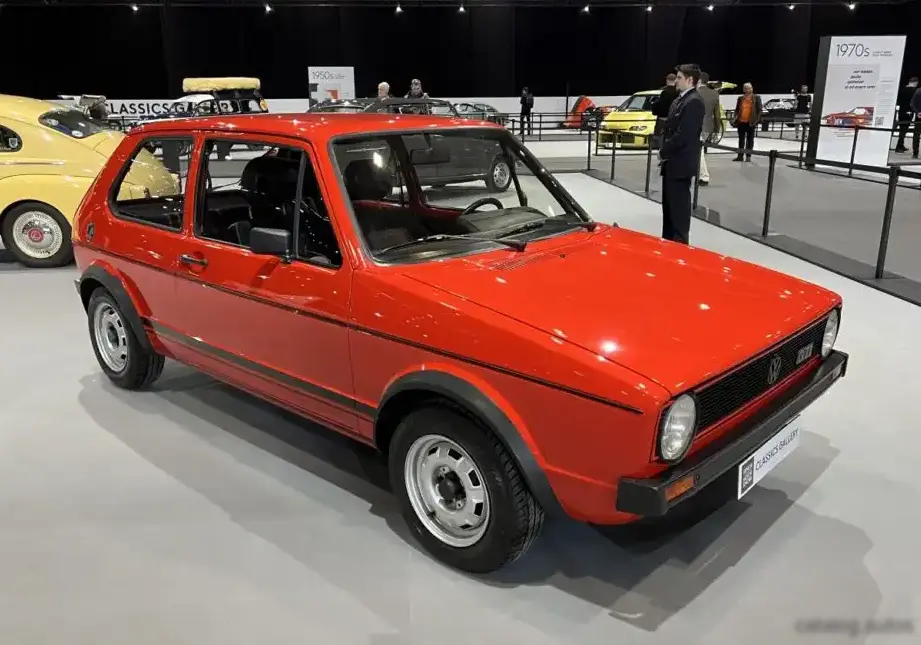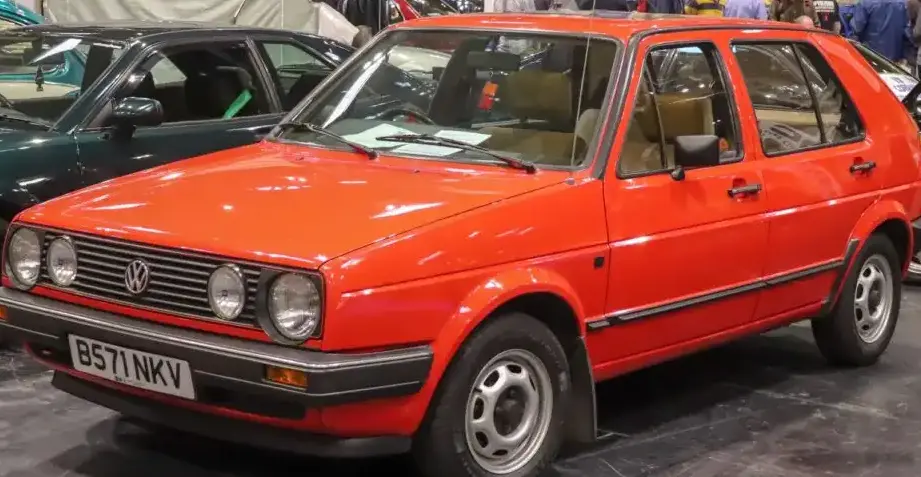
The Volkswagen Golf Mk2, produced from 1983 to 1992, represented a significant evolution of the original Golf, offering increased size, improved aerodynamics, and a more refined driving experience. Within the Mk2 range, the 1.3-liter (55 hp) 5-door model served as the entry point to the lineup, particularly in European markets. Introduced in 1983 and continuing through 1985, this variant aimed to provide affordable and economical transportation for families and first-time car buyers. It played a crucial role in solidifying the Golf’s position as a versatile and practical hatchback.
Technical Specifications
| Brand | Volkswagen |
| Model | Golf |
| Generation | Golf II (5-door) |
| Type (Engine) | 1.3 (55 Hp) |
| Start of production | 1983 |
| End of production | 1985 |
| Powertrain Architecture | Internal Combustion engine |
| Body type | Hatchback |
| Seats | 5 |
| Doors | 5 |
| Fuel consumption (urban) | 7.9 l/100 km (29.8 US mpg) |
| Fuel consumption (extra urban) | 5.5 l/100 km (42.8 US mpg) |
| Fuel Type | Petrol (Gasoline) |
| Acceleration 0 – 100 km/h | 16.7 sec |
| Acceleration 0 – 62 mph | 16.7 sec |
| Acceleration 0 – 60 mph | 15.9 sec |
| Maximum speed | 151 km/h (93.83 mph) |
| Weight-to-power ratio | 15.7 kg/Hp |
| Weight-to-torque ratio | 9 kg/Nm |
| Power | 55 Hp @ 5400 rpm |
| Power per litre | 43.2 Hp/l |
| Torque | 96 Nm @ 3300 rpm (70.81 lb.-ft. @ 3300 rpm) |
| Engine layout | Front, Transverse |
| Engine Model/Code | HK |
| Engine displacement | 1272 cm3 (77.62 cu. in.) |
| Number of cylinders | 4 |
| Engine configuration | Inline |
| Cylinder Bore | 75 mm (2.95 in.) |
| Piston Stroke | 72 mm (2.83 in.) |
| Compression ratio | 9.5:1 |
| Number of valves per cylinder | 2 |
| Fuel injection system | Carburettor |
| Engine aspiration | Naturally aspirated |
| Valvetrain | SOHC |
| Engine oil capacity | 3.5 l (3.7 US qt | 3.08 UK qt) |
| Kerb Weight | 865 kg (1907 lbs.) |
| Max. weight | 1360 kg (2998.29 lbs.) |
| Max load | 495 kg (1091.29 lbs.) |
| Trunk (boot) space – minimum | 345 l (12.18 cu. ft.) |
| Trunk (boot) space – maximum | 1145 l (40.44 cu. ft.) |
| Fuel tank capacity | 55 l (14.53 US gal | 12.1 UK gal) |
| Permitted trailer load with brakes (12%) | 800 kg (1763.7 lbs.) |
| Permitted trailer load without brakes | 460 kg (1014.13 lbs.) |
| Length | 3985 mm (156.89 in.) |
| Width | 1665 mm (65.55 in.) |
| Height | 1415 mm (55.71 in.) |
| Wheelbase | 2475 mm (97.44 in.) |
| Front track | 1413 mm (55.63 in.) |
| Rear (Back) track | 1408 mm (55.43 in.) |
| Front overhang | 810 mm (31.89 in.) |
| Rear overhang | 700 mm (27.56 in.) |
| Drag coefficient (Cd) | 0.34 |
| Minimum turning circle | 10.5 m (34.45 ft.) |
| Drivetrain Architecture | Front wheel drive |
| Number of gears and type of gearbox | 4 gears, manual transmission |
| Front suspension | Independent type McPherson |
| Rear suspension | Elastic beam |
| Front brakes | Disc |
| Rear brakes | Drum |
| Steering type | Steering rack and pinion |
| Tires size | 155/65 R13 |
| Wheel rims size | 5J x 13 |
Powertrain & Engine Architecture
The heart of this Golf variant was the 1.3-liter inline-four cylinder engine, designated the HK code. This engine was a naturally aspirated unit, relying on a single overhead camshaft (SOHC) valvetrain with two valves per cylinder. Fuel delivery was managed by a carburetor, a common feature for entry-level cars of this era. The 1272cc displacement produced 55 horsepower at 5400 rpm and 96 Nm (70.81 lb-ft) of torque at 3300 rpm. The engine was transversely mounted, driving the front wheels. The transmission was a standard four-speed manual gearbox, optimized for fuel efficiency rather than outright performance. This configuration was a cost-effective solution, allowing Volkswagen to offer the Golf at a competitive price point.
Driving Characteristics
The 1.3-liter Golf Mk2 with the four-speed manual transmission offered modest performance. Acceleration from 0 to 100 km/h (0-62 mph) took approximately 16.7 seconds, and top speed was around 151 km/h (93.83 mph). The gear ratios were geared towards economy, meaning the engine needed to be revved to extract the most performance. Compared to the more powerful 1.6-liter or the later 1.8-liter Golfs, this variant felt noticeably slower. However, it provided adequate power for everyday driving, particularly in urban environments. The manual transmission offered a more engaging driving experience than the optional three-speed automatic, which further reduced performance.
Equipment & Trim Levels
The 1.3-liter Golf Mk2 was typically equipped with basic, but functional, features. Standard equipment included cloth upholstery, a simple dashboard layout, and manual windows and door locks. Power steering and central locking were generally not included as standard, but were available as optional extras. The interior was designed for practicality and durability, rather than luxury. Trim levels were relatively limited on this base model, with options primarily focused on adding convenience features like a radio or upgraded seat fabric. The focus was on providing a no-frills, affordable vehicle.
Chassis & Braking
The Golf Mk2 featured an independent McPherson strut suspension at the front and an elastic beam suspension at the rear. This setup provided a reasonable balance between ride comfort and handling. The front brakes were disc brakes, while the rear brakes were drum brakes – a cost-saving measure common on base models. Steering was via a rack and pinion system. The relatively lightweight nature of the 1.3-liter Golf (865 kg / 1907 lbs) helped to mitigate the effects of the modest engine power. Stabilizer bars were typically smaller in diameter compared to higher-spec models.
Market Reception & Comparison
The 1.3-liter Golf Mk2 was generally well-received as an affordable and reliable family car. Critics acknowledged its practicality and fuel efficiency, but noted its lack of performance. Compared to the 1.6-liter and 1.8-liter Golfs, the 1.3-liter model offered significantly less power and a slower driving experience. However, it was more economical to run and maintain. The 1.6-liter offered a better balance of performance and economy, while the 1.8-liter (and later GTI models) catered to drivers seeking more spirited performance. The 1.3-liter appealed to buyers prioritizing affordability and fuel efficiency.
Legacy
The 1.3-liter Golf Mk2, while not the most powerful or desirable variant, remains a popular classic car today. Its simplicity and reliability make it relatively easy to maintain. The HK engine, while not known for its high performance, is generally considered durable. Parts availability is good, and a thriving community of Golf enthusiasts ensures that these cars are kept on the road. In the used car market, the 1.3-liter Golf Mk2 represents an affordable entry point into classic Volkswagen ownership, offering a nostalgic driving experience and a connection to a pivotal era in automotive history. While not a collector’s item like the GTI, it’s a testament to the Golf’s enduring appeal as a practical and versatile hatchback.