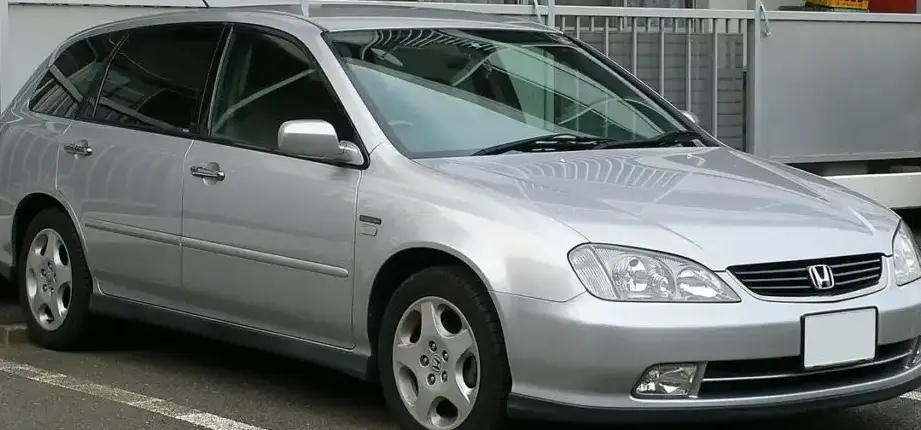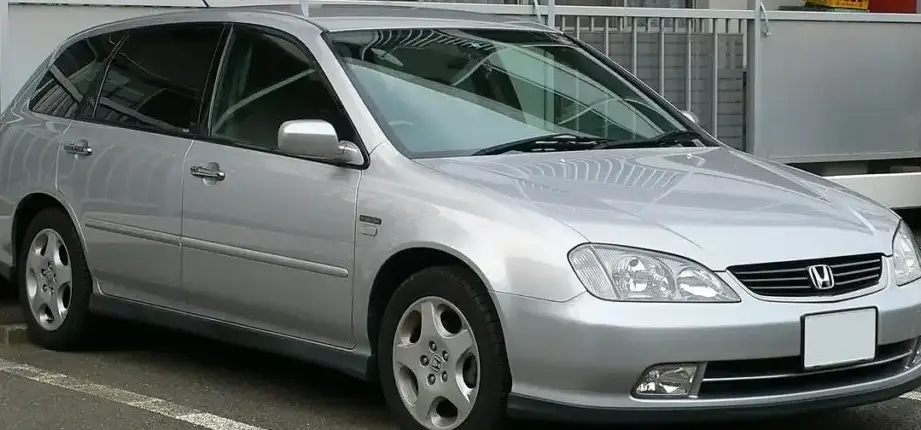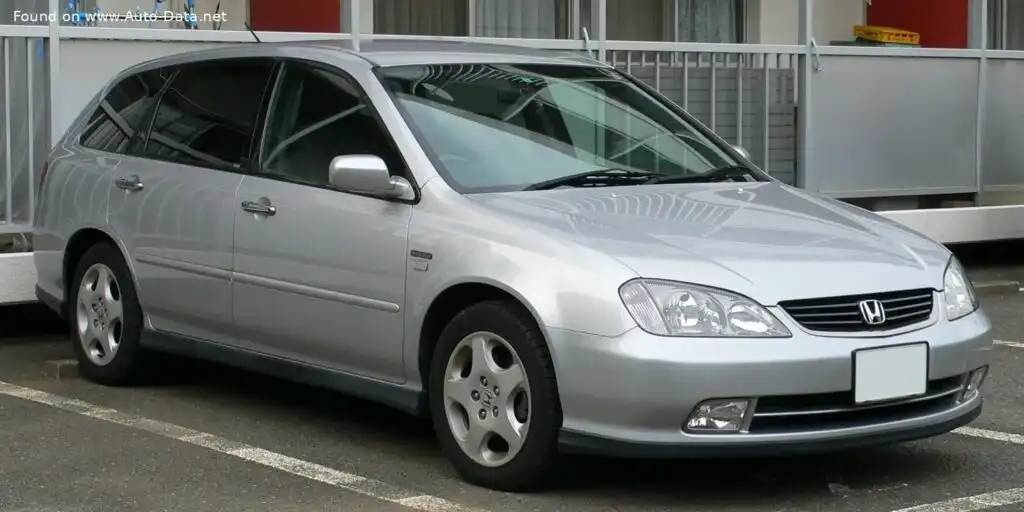
The Honda Avancier, launched in 1999 and produced through 2001, represented Honda’s foray into the burgeoning luxury crossover market, primarily aimed at Japanese domestic consumers. Positioned above the Honda Inspire and Vigor sedans, the Avancier offered a more spacious and versatile alternative, blending sedan comfort with the practicality of a station wagon. This particular variant, the 3.0 V6 24V paired with a five-speed automatic transmission, was a mid-range offering within the Avancier lineup, providing a balance of performance and convenience. It was built on the Honda MDX platform, sharing some components with the Acura MDX sold in North America.
Technical Specifications
| Brand | Honda |
| Model | Avancier |
| Generation | Avancier I |
| Type (Engine) | 3.0 V6 24V (215 Hp) Automatic |
| Start of production | 1999 |
| End of production | 2001 |
| Powertrain Architecture | Internal Combustion engine |
| Body type | Station wagon (estate) |
| Seats | 5 |
| Doors | 5 |
| Fuel consumption (urban) | 16.6 l/100 km (14.2 US mpg) |
| Fuel consumption (extra urban) | 9 l/100 km (26.1 US mpg) |
| Fuel consumption (combined) | 10.2 l/100 km (23.1 US mpg) |
| Fuel Type | Petrol (Gasoline) |
| Maximum speed | 180 km/h (111.85 mph) |
| Weight-to-power ratio | 7.3 kg/Hp |
| Weight-to-torque ratio | 5.8 kg/Nm |
| Power | 215 Hp @ 5800 rpm |
| Power per litre | 71.7 Hp/l |
| Torque | 272 Nm @ 5000 rpm (200.62 lb.-ft. @ 5000 rpm) |
| Engine layout | Front, Transverse |
| Engine Model/Code | J30A |
| Engine displacement | 2997 cm3 (182.89 cu. in.) |
| Number of cylinders | 6 |
| Engine configuration | V-engine |
| Cylinder Bore | 86 mm (3.39 in.) |
| Piston Stroke | 86 mm (3.39 in.) |
| Compression ratio | 9.4:1 |
| Number of valves per cylinder | 4 |
| Fuel injection system | Multi-port manifold injection |
| Engine aspiration | Naturally aspirated engine |
| Valvetrain | SOHC |
| Engine oil capacity | 4.4 l (4.65 US qt | 3.87 UK qt) |
| Kerb Weight | 1580 kg (3483.3 lbs.) |
| Fuel tank capacity | 65 l (17.17 US gal | 14.3 UK gal) |
| Length | 4700 mm (185.04 in.) |
| Width | 1790 mm (70.47 in.) |
| Height | 1500 mm (59.06 in.) |
| Wheelbase | 2765 mm (108.86 in.) |
| Front track | 1555 mm (61.22 in.) |
| Rear track | 1540 mm (60.63 in.) |
| Ride height (ground clearance) | 155 mm (6.1 in.) |
| Drag coefficient (Cd) | 0.37 |
| Minimum turning circle | 11.40 m (37.4 ft.) |
| Drivetrain Architecture | Front wheel drive |
| Number of gears | 5 |
| Gearbox type | automatic transmission |
| Front suspension | Double wishbone |
| Rear suspension | Several levers and rods |
| Front brakes | Ventilated discs |
| Rear brakes | Disc |
| Assisting systems | ABS (Anti-lock braking system) |
| Steering type | Steering rack and pinion |
| Power steering | Hydraulic Steering |
| Tires size | 205/65 R15 94H |
| Wheel rims size | 15 |
Powertrain & Engine Architecture
The heart of this Avancier variant is the Honda J30A engine, a 3.0-liter, 24-valve V6. This engine utilizes a single overhead camshaft (SOHC) valvetrain and multi-point fuel injection. The J30A was known for its smooth power delivery and relative reliability. The engine produces 215 horsepower at 5800 rpm and 272 Nm (200.62 lb-ft) of torque at 5000 rpm. The five-speed automatic transmission, while providing convenient operation, was a conventional torque converter type, not offering the quicker shifts of more modern transmissions. It was chosen for its smoothness and reliability, aligning with the Avancier’s focus on comfortable cruising.
Driving Characteristics
The 3.0L V6 automatic Avancier offered a comfortable and refined driving experience. While not a sports car, the engine provided adequate power for highway merging and passing maneuvers. The automatic transmission, with its five gears, was geared for relaxed cruising rather than aggressive acceleration. Compared to the manual transmission versions, the automatic sacrificed some responsiveness. The weight of the vehicle (1580 kg / 3483.3 lbs) did impact acceleration, but the V6 engine provided sufficient torque to make it feel adequately powered for its intended purpose. The front-wheel-drive configuration contributed to predictable handling, though it lacked the all-weather capability of an all-wheel-drive system.
Equipment & Trim Levels
The 3.0 V6 automatic Avancier typically included features such as power windows, power locks, air conditioning, and a basic audio system. Higher trim levels added features like leather upholstery, a sunroof, upgraded audio systems, and woodgrain interior trim. The interior design was functional and comfortable, prioritizing space and ease of use. The dashboard layout was typical of late-1990s Honda designs, with a clear instrument cluster and logically placed controls. Optional extras included navigation systems (a rarity for the time) and upgraded sound systems.
Chassis & Braking
The Avancier utilized a front double wishbone suspension and a multi-link rear suspension, providing a comfortable ride quality. Front brakes were ventilated discs, while the rear brakes were solid discs. Anti-lock Braking System (ABS) was standard, enhancing safety. The suspension was tuned for comfort, prioritizing a smooth ride over sporty handling. The relatively modest tire size (205/65 R15) further contributed to the comfortable ride, but limited ultimate grip.
Market Reception & Comparison
The Honda Avancier was generally well-received in Japan as a comfortable and practical crossover. Critics praised its spacious interior and smooth ride. However, some noted that the styling was somewhat conservative compared to competitors. The 3.0 V6 automatic variant was seen as a good all-around choice, offering a balance of performance and convenience. Compared to the smaller-engined versions, the V6 provided significantly more power, but at the cost of increased fuel consumption (10.2 l/100 km combined). Compared to other vehicles in its class, such as the Toyota Kluger, the Avancier offered a more refined driving experience, but was often more expensive.
Legacy
The Honda Avancier, while not a huge sales success outside of Japan, laid the groundwork for Honda’s future crossover offerings. The J30A engine proved to be a reliable powerplant, and many examples are still on the road today. The Avancier’s focus on comfort and practicality influenced the design of later Honda models, such as the Element and the CR-V. In the used car market, the Avancier is appreciated for its spaciousness, reliability, and relatively affordable price. However, finding parts can be challenging outside of Japan, and maintenance costs can be higher due to the age of the vehicle.