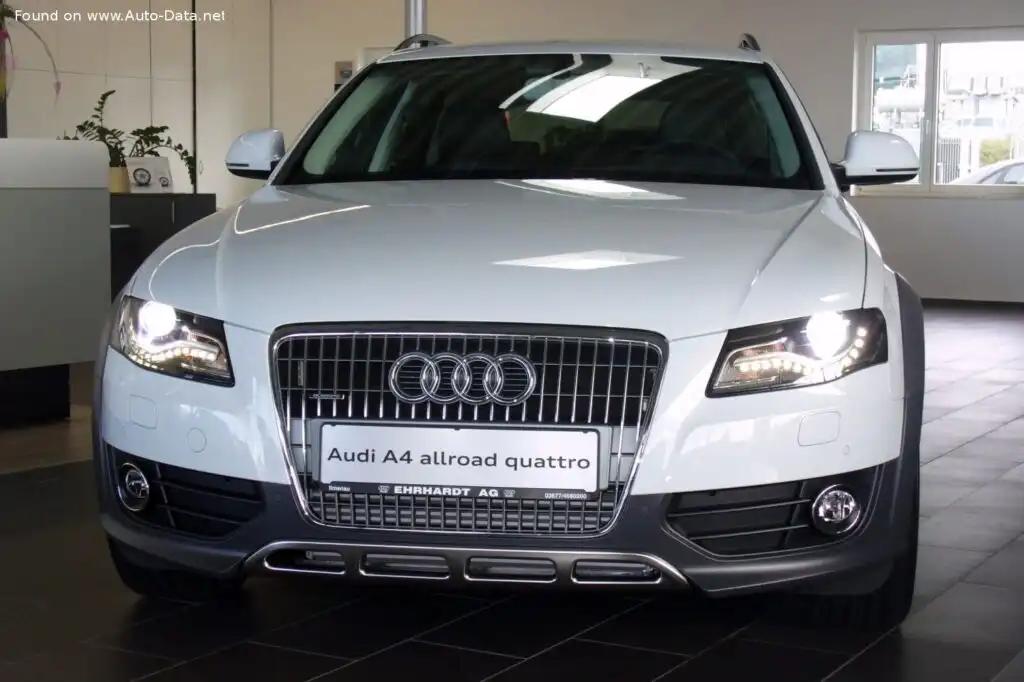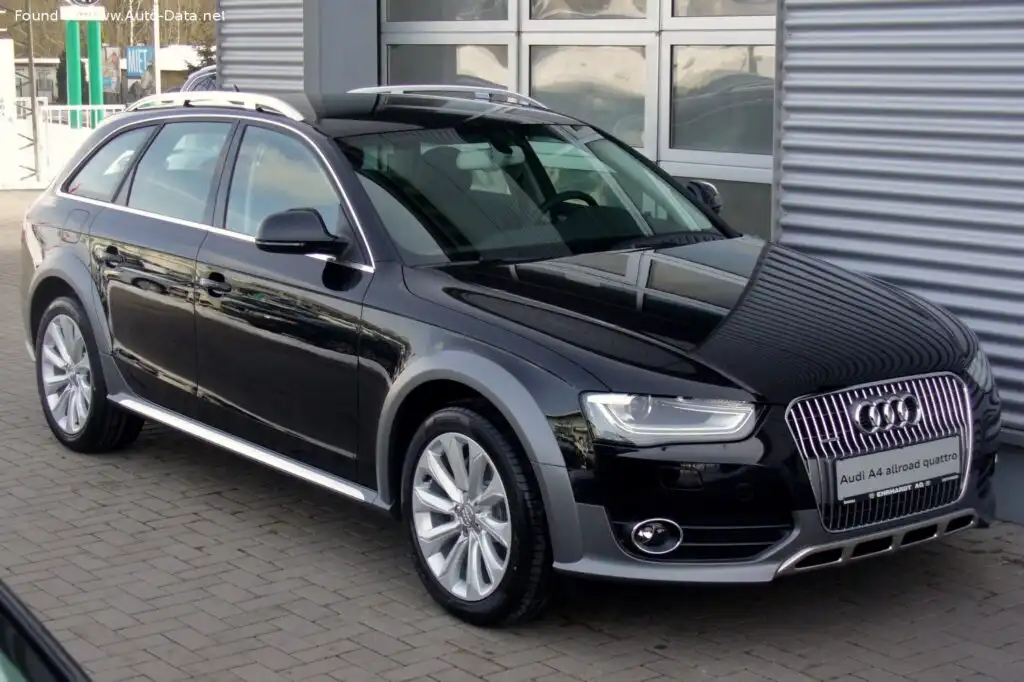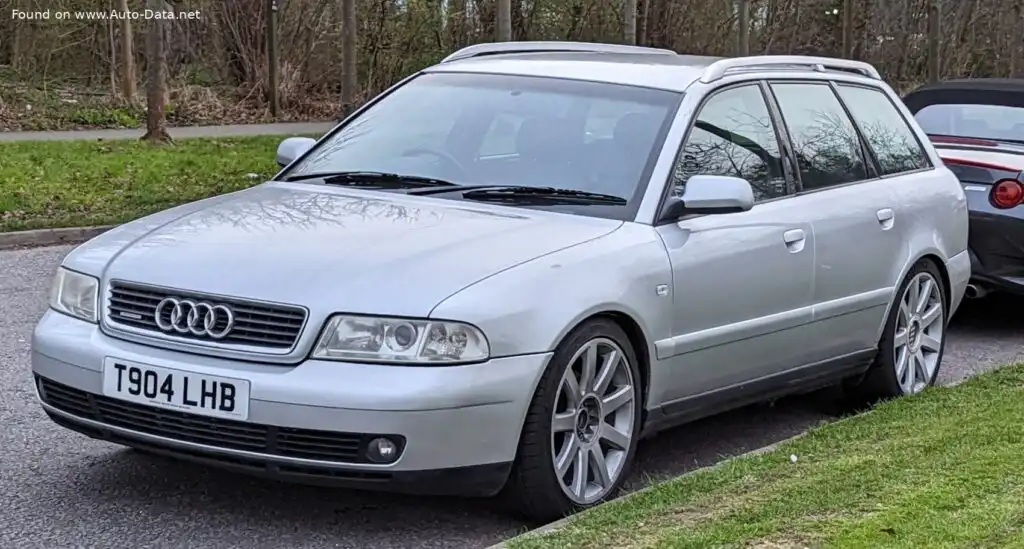
The Audi A4 Avant (B5, Typ 8D) facelift model produced between 1999 and 2000, equipped with the 1.9 TDI (110 horsepower) engine and quattro all-wheel drive, represented a compelling blend of practicality, efficiency, and all-weather capability within the compact executive wagon segment. This variant occupied a middle ground in the B5 A4 Avant lineup, positioned below the more powerful gasoline engines and the higher-output TDI models, appealing to buyers prioritizing fuel economy and secure handling over outright performance. It was a key offering in the European market, where wagons, or ‘Avants’ as Audi designates them, held significant popularity.
Technical Specifications
| Brand | Audi |
| Model | A4 |
| Generation | A4 Avant (B5, Typ 8D, facelift 1999) |
| Type (Engine) | 1.9 TDI (110 Hp) quattro |
| Start of production | January, 1999 |
| End of production | June, 2000 |
| Powertrain Architecture | Internal Combustion engine |
| Body type | Station wagon (estate) |
| Seats | 5 |
| Doors | 5 |
| Fuel consumption (urban) | 7.8 l/100 km (30.2 US mpg, 36.2 UK mpg, 12.8 km/l) |
| Fuel consumption (extra urban) | 4.8 l/100 km (49 US mpg, 58.9 UK mpg, 20.8 km/l) |
| Fuel consumption (combined) | 5.9 l/100 km (39.9 US mpg, 47.9 UK mpg, 16.9 km/l) |
| Fuel Type | Diesel |
| Acceleration 0 – 100 km/h | 12.2 sec |
| Acceleration 0 – 62 mph | 12.2 sec |
| Acceleration 0 – 60 mph | 11.6 sec |
| Maximum speed | 188 km/h (116.82 mph) |
| Weight-to-power ratio | 13 kg/Hp, 76.9 Hp/tonne |
| Weight-to-torque ratio | 6.1 kg/Nm, 164.3 Nm/tonne |
| Power | 110 Hp @ 4150 rpm |
| Power per litre | 58 Hp/l |
| Torque | 235 Nm @ 1900 rpm (173.33 lb.-ft. @ 1900 rpm) |
| Engine layout | Front, Longitudinal |
| Engine Model/Code | AVG |
| Engine displacement | 1896 cm3 (115.7 cu. in.) |
| Number of cylinders | 4 |
| Engine configuration | Inline |
| Cylinder Bore | 79.5 mm (3.13 in.) |
| Piston Stroke | 95.5 mm (3.76 in.) |
| Compression ratio | 19.5:1 |
| Number of valves per cylinder | 2 |
| Fuel injection system | Direct injection |
| Engine aspiration | Turbocharger |
| Valvetrain | OHC |
| Engine oil capacity | 3.8 l (4.02 US qt | 3.34 UK qt) |
| Coolant | 6.5 l (6.87 US qt | 5.72 UK qt) |
| Kerb Weight | 1430 kg (3152.61 lbs.) |
| Max. weight | 1980 kg (4365.15 lbs.) |
| Max load | 550 kg (1212.54 lbs.) |
| Trunk (boot) space – minimum | 390 l (13.77 cu. ft.) |
| Trunk (boot) space – maximum | 1250 l (44.14 cu. ft.) |
| Fuel tank capacity | 60 l (15.85 US gal | 13.2 UK gal) |
| Length | 4479 mm (176.34 in.) |
| Width | 1733 mm (68.23 in.) |
| Height | 1417 mm (55.79 in.) |
| Wheelbase | 2622 mm (103.23 in.) |
| Front track | 1498 mm (58.98 in.) |
| Rear (Back) track | 1479 mm (58.23 in.) |
| Drag coefficient (Cd) | 0.31 |
| Minimum turning circle | 11.1 m (36.42 ft.) |
| Drivetrain Architecture | The Internal combustion engine (ICE) drives permanently the four wheels of the vehicle. |
| Drive wheel | All wheel drive (4×4) |
| Number of gears | 5 gears, manual transmission |
| Front suspension | Double wishbone |
| Rear suspension | Suspension with traction connecting levers |
| Front brakes | Ventilated discs |
| Rear brakes | Ventilated discs |
| Assisting systems | ABS (Anti-lock braking system) |
| Steering type | Steering rack and pinion |
| Power steering | Hydraulic Steering |
| Tires size | 195/65 R15 |
| Wheel rims size | 15 |
Powertrain & Engine Architecture
The heart of this A4 Avant was the 1.9-liter inline-four cylinder diesel engine, designated AVG. This engine was a mainstay of the Volkswagen Group’s offerings during the late 1990s and early 2000s. It featured direct injection, a technology that significantly improved fuel efficiency and reduced emissions compared to older indirect injection systems. The AVG engine utilized a Bosch VE EDC (Electronic Diesel Control) fuel injection pump, delivering fuel directly into the cylinders at extremely high pressure. The engine employed an overhead camshaft (OHC) valvetrain with two valves per cylinder. A turbocharger, typically a Garrett or BorgWarner unit, was integrated to boost power output. The five-speed manual transmission was the standard offering, providing a balance between fuel economy and drivability. The quattro all-wheel-drive system employed a Torsen differential, distributing torque between the front and rear axles based on traction conditions, enhancing stability and grip.
Driving Characteristics
The 1.9 TDI 110 hp quattro A4 Avant offered a composed and practical driving experience. While not particularly quick, with a 0-60 mph time around 11.6 seconds, it provided ample torque for everyday driving and highway cruising. The turbocharger provided a noticeable boost in power from around 1900 rpm, making overtaking maneuvers manageable. The manual transmission’s gear ratios were well-suited to the engine’s characteristics, allowing for efficient acceleration and comfortable cruising. The quattro system instilled confidence in slippery conditions, providing enhanced traction and stability. Compared to the more powerful 1.8T gasoline versions, the TDI offered significantly better fuel economy, but lacked the same level of outright performance. The higher-output TDI models (typically 130 hp or more) provided a more spirited driving experience, but at the expense of fuel efficiency.
Equipment & Trim Levels
The 1.9 TDI quattro A4 Avant typically came equipped with a reasonable level of standard features. These included power windows, central locking, power mirrors, and an AM/FM radio. Air conditioning was often an optional extra. Interior upholstery was typically cloth, with options for leather available at an additional cost. Trim levels varied depending on the market, but generally included options for upgraded audio systems, alloy wheels, and a sunroof. Safety features included ABS brakes and front airbags. The overall interior design was functional and understated, reflecting Audi’s focus on quality and ergonomics.
Chassis & Braking
The B5 A4 Avant featured a fully independent suspension system, with double wishbones at the front and a semi-independent suspension with trailing arms at the rear. This setup provided a comfortable ride and good handling characteristics. The quattro models typically featured slightly stiffer suspension components to accommodate the increased weight and power. Brakes consisted of ventilated discs on all four wheels, providing adequate stopping power. ABS (Anti-lock Braking System) was standard, enhancing safety during emergency braking situations.
Market Reception & Comparison
The 1.9 TDI quattro A4 Avant was well-received by automotive critics for its blend of practicality, fuel efficiency, and all-weather capability. It was often praised for its comfortable ride, spacious interior, and secure handling. Compared to its gasoline-powered siblings, the TDI offered significantly better fuel economy, making it an attractive option for drivers covering long distances. However, some critics noted that the engine could be somewhat noisy and lacked the refinement of the gasoline engines. In terms of reliability, the 1.9 TDI engine proved to be robust and durable, although regular maintenance was essential to prevent issues with the turbocharger and fuel injection system.
Legacy
The 1.9 TDI engine, particularly in the AVG configuration, has earned a reputation for longevity and reliability. Many examples are still on the road today, testament to their robust construction. The B5 A4 Avant, in general, is considered a well-built and durable vehicle. The 1.9 TDI quattro variant remains a popular choice in the used car market, particularly among buyers seeking a practical, fuel-efficient, and reliable wagon. While modern diesels offer more advanced technology and refinement, the B5 A4 Avant 1.9 TDI quattro represents a solid and dependable option for those seeking a classic European wagon experience.