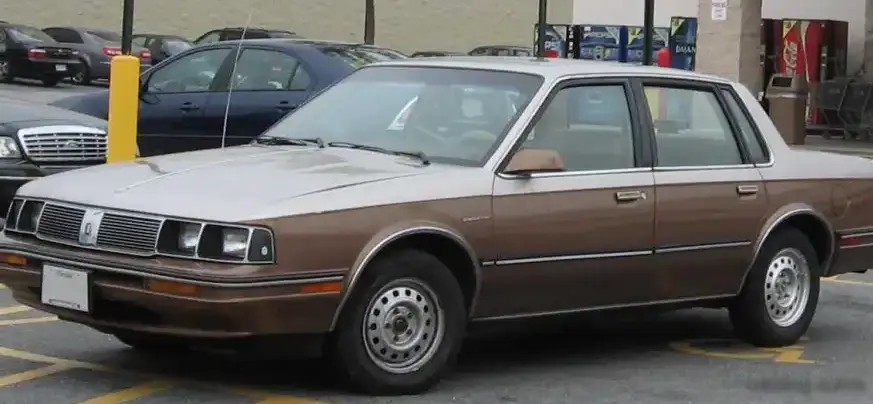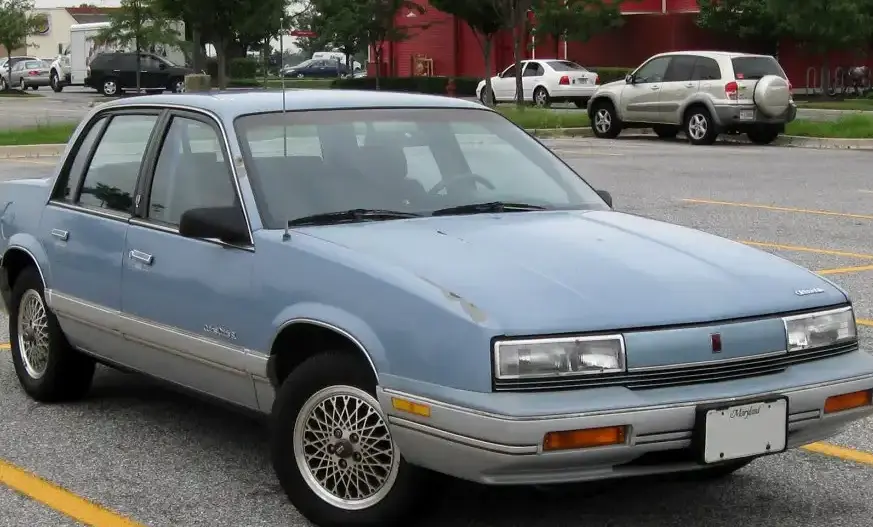
The Oldsmobile Cutlass Calais 2.5i, produced from 1984 to 1991, represented a downsized and more fuel-efficient offering within the broader Cutlass lineup. Positioned as the entry-level model, it aimed to attract buyers seeking a comfortable and affordable American sedan. This variant utilized a 2.5-liter inline-four engine paired with either a five-speed manual or a three-speed automatic transmission. The Calais was part of the third generation of the Cutlass, which saw a shift towards front-wheel drive and a more compact footprint, moving away from the traditional rear-wheel drive, body-on-frame construction of earlier Cutlass models. It was built on the A-body platform, shared with other GM vehicles of the era like the Buick Century and Pontiac 6000.
Technical Specifications
| Brand | Oldsmobile |
| Model | Cutlass |
| Generation | Cutlass Calais |
| Type (Engine) | 2.5 i (106 Hp) |
| Start of production | 1984 |
| End of production | 1991 |
| Powertrain Architecture | Internal Combustion engine |
| Body type | Sedan |
| Seats | 5 |
| Doors | 4 |
| Fuel consumption (urban) | 14 l/100 km (16.8 US mpg, 20.2 UK mpg, 7.1 km/l) |
| Fuel consumption (extra urban) | 8 l/100 km (29.4 US mpg, 35.3 UK mpg, 12.5 km/l) |
| Fuel Type | Petrol (Gasoline) |
| Maximum speed | 180 km/h (111.85 mph) |
| Weight-to-power ratio | 11.2 kg/Hp (89.5 Hp/tonne) |
| Weight-to-torque ratio | 6.5 kg/Nm (154.4 Nm/tonne) |
| Power | 106 Hp @ 4800 rpm |
| Power per litre | 42.9 Hp/l |
| Torque | 183 Nm @ 3200 rpm (134.97 lb.-ft. @ 3200 rpm) |
| Engine layout | Front, Transverse |
| Engine displacement | 2471 cm3 (150.79 cu. in.) |
| Number of cylinders | 4 |
| Engine configuration | Inline |
| Cylinder Bore | 101.6 mm (4 in.) |
| Piston Stroke | 76.2 mm (3 in.) |
| Compression ratio | 8.3:1 |
| Number of valves per cylinder | 2 |
| Fuel injection system | Single-point injection |
| Engine aspiration | Naturally aspirated |
| Engine oil capacity | 4.3 l (4.54 US qt, 3.78 UK qt) |
| Coolant | 10 l (10.57 US qt, 8.8 UK qt) |
| Kerb Weight | 1185 kg (2612.48 lbs.) |
| Trunk (boot) space (minimum) | 375 l (13.24 cu. ft.) |
| Fuel tank capacity | 51 l (13.47 US gal, 11.22 UK gal) |
| Length | 4555 mm (179.33 in.) |
| Width | 1700 mm (66.93 in.) |
| Height | 1330 mm (52.36 in.) |
| Wheelbase | 2625 mm (103.35 in.) |
| Front track | 1420 mm (55.91 in.) |
| Rear track | 1410 mm (55.51 in.) |
| Drivetrain Architecture | Front wheel drive, Internal Combustion Engine |
| Number of gears | 5 (manual) |
| Gearbox type | Manual Transmission |
| Front suspension | Coil spring |
| Rear suspension | Leaf spring |
| Front brakes | Ventilated discs |
| Rear brakes | Drum |
| Assisting systems | ABS (Anti-lock braking system) |
| Steering type | Steering rack and pinion |
| Power steering | Hydraulic |
| Tires size | 185/75 R14 |
Powertrain & Engine Architecture
The heart of the Cutlass Calais 2.5i was the 2.5-liter (2471 cc) inline-four cylinder engine, designated as the Tech IV. This engine featured a cast iron block and an aluminum cylinder head. It utilized a single overhead camshaft (SOHC) design with two valves per cylinder. Fuel delivery was handled by a single-point fuel injection system, a relatively basic setup for the time, which contributed to its affordability but also limited its overall performance potential. The engine produced 106 horsepower at 4800 rpm and 135 lb-ft of torque at 3200 rpm. The three-speed automatic transmission was a General Motors THM325, a common and generally reliable unit, but not known for its responsiveness or fuel efficiency compared to more modern automatics.
Driving Characteristics
The 2.5-liter engine and automatic transmission combination delivered adequate, but not exhilarating, performance. Acceleration was leisurely, and passing maneuvers required careful planning. The automatic transmission’s gear ratios were geared towards fuel economy rather than spirited driving. Compared to the available V6 engines in the Cutlass Calais lineup, the 2.5i felt noticeably slower. The manual transmission version offered a more engaging driving experience, allowing the driver to better utilize the engine’s limited power band. Handling was typical for a front-wheel-drive sedan of the era – safe and predictable, but not particularly sporty. The leaf spring rear suspension, while cost-effective, contributed to a somewhat firm and less refined ride compared to vehicles with independent rear suspension.
Equipment & Trim Levels
The Cutlass Calais 2.5i typically came standard with features like cloth upholstery, a basic AM/FM radio, and manual windows and locks. Air conditioning was often an optional extra. The interior was functional and straightforward in its design, prioritizing practicality over luxury. Higher trim levels, or those with added option packages, could include features like power windows and locks, a better stereo system, and upgraded interior trim. The Calais generally offered a more basic level of equipment compared to the higher-end Cutlass Supreme models.
Chassis & Braking
The Cutlass Calais featured a MacPherson strut front suspension and a leaf spring rear suspension. The front brakes were ventilated discs, providing adequate stopping power, while the rear brakes were drums. ABS (Anti-lock Braking System) was available as an option, enhancing safety. The steering was a rack-and-pinion system with hydraulic power assist, offering reasonable steering feel and ease of maneuverability. The relatively lightweight construction of the vehicle, at around 2600 pounds, helped to offset the modest engine output.
Market Reception & Comparison
The Cutlass Calais 2.5i was generally well-received as an affordable and fuel-efficient option in the American sedan market. Critics noted its comfortable ride and spacious interior, but also pointed out its lack of performance and somewhat basic interior appointments. Compared to the V6-powered Calais models, the 2.5i offered significantly lower fuel consumption but at the expense of acceleration and overall driving enjoyment. It competed with other compact and mid-size sedans from Japanese manufacturers, such as the Honda Accord and Toyota Camry, which were gaining popularity for their reliability and fuel efficiency.
Legacy
The Oldsmobile Cutlass Calais 2.5i, while not a performance icon, remains a relatively affordable and accessible classic car. The 2.5-liter Tech IV engine is generally considered reliable, although age and maintenance history are crucial factors. Parts availability is decent, as many components were shared with other GM vehicles. Today, these cars are often found in the used car market as budget-friendly transportation or as projects for restoration. While not highly sought after by collectors, the Cutlass Calais 2.5i represents a significant chapter in Oldsmobile’s history and a reflection of the automotive trends of the 1980s.