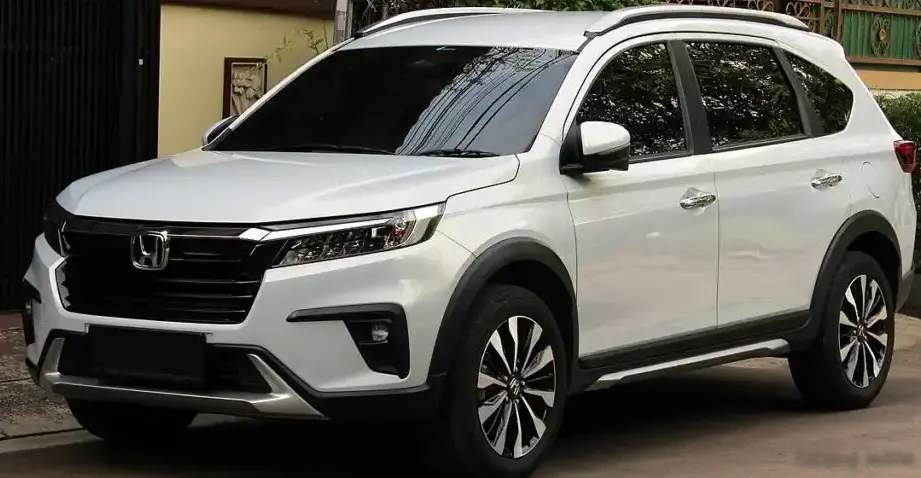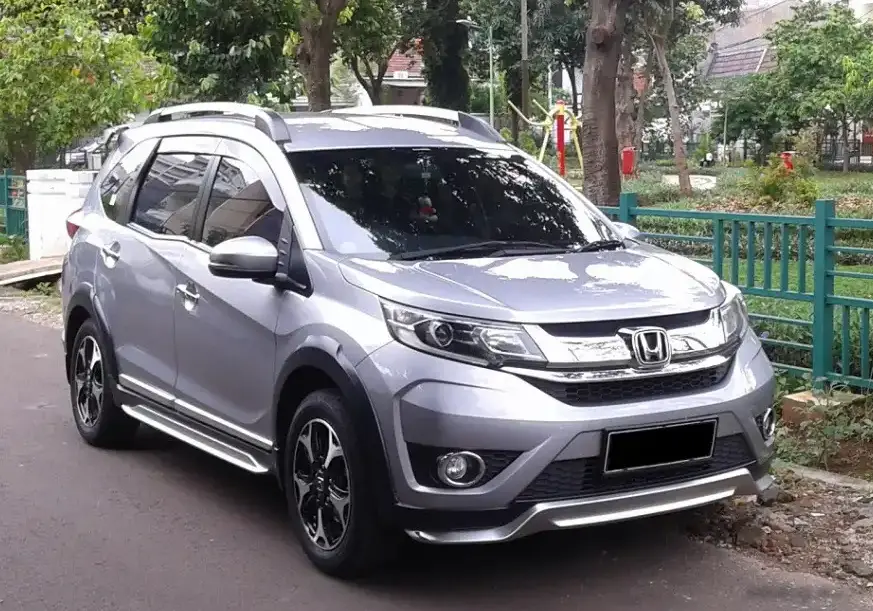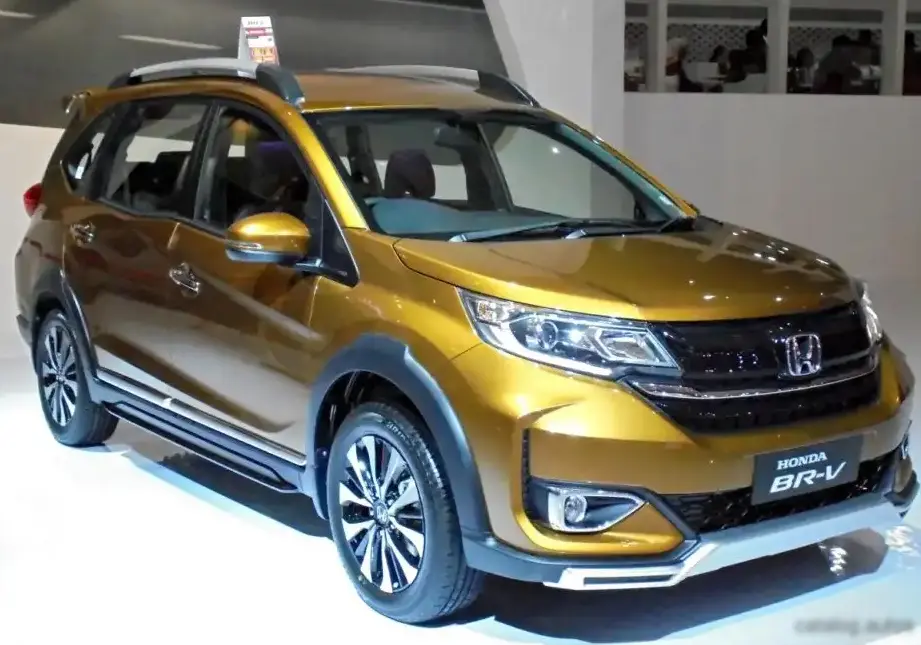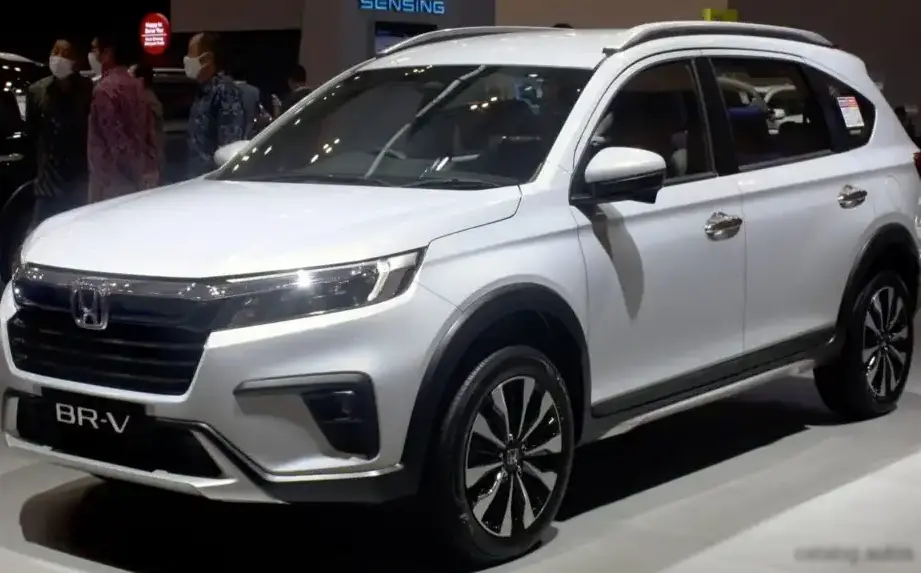
The Honda BR-V II 1.5 i-VTEC (121 Hp) CVT is a front-wheel-drive subcompact crossover SUV produced by Honda since December 2021. Representing the second generation of the BR-V model, it’s primarily marketed in Southeast Asia, South America, and select other emerging markets. This variant, equipped with the 1.5-liter i-VTEC engine and a continuously variable transmission (CVT), occupies a mid-range position within the BR-V II lineup, offering a balance between fuel efficiency, affordability, and practicality for families. The BR-V II is based on Honda’s Global Small Car platform, shared with other models like the Mobilio, aiming to provide a spacious and versatile vehicle in a relatively compact package.
Technical Specifications
| Brand | Honda |
| Model | BR-V |
| Generation | BR-V II |
| Type (Engine) | 1.5 i-VTEC (121 Hp) CVT |
| Start of production | December, 2021 |
| Powertrain Architecture | Internal Combustion engine |
| Body type | SUV |
| Seats | 7 |
| Doors | 5 |
| Fuel Type | Petrol (Gasoline) |
| Power | 121 Hp @ 6600 rpm |
| Power per litre | 80.8 Hp/l |
| Torque | 145 Nm @ 4300 rpm |
| Torque (lb.-ft.) | 106.95 lb.-ft. @ 4300 rpm |
| Engine layout | Front, Transverse |
| Engine Model/Code | L15ZF |
| Engine displacement | 1498 cm3 |
| Engine displacement (cu. in.) | 91.41 cu. in. |
| Number of cylinders | 4 |
| Engine configuration | Inline |
| Cylinder Bore | 73 mm |
| Cylinder Bore (in.) | 2.87 in. |
| Piston Stroke | 89.5 mm |
| Piston Stroke (in.) | 3.52 in. |
| Compression ratio | 10.6:1 |
| Number of valves per cylinder | 4 |
| Fuel injection system | Multi-port manifold injection |
| Engine aspiration | Naturally aspirated engine |
| Valvetrain | DOHC, i-VTEC |
| Engine systems | Start & Stop System |
| Length | 4490 mm |
| Length (in.) | 176.77 in. |
| Width | 1780 mm |
| Width (in.) | 70.08 in. |
| Height | 1685 mm |
| Height (in.) | 66.34 in. |
| Wheelbase | 2700 mm |
| Wheelbase (in.) | 106.3 in. |
| Front track | 1540 mm |
| Front track (in.) | 60.63 in. |
| Rear (Back) track | 1540 mm |
| Rear (Back) track (in.) | 60.63 in. |
| Drivetrain Architecture | The Internal combustion engine (ICE) drives the front wheels of the vehicle. |
| Drive wheel | Front wheel drive |
| Number of gears and type of gearbox | automatic transmission CVT |
| Front suspension | Independent type McPherson |
| Rear suspension | Torsion |
| Front brakes | Ventilated discs |
| Rear brakes | Drum |
| Assisting systems | ABS (Anti-lock braking system) |
| Steering type | Steering rack and pinion |
| Power steering | Electric Steering |
| Tires size | 215/60 R16; 215/55 R17 |
| Wheel rims size | 7J x 16; 7J x 17 |
Powertrain & Engine Architecture
The BR-V II 1.5 i-VTEC utilizes Honda’s L15ZF engine, a 1.5-liter inline-four cylinder gasoline engine. This engine is a member of Honda’s L-series engine family, known for its reliability and fuel efficiency. The L15ZF features a single overhead camshaft (SOHC) design, although it incorporates Honda’s intelligent Variable Valve Timing and Lift Electronic Control (i-VTEC) system on the intake valves. This system optimizes valve timing and lift based on engine speed and load, improving both performance and fuel economy. Fuel delivery is handled by a multi-point fuel injection system. The engine produces 121 horsepower at 6,600 rpm and 145 Nm (106.95 lb-ft) of torque at 4,300 rpm. The engine is paired with a continuously variable transmission (CVT), which provides smooth and efficient power delivery. The CVT lacks fixed gear ratios, instead using a belt and pulley system to provide an infinite number of ratios within its operating range.
Driving Characteristics
The 1.5L i-VTEC CVT combination in the BR-V II delivers adequate performance for everyday driving. Acceleration is not particularly brisk, but sufficient for merging onto highways and navigating city traffic. The CVT contributes to a smooth driving experience, eliminating the shift shock associated with traditional automatic transmissions. However, some drivers may find the CVT’s operation to be less engaging than a traditional automatic or manual transmission, as it can sometimes cause the engine to “drone” under hard acceleration. Compared to higher-spec BR-V II models equipped with a 1.5L engine and a manual transmission, the CVT version offers slightly reduced performance due to the transmission’s inherent efficiency losses. The CVT prioritizes fuel economy over outright acceleration. The gear ratios are optimized for efficient cruising, making it a comfortable vehicle for long journeys.
Equipment & Trim Levels
The BR-V II 1.5 i-VTEC CVT trim typically includes standard features such as air conditioning, power windows, power door locks, and a basic audio system with Bluetooth connectivity. Higher trim levels add features like a touchscreen infotainment system, rear parking sensors, a reverse camera, and alloy wheels. Interior upholstery is typically cloth, with optional leather seats available on some trims. Safety features generally include dual front airbags, ABS, and electronic brake-force distribution (EBD). Depending on the market, additional safety features like stability control and hill start assist may also be included.
Chassis & Braking
The BR-V II utilizes a McPherson strut suspension system at the front and a torsion beam suspension at the rear. This setup provides a comfortable ride quality, although it’s not particularly sporty. The front brakes are ventilated discs, while the rear brakes are drums. This configuration is typical for vehicles in this price segment. The steering system is a rack-and-pinion type with electric power steering, providing light and easy steering feel. Tire sizes vary depending on the trim level, with 215/60 R16 and 215/55 R17 being common options.
Market Reception & Comparison
The Honda BR-V II 1.5 i-VTEC CVT has been generally well-received in its target markets. Critics praise its spacious interior, fuel efficiency, and practicality. However, some reviewers have noted its relatively modest performance and basic interior appointments. Compared to other subcompact crossovers in the same segment, such as the Toyota Rush or Daihatsu Terios, the BR-V II offers a more refined driving experience and a more spacious interior. Fuel economy is competitive, typically ranging from 6.0 to 7.0 liters per 100 kilometers (39 to 45 mpg) in combined driving conditions. Reliability is generally considered to be good, consistent with Honda’s reputation for building durable vehicles.
Legacy
The Honda BR-V II 1.5 i-VTEC CVT powertrain is expected to be a reliable and durable unit. Honda’s L15 engine has a proven track record of longevity, and the CVT, while sometimes criticized for its driving feel, is generally reliable when properly maintained. In the used car market, the BR-V II is likely to hold its value reasonably well due to its practicality, fuel efficiency, and Honda’s brand reputation. Regular maintenance, including CVT fluid changes, is crucial to ensure the long-term reliability of this powertrain. As a versatile and affordable family vehicle, the BR-V II 1.5 i-VTEC CVT continues to be a popular choice in emerging markets.