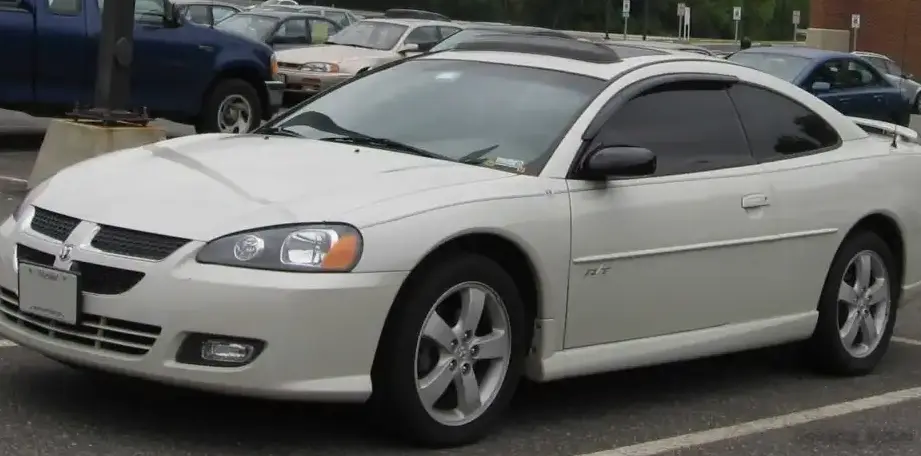
The Dodge Stratus II Coupe 3.0i V6 24V R/T, produced from 2001 to 2006, represented the performance-oriented variant of the second-generation Stratus coupe. Positioned as the flagship trim, the R/T model aimed to deliver a more engaging driving experience compared to the base and mid-range Stratus offerings. Built on the Chrysler JA platform, the Stratus II Coupe sought to revitalize the personal coupe segment for Dodge, offering a blend of sporty styling and V6 power. This particular 3.0-liter V6 configuration, paired with a five-speed manual transmission, was the top-tier powertrain option for the Stratus Coupe.
Technical Specifications
| Brand | Dodge |
| Model | Stratus |
| Generation | Stratus II Coupe |
| Type (Engine) | 3.0i V6 24V R/T (203 Hp) |
| Start of production | 2001 |
| End of production | 2006 |
| Powertrain Architecture | Internal Combustion engine |
| Body type | Coupe |
| Seats | 4 |
| Doors | 2 |
| Fuel consumption (urban) | 11.8 l/100 km (19.9 US mpg) |
| Fuel consumption (extra urban) | 8.1 l/100 km (29 US mpg) |
| Fuel Type | Petrol (Gasoline) |
| Acceleration 0 – 100 km/h | 7.4 sec |
| Acceleration 0 – 62 mph | 7.4 sec |
| Acceleration 0 – 60 mph | 7 sec |
| Maximum speed | 206 km/h (128 mph) |
| Weight-to-power ratio | 7.3 kg/Hp |
| Weight-to-torque ratio | 5.3 kg/Nm |
| Power | 203 Hp @ 5500 rpm |
| Torque | 278 Nm @ 4000 rpm (205.04 lb.-ft. @ 4000 rpm) |
| Engine layout | Front, Transverse |
| Engine Model/Code | 6G72 |
| Engine displacement | 2972 cm3 (181.36 cu. in.) |
| Number of cylinders | 6 |
| Engine configuration | V-engine |
| Cylinder Bore | 91.1 mm (3.59 in.) |
| Piston Stroke | 76 mm (2.99 in.) |
| Compression ratio | 9.1:1 |
| Number of valves per cylinder | 4 |
| Fuel injection system | Multi-port manifold injection |
| Engine aspiration | Naturally aspirated engine |
| Valvetrain | DOHC |
| Kerb Weight | 1485 kg (3273.86 lbs.) |
| Trunk (boot) space | 454 l (16.03 cu. ft.) |
| Fuel tank capacity | 62 l (16.38 US gal | 13.64 UK gal) |
| Length | 4849 mm (190.91 in.) |
| Width | 1786 mm (70.31 in.) |
| Height | 1364 mm (53.7 in.) |
| Wheelbase | 2634 mm (103.7 in.) |
| Front track | 1509 mm (59.41 in.) |
| Rear track | 1506 mm (59.29 in.) |
| Minimum turning circle | 12.19 m (39.99 ft.) |
| Drivetrain Architecture | Front wheel drive |
| Number of gears | 5 gears, manual transmission |
| Front suspension | Coil spring |
| Rear suspension | Coil spring |
| Front brakes | Ventilated discs |
| Rear brakes | Disc |
| Assisting systems | ABS (Anti-lock braking system) |
| Steering type | Steering rack and pinion |
| Power steering | Hydraulic Steering |
| Tires size | 215/50 R17 |
| Wheel rims size | 17 |
Powertrain & Engine Architecture
The heart of the Stratus II Coupe R/T was the 6G72 3.0-liter V6 engine. This engine, a member of Chrysler’s robust V6 family, featured a 60-degree V-angle and a double overhead camshaft (DOHC) valvetrain with four valves per cylinder. The 6G72 utilized a multi-port fuel injection system, delivering fuel directly into each intake port for optimized combustion. The engine’s 9.1:1 compression ratio was a compromise between performance and the ability to run on readily available octane fuels. The five-speed manual transmission, a Getrag unit, provided precise gear changes and allowed the driver to fully exploit the engine’s power band. This transmission was a key differentiator from the base Stratus models, which typically offered an automatic transmission.
Driving Characteristics
The 3.0L V6 and five-speed manual combination delivered a noticeably more spirited driving experience than the lower-trim Stratus models. Acceleration to 60 mph was achieved in approximately 7 seconds, and the car felt responsive in everyday driving situations. The manual transmission allowed for greater control and engagement, particularly during spirited driving on winding roads. While not a dedicated sports car, the R/T offered a good balance of performance and comfort. The gear ratios were well-matched to the engine’s torque curve, providing strong acceleration in each gear. Compared to the automatic transmission equipped models, the manual version felt more agile and connected to the driver.
Equipment & Trim Levels
The R/T trim level included a number of standard features designed to enhance both the aesthetic and driving experience. These typically included sport seats with upgraded upholstery, a leather-wrapped steering wheel, and a premium sound system. Exterior features often included a rear spoiler, alloy wheels (typically 17-inch), and unique badging. Optional extras could include a sunroof, upgraded audio systems, and various convenience packages. The interior generally featured a dark color scheme with metallic accents, aiming for a sporty and modern appearance.
Chassis & Braking
The Stratus II Coupe utilized a front-engine, front-wheel-drive layout. Suspension consisted of coil springs at all four corners. The front suspension incorporated stabilizer bars to reduce body roll during cornering. Braking duties were handled by ventilated discs at the front and solid discs at the rear. An Anti-lock Braking System (ABS) was standard equipment, enhancing safety and control during hard braking situations. The chassis was tuned to provide a comfortable ride while still offering reasonable handling characteristics. The R/T trim did not receive significant suspension upgrades compared to other Stratus Coupe models, focusing instead on powertrain and cosmetic enhancements.
Market Reception & Comparison
The Dodge Stratus II Coupe R/T was generally well-received by automotive critics as a stylish and affordable performance coupe. However, it often faced competition from established players in the segment, such as the Ford Mustang and Honda Civic Si. Critics praised the V6 engine’s power and the engaging nature of the manual transmission. Fuel economy was considered average for its class. Compared to the base Stratus models, the R/T offered a significant performance upgrade, but at a higher price point. The automatic transmission versions of the 3.0L V6 were often criticized for feeling less responsive and diminishing the overall driving experience.
Legacy
The Dodge Stratus II Coupe, particularly the 3.0L V6 R/T variant, has developed a modest following among enthusiasts. The 6G72 engine is known for its durability and relatively straightforward maintenance. While not without its flaws, the Stratus Coupe R/T offers a compelling combination of style, performance, and affordability in the used car market. Parts availability is generally good, and the engine is relatively easy to work on for experienced DIY mechanics. However, like many vehicles of this era, potential buyers should be aware of common issues such as corrosion and wear-and-tear on suspension components. The Stratus II Coupe R/T represents a somewhat overlooked chapter in Dodge’s history, offering a unique blend of American muscle and coupe styling.