
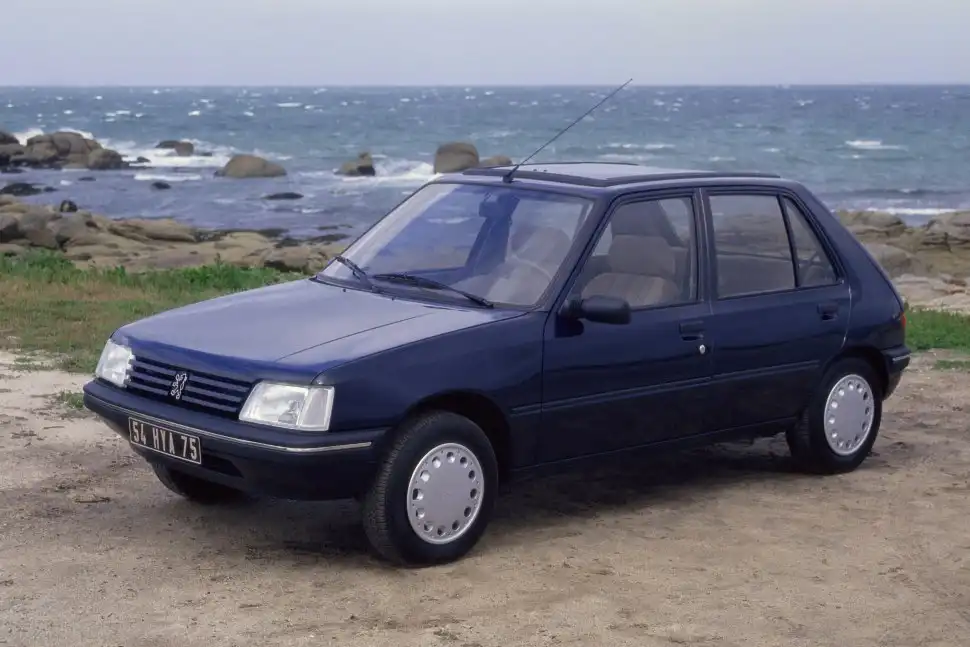
The Peugeot 205 I, specifically the 1.6-liter (75 horsepower) automatic variant produced between 1987 and 1989, represents a significant iteration of Peugeot’s hugely successful supermini. This version, falling within the 20A/C facelifted series, aimed to provide a comfortable and accessible entry point into the 205 range, prioritizing ease of use over outright performance. It occupied a middle ground in the lineup, positioned above the base 1.0-liter models but below the sportier 1.6 and 1.9 GTI versions. The introduction of an automatic transmission was a key feature, catering to drivers seeking a more relaxed driving experience, particularly in urban environments.
Technical Specifications
| Brand | Peugeot |
| Model | 205 |
| Generation | 205 I (20A/C, facelift 1987) |
| Type (Engine) | 1.6 (75 Hp) Automatic |
| Start of production | 1987 |
| End of production | 1989 |
| Powertrain Architecture | Internal Combustion engine |
| Body type | Hatchback |
| Fuel Type | Petrol (Gasoline) |
| Power | 75 Hp |
| Engine Model/Code | B1A XU51C, BAZ XU5CP |
| Engine aspiration | Naturally aspirated engine |
| Engine oil capacity | 5 l (5.28 US qt | 4.4 UK qt) |
| Coolant capacity | 6.7 l (7.08 US qt | 5.9 UK qt) |
Powertrain & Engine Architecture
The 1.6-liter engine, designated either B1A (XU51C) or BAZ (XU5CP) depending on the specific production year and market, is a naturally aspirated, inline-four cylinder unit. It features a single overhead camshaft (SOHC) valvetrain operating two valves per cylinder. Fuel delivery is managed by a Bosch mechanical fuel injection system, a relatively simple but reliable setup for the era. This system, while not as sophisticated as later multi-point injection systems, provided adequate fuel atomization for the engine’s modest power output. The XU series engine family was known for its durability and relatively straightforward maintenance. The automatic transmission paired with this engine was typically a three-speed unit, designed for smooth, if not particularly rapid, gear changes. It wasn’t a particularly advanced transmission by modern standards, but it suited the engine’s characteristics and the target audience’s expectations.
Driving Characteristics
The 1.6-liter automatic 205 offered a distinctly different driving experience compared to its manual counterparts or the higher-performance GTI models. With 75 horsepower on tap, acceleration was adequate for everyday driving, but it wasn’t a particularly quick car. The three-speed automatic transmission, while providing convenience, resulted in wider gear ratios and a less engaging driving experience. The transmission’s shift points were calibrated for fuel economy and comfort, meaning it didn’t hold gears for long under hard acceleration. This resulted in a noticeable delay when attempting to overtake or merge onto highways. Compared to the five-speed manual versions, the automatic felt noticeably slower, particularly in the mid-range. However, the automatic’s smooth operation and ease of use made it a popular choice for drivers prioritizing comfort and convenience over sporty performance.
Equipment & Trim Levels
The 1.6 Automatic 205 typically came equipped with a reasonable level of standard features for its time. Interior upholstery was generally cloth, with a simple, functional dashboard layout. Power steering was often included, a welcome addition for urban driving. Other standard features included a basic stereo system, central locking, and electric front windows on some models. Optional extras included a sunroof, upgraded upholstery, and alloy wheels. The trim level generally sat in the mid-range of the 205 lineup, offering a step up from the very basic models but lacking the sporty enhancements found in the GTI versions. The focus was on providing a comfortable and well-equipped car at an affordable price point.
Chassis & Braking
The 205’s chassis was a key element of its success, providing a good balance of ride comfort and handling. The 1.6 Automatic variant utilized a MacPherson strut front suspension and a torsion beam rear suspension. Braking was typically accomplished with disc brakes on the front wheels and drum brakes on the rear. While the drum brakes were adequate for the car’s weight and performance, they lacked the stopping power and fade resistance of disc brakes. A stabilizer bar was fitted to the front suspension to reduce body roll during cornering. The suspension setup was tuned for comfort, resulting in a relatively soft ride, but it still provided decent handling characteristics for everyday driving.
Market Reception & Comparison
The Peugeot 205 1.6 Automatic was generally well-received by critics as a practical and affordable supermini. It was praised for its comfortable ride, ease of use, and relatively low running costs. However, it was often criticized for its lack of performance compared to the manual versions and the GTI models. Fuel economy was a strong point, with the automatic transmission not significantly impacting consumption compared to the manual. Reliability was generally good, with the XU engine family being known for its durability. Compared to rivals like the Renault 5 and Citroën AX, the 205 offered a more refined driving experience and a more stylish interior. The automatic transmission, while not a performance enhancer, broadened the 205’s appeal to a wider range of buyers.
Legacy
The Peugeot 205 1.6 Automatic, while not the most iconic version of the 205, remains a fondly remembered car for many. The XU engine, in its various iterations, proved to be remarkably durable, and many examples are still on the road today. The automatic transmission, while simple, has also proven to be relatively reliable. In the used car market, these models are often sought after by enthusiasts looking for a classic French hatchback that is easy to maintain and comfortable to drive. While not a collector’s item like the GTI versions, the 1.6 Automatic 205 represents a significant part of the 205’s success story, offering a practical and affordable entry point into one of the most beloved superminis of all time. Its enduring appeal lies in its simplicity, reliability, and the overall charm of the 205 platform.
