
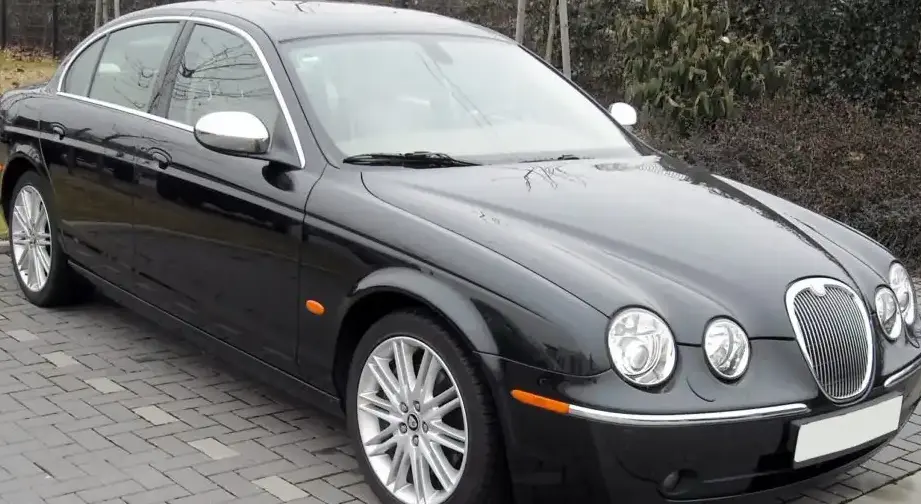
The Jaguar S-Type (CCX) 4.2 i V8 32V Type R, produced from 2001 to 2007, represented the pinnacle of performance for the second-generation S-Type. Positioned as the flagship model, the Type R aimed to blend Jaguar’s traditional luxury with genuine sporting capability. It was a direct response to criticism that earlier S-Type models lacked the dynamic prowess expected of a Jaguar. This variant sat at the top of the S-Type range, offering a significant step up in power and handling compared to the 3.0L and 4.0L naturally aspirated models. The CCX designation refers to the model’s internal platform code.
Technical Specifications
| Brand | Jaguar |
| Model | S-type |
| Generation | S-type (CCX) |
| Type (Engine) | 4.2 i V8 32V Type R (395 Hp) |
| Start of production | 2001 year |
| End of production | 2007 year |
| Powertrain Architecture | Internal Combustion engine |
| Body type | Sedan |
| Seats | 5 |
| Doors | 4 |
| Fuel consumption (economy) – urban | 18.5 l/100 km (12.7 US mpg, 15.3 UK mpg, 5.4 km/l) |
| Fuel consumption (economy) – extra urban | 9.6 l/100 km (24.5 US mpg, 29.4 UK mpg, 10.4 km/l) |
| Fuel consumption (economy) – combined | 12.5 l/100 km (18.8 US mpg, 22.6 UK mpg, 8 km/l) |
| Fuel Type | Petrol (Gasoline) |
| Acceleration 0 – 100 km/h | 5.6 sec |
| Acceleration 0 – 62 mph | 5.6 sec |
| Acceleration 0 – 60 mph | 5.3 sec |
| Maximum speed | 250 km/h (155.34 mph) |
| Weight-to-power ratio | 4.6 kg/Hp, 219.4 Hp/tonne |
| Weight-to-torque ratio | 3.3 kg/Nm, 300.6 Nm/tonne |
| Power | 395 Hp @ 6100 rpm |
| Power per litre | 94.1 Hp/l |
| Torque | 541 Nm @ 5500 rpm (399.02 lb.-ft. @ 5500 rpm) |
| Engine layout | Front, Longitudinal |
| Engine Model/Code | AJ33S |
| Engine displacement | 4196 cm3 (256.06 cu. in.) |
| Number of cylinders | 8 |
| Engine configuration | V-engine |
| Cylinder Bore | 86 mm (3.39 in.) |
| Piston Stroke | 90.3 mm (3.56 in.) |
| Compression ratio | 9.1:1 |
| Number of valves per cylinder | 4 |
| Fuel injection system | Multi-port manifold injection |
| Engine aspiration | Supercharger, Intercooler |
| Valvetrain | DOHC |
| Engine oil capacity | 6.3 l (6.66 US qt | 5.54 UK qt) |
| Coolant | 10 l (10.57 US qt | 8.8 UK qt) |
| Kerb Weight | 1800 kg (3968.32 lbs.) |
| Max. weight | 2240 kg (4938.35 lbs.) |
| Max load | 440 kg (970.03 lbs.) |
| Trunk (boot) space – minimum | 370 l (13.07 cu. ft.) |
| Trunk (boot) space – maximum | 810 l (28.6 cu. ft.) |
| Fuel tank capacity | 68 l (17.96 US gal | 14.96 UK gal) |
| Length | 4861 mm (191.38 in.) |
| Width | 1819 mm (71.61 in.) |
| Height | 1441 mm (56.73 in.) |
| Wheelbase | 2909 mm (114.53 in.) |
| Front track | 1537 mm (60.51 in.) |
| Rear (Back) track | 1544 mm (60.79 in.) |
| Drive wheel | All wheel drive (4×4) |
| Number of gears and type of gearbox | 6 gears, automatic transmission |
| Front suspension | Double wishbone |
| Rear suspension | Double wishbone |
| Front brakes | Ventilated discs |
| Rear brakes | Ventilated discs |
| Assisting systems | ABS (Anti-lock braking system) |
| Steering type | Steering rack and pinion |
| Power steering | Hydraulic Steering |
| Tires size | 245/40 R18; 275/35 R18 |
Powertrain & Engine Architecture
The heart of the S-Type R is the AJ33S 4.2-liter supercharged V8 engine. This engine is a significant departure from the naturally aspirated engines found in other S-Type models. It features a Roots-type supercharger with an intercooler, boosting power output to 395 horsepower and 399 lb-ft of torque. The engine utilizes multi-port fuel injection and a double overhead camshaft (DOHC) valvetrain with four valves per cylinder. The engine code, AJ33S, is crucial for identifying specific parts and maintenance requirements. The six-speed automatic transmission, sourced from ZF, was specifically calibrated for the Type R to handle the increased power and provide relatively quick shifts. It features a sport mode for more aggressive shifting.
Driving Characteristics
The S-Type R delivers a markedly different driving experience compared to its siblings. The supercharger provides instant and substantial torque, resulting in brisk acceleration. The 0-60 mph sprint takes approximately 5.3 seconds, and the car is electronically limited to a top speed of 155 mph. The automatic transmission, while smooth, isn’t as engaging as a manual gearbox. However, the sport mode helps to mitigate this, holding gears longer and downshifting more readily. The all-wheel-drive system provides excellent traction, particularly in inclement weather, but it also adds weight. Compared to the 4.0L models, the Type R feels significantly more powerful and responsive. The 3.0L models, while more fuel-efficient, are in a different performance category altogether.
Equipment & Trim Levels
The Type R came standard with a comprehensive list of features, befitting its flagship status. Interior appointments included leather upholstery, wood trim, and heated front seats. Standard equipment also included a premium sound system, automatic climate control, and a sunroof. Optional extras included navigation, upgraded leather, and various cosmetic enhancements. The exterior was distinguished by unique alloy wheels, a mesh grille, and a rear spoiler. The interior typically featured sport seats with more aggressive bolstering than the standard S-Type models.
Chassis & Braking
The S-Type R featured a revised suspension setup compared to other models, with stiffer springs and dampers to improve handling. Both front and rear suspensions utilize a double wishbone configuration. Braking duties are handled by ventilated discs on all four wheels, providing ample stopping power. The anti-lock braking system (ABS) is standard. The all-wheel-drive system distributes power between the front and rear axles, enhancing stability and traction. The steering is rack and pinion with hydraulic power assistance, offering a reasonably direct feel.
Market Reception & Comparison
Critics generally praised the S-Type R for its performance and luxurious interior. However, some noted that the car felt heavy and lacked the ultimate agility of its German rivals. Fuel economy was also a concern, with combined fuel consumption averaging around 18.8 US mpg. Compared to the 4.0L S-Type, the Type R offered a substantial performance upgrade, but at a higher price point. The 3.0L models were more affordable and fuel-efficient, but they catered to a different buyer seeking comfort and economy rather than outright performance.
Legacy
The S-Type R remains a desirable used car, particularly among Jaguar enthusiasts. The AJ33S engine is generally considered reliable, although regular maintenance is crucial. Common issues include supercharger pulley failures and occasional oil leaks. The ZF transmission is also robust but requires fluid changes at the recommended intervals. The car’s all-wheel-drive system adds complexity, potentially increasing maintenance costs. Today, the S-Type R offers a unique blend of British luxury and performance, making it a compelling alternative to more common German sports sedans. Its supercharged V8 provides a distinctive driving experience that continues to appeal to enthusiasts.
