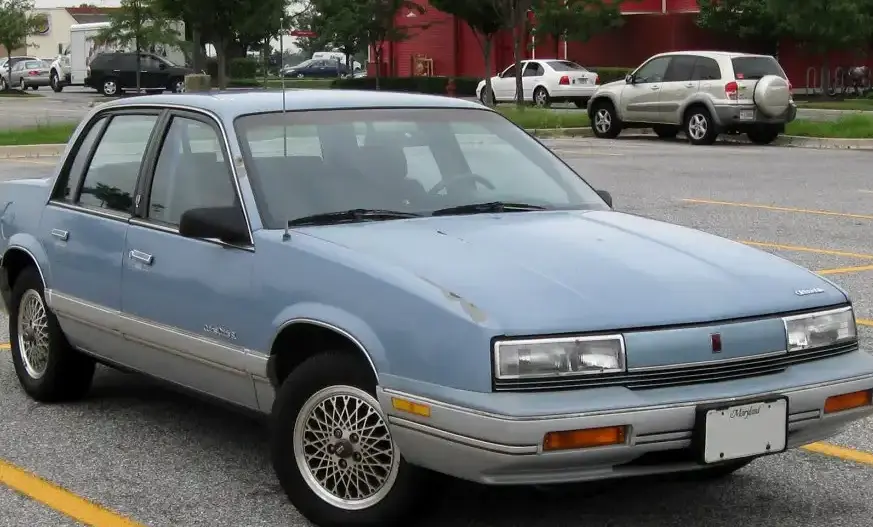
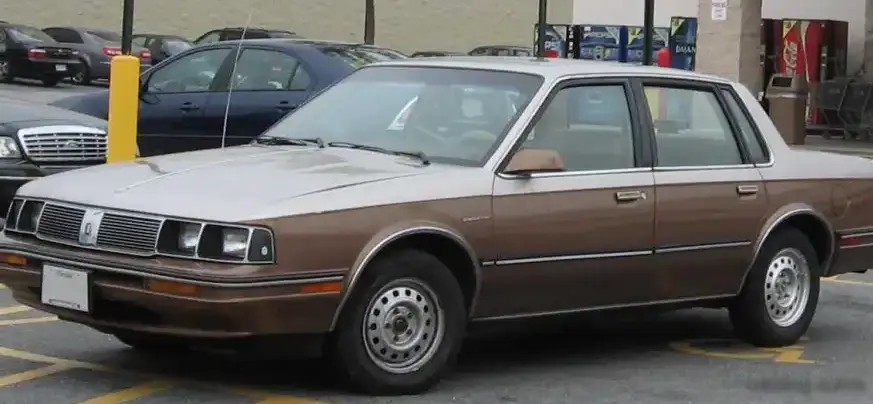
The Oldsmobile Cutlass Supreme Convertible 2.3 16V, produced from 1987 to 1997, represented a downsized and more fuel-efficient offering within the traditionally large Cutlass Supreme lineup. Positioned as the entry-level convertible option, it aimed to capture a broader market segment seeking open-air motoring without the expense or size of its V6-powered siblings. This variant was part of the third-generation Cutlass Supreme (1988-1997), which itself was based on the A-body platform shared with other GM vehicles like the Buick Century and Pontiac 6000. The 2.3-liter engine and three-speed automatic transmission combination offered a balance of affordability and convenience, though at the expense of outright performance.
Technical Specifications
| Brand | Oldsmobile |
| Model | Cutlass |
| Generation | Cutlass Supreme Convertible |
| Type (Engine) | 2.3 16V (162 Hp) |
| Start of production | 1987 |
| End of production | 1997 |
| Powertrain Architecture | Internal Combustion engine |
| Body type | Cabriolet |
| Seats | 4 |
| Doors | 2 |
| Fuel consumption (urban) | 16 l/100 km (14.7 US mpg, 17.7 UK mpg, 6.3 km/l) |
| Fuel consumption (extra urban) | 9 l/100 km (26.1 US mpg, 31.4 UK mpg, 11.1 km/l) |
| Fuel Type | Petrol (Gasoline) |
| Maximum speed | 190 km/h (118.06 mph) |
| Weight-to-power ratio | 10.1 kg/Hp (99.1 Hp/tonne) |
| Weight-to-torque ratio | 7.8 kg/Nm (128.4 Nm/tonne) |
| Power | 162 Hp @ 6200 rpm |
| Power per litre | 71.7 Hp/l |
| Torque | 210 Nm @ 5200 rpm (154.89 lb.-ft. @ 5200 rpm) |
| Engine layout | Front, Transverse |
| Engine Model/Code | LD2 |
| Engine displacement | 2260 cm3 (137.91 cu. in.) |
| Number of cylinders | 4 |
| Engine configuration | Inline |
| Cylinder Bore | 92 mm (3.62 in.) |
| Piston Stroke | 85 mm (3.35 in.) |
| Compression ratio | 9.5:1 |
| Number of valves per cylinder | 4 |
| Fuel injection system | Multi-port manifold injection |
| Engine aspiration | Naturally aspirated engine |
| Valvetrain | DOHC |
| Engine oil capacity | 4.3 l (4.54 US qt | 3.78 UK qt) |
| Coolant | 10.5 l (11.1 US qt | 9.24 UK qt) |
| Kerb Weight | 1635 kg (3604.56 lbs.) |
| Trunk (boot) space (minimum) | 320 l (11.3 cu. ft.) |
| Fuel tank capacity | 63 l (16.64 US gal | 13.86 UK gal) |
| Length | 4880 mm (192.13 in.) |
| Width | 1805 mm (71.06 in.) |
| Height | 1380 mm (54.33 in.) |
| Wheelbase | 2730 mm (107.48 in.) |
| Front track | 1510 mm (59.45 in.) |
| Rear (Back) track | 1470 mm (57.87 in.) |
| Drivetrain Architecture | Front wheel drive |
| Number of gears and type of gearbox | 3 gears, automatic transmission |
| Front suspension | Coil spring |
| Rear suspension | Leaf spring |
| Front brakes | Ventilated discs |
| Rear brakes | Disc |
| Assisting systems | ABS (Anti-lock braking system) |
| Steering type | Steering rack and pinion |
| Power steering | Hydraulic Steering |
| Tires size | 195/75 R14 |
Powertrain & Engine Architecture
The heart of the Cutlass Supreme Convertible 2.3 was the LD2 engine, a 2.3-liter inline-four cylinder powerplant. This engine was part of GM’s “Quad 4” family, known for its dual overhead camshaft (DOHC) design and four valves per cylinder. This configuration allowed for improved breathing and higher revving capability compared to traditional pushrod engines. The LD2 featured multi-port fuel injection, delivering fuel directly to each cylinder for precise control and efficient combustion. The three-speed automatic transmission, a TH125C, was a common unit used in many GM vehicles of the era. While reliable, it wasn’t known for its responsiveness or fuel efficiency compared to more modern automatic transmissions. The transmission was electronically controlled, offering smoother shifts than earlier hydraulically-governed automatics.
Driving Characteristics
The 162 horsepower and 155 lb-ft of torque produced by the 2.3-liter engine provided adequate, but not exhilarating, performance in the Cutlass Supreme Convertible. Acceleration was leisurely, taking approximately 10-11 seconds to reach 60 mph. The three-speed automatic transmission’s gear ratios were geared more towards fuel economy than outright acceleration. Compared to the V6-powered Cutlass Supreme Convertibles, the 2.3-liter version felt noticeably slower, particularly when merging onto highways or climbing hills. The automatic transmission, while convenient, lacked the driver engagement and responsiveness of the available five-speed manual transmission. However, the 2.3L engine was lighter than the V6, which slightly improved handling and reduced understeer.
Equipment & Trim Levels
The 2.3-liter Cutlass Supreme Convertible typically came with a fairly basic level of equipment. Standard features included power steering, power brakes, cloth upholstery, and an AM/FM stereo. Air conditioning was often an optional extra, as were features like power windows and locks. The interior design was typical of the early 1990s, with a focus on practicality rather than luxury. The dashboard featured a straightforward layout with easy-to-read gauges. Optional extras included upgraded sound systems, leather upholstery, and a tilt steering wheel. The convertible top was manually operated, a cost-saving measure compared to the power-operated tops found on higher-trim models.
Chassis & Braking
The Cutlass Supreme Convertible utilized a front-wheel-drive layout with an independent coil spring suspension in the front and a solid leaf spring suspension in the rear. The rear leaf spring design was a cost-effective solution, but it didn’t offer the same level of ride comfort or handling precision as a fully independent rear suspension. Braking duties were handled by ventilated discs in the front and solid discs in the rear. An anti-lock braking system (ABS) was available as an option, enhancing safety by preventing wheel lockup during hard braking. The steering system was a rack-and-pinion setup with hydraulic power assist, providing reasonably precise steering feel.
Market Reception & Comparison
The Cutlass Supreme Convertible 2.3 16V was generally well-received as an affordable entry point into the convertible market. Critics praised its relatively fuel-efficient engine and comfortable ride. However, the lack of power was a common complaint. Compared to the V6-powered Cutlass Supreme Convertibles, the 2.3-liter version offered significantly lower performance, but at a considerably lower price point. Fuel economy was a strong point, averaging around 26 mpg on the highway. Reliability was generally good, although the automatic transmission could be prone to issues if not properly maintained. The 2.3L engine was considered relatively durable, but regular oil changes and maintenance were essential.
Legacy
Today, the Oldsmobile Cutlass Supreme Convertible 2.3 16V is a relatively affordable classic car. While not as sought-after as the V6 models, it offers a unique blend of style, affordability, and open-air enjoyment. The LD2 engine, while not a powerhouse, is known for its reliability and relatively simple maintenance requirements. Parts availability is generally good, as many components are shared with other GM vehicles of the era. The 2.3-liter Cutlass Supreme Convertible represents a snapshot of the early 1990s American automotive landscape, a time when manufacturers were striving to offer more fuel-efficient and affordable options to a wider range of consumers. Well-maintained examples are becoming increasingly collectible, appealing to enthusiasts seeking a nostalgic and accessible classic convertible.