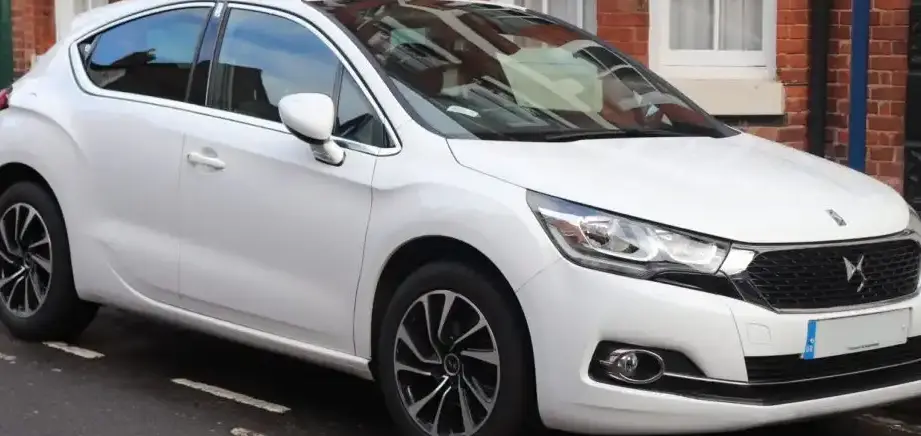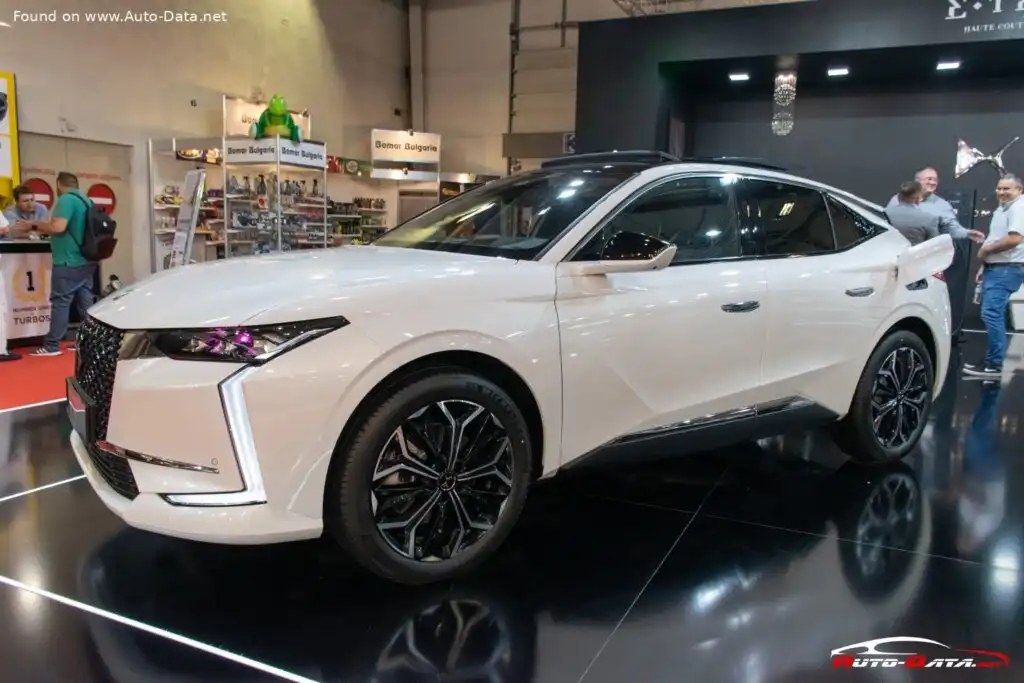
The DS 4 II 1.6 PureTech 225 Automatic, produced from May 2021 to October 2022, represents a performance-oriented variant within the second generation of the DS 4 compact crossover. Positioned as a mid-to-high trim level, it offered a significant power upgrade over the base engine options, appealing to drivers seeking a more engaging driving experience. This model played a key role in establishing the DS brand’s identity as a premium alternative within the broader Stellantis portfolio, particularly in European markets where the DS 4 II was primarily sold. It’s built on the EMP2 platform, shared with other Stellantis vehicles like the Peugeot 308 and Opel Astra.
Technical Specifications
| Brand | DS |
| Model | 4 |
| Generation | 4 II |
| Type (Engine) | 1.6 PureTech (225 Hp) Automatic |
| Start of production | May, 2021 |
| End of production | October, 2022 |
| Powertrain Architecture | Internal Combustion engine |
| Body type | Crossover |
| Seats | 5 |
| Doors | 5 |
| Fuel consumption at Low speed (WLTP) | 8.3-8.5 l/100 km (28.3 – 27.7 US mpg, 34 – 33.2 UK mpg, 12 – 11.8 km/l) |
| Fuel consumption at Medium speed (WLTP) | 6.5-6.7 l/100 km (36.2 – 35.1 US mpg, 43.5 – 42.2 UK mpg, 15.4 – 14.9 km/l) |
| Fuel consumption at high speed (WLTP) | 5.7-6 l/100 km (41.3 – 39.2 US mpg, 49.6 – 47.1 UK mpg, 17.5 – 16.7 km/l) |
| Fuel consumption at very high speed (WLTP) | 6.8-7.1 l/100 km (34.6 – 33.1 US mpg, 41.5 – 39.8 UK mpg, 14.7 – 14.1 km/l) |
| Combined fuel consumption (WLTP) | 6.6-6.9 l/100 km (35.6 – 34.1 US mpg, 42.8 – 40.9 UK mpg, 15.2 – 14.5 km/l) |
| CO2 emissions (WLTP) | 149-155 g/km |
| Fuel consumption (economy) – urban (NEDC, WLTP equivalent) | 6.6 l/100 km (35.6 US mpg, 42.8 UK mpg, 15.2 km/l) |
| Fuel consumption (economy) – extra urban (NEDC, WLTP equivalent) | 4.7 l/100 km (50 US mpg, 60.1 UK mpg, 21.3 km/l) |
| Fuel consumption (economy) – combined (NEDC, WLTP equivalent) | 5.4 l/100 km (43.6 US mpg, 52.3 UK mpg, 18.5 km/l) |
| CO2 emissions (NEDC, WLTP equivalent) | 123 g/km |
| Fuel Type | Petrol (Gasoline) |
| Acceleration 0 – 100 km/h | 7.9 sec |
| Acceleration 0 – 62 mph | 7.9 sec |
| Acceleration 0 – 60 mph | 7.5 sec |
| Maximum speed | 235 km/h (146.02 mph) |
| Emission standard | Euro 6.3 |
| Weight-to-power ratio | 6.3 kg/Hp, 158.6 Hp/tonne |
| Weight-to-torque ratio | 4.7 kg/Nm, 211.4 Nm/tonne |
| Power | 225 Hp @ 5500 rpm |
| Power per litre | 140.8 Hp/l |
| Torque | 300 Nm @ 1900 rpm (221.27 lb.-ft. @ 1900 rpm) |
| Engine layout | Front, Transverse |
| Engine Model/Code | 5GG EP6FADTX |
| Engine displacement | 1598 cm3 (97.52 cu. in.) |
| Number of cylinders | 4 |
| Engine configuration | Inline |
| Number of valves per cylinder | 4 |
| Fuel injection system | Direct injection |
| Engine aspiration | Twin-Turbo, Intercooler |
| Engine oil capacity | 4.25 l (4.49 US qt | 3.74 UK qt) |
| Kerb Weight | 1419 kg (3128.36 lbs.) |
| Max. weight | 1990 kg (4387.2 lbs.) |
| Max load | 571 kg (1258.84 lbs.) |
| Trunk (boot) space – minimum | 430 l (15.19 cu. ft.) |
| Fuel tank capacity | 52 l (13.74 US gal | 11.44 UK gal) |
| Permitted trailer load with brakes (12%) | 1600 kg (3527.4 lbs.) |
| Length | 4400 mm (173.23 in.) |
| Width | 1866 mm (73.46 in.) |
| Width including mirrors | 2061 mm (81.14 in.) |
| Height | 1490 mm (58.66 in.) |
| Wheelbase | 2675 mm (105.31 in.) |
| Front track | 1600 mm (62.99 in.) |
| Rear (Back) track | 1605 mm (63.19 in.) |
| Front overhang | 925 mm (36.42 in.) |
| Rear overhang | 800 mm (31.5 in.) |
| Ride height (ground clearance) | 189 mm (7.44 in.) |
| Minimum turning circle (turning diameter) | 10.82 m (35.5 ft.) |
| Drivetrain Architecture | The Internal combustion engine (ICE) drives the front wheels of the vehicle. |
| Drive wheel | Front wheel drive |
| Number of gears and type of gearbox | 8 gears, automatic transmission |
| Front suspension | Independent, type McPherson with coil spring and anti-roll bar |
| Rear suspension | Semi-independent, coil spring |
| Front brakes | Ventilated discs, 330×28 mm |
| Rear brakes | Disc, 290×12 mm |
| Assisting systems | ABS (Anti-lock braking system) |
| Steering type | Steering rack and pinion |
| Power steering | Electric Steering |
| Tires size | 205/55 R19 97V; 245/40 R20 99V |
| Wheel rims size | 19; 20 |
Powertrain & Engine Architecture
At the heart of the DS 4 II 1.6 PureTech 225 lies the 5GG EP6FADTX engine, a 1.6-liter turbocharged inline-four cylinder gasoline engine. This engine is part of the PureTech family developed by the PSA Group (now Stellantis). The ‘225’ designation refers to its peak power output of 225 horsepower at 5500 rpm, and it produces 300 Nm (221 lb-ft) of torque from as low as 1900 rpm. The engine utilizes direct fuel injection, a twin-scroll turbocharger, and an intercooler to enhance performance and efficiency. The engine management system is sophisticated, optimizing fuel delivery and ignition timing for varying driving conditions. Paired with this engine is an eight-speed automatic transmission (Aisin-sourced), providing smooth and responsive gear changes. This transmission is known for its efficiency and contributes to the overall refinement of the driving experience.
Driving Characteristics
The 1.6 PureTech 225 Automatic delivers a noticeably more spirited driving experience compared to lower-powered DS 4 II variants. Acceleration from 0 to 100 km/h (0-62 mph) takes approximately 7.9 seconds. The twin-turbocharger setup minimizes turbo lag, providing strong and readily available torque across a wide rev range. The eight-speed automatic transmission is well-tuned, offering quick shifts and contributing to a comfortable ride. While not a sports car, the DS 4 II 1.6 PureTech 225 offers a good balance of performance and comfort, making it suitable for both daily commuting and longer journeys. The front-wheel-drive configuration provides adequate traction in most conditions, although it can exhibit some torque steer under hard acceleration.
Equipment & Trim Levels
The DS 4 II 1.6 PureTech 225 Automatic typically came equipped with a generous level of standard features. These included a touchscreen infotainment system with Apple CarPlay and Android Auto compatibility, a digital instrument cluster, automatic climate control, and a suite of advanced driver-assistance systems (ADAS) such as lane-keeping assist, adaptive cruise control, and automatic emergency braking. Interior upholstery was typically a combination of cloth and leather, with options for full leather available. Optional extras included a premium sound system, a panoramic sunroof, and upgraded wheels. The trim level often featured unique exterior styling elements, such as chrome accents and distinctive alloy wheel designs.
Chassis & Braking
The DS 4 II utilizes a McPherson strut front suspension and a semi-independent rear suspension setup. This configuration provides a good balance of ride comfort and handling. The suspension is tuned to prioritize comfort, but it remains reasonably controlled in corners. The braking system consists of ventilated discs at the front and solid discs at the rear. ABS (Anti-lock Braking System) is standard, along with electronic brake-force distribution and emergency brake assist. The steering is electrically assisted, providing a light and precise feel.
Market Reception & Comparison
The DS 4 II 1.6 PureTech 225 Automatic was generally well-received by automotive critics. It was praised for its strong performance, refined ride, and stylish interior. However, some reviewers noted that the front-wheel-drive configuration limited its handling capabilities compared to some of its rivals. Compared to the lower-powered 1.2 PureTech variants, the 1.6 PureTech 225 offered a significant performance upgrade, but at a higher price point. Fuel economy was respectable, but not class-leading, averaging around 6.6-6.9 l/100 km (35.6-34.1 US mpg). Reliability reports have been mixed, with some owners reporting issues with the engine’s timing chain and turbocharger.
Legacy
The DS 4 II 1.6 PureTech 225 Automatic represents a significant step forward for the DS brand, showcasing its commitment to delivering premium and stylish vehicles. While the model is no longer in production, it remains a popular choice on the used car market. The 1.6 PureTech engine, despite some reported reliability concerns, has proven to be a capable and efficient powerplant. The eight-speed automatic transmission continues to be highly regarded for its smoothness and responsiveness. As a used vehicle, the DS 4 II 1.6 PureTech 225 offers a compelling combination of performance, comfort, and style at a relatively affordable price point.