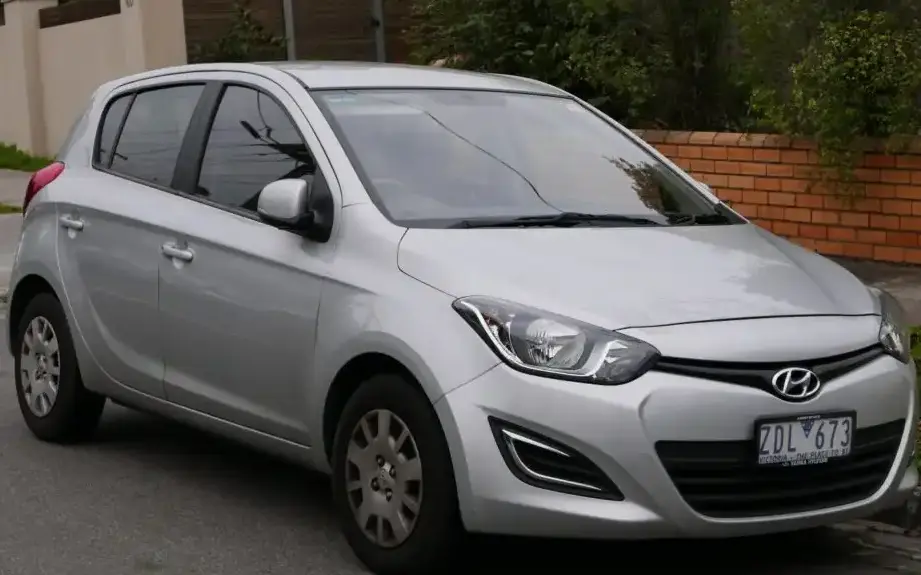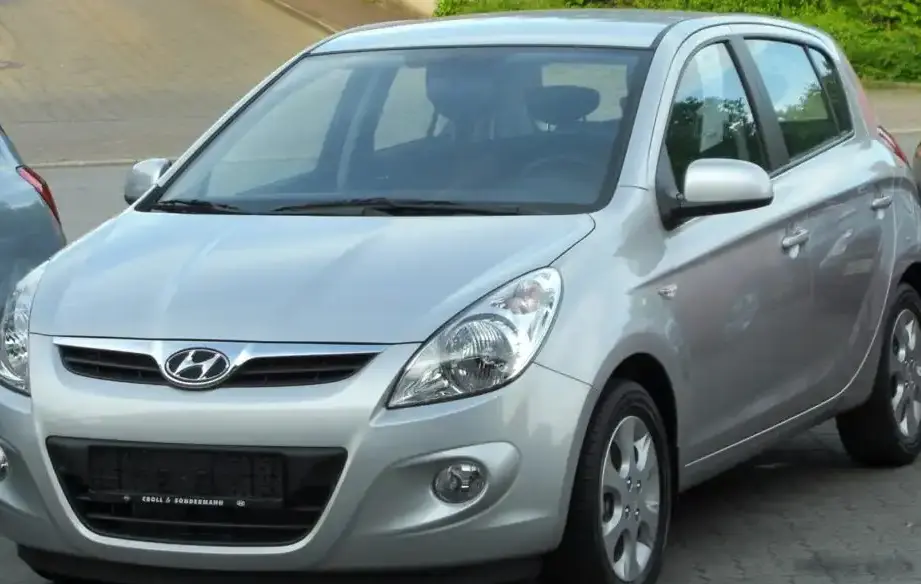
The Hyundai i20 I (PB) 1.6, produced between 2009 and 2010, represented a significant step forward for Hyundai’s presence in the European subcompact hatchback market. Positioned as a mid-range offering within the first generation i20 lineup (PB), it aimed to provide a balance of performance, fuel efficiency, and practicality. The i20, as a whole, was designed to appeal to buyers seeking a modern, well-equipped, and affordable small car, and the 1.6-liter variant sought to elevate the driving experience compared to the base 1.2-liter engine. It was a key model in Hyundai’s strategy to improve brand perception and increase market share in a highly competitive segment.
Technical Specifications
| Brand | Hyundai |
| Model | i20 |
| Generation | i20 I (PB) |
| Type (Engine) | 1.6 (126 Hp) |
| Start of production | 2009 |
| End of production | 2010 |
| Powertrain Architecture | Internal Combustion engine |
| Body type | Hatchback |
| Seats | 5 |
| Doors | 5 |
| Fuel consumption (urban) | 7.7 l/100 km (30.5 US mpg) |
| Fuel consumption (extra urban) | 5.1 l/100 km (46.1 US mpg) |
| Fuel consumption (combined) | 6.1 l/100 km (38.6 US mpg) |
| CO2 emissions | 144 g/km |
| Fuel Type | Petrol (Gasoline) |
| Acceleration 0 – 100 km/h | 9.5 sec |
| Acceleration 0 – 62 mph | 9.5 sec |
| Acceleration 0 – 60 mph | 9 sec |
| Maximum speed | 190 km/h (118.06 mph) |
| Emission standard | Euro 4 |
| Weight-to-power ratio | 8.9 kg/Hp |
| Weight-to-torque ratio | 7.1 kg/Nm |
| Power | 126 Hp @ 6300 rpm |
| Torque | 157 Nm @ 4200 rpm (115.8 lb.-ft. @ 4200 rpm) |
| Engine layout | Front, Transverse |
| Engine Model/Code | G4FC |
| Engine displacement | 1591 cm3 (97.09 cu. in.) |
| Number of cylinders | 4 |
| Engine configuration | Inline |
| Cylinder Bore | 77 mm (3.03 in.) |
| Piston Stroke | 85.4 mm (3.36 in.) |
| Compression ratio | 10.5:1 |
| Number of valves per cylinder | 4 |
| Fuel injection system | Multi-port manifold injection |
| Engine aspiration | Naturally aspirated engine |
| Valvetrain | DOHC |
| Engine oil capacity | 3.3 l (3.49 US qt | 2.9 UK qt) |
| Coolant capacity | 5.8 l (6.13 US qt | 5.1 UK qt) |
| Kerb Weight | 1119 kg (2466.97 lbs.) |
| Max. weight | 1565 kg (3450.23 lbs.) |
| Max load | 446 kg (983.26 lbs.) |
| Trunk (boot) space – minimum | 295 l (10.42 cu. ft.) |
| Trunk (boot) space – maximum | 1060 l (37.43 cu. ft.) |
| Fuel tank capacity | 45 l (11.89 US gal | 9.9 UK gal) |
| Length | 3940 mm (155.12 in.) |
| Width | 1710 mm (67.32 in.) |
| Height | 1490 mm (58.66 in.) |
| Wheelbase | 2525 mm (99.41 in.) |
| Front track | 1487 mm (58.54 in.) |
| Rear track | 1485 mm (58.46 in.) |
| Ride height (ground clearance) | 150 mm (5.91 in.) |
| Drag coefficient (Cd) | 0.33 |
| Minimum turning circle | 10.4 m (34.12 ft.) |
| Drivetrain Architecture | Front wheel drive |
| Number of gears | 5 |
| Gearbox type | Manual transmission |
| Front brakes | Ventilated discs |
| Rear brakes | Disc |
| Assisting systems | ABS (Anti-lock braking system) |
| Steering type | Steering rack and pinion |
| Power steering | Electric Steering |
| Tires size | 185/60 R15 |
| Wheel rims size | 15 |
Powertrain & Engine Architecture
The heart of the i20 1.6 was the Hyundai G4FC engine, a 1.6-liter inline-four cylinder gasoline engine. This engine utilized a multi-point fuel injection system and a double overhead camshaft (DOHC) valvetrain, contributing to its relatively efficient operation and respectable power output. The G4FC was a naturally aspirated engine, meaning it did not employ turbocharging or supercharging. Its 1591cc displacement allowed for a good balance between responsiveness and fuel economy. The engine produced 126 horsepower at 6300 rpm and 157 Nm (115.8 lb-ft) of torque at 4200 rpm. The engine was paired with a five-speed manual transmission, providing drivers with direct control over gear selection. This transmission was chosen for its simplicity and affordability, aligning with the i20’s overall value proposition.
Driving Characteristics
The i20 1.6 with the five-speed manual offered a noticeable improvement in performance over the base 1.2-liter model. Acceleration from 0 to 60 mph took approximately 9 seconds, and it could reach a top speed of 118 mph. While not a sports car, the 1.6-liter engine provided sufficient power for everyday driving, including highway merging and overtaking. The five-speed gearbox was well-matched to the engine’s characteristics, offering smooth shifts and a reasonable spread of ratios. The gear ratios were tuned for a balance of fuel efficiency and responsiveness. Compared to the 1.2-liter, the 1.6 felt more relaxed at highway speeds and required less frequent downshifting. However, it wasn’t as nimble or engaging as some of its competitors, such as the Ford Fiesta or Volkswagen Polo.
Equipment & Trim Levels
The i20 1.6 typically came equipped with a reasonable level of standard features. These included air conditioning, power steering, electric front windows, and a basic audio system with CD player. Higher trim levels, often denoted by additional packages, could add features like alloy wheels, fog lights, a trip computer, and upgraded interior trim. Interior upholstery was typically cloth, with a focus on durability rather than luxury. Optional extras included a sunroof, parking sensors, and a more advanced audio system with MP3 compatibility. The dashboard layout was functional and straightforward, prioritizing ease of use over stylistic flair.
Chassis & Braking
The i20 I (PB) utilized a front-wheel-drive platform with a MacPherson strut front suspension and a torsion beam rear suspension. This setup provided a comfortable ride quality, although it wasn’t particularly sporty. The front brakes were ventilated discs, offering good stopping power, while the rear brakes were solid discs. Anti-lock Braking System (ABS) was standard, enhancing safety. The steering was electrically assisted, providing light and easy steering feel. The i20’s suspension was tuned for comfort, absorbing bumps and imperfections in the road reasonably well. However, body roll was noticeable during cornering.
Market Reception & Comparison
The Hyundai i20 1.6 was generally well-received by automotive critics as a practical and affordable small car. It was praised for its spacious interior, comfortable ride, and good value for money. However, some critics noted that its styling was somewhat conservative and that its driving dynamics weren’t as engaging as some of its rivals. Compared to the 1.2-liter i20, the 1.6 offered a significant performance boost, but at a slightly higher price point. Fuel economy was comparable to other small cars in its class, and reliability was generally good. The i20 1.6 competed directly with models like the Ford Fiesta, Volkswagen Polo, Renault Clio, and Peugeot 207.
Legacy
The Hyundai i20 I (PB) 1.6, while not a groundbreaking vehicle, played an important role in establishing Hyundai as a credible player in the European small car market. The G4FC engine proved to be a reliable and durable unit, and many examples are still on the road today. In the used car market, the i20 1.6 is often sought after by buyers looking for an affordable, practical, and reliable hatchback. Its relatively simple mechanical design makes it relatively easy and inexpensive to maintain. While it may lack the sophistication of more modern small cars, the i20 1.6 remains a solid choice for those seeking a dependable and economical mode of transportation.