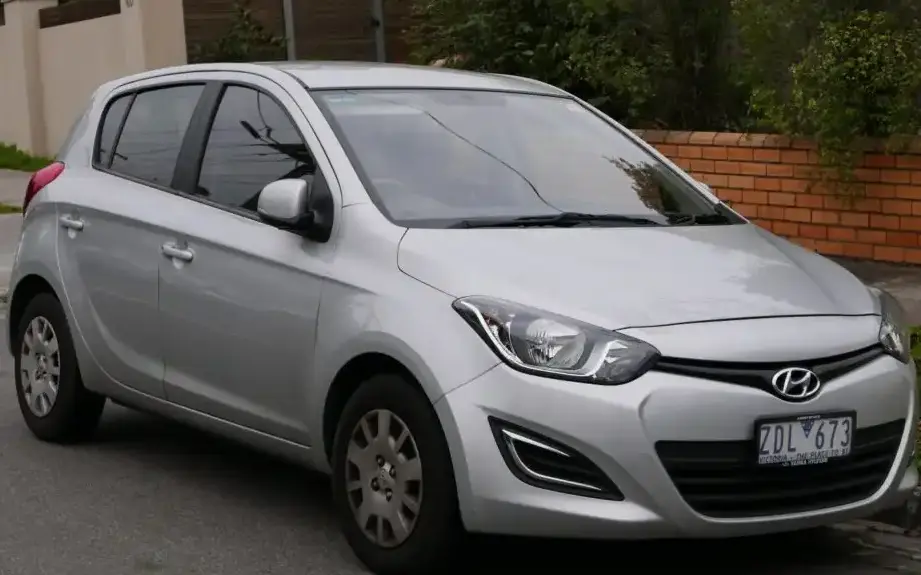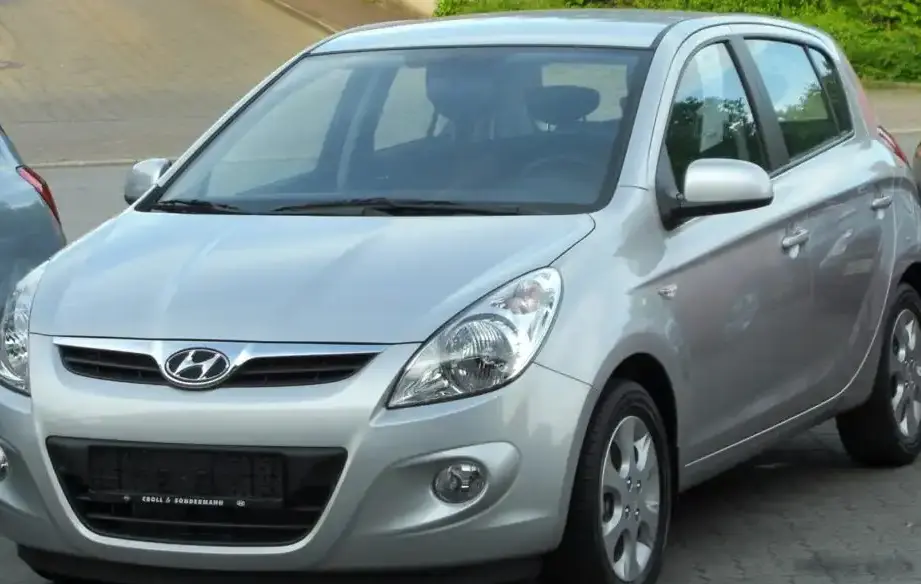
The Hyundai i20 I (PB) 1.6 Automatic, produced between 2009 and 2010, represented a significant step forward for Hyundai’s presence in the European subcompact hatchback market. Positioned as a mid-range offering within the first generation i20 lineup (the PB series), this variant combined a 1.6-liter gasoline engine with a four-speed automatic transmission, aiming to provide a balance of practicality, comfort, and affordability. It was designed to appeal to buyers seeking an easy-to-drive city car with enough power for occasional highway journeys. The i20 PB platform was a key model for Hyundai, establishing a foothold against established competitors like the Ford Fiesta, Volkswagen Polo, and Renault Clio.
Technical Specifications
| Brand | Hyundai |
| Model | i20 |
| Generation | i20 I (PB) |
| Type (Engine) | 1.6 (126 Hp) Automatic |
| Start of production | 2009 |
| End of production | 2010 |
| Powertrain Architecture | Internal Combustion engine |
| Body type | Hatchback |
| Seats | 5 |
| Doors | 5 |
| Fuel consumption (urban) | 8.4 l/100 km (28 US mpg, 33.6 UK mpg, 11.9 km/l) |
| Fuel consumption (extra urban) | 5.4 l/100 km (43.6 US mpg, 52.3 UK mpg, 18.5 km/l) |
| Fuel consumption (combined) | 6.5 l/100 km (36.2 US mpg, 43.5 UK mpg, 15.4 km/l) |
| Fuel Type | Petrol (Gasoline) |
| Acceleration 0 – 100 km/h | 11.4 sec |
| Acceleration 0 – 62 mph | 11.4 sec |
| Acceleration 0 – 60 mph | 10.8 sec |
| Maximum speed | 180 km/h (111.85 mph) |
| Emission standard | Euro 4 |
| Weight-to-power ratio | 9.2 kg/Hp, 108.9 Hp/tonne |
| Weight-to-torque ratio | 7.4 kg/Nm, 135.7 Nm/tonne |
| Power | 126 Hp @ 6300 rpm |
| Power per litre | 79.2 Hp/l |
| Torque | 157 Nm @ 4200 rpm (115.8 lb.-ft. @ 4200 rpm) |
| Engine layout | Front, Transverse |
| Engine Model/Code | G4FC |
| Engine displacement | 1591 cm3 (97.09 cu. in.) |
| Number of cylinders | 4 |
| Engine configuration | Inline |
| Cylinder Bore | 77 mm (3.03 in.) |
| Piston Stroke | 85.4 mm (3.36 in.) |
| Compression ratio | 10.5:1 |
| Number of valves per cylinder | 4 |
| Fuel injection system | Multi-port manifold injection |
| Engine aspiration | Naturally aspirated engine |
| Valvetrain | DOHC |
| Engine oil capacity | 3.3 l (3.49 US qt | 2.9 UK qt) |
| Coolant capacity | 5.8 l (6.13 US qt | 5.1 UK qt) |
| Kerb Weight | 1157 kg (2550.75 lbs.) |
| Max. weight | 1515 kg (3340 lbs.) |
| Max load | 358 kg (789.25 lbs.) |
| Trunk (boot) space – minimum | 295 l (10.42 cu. ft.) |
| Trunk (boot) space – maximum | 1045 l (36.9 cu. ft.) |
| Fuel tank capacity | 45 l (11.89 US gal | 9.9 UK gal) |
| Length | 3940 mm (155.12 in.) |
| Width | 1710 mm (67.32 in.) |
| Height | 1490 mm (58.66 in.) |
| Wheelbase | 2525 mm (99.41 in.) |
| Front track | 1487 mm (58.54 in.) |
| Rear track | 1485 mm (58.46 in.) |
| Minimum turning circle | 10.4 m (34.12 ft.) |
| Drivetrain Architecture | Front wheel drive |
| Number of gears | 4 |
| Gearbox type | Automatic transmission |
| Front suspension | Independent, McPherson with coil spring and anti-roll bar |
| Rear suspension | Rigid axle suspension |
| Front brakes | Ventilated discs |
| Rear brakes | Disc |
| Assisting systems | ABS (Anti-lock braking system) |
| Steering type | Steering rack and pinion |
| Power steering | Electric |
| Tires size | 175/70 R14 |
| Wheel rims size | 5.0J x 14 |
Powertrain & Engine Architecture
The heart of the i20 1.6 Automatic is the Hyundai G4FC engine, a 1.6-liter inline-four cylinder gasoline engine. This engine utilizes a multi-point fuel injection system and a double overhead camshaft (DOHC) valvetrain, contributing to reasonable efficiency and power output for its class. The G4FC engine was a relatively common unit within the Hyundai-Kia group, known for its generally robust nature. The four-speed automatic transmission, while providing convenience, was a somewhat dated design by the late 2000s. It featured traditional hydraulic control and lacked the efficiency and responsiveness of more modern automatic transmissions with more gears. The transmission’s gear ratios were tuned for comfortable city driving and adequate highway cruising, but it wasn’t optimized for sporty performance.
Driving Characteristics
The i20 1.6 Automatic offered a comfortable and predictable driving experience. With 126 horsepower, acceleration was adequate for everyday driving, with a 0-60 mph time around 10.8 seconds. However, it wasn’t particularly quick, and the four-speed automatic transmission could sometimes feel sluggish during overtaking maneuvers. The automatic transmission’s shift points were programmed for fuel economy, which meant the engine often lacked the immediate response found in manual transmission versions or higher-output i20 models. Compared to the more economical 1.4-liter variants, the 1.6 offered noticeably more power, but at the expense of slightly higher fuel consumption. The suspension provided a comfortable ride, absorbing bumps and imperfections in the road well, making it a suitable choice for urban environments.
Equipment & Trim Levels
The 1.6 Automatic trim typically included features such as air conditioning, power windows, central locking, and a basic audio system with CD player. Higher trim levels added features like alloy wheels, fog lights, and upgraded interior trim. Interior upholstery was generally cloth, with a functional and durable design. Optional extras included a sunroof, upgraded audio systems, and parking sensors. The i20 aimed for a good balance of features for the price point, offering a competitive package against its rivals.
Chassis & Braking
The i20 I (PB) utilized a McPherson strut front suspension and a rigid axle rear suspension. This setup provided a good compromise between ride comfort and handling. The front brakes were ventilated discs, offering adequate stopping power, while the rear brakes were solid discs. ABS (Anti-lock Braking System) was standard, enhancing safety. The steering was electrically assisted, providing light and easy steering for urban driving. The chassis was designed to be lightweight, contributing to fuel efficiency and handling.
Market Reception & Comparison
The Hyundai i20 1.6 Automatic received generally positive reviews for its practicality, comfort, and value for money. Critics noted that the automatic transmission felt somewhat dated compared to newer designs, and the engine wasn’t particularly exciting. However, the i20’s overall package was considered competitive in the subcompact segment. Compared to the 1.4-liter i20, the 1.6 Automatic offered more power and a more relaxed driving experience, but at a higher price and with slightly lower fuel economy. Against rivals like the Ford Fiesta and Volkswagen Polo, the i20 offered a similar level of equipment and practicality, often at a more affordable price point.
Legacy
The Hyundai i20 I (PB) 1.6 Automatic, while not a performance standout, proved to be a reliable and practical vehicle. The G4FC engine is generally considered durable, and the four-speed automatic transmission, while not the most efficient, is relatively simple and reliable. In the used car market, these i20s are often sought after for their affordability and low running costs. Maintenance is generally straightforward, and parts availability is good. The i20 PB played a crucial role in establishing Hyundai as a credible player in the European small car market, paving the way for subsequent generations of the i20 to build upon its success.