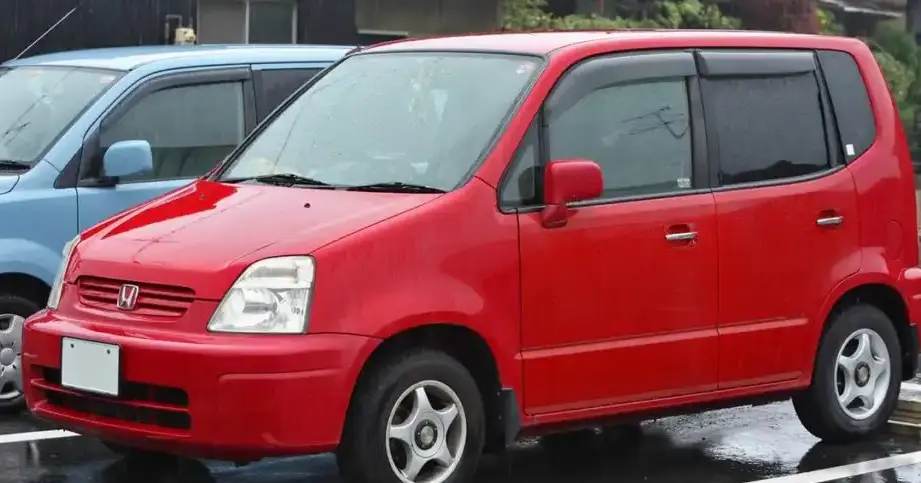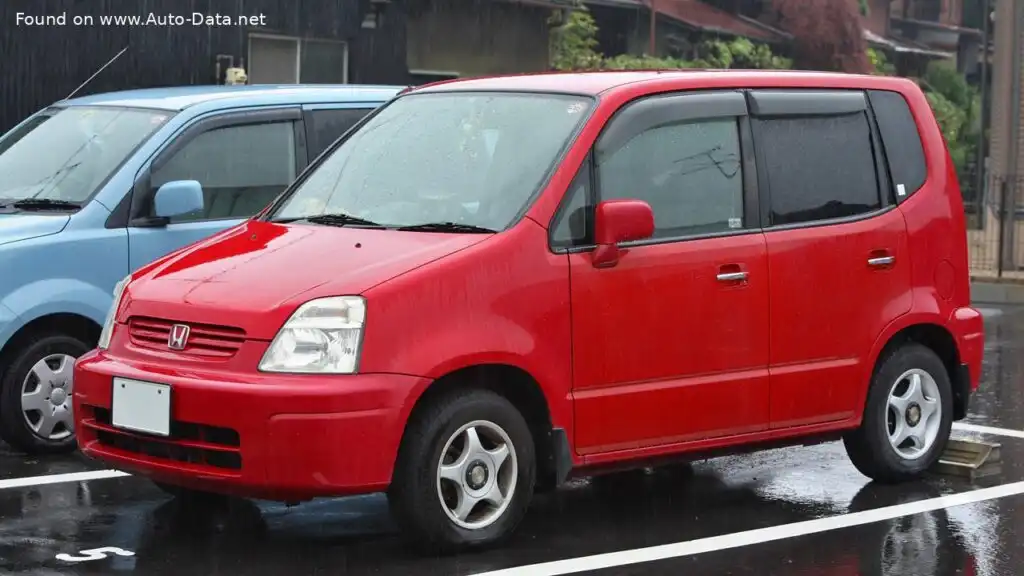
The Honda Capa 1.5 16V, producing 98 horsepower, was a unique and practical compact minivan produced by Honda between 1998 and 2002. Primarily aimed at the Japanese domestic market (JDM), the Capa offered a blend of space efficiency and maneuverability, filling a niche between larger MPVs and conventional subcompact cars. It was based on Honda’s small car platform, sharing components with the Civic and Logo, but distinguished itself with its tall, boxy silhouette and versatile interior. This particular 1.5L engine and automatic transmission combination represented a mainstream offering within the Capa lineup, prioritizing affordability and ease of use over outright performance.
Technical Specifications
| Brand | Honda |
| Model | Capa |
| Generation | Capa |
| Type (Engine) | 1.5 16V (98 Hp) |
| Start of production | 1998 |
| End of production | 2002 |
| Powertrain Architecture | Internal Combustion engine |
| Body type | Minivan |
| Seats | 5 |
| Doors | 5 |
| Fuel consumption (urban) | 9 l/100 km (26.1 US mpg) |
| Fuel consumption (extra urban) | 4.5 l/100 km (52.3 US mpg) |
| Fuel Type | Petrol (Gasoline) |
| Maximum speed | 175 km/h (108.74 mph) |
| Weight-to-power ratio | 11.3 kg/Hp |
| Weight-to-torque ratio | 8.3 kg/Nm |
| Power | 98 Hp @ 6300 rpm |
| Power per litre | 65.6 Hp/l |
| Torque | 133 Nm @ 3500 rpm (98.1 lb.-ft. @ 3500 rpm) |
| Engine layout | Front, Transverse |
| Engine displacement | 1493 cm3 (91.11 cu. in.) |
| Number of cylinders | 4 |
| Engine configuration | Inline |
| Cylinder Bore | 75 mm (2.95 in.) |
| Piston Stroke | 84.5 mm (3.33 in.) |
| Compression ratio | 9.4:1 |
| Number of valves per cylinder | 4 |
| Fuel injection system | Multi-port manifold injection |
| Engine aspiration | Naturally aspirated engine |
| Valvetrain | OHC |
| Kerb Weight | 1110 kg (2447.13 lbs.) |
| Max. weight | 1385 kg (3053.4 lbs.) |
| Max load | 275 kg (606.27 lbs.) |
| Fuel tank capacity | 40 l (10.57 US gal) |
| Length | 3775 mm (148.62 in.) |
| Width | 1640 mm (64.57 in.) |
| Height | 1650 mm (64.96 in.) |
| Wheelbase | 2360 mm (92.91 in.) |
| Front track | 1425 mm (56.1 in.) |
| Rear track | 1420 mm (55.91 in.) |
| Minimum turning circle | 9.6 m (31.5 ft.) |
| Drivetrain Architecture | Front wheel drive |
| Front suspension | Coil spring |
| Rear suspension | Coil spring |
| Front brakes | Disc |
| Rear brakes | Drum |
| Assisting systems | ABS (Anti-lock braking system) |
| Steering type | Steering rack and pinion |
| Power steering | Hydraulic Steering |
| Tires size | 175/70 R13 |
Powertrain & Engine Architecture
The Capa 1.5 16V utilized Honda’s D15B series engine, specifically a variant tuned to produce 98 horsepower. This engine was a naturally aspirated, inline-four cylinder unit with a single overhead camshaft (SOHC) valvetrain. The 16 valves (four per cylinder) contributed to improved breathing and a relatively broad torque curve. Fuel delivery was managed by a multi-point fuel injection system, optimizing combustion efficiency. The engine’s 1.5-liter displacement (1493 cc) provided a reasonable balance between fuel economy and usable power for its intended purpose. The automatic transmission paired with this engine was typically a four-speed unit, chosen for its simplicity and ease of operation. While not offering the sporty responsiveness of a manual gearbox, it aligned with the Capa’s focus on comfortable and convenient transportation.
Driving Characteristics
The 98 hp engine and four-speed automatic transmission combination in the Capa delivered adequate, but not exhilarating, performance. Acceleration was modest, with a focus on smooth and predictable power delivery. The automatic transmission’s gear ratios were optimized for fuel efficiency and everyday driving, rather than aggressive acceleration. Compared to the manual transmission versions of the Capa, the automatic offered less driver engagement and slightly slower acceleration times. However, it provided a more relaxed driving experience, particularly in urban traffic. The Capa’s relatively lightweight construction (around 1110 kg) helped to mitigate the engine’s modest power output, making it feel reasonably nimble in city driving conditions.
Equipment & Trim Levels
The 1.5 16V automatic Capa typically came equipped with a reasonable level of standard features. These generally included power windows, power steering, central locking, and an AM/FM radio. Air conditioning was often standard, or available as an option. Interior upholstery was typically cloth, with a simple and functional dashboard layout. Higher trim levels, if available, might have added features such as alloy wheels, upgraded audio systems, and more luxurious interior trim. The Capa’s interior was designed with practicality in mind, offering a spacious cabin for its size and a versatile seating arrangement.
Chassis & Braking
The Capa’s chassis featured a relatively simple suspension setup, utilizing coil springs and dampers at all four corners. The front suspension employed a MacPherson strut design, while the rear suspension utilized a torsion beam axle. This configuration provided a comfortable ride quality, although it wasn’t particularly sporty. Braking duties were handled by disc brakes at the front and drum brakes at the rear. An Anti-lock Braking System (ABS) was often included as standard equipment, enhancing safety by preventing wheel lockup during hard braking. The steering system was a rack-and-pinion setup with hydraulic power assistance, providing light and easy steering feel.
Market Reception & Comparison
The Honda Capa was generally well-received in the Japanese market as a practical and affordable compact minivan. Critics praised its spacious interior, maneuverability, and fuel efficiency. However, some reviewers noted that its engine lacked significant power, particularly when fully loaded. Compared to other trims in the Capa lineup, the 1.5 16V automatic offered a balance between price and features. It was more affordable than the higher-powered variants, but still provided a comfortable and well-equipped driving experience. Its fuel economy was comparable to other similarly sized vehicles in its class.
Legacy
The Honda Capa, while not a globally recognized model, remains a fondly remembered vehicle in Japan. The 1.5 16V powertrain, when properly maintained, proved to be relatively reliable. The engine is known for its durability and relatively simple design, making it easier and less expensive to repair than more complex engines. In the used car market, Capas with this engine and transmission combination are often sought after for their affordability and practicality. While finding parts outside of Japan can be challenging, the Capa’s robust construction and readily available components within its home market contribute to its continued presence on the roads today. It represents a unique chapter in Honda’s history, showcasing the company’s ability to create innovative and space-efficient vehicles for specific market needs.