Technical Specifications
| Brand | DS |
| Model | 7 |
| Generation | 7 Crossback |
| Type (Engine) | 1.6 PureTech (181 Hp) Automatic |
| Start of production | August, 2018 |
| End of production | July, 2019 |
| Powertrain Architecture | Internal Combustion engine |
| Body type | SUV |
| Seats | 5 |
| Doors | 5 |
| Fuel consumption (economy) – urban | 7.5 l/100 km (31.4 US mpg) |
| Fuel consumption (economy) – extra urban | 4.9 l/100 km (48 US mpg) |
| Fuel consumption (economy) – combined | 5.9 l/100 km (39.9 US mpg) |
| CO2 emissions | 134 g/km |
| Fuel Type | Petrol (Gasoline) |
| Maximum speed | 220 km/h (136.7 mph) |
| Emission standard | Euro 6d |
| Weight-to-power ratio | 7.9 kg/Hp |
| Weight-to-torque ratio | 5.7 kg/Nm |
| Power | 181 Hp @ 5500 rpm |
| Torque | 250 Nm @ 1650 rpm (184.39 lb.-ft. @ 1650 rpm) |
| Engine layout | Front, Transverse |
| Engine Model/Code | 5GF EP6FADTXD |
| Engine displacement | 1598 cm3 (97.52 cu. in.) |
| Number of cylinders | 4 |
| Engine configuration | Inline |
| Cylinder Bore | 77 mm (3.03 in.) |
| Piston Stroke | 85.8 mm (3.38 in.) |
| Fuel injection system | Direct injection |
| Engine aspiration | Turbocharger, Intercooler |
| Engine oil capacity | 4.25 l (4.49 US qt | 3.74 UK qt) |
| Kerb Weight | 1425 kg (3141.59 lbs.) |
| Max. weight | 2050 kg (4519.48 lbs.) |
| Max load | 625 kg (1377.89 lbs.) |
| Trunk (boot) space – minimum | 555 l (19.6 cu. ft.) |
| Trunk (boot) space – maximum | 1752 l (61.87 cu. ft.) |
| Fuel tank capacity | 62 l (16.38 US gal | 13.64 UK gal) |
| Max. roof load | 80 kg (176.37 lbs.) |
| Permitted trailer load with brakes (12%) | 1550 kg (3417.17 lbs.) |
| Permitted trailer load without brakes | 750 kg (1653.47 lbs.) |
| Permitted towbar download | 68 kg (149.91 lbs.) |
| Length | 4595 mm (180.91 in.) |
| Width | 1895 mm (74.61 in.) |
| Height | 1625 mm (63.98 in.) |
| Wheelbase | 2738 mm (107.8 in.) |
| Minimum turning circle (turning diameter) | 10.45 m (34.28 ft.) |
| Drivetrain Architecture | Front wheel drive |
| Number of gears and type of gearbox | 8 gears, automatic transmission |
| Front suspension | Independent, type McPherson with coil spring and anti-roll bar |
| Rear suspension | Independent multi-link spring suspension with stabilizer |
| Front brakes | Ventilated discs |
| Rear brakes | Disc |
| Assisting systems | ABS (Anti-lock braking system) |
| Steering type | Steering rack and pinion |
| Power steering | Electric Steering |
| Tires size | 235/55 R18 |
| Wheel rims size | 18 |
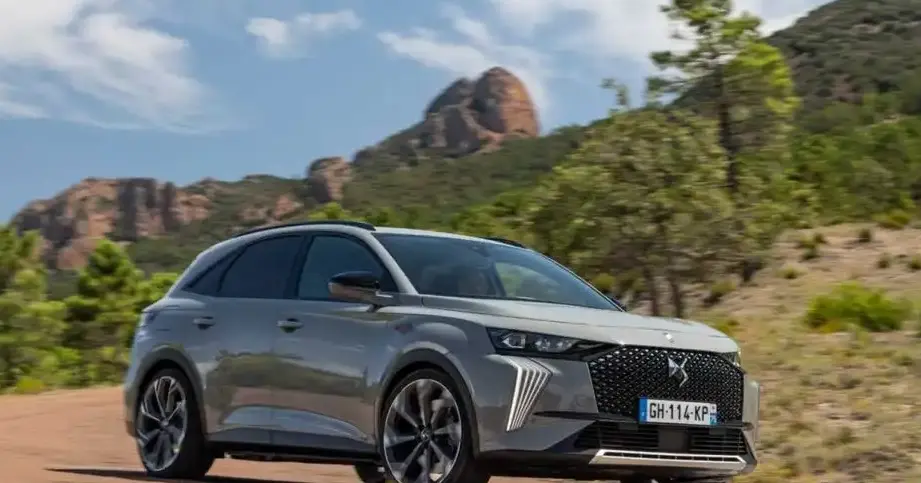
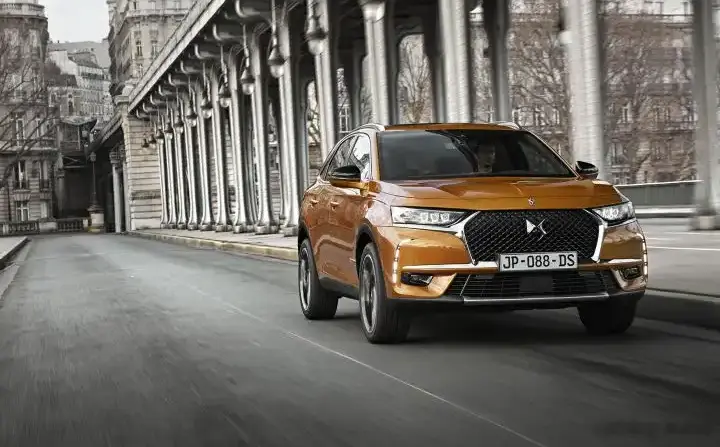
The DS 7 Crossback 1.6 PureTech (181 hp) Automatic, produced from August 2018 to July 2019, represents a significant variant within the first generation of DS Automobiles’ flagship SUV. Positioned as a mid-range offering, this model aimed to strike a balance between performance, fuel efficiency, and comfort for the European market. It was a crucial component of DS’s broader strategy to establish itself as a distinct premium brand, separate from its parent company, Citroën. The DS 7 Crossback, built on the EMP2 platform – also utilized by Peugeot and Citroën vehicles – sought to deliver a sophisticated driving experience with a strong emphasis on technology and design. This particular powertrain combination – the 1.6L PureTech engine paired with an eight-speed automatic transmission – was specifically designed to appeal to buyers seeking a refined and accessible entry point into the DS 7 lineup.
Powertrain & Engine Architecture
The core of this DS 7 Crossback variant is the 1.6-liter PureTech engine, a member of the Peugeot-Citroën (PSA Group, now Stellantis) PureTech family of direct-injection, turbocharged petrol engines. The engine code 5GF EP6FADTXD designates a version producing 181 horsepower at 5500 rpm and 250 Nm (184 lb-ft) of torque, readily available from as low as 1650 rpm. This engine employs a direct fuel injection system, which enhances combustion efficiency and contributes to improved fuel economy. The turbocharger, working in conjunction with an intercooler, provides a boost in power and responsiveness. The engine features an inline-four cylinder configuration and a relatively high compression ratio, carefully optimized for both performance and efficiency. The eight-speed automatic transmission, sourced from Aisin, was selected for its smooth shifting characteristics and its contribution to fuel savings. This transmission offers a wide spectrum of gear ratios, enabling the engine to operate within its optimal power band more frequently.
Driving Characteristics
The 1.6 PureTech 181 hp Automatic DS 7 Crossback provides a comfortable and refined driving experience. While not overtly sporty, the engine delivers sufficient power for everyday driving and highway cruising. Acceleration is respectable, though demonstrably slower than the higher-output PureTech 225 or the diesel variants. The eight-speed automatic transmission contributes to smooth gear changes, minimizing disruptions during acceleration. The transmission’s programming leans towards fuel efficiency, resulting in slightly less aggressive shift points compared to sportier settings found in some competing vehicles. The front-wheel-drive configuration provides predictable handling, but lacks the all-weather capability offered by the optional four-wheel-drive system. In general, this variant prioritizes comfort and ease of use over outright performance.
Equipment & Trim Levels
The 1.6 PureTech 181 hp Automatic typically came equipped with a generous array of standard features. These included automatic climate control, a touchscreen infotainment system with Apple CarPlay and Android Auto compatibility, rear parking sensors, and a comprehensive suite of safety features such as automatic emergency braking and lane departure warning. Interior upholstery was generally a combination of cloth and leatherette, with options for full leather available as an upgrade. Higher trim levels added features like a panoramic sunroof, a premium audio system, and adaptive cruise control. The DS 7 Crossback aimed to deliver a premium interior experience, with careful attention paid to material quality and design.
Chassis & Braking
The DS 7 Crossback utilizes an independent suspension system on both the front and rear axles. The front suspension employs a McPherson strut design, while the rear features a multi-link setup. This configuration strikes a good balance between ride comfort and handling. Stabilizer bars are fitted to both axles to minimize body roll during cornering. The braking system consists of ventilated discs on the front wheels and solid discs on the rear. Anti-lock braking system (ABS) and electronic stability control (ESC) are standard features, enhancing safety and control. The steering system is an electric power-assisted rack and pinion, providing light and precise steering feel.
Market Reception & Comparison
The DS 7 Crossback 1.6 PureTech 181 hp Automatic received largely positive reviews from automotive critics. It was lauded for its stylish design, comfortable ride, and well-equipped interior. However, some critics pointed out that the engine, while adequate, lacked the punch of its more powerful counterparts. Fuel economy was considered competitive for its class, but not necessarily class-leading. Compared to the PureTech 225, the 181 hp version offered a more affordable entry point into the DS 7 range, but at the cost of performance. The diesel variants, while offering superior fuel economy, were generally less refined and potentially more expensive to maintain in the long run.
Legacy
The 1.6 PureTech engine, while generally reliable, has been the subject of some reports concerning timing chain issues in certain applications. Consistent maintenance, including regular oil changes and adherence to the manufacturer’s recommended service intervals, is crucial for ensuring the longevity of this powertrain. The DS 7 Crossback, as a whole, played a key role in establishing DS Automobiles as a credible premium brand. In the used car market, this variant represents a compelling value proposition, offering a stylish and well-equipped SUV at a competitive price. Its combination of comfort, technology, and reasonable running costs continues to appeal to buyers seeking a sophisticated and practical vehicle.