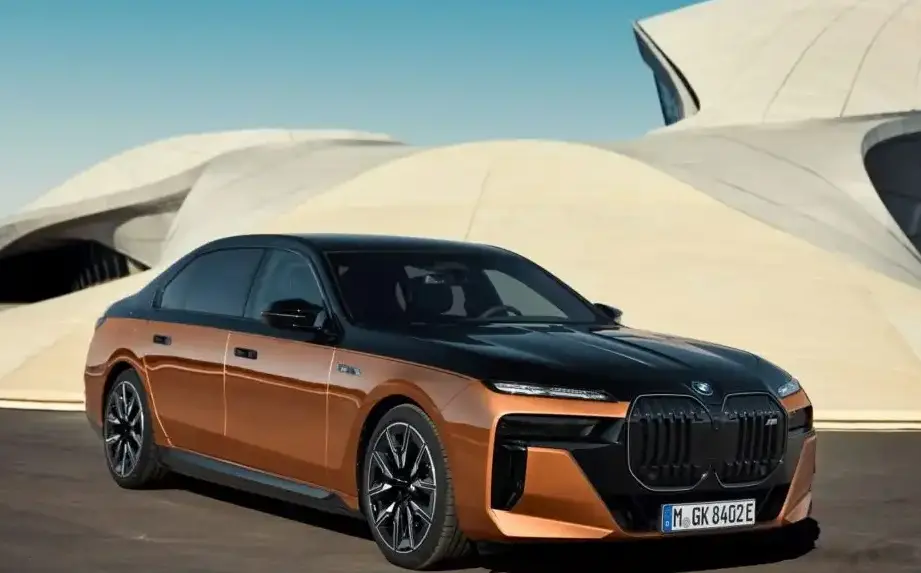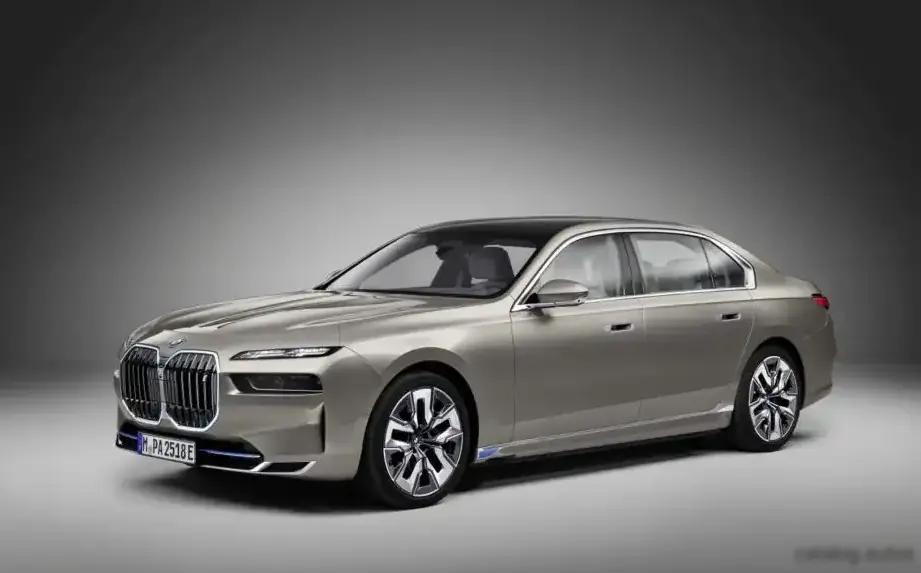
The BMW i7 eDrive50, launched in 2023 as part of the G70 generation, represents BMW’s flagship all-electric luxury sedan. Positioned as the initial offering in the i7 lineup, it serves as the entry point into the all-electric 7 Series range, offering a balance of performance, range, and luxury features. The i7 (G70) is built on a modified version of the Cluster Architecture (CLAR) platform, allowing for both internal combustion engine (ICE) and electric powertrains, showcasing BMW’s flexible manufacturing approach. This variant is primarily targeted at buyers seeking a premium electric vehicle experience with a focus on rear-wheel drive dynamics and long-range capability.
Technical Specifications
| Brand | BMW |
| Model | i7 |
| Generation | i7 (G70) |
| Type (Engine) | 105.7 kWh (455 Hp) eDrive50 |
| Start of production | 2023 |
| Powertrain Architecture | BEV (Electric Vehicle) |
| Body type | Sedan |
| Seats | 5 |
| Doors | 4 |
| Fuel Type | Electricity |
| Acceleration 0 – 100 km/h | 5.5 sec |
| Acceleration 0 – 62 mph | 5.5 sec |
| Acceleration 0 – 60 mph | 5.2 sec |
| Maximum speed | 205 km/h (127.38 mph) |
| Weight-to-power ratio | 5.5 kg/Hp, 180.6 Hp/tonne |
| Weight-to-torque ratio | 3.9 kg/Nm, 257.9 Nm/tonne |
| Gross battery capacity | 105.7 kWh |
| Net (usable) battery capacity | 101.7 kWh |
| Battery technology | Lithium-ion (Li-Ion) |
| Battery location | Below the floor |
| All-electric range (WLTP) | 575-611 km (357.29 – 379.66 mi) |
| All-electric range (NEDC) | 603 km (374.69 mi) |
| Average Energy consumption (WLTP) | 19.1-20.3 kWh/100 km (30.74 – 32.67 kWh/100 mi) |
| Average Energy consumption (NEDC) | 18.8 kWh/100 km (30.26 kWh/100 mi) |
| Electric motor power | 455 Hp |
| Electric motor Torque | 650 Nm (479.42 lb.-ft.) |
| Electric motor model/code | HA0004N0 |
| Electric motor location | Rear axle, Transverse |
| Electric motor type | Synchronous |
| System power | 455 Hp |
| System torque | 650 Nm (479.42 lb.-ft.) |
| Kerb Weight | 2520 kg (5555.65 lbs.) |
| Max. weight | 3130 kg (6900.47 lbs.) |
| Max load | 610 kg (1344.82 lbs.) |
| Trunk (boot) space – minimum | 500 l (17.66 cu. ft.) |
| Length | 5391 mm (212.24 in.) |
| Width | 1950 mm (76.77 in.) |
| Width including mirrors | 2192 mm (86.3 in.) |
| Height | 1544 mm (60.79 in.) |
| Wheelbase | 3215 mm (126.57 in.) |
| Front track | 1663 mm (65.47 in.) |
| Rear (Back) track | 1683 mm (66.26 in.) |
| Front overhang | 982 mm (38.66 in.) |
| Rear overhang | 1194 mm (47.01 in.) |
| Drivetrain Architecture | One electric motor drives the rear wheels. |
| Drive wheel | Rear wheel drive |
| Number of gears and type of gearbox | 1 gears, automatic transmission |
| Front suspension | Double wishbone, Air suspension |
| Rear suspension | Independent multi-link suspension, Air suspension |
| Front brakes | Ventilated discs |
| Rear brakes | Ventilated discs |
| Assisting systems | ABS (Anti-lock braking system), 4-wheel steering (4WS, active rear steering) |
| Steering type | Steering rack and pinion |
| Power steering | Electric Steering |
| Front wheel tires | 245/50 R19; 255/45 R20; 255/40 R21 |
| Rear wheel tires | 245/50 R19; 285/40 R20; 285/35 R21 |
| Front wheel rims | 8.5J x 19; 9J x 20; 9J x 21 |
| Rear wheel rims | 8.5J x 19; 10.5J x 20; 10.5J x 21 |
Powertrain & Engine Architecture
The i7 eDrive50 utilizes BMW’s fifth-generation eDrive technology. At its heart is a permanently excited synchronous motor (PSM) located on the rear axle, producing 455 horsepower and 650 lb-ft of torque. This motor is known for its high efficiency and power density. The 105.7 kWh (gross) / 101.7 kWh (net) lithium-ion battery pack is positioned low in the vehicle floor, contributing to a lower center of gravity and improved handling. The battery employs advanced cell chemistry and cooling systems to optimize performance and longevity. The single-speed automatic transmission is specifically designed for electric vehicles, providing smooth and seamless acceleration. The power electronics and integrated charging unit allow for DC fast charging at up to 195 kW, enabling a significant range boost in a relatively short time.
Driving Characteristics
The i7 eDrive50 delivers a refined and powerful driving experience. Acceleration from 0-60 mph takes approximately 5.2 seconds. The instant torque characteristic of electric motors provides brisk acceleration in all situations. The rear-wheel drive configuration contributes to a balanced feel, while the optional rear-wheel steering enhances agility and maneuverability, particularly at lower speeds. The air suspension provides a comfortable ride, effectively isolating passengers from road imperfections. Compared to potential future higher-performance i7 variants (like the M70), the eDrive50 prioritizes efficiency and comfort over outright speed, offering a more relaxed and luxurious driving experience.
Equipment & Trim Levels
The i7 eDrive50 comes standard with a comprehensive suite of luxury features. Interior appointments include premium leather upholstery, multi-contour seats with massage function, and a panoramic glass sunroof. The curved display, consisting of a 12.3-inch information display and a 14.9-inch control display, provides a modern and intuitive interface. Standard driver-assistance systems include adaptive cruise control, lane keeping assist, and automatic emergency braking. Optional extras include a rear entertainment system with 31.3-inch Theater Screen, Bowers & Wilkins Diamond Surround Sound System, and various interior trim options. The overall cabin design emphasizes spaciousness, comfort, and technological sophistication.
Chassis & Braking
The i7 eDrive50 features a sophisticated chassis designed to maximize comfort and handling. The double-wishbone front suspension and independent multi-link rear suspension, combined with the air suspension system, provide a smooth and controlled ride. The air suspension automatically adjusts ride height based on driving conditions and speed. Braking is handled by ventilated disc brakes on all four wheels, providing ample stopping power. Regenerative braking is also integrated into the system, capturing energy during deceleration and returning it to the battery, further enhancing efficiency. The standard inclusion of ABS and the optional 4-wheel steering contribute to enhanced stability and control.
Market Reception & Comparison
The BMW i7 eDrive50 has been generally well-received by automotive critics, praised for its luxurious interior, comfortable ride, and impressive range. Comparisons to rivals such as the Mercedes-Benz EQS and Lucid Air often highlight the i7’s more traditional BMW driving dynamics and its well-integrated technology. While the EQS offers a similar level of luxury and range, the i7 is often considered to be more engaging to drive. The i7’s energy consumption figures (around 30.74-32.67 kWh/100mi) are competitive within the luxury EV segment. Reliability data is still emerging, but BMW’s reputation for build quality and engineering suggests a high level of long-term dependability.
Legacy
The i7 eDrive50 represents a significant step forward for BMW in the electric vehicle market. As the initial offering in the i7 lineup, it establishes the benchmark for future all-electric 7 Series models. The powertrain technology and battery management systems developed for the i7 are expected to trickle down to other BMW electric vehicles in the coming years. On the used car market, the i7 eDrive50 is expected to hold its value well due to its premium brand image, advanced technology, and long-range capability. Its status as a pioneering luxury EV will likely contribute to its desirability among collectors and enthusiasts.