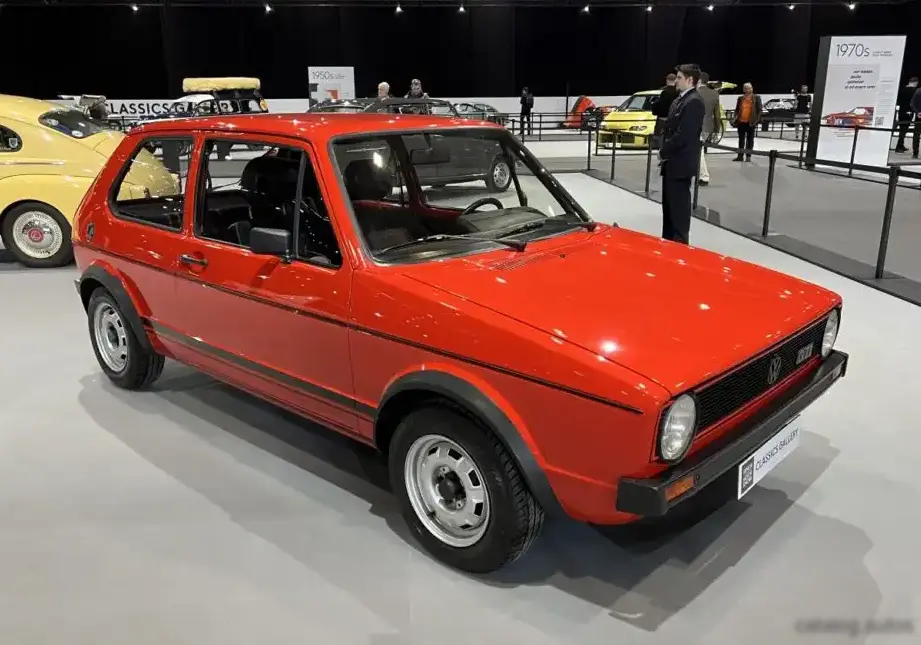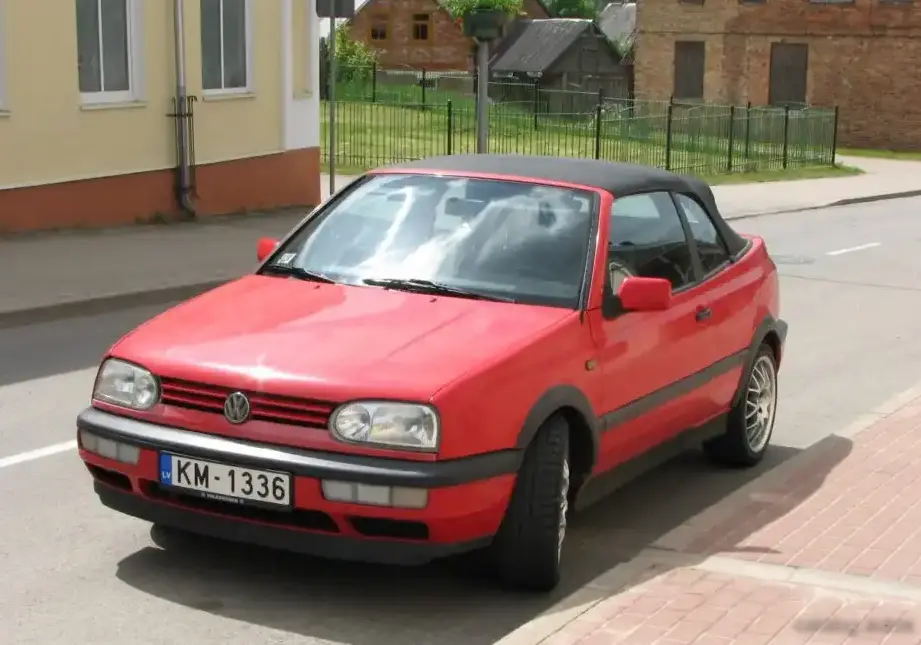
The Volkswagen Golf III Cabrio 1.6i, producing 101 horsepower, was a popular iteration of the third-generation Golf Cabriolet, manufactured between 1995 and 1998. Positioned as an entry-level offering within the Golf III Cabrio range, it provided open-air motoring at a more accessible price point than the higher-performance variants. This model was primarily sold in Europe, where the Golf Cabriolet held a strong following as a stylish and practical convertible. It represented a continuation of Volkswagen’s commitment to offering a versatile and affordable convertible option, building upon the success of its predecessors.
Technical Specifications
| Brand | Volkswagen |
| Model | Golf |
| Generation | Golf III Cabrio |
| Type (Engine) | 1.6i (101 Hp) |
| Start of production | 1995 |
| End of production | 1998 |
| Powertrain Architecture | Internal Combustion engine |
| Body type | Cabriolet |
| Seats | 4 |
| Doors | 2 |
| Fuel consumption (economy) – urban (NEDC) | 11.1 l/100 km (21.2 US mpg, 25.4 UK mpg, 9 km/l) |
| Fuel consumption (economy) – extra urban (NEDC) | 6.5 l/100 km (36.2 US mpg, 43.5 UK mpg, 15.4 km/l) |
| Fuel consumption (economy) – combined (NEDC) | 8.2 l/100 km (28.7 US mpg, 34.4 UK mpg, 12.2 km/l) |
| CO2 emissions (NEDC) | 197 g/km |
| Fuel Type | Petrol (Gasoline) |
| Acceleration 0 – 100 km/h | 11.9 sec |
| Acceleration 0 – 62 mph | 11.9 sec |
| Acceleration 0 – 60 mph | 11.3 sec |
| Maximum speed | 182 km/h (113.09 mph) |
| Weight-to-power ratio | 12.2 kg/Hp, 82.1 Hp/tonne |
| Weight-to-torque ratio | 8.8 kg/Nm, 113.8 Nm/tonne |
| Power | 101 Hp @ 5800 rpm |
| Power per litre | 63.3 Hp/l |
| Torque | 140 Nm @ 3500 rpm (103.26 lb.-ft. @ 3500 rpm) |
| Engine layout | Front, Transverse |
| Engine Model/Code | AFT, AKS |
| Engine displacement | 1595 cm3 (97.33 cu. in.) |
| Number of cylinders | 4 |
| Engine configuration | Inline |
| Cylinder Bore | 81 mm (3.19 in.) |
| Piston Stroke | 77.4 mm (3.05 in.) |
| Compression ratio | 10.3:1 |
| Number of valves per cylinder | 2 |
| Fuel injection system | Multi-port manifold injection |
| Engine aspiration | Naturally aspirated engine |
| Valvetrain | SOHC |
| Engine oil capacity | 3.8 l (4.02 US qt | 3.34 UK qt) |
| Coolant | 5.5 l (5.81 US qt | 4.84 UK qt) |
| Kerb Weight | 1230 kg (2711.69 lbs.) |
| Max. weight | 1580 kg (3483.3 lbs.) |
| Max load | 350 kg (771.62 lbs.) |
| Trunk (boot) space – minimum | 270 l (9.53 cu. ft.) |
| Trunk (boot) space – maximum | 448 l (15.82 cu. ft.) |
| Fuel tank capacity | 55 l (14.53 US gal | 12.1 UK gal) |
| Length | 4020 mm (158.27 in.) |
| Width | 1695 mm (66.73 in.) |
| Height | 1400 mm (55.12 in.) |
| Wheelbase | 2475 mm (97.44 in.) |
| Front track | 1464 mm (57.64 in.) |
| Rear (Back) track | 1428 mm (56.22 in.) |
| Minimum turning circle | 10.7 m (35.1 ft.) |
| Drivetrain Architecture | The Internal combustion engine (ICE) drives the front wheels of the vehicle. |
| Drive wheel | Front wheel drive |
| Number of gears and type of gearbox | 5 gears, manual transmission |
| Front suspension | Independent, type McPherson with coil spring and anti-roll bar |
| Rear suspension | Torsion |
| Front brakes | Disc |
| Rear brakes | Drum |
| Assisting systems | ABS (Anti-lock braking system) |
| Steering type | Steering rack and pinion |
| Power steering | Hydraulic Steering |
| Tires size | 185/60 R14; 195/50 R15 |
| Wheel rims size | 6J x 14; 6J x 15 |
Powertrain & Engine Architecture
The Golf III Cabrio 1.6i was powered by the Volkswagen AFT or AKS engine, a 1.6-liter inline-four cylinder gasoline engine. This engine was a relatively simple design, utilizing a single overhead camshaft (SOHC) valvetrain with two valves per cylinder. Fuel delivery was managed by a multi-port fuel injection system, providing adequate, though not exceptional, performance. The engine’s 101 horsepower output at 5800 rpm and 140 Nm (103 lb-ft) of torque at 3500 rpm were considered sufficient for comfortable cruising and everyday driving. The engine’s design prioritized fuel efficiency and reliability over outright power. The transmission was typically a five-speed manual, although a four-speed automatic transmission was also available, albeit less common. The automatic transmission, while offering convenience, did impact acceleration and fuel economy.
Driving Characteristics
The 1.6i engine, paired with the manual transmission, provided a reasonably engaging driving experience. Acceleration was adequate for merging onto highways and overtaking, but it wasn’t particularly brisk. The 0-60 mph time was around 11.3 seconds. The automatic transmission version noticeably reduced acceleration times, making the car feel somewhat sluggish, especially when fully loaded. The Golf III Cabrio’s suspension, featuring McPherson struts in the front and a torsion beam rear axle, offered a comfortable ride, absorbing bumps and imperfections in the road well. Steering was precise, thanks to the rack-and-pinion system with hydraulic power assistance. The car’s relatively light weight (around 2700 lbs) helped to mitigate the effects of the modest engine output, making it feel nimble and responsive in city driving.
Equipment & Trim Levels
The Golf III Cabrio 1.6i typically came with a fairly basic level of equipment, reflecting its position as an entry-level model. Standard features generally included power steering, central locking, and a basic stereo system. Interior upholstery was typically cloth, and the dashboard featured a simple, functional design. Optional extras included power windows, a sunroof (in addition to the convertible top), alloy wheels, and upgraded audio systems. Higher trim levels, such as the GL, offered more luxurious features like leather upholstery and air conditioning. The interior space was adequate for four passengers, but rear seat legroom was limited, as is typical for compact convertibles.
Chassis & Braking
The Golf III Cabrio utilized a front-wheel-drive chassis with independent suspension in the front and a torsion beam rear axle. The front brakes were disc brakes, providing good stopping power, while the rear brakes were drum brakes, which were less effective but helped to keep costs down. Anti-lock braking system (ABS) was available as an option, enhancing safety by preventing wheel lockup during hard braking. The car’s suspension was tuned for comfort, prioritizing ride quality over sporty handling. Stabilizer bars were fitted to both the front and rear axles to reduce body roll during cornering.
Market Reception & Comparison
The Golf III Cabrio 1.6i was generally well-received by critics as an affordable and practical convertible. It was praised for its comfortable ride, decent fuel economy, and relatively low maintenance costs. However, it was also criticized for its modest performance, particularly with the automatic transmission. Compared to the more powerful Golf Cabriolet variants, such as the 1.8 or VR6 models, the 1.6i offered significantly less performance but at a lower price point. The 1.9 TDI diesel version provided superior fuel economy but lacked the responsiveness of the gasoline engine. The 1.6i appealed to buyers who prioritized affordability and practicality over outright performance.
Legacy
The Golf III Cabrio 1.6i remains a popular choice among classic car enthusiasts and those seeking an affordable entry into classic convertible ownership. The engine is known for its reliability, and parts are generally readily available. While not a high-performance machine, the 1.6i offers a charming and enjoyable driving experience. Well-maintained examples are becoming increasingly collectible, and the car’s simple mechanical design makes it relatively easy to maintain and repair. Today, it represents a piece of Volkswagen history and a testament to the enduring appeal of the Golf Cabriolet.