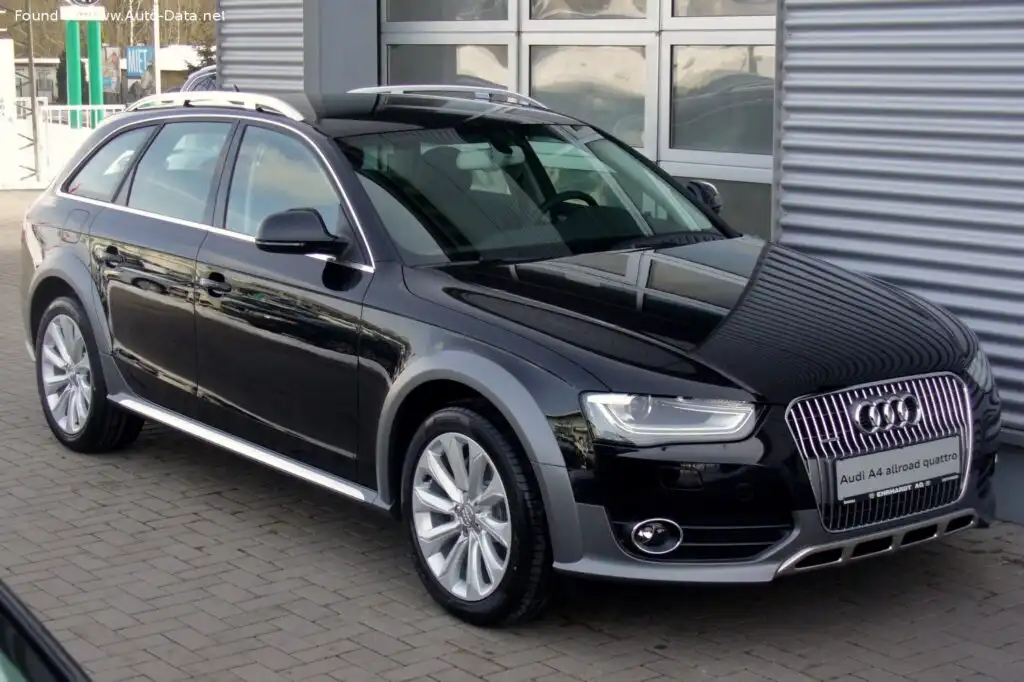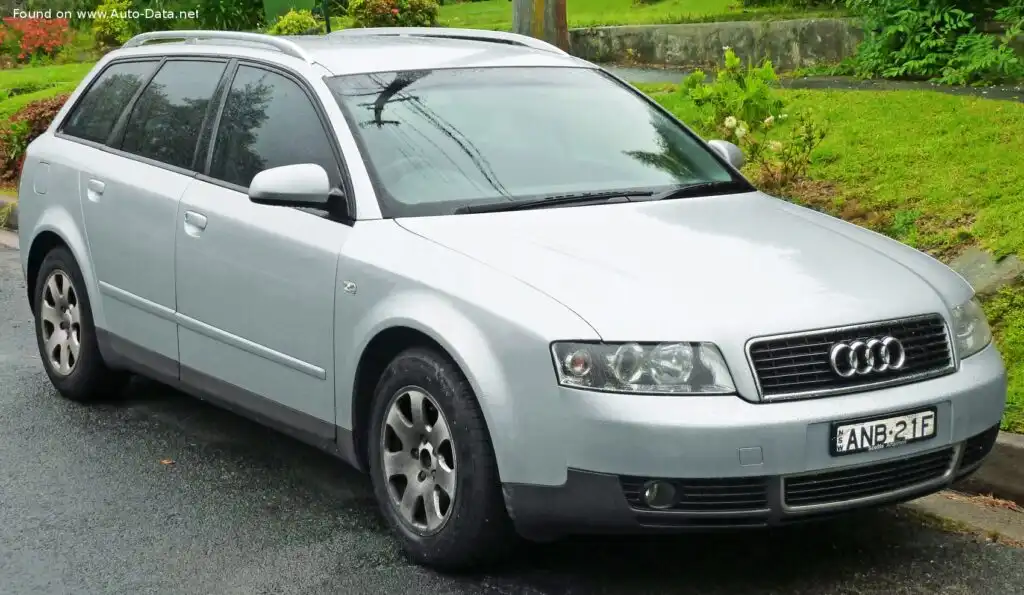
The Audi A4 Avant (B6 8E) 3.0 V6 quattro, produced between 2001 and 2004, represents a compelling blend of performance and practicality within the B6 A4 generation. As the flagship engine option for the Avant (wagon) body style during its production run, it catered to buyers seeking a more spirited driving experience without sacrificing the versatility of a station wagon. This variant occupied the premium position in the A4 Avant lineup, offering a significant step up in power and all-wheel-drive capability compared to the 1.8T and 2.0 models. It was a key offering in the European market, where wagons are highly popular, and also found a niche following in North America.
Technical Specifications
| Brand | Audi |
| Model | A4 |
| Generation | A4 Avant (B6 8E) |
| Type (Engine) | 3.0 V6 (220 Hp) quattro |
| Start of production | 2001 |
| End of production | 2004 |
| Powertrain Architecture | Internal Combustion engine |
| Body type | Station wagon (estate) |
| Seats | 5 |
| Doors | 5 |
| Fuel consumption (urban) | 15.6 l/100 km (15.1 US mpg, 18.1 UK mpg, 6.4 km/l) |
| Fuel consumption (extra urban) | 8.1 l/100 km (29 US mpg, 34.9 UK mpg, 12.3 km/l) |
| Fuel consumption (combined) | 10.2 l/100 km (23.1 US mpg, 27.7 UK mpg, 9.8 km/l) |
| Fuel Type | Petrol (Gasoline) |
| Acceleration 0 – 100 km/h | 7.3 sec |
| Acceleration 0 – 62 mph | 7.3 sec |
| Acceleration 0 – 60 mph | 6.9 sec |
| Maximum speed | 241 km/h (149.75 mph) |
| Weight-to-power ratio | 7.1 kg/Hp, 140.1 Hp/tonne |
| Weight-to-torque ratio | 5.2 kg/Nm, 191.1 Nm/tonne |
| Power | 220 Hp @ 6300 rpm |
| Power per litre | 73.9 Hp/l |
| Torque | 300 Nm @ 3200 rpm (221.27 lb.-ft. @ 3200 rpm) |
| Engine layout | Front, Longitudinal |
| Engine Model/Code | ASN, AVK |
| Engine displacement | 2976 cm3 (181.61 cu. in.) |
| Number of cylinders | 6 |
| Engine configuration | V-engine |
| Cylinder Bore | 82.5 mm (3.25 in.) |
| Piston Stroke | 92.8 mm (3.65 in.) |
| Compression ratio | 10.5:1 |
| Number of valves per cylinder | 5 |
| Fuel injection system | Multi-port manifold injection |
| Engine aspiration | Naturally aspirated engine |
| Valvetrain | DOHC |
| Engine oil capacity | 6.3 l (6.66 US qt | 5.54 UK qt) |
| Coolant | 9 l (9.51 US qt | 7.92 UK qt) |
| Kerb Weight | 1570 kg (3461.26 lbs.) |
| Max. weight | 2120 kg (4673.8 lbs.) |
| Max load | 550 kg (1212.54 lbs.) |
| Trunk (boot) space – minimum | 442 l (15.61 cu. ft.) |
| Trunk (boot) space – maximum | 1184 l (41.81 cu. ft.) |
| Fuel tank capacity | 66 l (17.44 US gal | 14.52 UK gal) |
| Length | 4548 mm (179.06 in.) |
| Width | 1772 mm (69.76 in.) |
| Height | 1428 mm (56.22 in.) |
| Wheelbase | 2650 mm (104.33 in.) |
| Front track | 1528 mm (60.16 in.) |
| Rear (Back) track | 1526 mm (60.08 in.) |
| Drag coefficient (Cd) | 0.33 |
| Minimum turning circle | 11.1 m (36.42 ft.) |
| Drivetrain Architecture | The Internal combustion engine (ICE) drives permanently the four wheels of the vehicle. |
| Drive wheel | All wheel drive (4×4) |
| Number of gears | 6 gears, manual transmission |
| Front suspension | Independent multi-link suspension |
| Rear suspension | Independent multi-link suspension |
| Front brakes | Ventilated discs |
| Rear brakes | Disc |
| Assisting systems | ABS (Anti-lock braking system) |
| Steering type | Steering rack and pinion |
| Power steering | Hydraulic Steering |
| Tires size | 215/55 R16 |
| Wheel rims size | 7J x 16 |
Powertrain & Engine Architecture
The heart of the A4 Avant 3.0 V6 quattro is the ASN or AVK engine code, a 2.976-liter naturally aspirated V6. This engine is a member of Audi’s long-running V6 family, known for its smoothness and robust construction. It features a 90-degree V-angle, contributing to its inherent balance. The engine utilizes a multi-port fuel injection system, delivering fuel directly into the intake ports. The double overhead camshafts (DOHC) operate five valves per cylinder (four intake, one exhaust), optimizing airflow for improved performance. The engine’s 300 Nm (221 lb-ft) of torque is readily available at 3200 rpm, providing strong mid-range acceleration. The standard transmission for this variant was a robust 6-speed manual gearbox, although a 5-speed Tiptronic automatic transmission was also available, albeit less common. The quattro all-wheel-drive system employs a Torsen center differential, distributing torque between the front and rear axles based on traction conditions.
Driving Characteristics
The 3.0 V6 quattro Avant delivers a noticeably more engaging driving experience than its four-cylinder counterparts. The engine’s power and torque provide brisk acceleration, with 0-60 mph times around 6.9 seconds. The manual transmission offers precise shifts and allows the driver to fully exploit the engine’s capabilities. The quattro system provides excellent grip in all weather conditions, inspiring confidence on both dry and slippery surfaces. While not a sports car, the A4 Avant 3.0 V6 offers a refined and capable driving experience, blending performance with practicality. The automatic transmission, while convenient, slightly diminishes the responsiveness compared to the manual, and can feel a bit dated by modern standards.
Equipment & Trim Levels
The A4 Avant 3.0 V6 quattro typically came well-equipped, reflecting its position as the range-topping Avant model. Standard features included leather upholstery, automatic climate control, power-adjustable front seats, and a premium audio system. Alloy wheels were also standard. Optional extras included sunroof, navigation system, and upgraded sound systems. The interior design was typical of early 2000s Audis – functional, well-built, and featuring a clean, understated aesthetic. Trim levels varied slightly by market, but generally focused on adding cosmetic enhancements and convenience features.
Chassis & Braking
The B6 A4 Avant featured an independent multi-link suspension at both the front and rear, providing a comfortable ride and good handling characteristics. The 3.0 V6 models often received slightly stiffer springs and dampers compared to the lower-powered variants to manage the increased weight and power. Braking duties were handled by ventilated discs at the front and solid discs at the rear. Anti-lock braking system (ABS) was standard. The quattro system’s all-wheel drive contributes significantly to the car’s stability and braking performance, particularly in adverse conditions.
Market Reception & Comparison
The A4 Avant 3.0 V6 quattro was generally well-received by automotive critics. It was praised for its powerful engine, capable handling, and practical wagon body style. However, some reviewers noted that the fuel economy was relatively poor compared to the 1.8T models. Compared to the 1.8T Avant, the 3.0 V6 offered a significant performance boost but came at a higher price point and with increased running costs. The 3.0 V6 also provided a more refined and luxurious experience than the diesel-powered A4 Avants available in Europe.
Legacy
The Audi A4 Avant (B6 8E) 3.0 V6 quattro has developed a loyal following among enthusiasts. The ASN and AVK engines are known for their durability, although regular maintenance is crucial. Timing belt replacement is a critical service item, as failure can lead to catastrophic engine damage. Today, these Avants are increasingly sought after as modern classics, offering a unique combination of performance, practicality, and Audi build quality. While finding well-maintained examples can be challenging, the A4 Avant 3.0 V6 quattro remains a compelling choice for those seeking a versatile and rewarding driving experience.