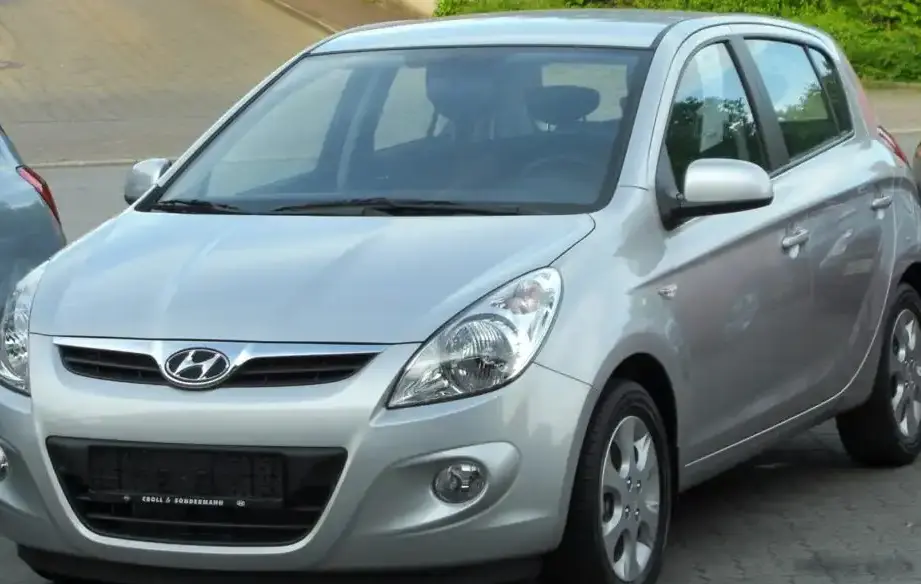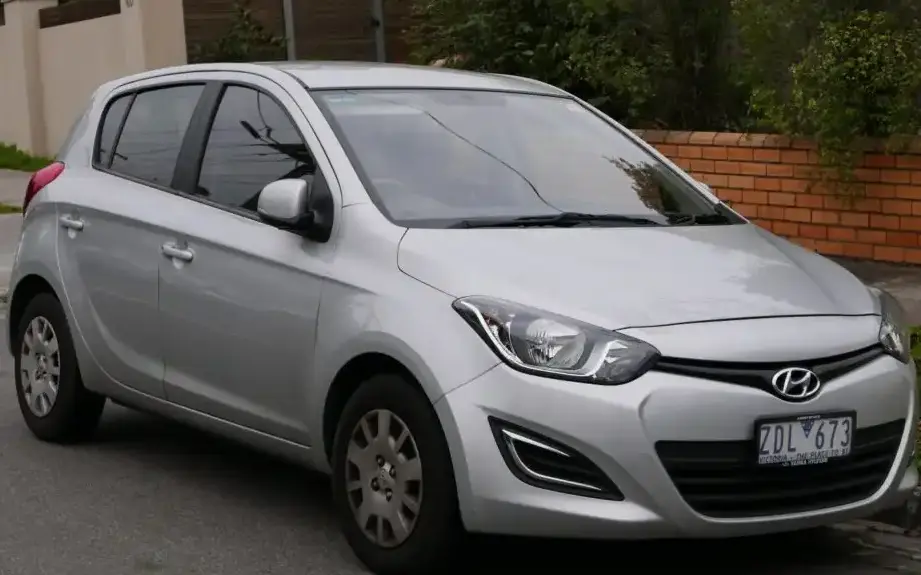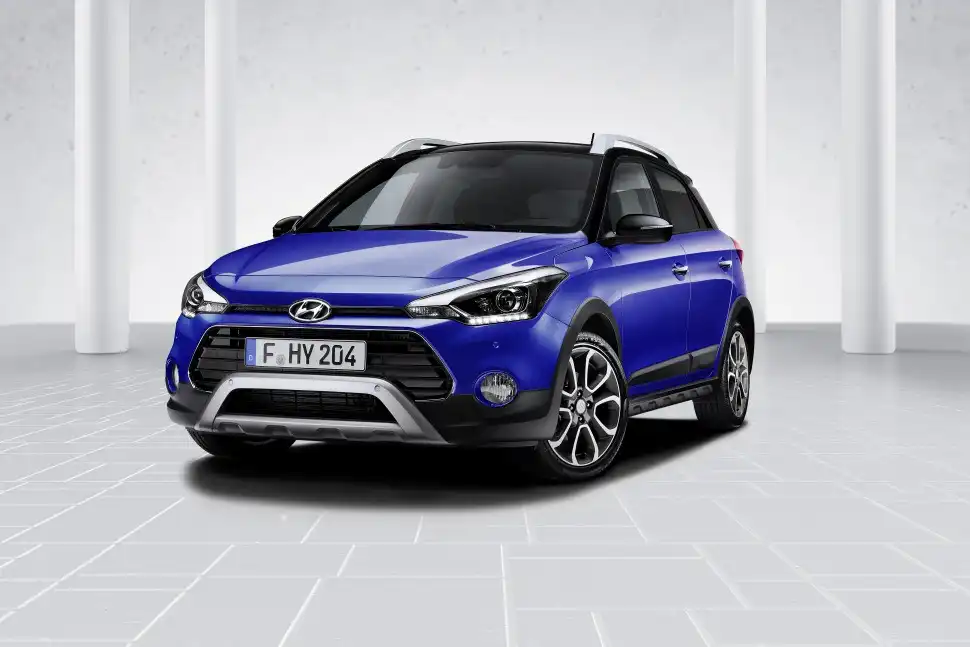
The Hyundai i20 II Active (facelift 2018) 1.0 T-GDi 120 hp variant, produced from 2018 to 2020, represented a significant step forward for Hyundai’s subcompact offerings in the European market and beyond. Positioned as a mid-range trim within the i20 Active lineup – Hyundai’s attempt to blend hatchback practicality with crossover styling – this model aimed to appeal to buyers seeking a balance of fuel efficiency, modern technology, and a slightly more rugged aesthetic. It was built on the PB platform (internally designated as the i20 II), a revised version of the earlier i20’s architecture, offering improved refinement and safety features. This particular engine and transmission combination was a key part of Hyundai’s strategy to offer a diverse powertrain selection to cater to varying customer preferences.
Technical Specifications
| Brand | Hyundai |
| Model | i20 |
| Generation | i20 II Active (facelift 2018) |
| Type (Engine) | 1.0 T-GDi (120 Hp) DCT |
| Start of production | 2018 |
| End of production | 2020 |
| Powertrain Architecture | Internal Combustion engine |
| Body type | Hatchback, Crossover |
| Seats | 5 |
| Doors | 5 |
| Fuel consumption (urban) | 5.9 l/100 km (39.9 US mpg, 47.9 UK mpg, 16.9 km/l) |
| Fuel consumption (extra urban) | 4.9 l/100 km (48 US mpg, 57.6 UK mpg, 20.4 km/l) |
| Fuel consumption (combined) | 5.3 l/100 km (44.4 US mpg, 53.3 UK mpg, 18.9 km/l) |
| CO2 emissions | 121 g/km |
| Fuel Type | Petrol (Gasoline) |
| Acceleration 0 – 100 km/h | 10.7 sec |
| Acceleration 0 – 62 mph | 10.7 sec |
| Acceleration 0 – 60 mph | 10.2 sec |
| Maximum speed | 184 km/h (114.33 mph) |
| Emission standard | Euro 6d-Temp |
| Weight-to-power ratio | 9.4 kg/Hp, 106.2 Hp/tonne |
| Weight-to-torque ratio | 6.6 kg/Nm, 152.2 Nm/tonne |
| Power | 120 Hp @ 6000 rpm |
| Power per litre | 120.2 Hp/l |
| Torque | 172 Nm @ 1500-4000 rpm (126.86 lb.-ft. @ 1500-4000 rpm) |
| Engine layout | Front, Transverse |
| Engine Model/Code | Kappa II / G3LC |
| Engine displacement | 998 cm3 (60.9 cu. in.) |
| Number of cylinders | 3 |
| Engine configuration | Inline |
| Cylinder Bore | 71 mm (2.8 in.) |
| Piston Stroke | 84 mm (3.31 in.) |
| Compression ratio | 10:1 |
| Number of valves per cylinder | 4 |
| Fuel injection system | Direct injection |
| Engine aspiration | Turbocharger, Intercooler |
| Engine oil capacity | 3.6 l (3.8 US qt | 3.17 UK qt) |
| Coolant | 6.4 l (6.76 US qt | 5.63 UK qt) |
| Kerb Weight | 1130-1240 kg (2491.22 – 2733.73 lbs.) |
| Max. weight | 1650 kg (3637.63 lbs.) |
| Max load | 410-520 kg (903.9 – 1146.4 lbs.) |
| Trunk (boot) space – minimum | 301-326 l (10.63 – 11.51 cu. ft.) |
| Fuel tank capacity | 50 l (13.21 US gal | 11 UK gal) |
| Max. roof load | 70 kg (154.32 lbs.) |
| Permitted trailer load with brakes (12%) | 800 kg (1763.7 lbs.) |
| Permitted trailer load without brakes | 450 kg (992.08 lbs.) |
| Permitted towbar download | 75 kg (165.35 lbs.) |
| Length | 4065 mm (160.04 in.) |
| Width | 1760 mm (69.29 in.) |
| Height | 1529 mm (60.2 in.) |
| Wheelbase | 2570 mm (101.18 in.) |
| Front track | 1511-1517 mm (59.49 – 59.72 in.) |
| Rear (Back) track | 1512-1519 mm (59.53 – 59.8 in.) |
| Ride height (ground clearance) | 160 mm (6.3 in.) |
| Drivetrain Architecture | The Internal combustion engine (ICE) drives the front wheels of the vehicle. |
| Drive wheel | Front wheel drive |
| Number of gears and type of gearbox | 7 gears, automatic transmission |
| Front suspension | Independent type McPherson |
| Rear suspension | Torsion |
| Front brakes | Ventilated discs |
| Rear brakes | Disc |
| Assisting systems | ABS (Anti-lock braking system) |
| Steering type | Steering rack and pinion |
| Power steering | Electric Steering |
| Tires size | 205/45 R17 |
| Wheel rims size | 6.5J x 17 |
Powertrain & Engine Architecture
The heart of this i20 Active variant is the Hyundai Kappa II 1.0 T-GDi engine, specifically the G3LC code. This is a three-cylinder, turbocharged gasoline engine featuring direct fuel injection. The engine utilizes a single scroll turbocharger and an intercooler to boost power and efficiency. The direct injection system allows for precise fuel delivery, contributing to improved combustion and reduced emissions. The engine’s 10:1 compression ratio is a balance between performance and fuel economy. Paired with this engine is a seven-speed dual-clutch transmission (DCT). This DCT provides quicker and smoother gear changes compared to a traditional automatic transmission, enhancing both performance and fuel efficiency. The DCT’s programming prioritizes fuel economy in normal driving conditions, but allows for quicker downshifts when more power is needed.
Driving Characteristics
The 120 hp output, combined with the DCT, provides adequate performance for everyday driving. Acceleration from 0-60 mph takes around 10.2 seconds, and the top speed is 114.33 mph. While not a particularly sporty setup, the turbocharger provides a noticeable boost in power during acceleration, making overtaking maneuvers relatively easy. The DCT contributes to a more engaging driving experience than a traditional automatic, but it can occasionally exhibit some hesitation at low speeds. Compared to the base 1.2L naturally aspirated engine, the 1.0 T-GDi offers significantly more power and torque. However, it doesn’t match the performance of larger-engined i20 variants. The gear ratios in the DCT are tuned for efficiency, meaning the engine can feel slightly strained at highway speeds, particularly when climbing hills.
Equipment & Trim Levels
The i20 Active 1.0 T-GDi 120 hp typically came equipped with features such as air conditioning, a touchscreen infotainment system with Apple CarPlay and Android Auto compatibility, Bluetooth connectivity, and a suite of safety features including ABS, ESC (Electronic Stability Control), and multiple airbags. The Active trim level also included exterior styling enhancements such as roof rails, plastic body cladding, and raised ride height, giving it a more crossover-like appearance. Interior upholstery was typically cloth, with options for upgraded materials available. Optional extras included a rear parking sensor, a reversing camera, and a panoramic sunroof.
Chassis & Braking
The i20 Active utilizes a McPherson strut front suspension and a torsion beam rear suspension. This setup provides a comfortable ride quality, although it’s not particularly sporty. The front brakes are ventilated discs, while the rear brakes are solid discs. ABS (Anti-lock Braking System) is standard, providing enhanced braking performance in emergency situations. The steering is electrically assisted, offering light and precise steering feel. The raised ride height of the Active trim level provides slightly improved ground clearance, making it more suitable for tackling rougher road surfaces.
Market Reception & Comparison
The i20 Active 1.0 T-GDi 120 hp was generally well-received by automotive critics. It was praised for its fuel efficiency, modern technology, and comfortable ride. However, some critics noted that the engine could feel a bit underpowered when fully loaded or driving uphill. Compared to other trims in the i20 lineup, this variant offered a good balance of performance and economy. The 1.2L engine was more affordable but lacked the power of the 1.0 T-GDi, while the diesel variants offered better fuel economy but were more expensive to purchase and maintain. Against competitors like the Ford Fiesta and Volkswagen Polo, the i20 Active offered a competitive package with a generous warranty and a well-equipped interior.
Legacy
The Kappa II 1.0 T-GDi engine has proven to be a relatively reliable powertrain, although some owners have reported issues with the turbocharger and direct injection system. Regular maintenance, including oil changes and fuel system cleaning, is crucial for ensuring long-term reliability. In the used car market, the i20 Active 1.0 T-GDi 120 hp remains a popular choice for buyers seeking a fuel-efficient and well-equipped subcompact hatchback. Its combination of practicality, technology, and affordability continues to make it a compelling option in its segment. The DCT transmission, while generally reliable, should be inspected for smooth operation during a pre-purchase inspection.