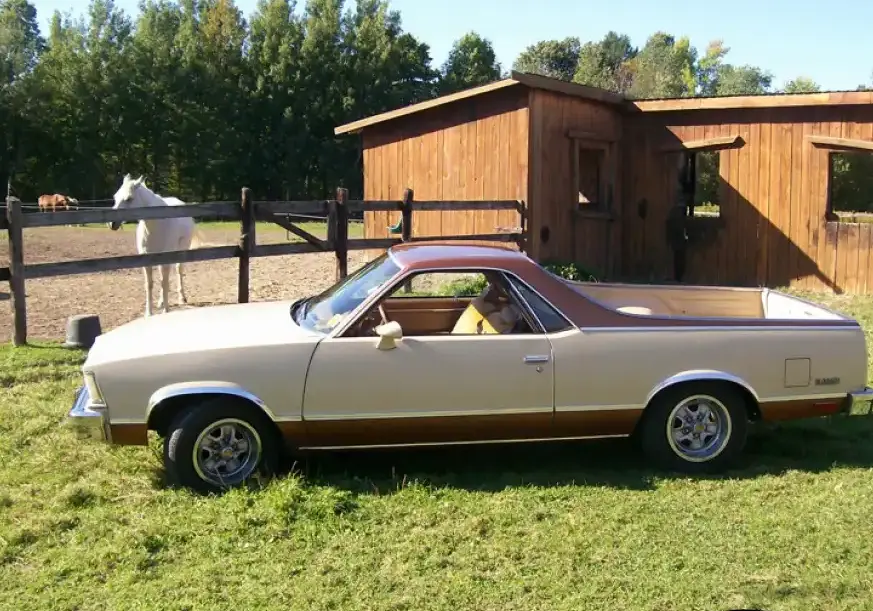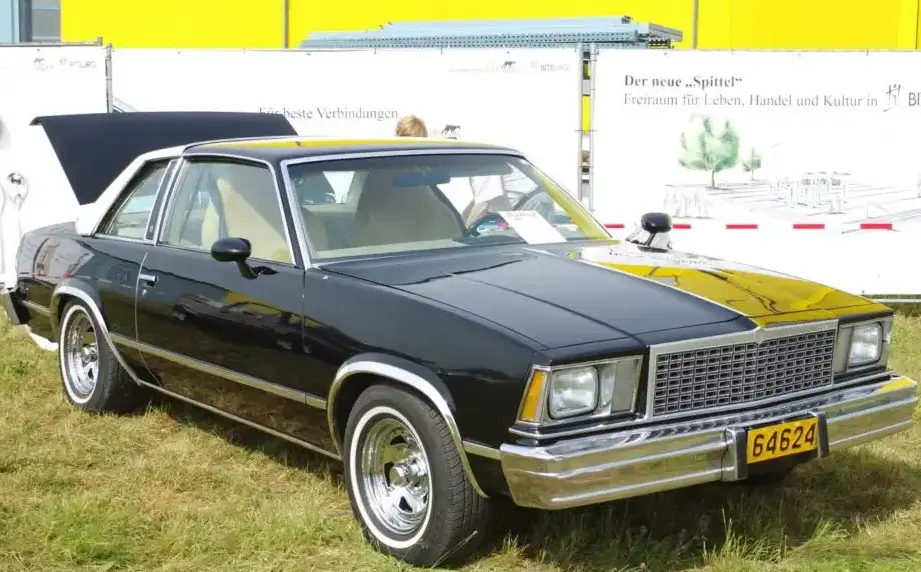
The Chevrolet Malibu IV Sport Coupe with the 5.0-liter V8 engine, producing 155 horsepower, was a short-lived but notable variant of the fourth-generation Malibu. Produced for the 1979 and 1980 model years, this configuration represented a performance-oriented offering within the Malibu lineup, aimed at buyers seeking a more spirited driving experience than the standard six-cylinder models provided. It occupied a middle ground, offering V8 power without the expense or bulk of the larger, more luxurious Chevrolet models of the era. This particular trim was positioned as a step up from the base Malibu, appealing to those who desired a blend of style, comfort, and performance in a relatively affordable package.
Technical Specifications
| Brand | Chevrolet |
| Model | Malibu |
| Generation | Malibu IV Sport Coupe |
| Type (Engine) | 5.0 V8 (155 Hp) CAT |
| Start of production | 1979 |
| End of production | 1980 |
| Powertrain Architecture | Internal Combustion engine |
| Body type | Coupe |
| Seats | 6 |
| Doors | 2 |
| Fuel Type | Petrol (Gasoline) |
| Weight-to-power ratio | 9.5 kg/Hp, 105.7 Hp/tonne |
| Weight-to-torque ratio | 4.5 kg/Nm, 221.5 Nm/tonne |
| Power | 155 Hp @ 4000 rpm |
| Power per litre | 31 Hp/l |
| Torque | 325 Nm @ 1600 rpm, 239.71 lb.-ft. @ 1600 rpm |
| Engine layout | Front, Longitudinal |
| Engine displacement | 5001 cm3, 305.18 cu. in. |
| Number of cylinders | 8 |
| Engine configuration | V-engine |
| Cylinder Bore | 95 mm, 3.74 in. |
| Piston Stroke | 88.4 mm, 3.48 in. |
| Compression ratio | 8.6:1 |
| Number of valves per cylinder | 2 |
| Fuel injection system | Carburettor |
| Engine aspiration | Naturally aspirated engine |
| Valvetrain | OHV |
| Kerb Weight | 1467 kg, 3234.18 lbs |
| Trunk (boot) space – maximum | 470 l, 16.6 cu. ft. |
| Fuel tank capacity | 68 l, 17.96 US gal | 14.96 UK gal |
| Length | 4895 mm, 192.72 in. |
| Width | 1816 mm, 71.5 in. |
| Height | 1354 mm, 53.31 in. |
| Wheelbase | 2745 mm, 108.07 in. |
| Front track | 1486 mm, 58.5 in. |
| Rear (Back) track | 1467 mm, 57.76 in. |
| Front overhang | 915 mm, 36.02 in. |
| Rear overhang | 1235 mm, 48.62 in. |
| Ride height (ground clearance) | 137 mm, 5.39 in. |
| Minimum turning circle (turning diameter) | 12.2 m, 40.03 ft. |
| Approach angle | 23° |
| Departure angle | 16° |
| Ramp-over (brakeover) angle | 14° |
| Drivetrain Architecture | The Internal combustion engine (ICE) drives the rear wheels of the vehicle. |
| Drive wheel | Rear wheel drive |
| Number of gears and type of gearbox | 4 gears, manual transmission |
| Front suspension | Independent, type McPherson with coil spring and anti-roll bar |
| Rear suspension | dependent spring suspension, Transverse stabilizer, Trailing arm |
| Front brakes | Ventilated discs |
| Rear brakes | Drum |
| Steering type | Steering rack and pinion |
| Tires size | 185/75 R14 |
| Wheel rims size | 6.0J x 14 |
Powertrain & Engine Architecture
The heart of the Malibu IV Sport Coupe was the Chevrolet 305 cubic inch (5.0-liter) small-block V8 engine. This engine, designated with various codes depending on the specific calibration, produced 155 horsepower at 4000 rpm and 325 Nm (239.71 lb-ft) of torque at 1600 rpm. It utilized a two-barrel carburetor for fuel delivery, a relatively simple system for the time, and featured an overhead valve (OHV) valvetrain with two valves per cylinder. The engine was longitudinally mounted in the front of the vehicle, driving the rear wheels. The 8.6:1 compression ratio was a compromise designed to balance performance with emissions regulations. While not a high-performance engine by modern standards, it provided a significant power increase over the standard inline-six engines offered in other Malibu trims.
Driving Characteristics
The 155 hp V8, coupled with a four-speed manual transmission, gave the Malibu Sport Coupe a noticeably more responsive feel than its six-cylinder counterparts. Acceleration was brisk for the era, and the engine’s torque provided good low-end grunt. However, it wasn’t a particularly refined engine; it was known for its somewhat rough idle and moderate noise levels. The four-speed manual transmission offered a direct connection to the engine, allowing drivers to make the most of the available power. Compared to a hypothetical V8 automatic version, the manual would have provided better acceleration and fuel economy, though at the cost of some convenience. The rear-wheel-drive configuration contributed to a balanced feel, although the suspension wasn’t particularly sophisticated, resulting in a ride that was firm but not overly comfortable.
Equipment & Trim Levels
The Sport Coupe trim generally included features such as color-keyed carpeting, upgraded interior trim, and a more comprehensive gauge package than the base Malibu. Standard features typically included a basic AM radio, cloth upholstery, and manual windows and locks. Optional extras could include air conditioning, a more powerful stereo system, and upgraded wheel covers. The Sport Coupe was positioned as a step above the base Malibu in terms of aesthetics and comfort, but it didn’t offer the same level of luxury as Chevrolet’s larger models like the Monte Carlo or Caprice.
Chassis & Braking
The Malibu IV Sport Coupe utilized a body-on-frame construction, typical for American cars of the late 1970s. The front suspension was independent, employing McPherson struts with coil springs and an anti-roll bar. The rear suspension was a more traditional dependent spring setup with trailing arms and a transverse stabilizer. Braking duties were handled by ventilated discs at the front and drum brakes at the rear. The steering system was a rack-and-pinion setup, providing reasonably precise steering feel. The tires were typically 185/75 R14, mounted on 6.0J x 14 inch steel wheels.
Market Reception & Comparison
The Malibu IV Sport Coupe with the 5.0 V8 received mixed reviews. Critics generally praised the engine’s power and responsiveness, but some found the overall package to be somewhat unrefined. Compared to the six-cylinder Malibus, the V8 offered a significant performance boost, but it also came with a slight penalty in fuel economy. Against competitors like the Ford Fairmont and Dodge Dart, the Malibu offered a comparable level of performance and features, but it wasn’t necessarily a standout in any particular category. The V8 Malibu appealed to buyers who wanted a sporty-looking coupe with a bit more muscle than the average family sedan.
Legacy
The 1979-1980 Chevrolet Malibu IV Sport Coupe with the 5.0 V8 engine is now considered a collectible car, particularly among enthusiasts of classic American automobiles. The 305 small-block V8 is known for its durability and relative ease of maintenance, making these cars relatively affordable to own and operate. While not a high-performance machine by modern standards, the V8 Malibu offers a nostalgic driving experience and a glimpse into the automotive landscape of the late 1970s. Today, well-maintained examples command a modest but growing following in the used car market, appreciated for their classic styling and the iconic Chevrolet small-block V8 engine.