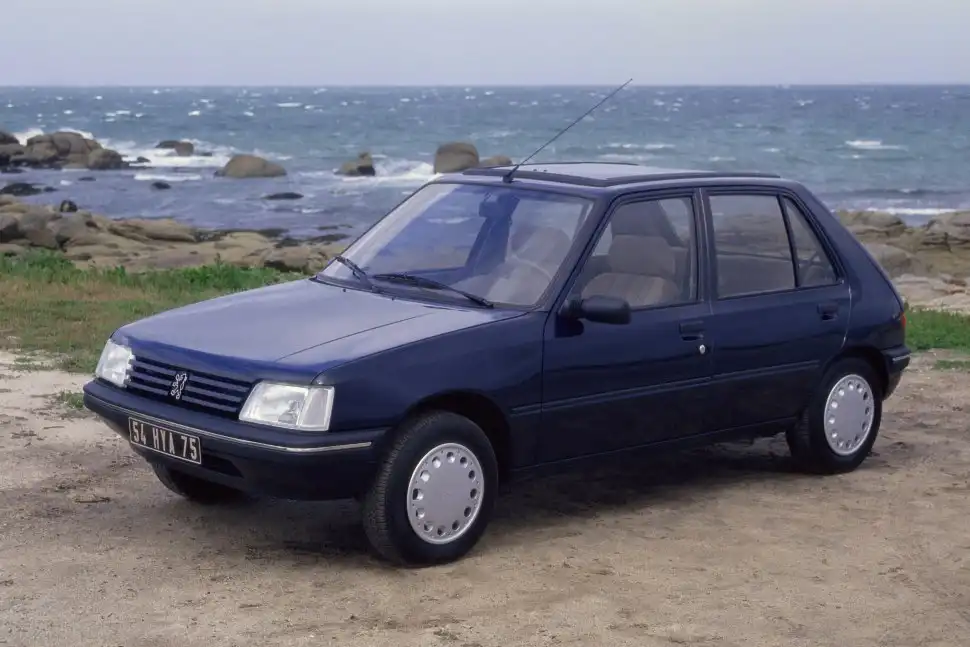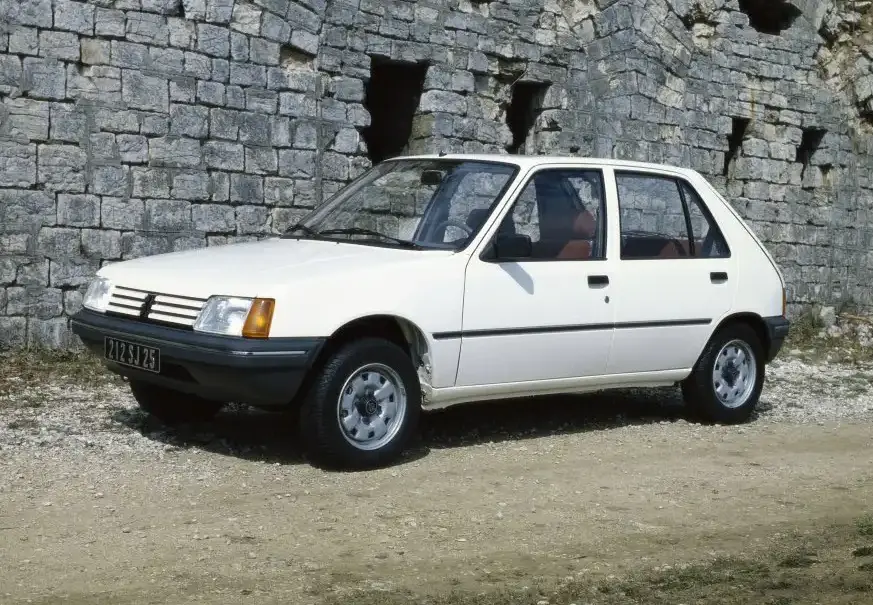
The Peugeot 205 I, specifically the 1.4-liter (79 horsepower) variant produced between 1983 and 1987, represents a pivotal moment in Peugeot’s history. Falling under the 741A/C chassis code, this model was a cornerstone of the first-generation 205 series, a supermini designed to replace the aging Peugeot 104. The 205 aimed to offer a modern, efficient, and stylish alternative in the competitive European small car market. The 1.4L engine served as the entry point to the 205 range, prioritizing affordability and fuel economy over outright performance. It was available in both 3-door and 5-door body styles, catering to a broad range of buyers.
Technical Specifications
| Brand | Peugeot |
| Model | 205 |
| Generation | 205 I (741A/C) |
| Type (Engine) | 1.4 (79 Hp) |
| Start of production | 1983 |
| End of production | 1987 |
| Powertrain Architecture | Internal Combustion engine |
| Body type | Hatchback |
| Doors | 3-5 |
| Fuel Type | Petrol (Gasoline) |
| Power | 79 Hp |
| Engine Model/Code | 150H XY8 |
| Engine aspiration | Naturally aspirated engine |
| Engine oil capacity | 5 l (5.28 US qt | 4.4 UK qt) |
| Coolant capacity | 5.8 l (6.13 US qt | 5.1 UK qt) |
Powertrain & Engine Architecture
The heart of the 205 I 1.4 was the 150H XY8 engine, a 1376cc inline-four cylinder petrol engine. This engine was a relatively simple design, featuring a single overhead camshaft (SOHC) operating two valves per cylinder. Fuel delivery was managed by a single, down-draft carburetor – typically a Solex or Weber unit – a common setup for vehicles of this era and price point. The carburetor system, while reliable, was less efficient and precise than fuel injection systems becoming increasingly prevalent at the time. The engine produced 79 horsepower at approximately 6000 rpm and 98 lb-ft of torque at 3500 rpm. The engine block was cast iron, contributing to its durability, while the cylinder head was aluminum. The 205 1.4 was typically paired with a four-speed manual transmission, though a three-speed automatic transmission was also offered, albeit less commonly. The automatic transmission was a simple hydraulic unit, prioritizing ease of use over performance or fuel efficiency.
Driving Characteristics
The 1.4-liter 205, particularly in automatic guise, was not designed for spirited driving. Acceleration was modest, taking around 13-14 seconds to reach 60 mph. The three-speed automatic transmission further dampened performance, with noticeable gaps between gears. However, the 205’s lightweight construction (around 1,700 lbs) meant it felt nimble and responsive in urban environments. The steering was unassisted, providing good feedback, and the suspension, while basic – typically featuring MacPherson struts at the front and a torsion beam rear axle – offered a comfortable ride. Compared to the more powerful 1.6 and 1.9-liter versions of the 205, the 1.4 felt significantly slower. The manual transmission versions offered a more engaging driving experience, allowing drivers to extract more performance from the engine, but still didn’t match the zest of the higher-spec models. The automatic version prioritized ease of driving, making it ideal for novice drivers or those seeking a comfortable city car.
Equipment & Trim Levels
The 1.4-liter 205 served as the base model, and as such, came with a relatively sparse equipment list. Standard features typically included cloth upholstery, basic instrumentation (speedometer, fuel gauge, temperature gauge), and manually operated windows and door locks. The interior was functional and durable, prioritizing practicality over luxury. Optional extras included a sunroof, upgraded upholstery, and a basic radio. Trim levels were relatively simple, with the base model offering minimal frills. Higher trim levels, available with the larger engines, added features like central locking, electric windows, and more comfortable seats. The dashboard layout was straightforward, with all controls within easy reach of the driver. The 3-door version generally had a slightly sportier feel, while the 5-door offered greater practicality for families.
Chassis & Braking
The 205 I utilized a monocoque chassis construction, contributing to its light weight and rigidity. The front suspension consisted of MacPherson struts with an anti-roll bar, while the rear suspension employed a torsion beam axle. This setup provided a good balance between ride comfort and handling. Braking was typically accomplished with disc brakes at the front and drum brakes at the rear. The braking system was adequate for the car’s performance, but lacked the stopping power of more modern vehicles. Steering was unassisted, providing a direct and responsive feel. The relatively simple suspension setup and drum brakes on the rear were cost-saving measures typical of entry-level models in this segment.
Market Reception & Comparison
The Peugeot 205 1.4 was generally well-received as an affordable and practical supermini. Critics praised its nimble handling, comfortable ride, and fuel efficiency. However, the 1.4-liter engine was often criticized for its lack of power, particularly when paired with the automatic transmission. Compared to rivals like the Renault 5, Citroën Visa, and Fiat Uno, the 205 offered a more refined driving experience and a more stylish interior. Fuel economy was a strong point, averaging around 35-40 mpg in real-world driving. Reliability was generally good, although the carburetor required periodic adjustment and maintenance. The automatic transmission, while convenient, was less reliable than the manual gearbox. The 1.6-liter and 1.9-liter versions of the 205 offered significantly better performance, but came at a higher price point.
Legacy
The Peugeot 205 I 1.4, while not the most powerful or technologically advanced version of the 205, played a crucial role in establishing the model’s success. It provided an accessible entry point to the 205 range, attracting a wide range of buyers. The 150H XY8 engine proved to be reasonably durable, and many examples are still on the road today. In the used car market, the 1.4-liter 205 is often sought after by enthusiasts looking for a classic French hatchback that is affordable to maintain and enjoyable to drive. While the automatic transmission versions are less desirable due to their slower performance, they remain a viable option for those seeking a simple and reliable city car. The 205, in all its forms, is remembered as a landmark vehicle that helped to redefine the supermini segment and cemented Peugeot’s reputation for building stylish and practical cars.