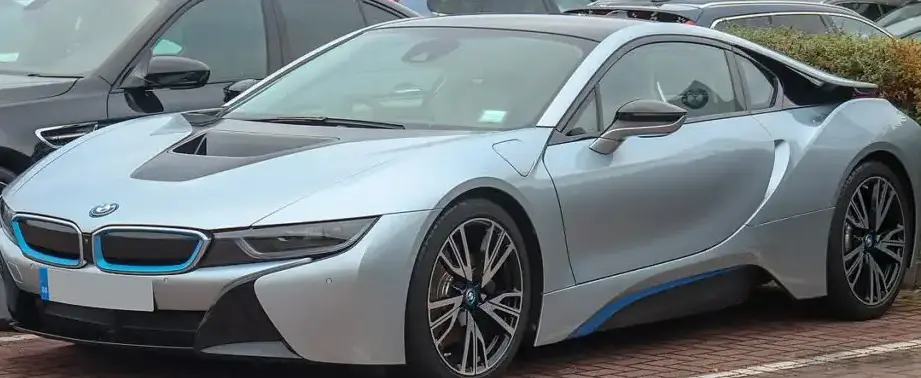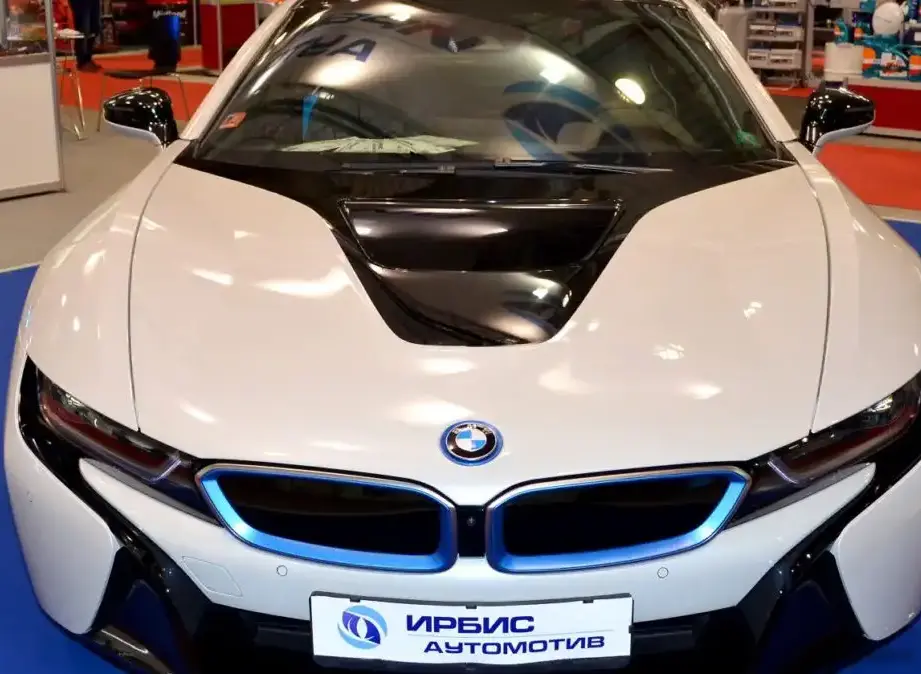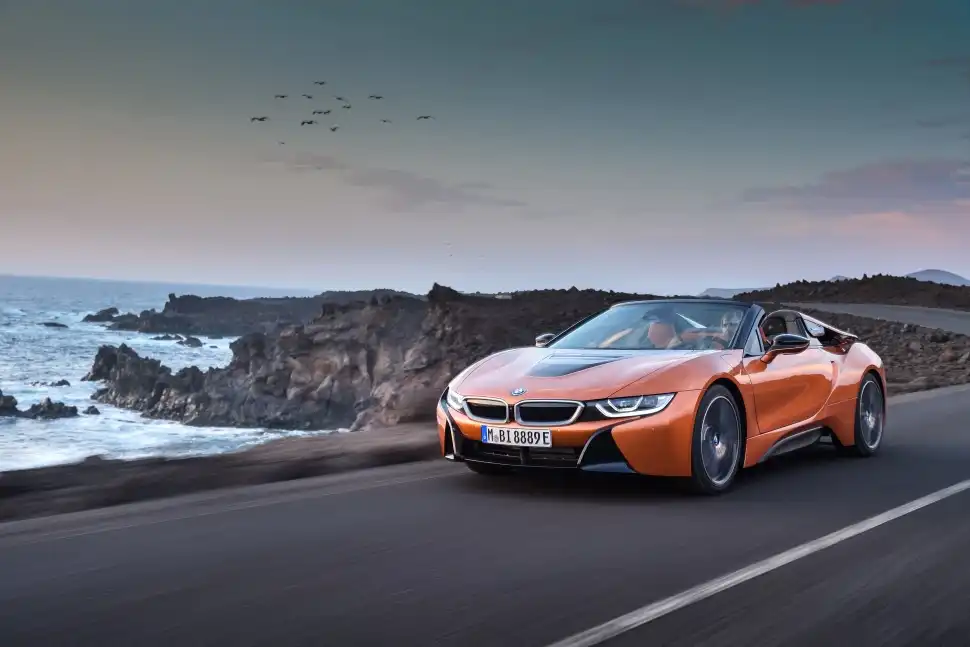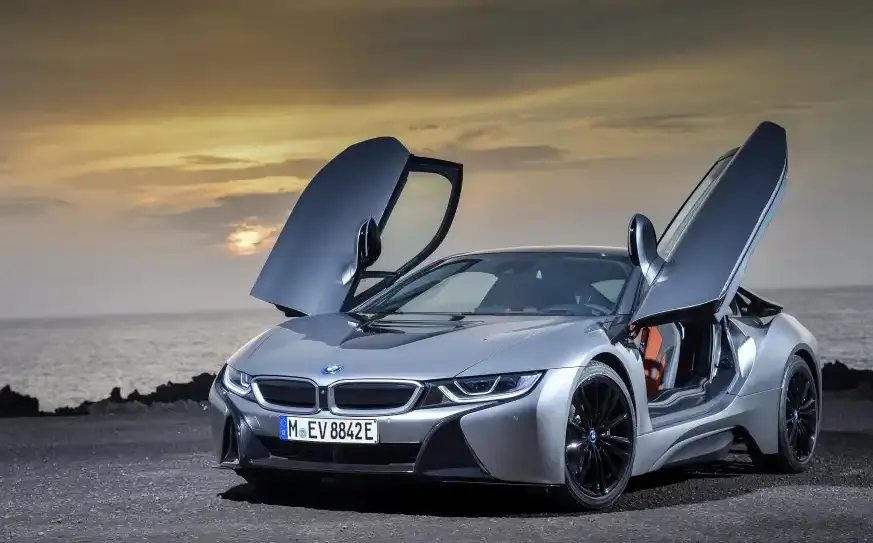
The BMW i8 Coupe (I12 LCI) 1.5/11.6 kWh (374 Hp) xDrive Automatic, produced from November 2017 to September 2018, represents a significant evolution of BMW’s initial foray into plug-in hybrid sports car territory. Positioned as a halo vehicle, the i8 aimed to showcase BMW’s commitment to sustainable performance and innovative design. This particular variant, utilizing a 1.5-liter turbocharged three-cylinder engine paired with an electric motor and a six-speed automatic transmission, was the primary configuration offered during the LCI (Life Cycle Impulse) refresh, representing the culmination of the i8’s development. It sits at the top of the i8 range, offering the highest combined output and most refined driving experience.
Technical Specifications
| Brand | BMW |
| Model | i8 |
| Generation | i8 Coupe (I12 LCI) |
| Type (Engine) | 1.5/11.6 kWh (374 Hp) xDrive Automatic |
| Start of production | November, 2017 |
| End of production | September, 2018 |
| Powertrain Architecture | PHEV (Plug-in Hybrid Electric Vehicle) |
| Body type | Coupe |
| Seats | 4 |
| Doors | 2 |
| Fuel consumption (economy) – combined (NEDC) | 1.8 l/100 km (130.7 US mpg, 156.9 UK mpg, 55.6 km/l) |
| CO2 emissions (NEDC) | 42 g/km |
| Fuel Type | Petrol / electricity |
| Acceleration 0 – 100 km/h | 4.4 sec |
| Acceleration 0 – 62 mph | 4.4 sec |
| Acceleration 0 – 60 mph | 4.2 sec |
| Maximum speed | 250 km/h (155.34 mph) – Electronically limited |
| Emission standard | Euro 6 |
| Weight-to-power ratio | 4.1 kg/Hp, 243.6 Hp/tonne |
| Weight-to-torque ratio | 2.7 kg/Nm, 371.3 Nm/tonne |
| Gross battery capacity | 11.6 kWh |
| Net (usable) battery capacity | 9.4 kWh |
| Battery voltage | 355 V |
| Battery technology | Lithium-ion (Li-Ion) |
| Battery location | In the central tunnel |
| Recuperation output | 60 kW |
| All-electric range (NEDC) | 55 km (34.18 mi) |
| Average Energy consumption (NEDC) | 14 kWh/100 km (22.53 kWh/100 mi, 150 MPGe, 7.1 km/kWh, 4.4 mi/kWh) |
| Max speed (electric) | 120 km/h (74.56 mph) |
| Electric motor power | 143 Hp @ 4800 rpm (250 Nm @ 0 rpm / 184.39 lb.-ft.) |
| Electric motor location | Front axle, Transverse |
| System power | 374 Hp |
| System torque | 570 Nm (420.41 lb.-ft.) |
| Power | 231 Hp @ 5800 rpm (320 Nm @ 3700 rpm / 236.02 lb.-ft. @ 3700 rpm) |
| Engine layout | Rear, Transverse |
| Engine Model/Code | B38K15T0 |
| Engine displacement | 1499 cm3 (91.47 cu. in.) |
| Number of cylinders | 3 |
| Engine configuration | Inline |
| Cylinder Bore | 82 mm (3.23 in.) |
| Piston Stroke | 94.6 mm (3.72 in.) |
| Compression ratio | 9.5:1 |
| Number of valves per cylinder | 4 |
| Fuel injection system | Direct injection |
| Engine aspiration | Twin-power turbo, Intercooler |
| Valvetrain | VALVETRONIC |
| Engine oil capacity | 4.25 l (4.49 US qt | 3.74 UK qt) |
| Kerb Weight | 1535 kg (3384.1 lbs.) |
| Max. weight | 1905 kg (4199.81 lbs.) |
| Max load | 370 kg (815.71 lbs.) |
| Trunk (boot) space – minimum | 154 l (5.44 cu. ft.) |
| Fuel tank capacity | 30 l (7.93 US gal | 6.6 UK gal) |
| Length | 4689 mm (184.61 in.) |
| Width | 1942 mm (76.46 in.) |
| Width including mirrors | 2218 mm (87.32 in.) |
| Height | 1293 mm (50.91 in.) |
| Wheelbase | 2800 mm (110.24 in.) |
| Front track | 1644 mm (64.72 in.) |
| Rear (Back) track | 1721 mm (67.76 in.) |
| Front overhang | 960 mm (37.8 in.) |
| Rear overhang | 929 mm (36.57 in.) |
| Ride height (ground clearance) | 117 mm (4.61 in.) |
| Drag coefficient (Cd) | 0.26 |
| Minimum turning circle (turning diameter) | 12.3 m (40.35 ft.) |
| Drivetrain Architecture | The Internal combustion engine (ICE) permanently drives the rear wheels of the vehicle, the electric motor drives the front wheels of the vehicle, capable of running in full electric mode, only by the Internal combustion engine (ICE) or in mixed mode. |
| Drive wheel | All wheel drive (4×4) |
| Number of gears and type of gearbox | 6 gears, automatic transmission |
| Front suspension | Double wishbone |
| Rear suspension | Independent multi-link suspension |
| Front brakes | Ventilated discs |
| Rear brakes | Ventilated discs |
| Assisting systems | ABS (Anti-lock braking system) |
| Steering type | Steering rack and pinion |
| Power steering | Electric Steering |
| Tires size | Front wheel tires: 195/50 R20 Rear wheel tires: 215/45 R20 |
| Wheel rims size | Front wheel rims: 7J x 20 Rear wheel rims: 7.5J x 20 |
Powertrain & Engine Architecture
The i8 LCI’s powertrain is a complex interplay between a 1.5-liter turbocharged three-cylinder engine (BMW’s B38K15T0 code) and a powerful electric motor. The engine, part of BMW’s modular engine family, utilizes direct injection and VALVETRONIC variable valve timing for efficient combustion. The turbocharger is a twin-scroll unit, enhancing responsiveness. The electric motor, positioned at the front axle, delivers instant torque and contributes significantly to the overall power output. The six-speed automatic transmission is specifically tuned to handle the combined output of both power sources. The battery pack, a 7.1 kWh lithium-ion unit (usable capacity of 9.4 kWh), is located in the central tunnel, contributing to a low center of gravity. The power electronics manage the flow of energy between the engine, motor, and battery, allowing for various driving modes, including pure electric, hybrid, and sport.
Driving Characteristics
The i8 LCI 1.5/11.6 kWh xDrive Automatic offers a unique driving experience. In electric mode, it provides silent and smooth acceleration, capable of covering up to 34 miles on a full charge. Switching to Sport mode engages both the engine and motor, delivering a combined output of 374 horsepower and 420 lb-ft of torque. The all-wheel-drive system, with the engine powering the rear wheels and the electric motor driving the front, provides excellent traction and stability. While the automatic transmission is smooth, it isn’t as aggressively geared for performance as some dual-clutch transmissions found in competitors. The i8 prioritizes efficiency and a refined driving experience over outright track performance, though its 4.4-second 0-60 mph time is still impressive. Compared to earlier i8 models, the LCI version benefited from a slightly increased battery capacity and refined power management, resulting in improved electric range and overall efficiency.
Equipment & Trim Levels
The i8 LCI came relatively well-equipped as standard. Interior features included leather upholstery, a premium sound system, and BMW’s iDrive infotainment system with a large central display. Standard safety features included automatic emergency braking, lane departure warning, and parking sensors. Optional extras included upgraded leather options, a head-up display, and a more powerful Harman Kardon sound system. The LCI refresh also brought subtle interior trim updates and new exterior color options. The focus was on creating a luxurious and technologically advanced cabin befitting the i8’s premium positioning.
Chassis & Braking
The i8’s chassis is a lightweight carbon fiber reinforced plastic (CFRP) structure, bonded to an aluminum frame. This construction technique significantly reduces weight while maintaining high levels of rigidity. The suspension utilizes a double-wishbone setup at the front and a multi-link setup at the rear, providing a comfortable yet controlled ride. Brakes are ventilated discs all around, offering strong stopping power. The i8’s low center of gravity, thanks to the battery placement, contributes to its agile handling characteristics.
Market Reception & Comparison
The BMW i8 was generally well-received by critics, praised for its innovative design, impressive fuel economy, and engaging driving experience. However, some criticized its limited rear seat space and the relatively small trunk. Compared to other plug-in hybrid sports cars of the time, such as the Porsche Panamera E-Hybrid, the i8 offered a more striking and futuristic design, but lacked the outright performance of the Porsche. Its fuel economy of 1.8 l/100km was exceptional for a sports car, making it an attractive option for environmentally conscious buyers. Reliability reports have been generally positive, with few major issues reported, although the complex hybrid system requires specialized maintenance.
Legacy
The BMW i8 was a groundbreaking vehicle that demonstrated BMW’s commitment to sustainable mobility. While production ended in 2018, the i8 remains a desirable and collectible car. Its innovative design and technology continue to influence BMW’s current models. On the used car market, the i8 holds its value relatively well, particularly well-maintained examples with low mileage. The powertrain, while complex, has proven to be reasonably reliable, and parts availability remains good. The i8 paved the way for BMW’s expanding range of plug-in hybrid and electric vehicles, solidifying its place as a pivotal model in the company’s history.