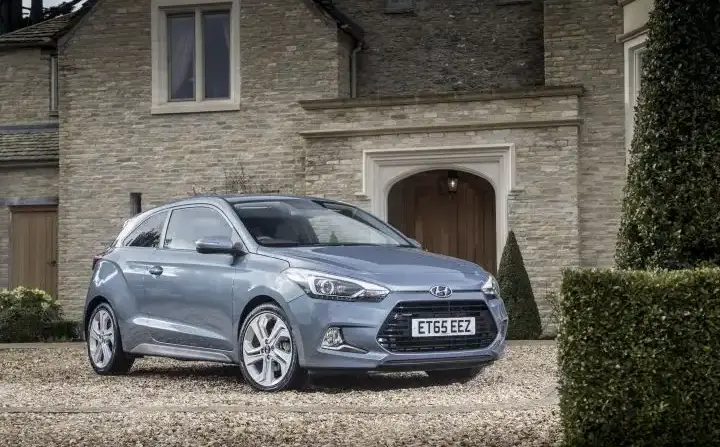
The Hyundai i20 II Coupe 1.4, produced between 2015 and 2018, represented a sporty, three-door variant within the second generation of Hyundai’s popular subcompact hatchback. Positioned as an entry-level to mid-range offering, this model aimed to attract buyers seeking a more dynamic aesthetic than the standard five-door i20, while maintaining Hyundai’s reputation for value and practicality. It was primarily marketed in Europe and other regions where three-door coupes remained popular, offering a blend of affordability, reasonable performance, and modern features. This specific 1.4-liter, 100 horsepower configuration was a key part of the i20 Coupe lineup, offering a balance between fuel efficiency and acceptable acceleration.
Technical Specifications
| Brand | Hyundai |
| Model | i20 |
| Generation | i20 II Coupe |
| Type (Engine) | 1.4 (100 Hp) |
| Start of production | 2015 |
| End of production | 2018 |
| Powertrain Architecture | Internal Combustion engine |
| Body type | Coupe |
| Seats | 5 |
| Doors | 3 |
| Fuel Type | Petrol (Gasoline) |
| Acceleration 0 – 100 km/h | 11.6 sec |
| Acceleration 0 – 62 mph | 11.6 sec |
| Acceleration 0 – 60 mph | 11 sec |
| Maximum speed | 184 km/h (114.33 mph) |
| Emission standard | Euro 6 |
| Power | 100 Hp @ 6000 rpm |
| Power per litre | 73.1 Hp/l |
| Torque | 134 Nm @ 3500 rpm (98.83 lb.-ft. @ 3500 rpm) |
| Engine layout | Front, Transverse |
| Engine Model/Code | Kappa / G4LC |
| Engine displacement | 1368 cm3 (83.48 cu. in.) |
| Number of cylinders | 4 |
| Engine configuration | Inline |
| Cylinder Bore | 72 mm (2.83 in.) |
| Piston Stroke | 84 mm (3.31 in.) |
| Compression ratio | 10.5:1 |
| Number of valves per cylinder | 4 |
| Fuel injection system | Multi-port manifold injection |
| Engine aspiration | Naturally aspirated engine |
| Valvetrain | DOHC |
| Engine oil capacity | 3.5 l (3.7 US qt | 3.08 UK qt) |
| Coolant | 4.3 l (4.54 US qt | 3.78 UK qt) |
| Trunk (boot) space – minimum | 336 l (11.87 cu. ft.) |
| Trunk (boot) space – maximum | 1011 l (35.7 cu. ft.) |
| Fuel tank capacity | 50 l (13.21 US gal | 11 UK gal) |
| Length | 4045 mm (159.25 in.) |
| Width | 1730 mm (68.11 in.) |
| Height | 1449 mm (57.05 in.) |
| Wheelbase | 2570 mm (101.18 in.) |
| Front track | 1514-1520 mm (59.61 – 59.84 in.) |
| Rear (Back) track | 1513-1519 mm (59.57 – 59.8 in.) |
| Front overhang | 815 mm (32.09 in.) |
| Rear overhang | 660 mm (25.98 in.) |
| Ride height (ground clearance) | 140 mm (5.51 in.) |
| Minimum turning circle | 10.2 m (33.46 ft.) |
| Drivetrain Architecture | The Internal combustion engine (ICE) drives the front wheels of the vehicle. |
| Drive wheel | Front wheel drive |
| Number of gears and type of gearbox | 6 gears, manual transmission |
| Front suspension | Independent type McPherson |
| Rear suspension | Semi-independent, coil spring |
| Front brakes | Ventilated discs |
| Rear brakes | Disc |
| Assisting systems | ABS (Anti-lock braking system) |
| Steering type | Steering rack and pinion |
| Power steering | Electric Steering |
| Tires size | 185/65 R15; 195/55 R16; 205/45 R17 |
| Wheel rims size | 6.0J x 15; 6.0J x 16; 6.5J x 17 |
Introduction
The Hyundai i20 II Coupe 1.4, launched in 2015, was a stylistic variation of the PB/IB series i20. Built on the Hyundai-Kia’s B-platform, also known as the 1HX0/A3 platform, it aimed to provide a more youthful and sporty alternative to the standard five-door hatchback. The Coupe’s three-door configuration and slightly lower roofline contributed to a more aggressive profile. This 1.4-liter engine option was positioned as a sweet spot in the range, offering a balance between performance and fuel economy, appealing to a broad customer base. Production continued until 2018, after which Hyundai shifted its focus towards newer models and design philosophies.
Powertrain & Engine Architecture
At the heart of the i20 II Coupe 1.4 lies the Hyundai Kappa II engine family, specifically the G4LC code. This 1.4-liter, naturally aspirated inline-four cylinder engine utilizes a multi-point fuel injection system, delivering fuel directly into the intake ports. The engine features a double overhead camshaft (DOHC) valvetrain with four valves per cylinder, optimizing airflow for improved efficiency and power output. The G4LC engine is known for its relatively simple design, contributing to its reliability and ease of maintenance. The engine produces 100 horsepower at 6000 rpm and 134 Nm (98.83 lb-ft) of torque at 3500 rpm. This power is delivered to the front wheels through a six-speed manual transmission, which was the standard offering for this variant. While an automatic transmission was available on some i20 models, it was not typically paired with the 1.4-liter engine in the Coupe configuration.
Driving Characteristics
The i20 II Coupe 1.4 with the manual transmission offered a reasonably engaging driving experience for its class. Acceleration from 0 to 62 mph (0-100 km/h) took approximately 11.6 seconds, and it reached a top speed of 184 km/h (114.33 mph). While not particularly quick, the engine provided adequate power for everyday driving and urban commutes. The six-speed gearbox was well-matched to the engine’s characteristics, allowing drivers to keep the engine in its optimal power band. Compared to the more powerful engine options (if available in the Coupe body style), the 1.4-liter felt less strained during acceleration, but also lacked the same level of outright performance. The gear ratios were tuned for a balance between fuel efficiency and responsiveness, making it a comfortable and practical choice for daily use.
Equipment & Trim Levels
The i20 II Coupe 1.4 typically came equipped with a respectable level of standard features. These generally included air conditioning, power steering, electric front windows, a basic audio system with USB connectivity, and ABS brakes. Higher trim levels, such as SE or Sport, added features like alloy wheels, fog lights, a more advanced audio system, and upgraded interior trim. Interior upholstery was typically cloth, with options for different color schemes. Optional extras included a panoramic sunroof, rear parking sensors, and a navigation system. The dashboard layout was functional and user-friendly, with a focus on simplicity and ease of use.
Chassis & Braking
The i20 II Coupe utilized a McPherson strut front suspension and a semi-independent coil spring rear suspension. This setup provided a comfortable ride quality, absorbing bumps and imperfections in the road surface effectively. The front brakes were ventilated discs, offering good stopping power, while the rear brakes were solid discs. The steering was electrically assisted, providing light and precise control. Stabilizer bars were fitted to both the front and rear axles to reduce body roll during cornering. The chassis was designed to be lightweight, contributing to the car’s overall agility and fuel efficiency.
Market Reception & Comparison
The Hyundai i20 II Coupe 1.4 was generally well-received by automotive critics. It was praised for its stylish design, value for money, and comfortable ride. However, some reviewers noted that the 1.4-liter engine could feel underpowered when fully loaded or on steep inclines. Compared to other trims in the i20 lineup, the 1.4-liter offered a more affordable entry point, but at the expense of performance. Fuel economy was a strong point, with the 1.4-liter engine achieving respectable figures in real-world driving conditions. Reliability was also a positive aspect, with the Kappa II engine proving to be durable and dependable.
Legacy
The Hyundai i20 II Coupe 1.4 has proven to be a reliable and affordable used car option. The Kappa II engine is known for its longevity, and routine maintenance is relatively inexpensive. While not a performance car, the 1.4-liter engine provides sufficient power for most drivers, and the six-speed manual transmission adds to the driving experience. Today, these vehicles can be found at reasonable prices, making them an attractive option for budget-conscious buyers seeking a stylish and practical subcompact. The i20 II Coupe helped solidify Hyundai’s reputation for building well-rounded and dependable vehicles, and it remains a popular choice in the used car market.