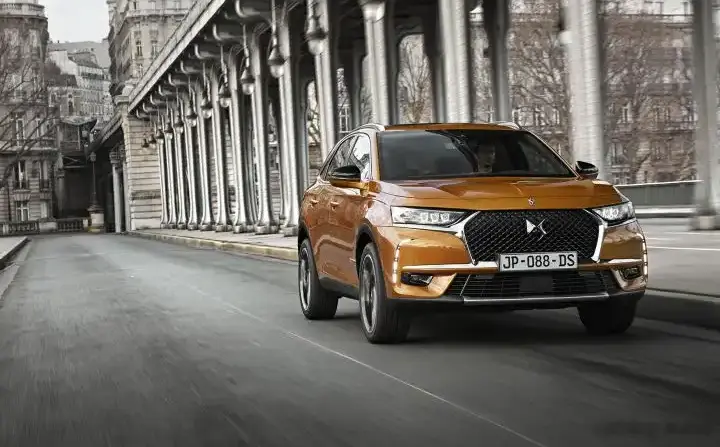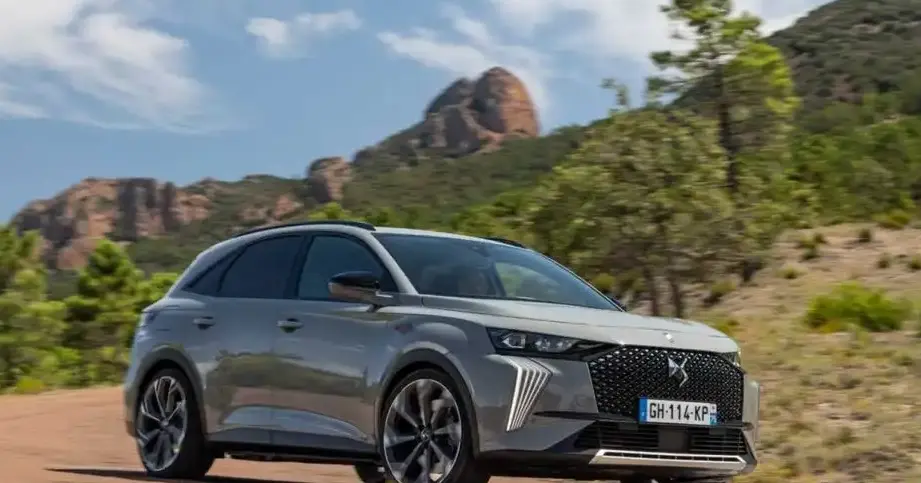
The DS 7 (facelift, introduced in July 2022) 1.5 BlueHDi 130 Automatic represents a key offering in the DS Automobiles compact SUV lineup. Positioned as a mid-range option, this variant balances fuel efficiency with reasonable performance, appealing to buyers seeking a refined and comfortable driving experience. It builds upon the foundation of the original DS 7, which itself was a significant model for the brand, marking its initial foray into establishing a distinct identity separate from Citroën. The 2022 facelift brought updated styling, enhanced technology, and refinements to the powertrain options, including this 1.5-liter diesel.
Technical Specifications
| Brand | DS |
| Model | 7 |
| Generation | 7 (facelift 2022) |
| Type (Engine) | 1.5 BlueHDi (130 Hp) Automatic |
| Start of production | July, 2022 |
| Powertrain Architecture | Internal Combustion engine |
| Body type | SUV |
| Seats | 5 |
| Doors | 5 |
| Fuel consumption at Low speed (WLTP) | 6-6.3 l/100 km (39.2 – 37.3 US mpg, 47.1 – 44.8 UK mpg, 16.7 – 15.9 km/l) |
| Fuel consumption at Medium speed (WLTP) | 5-5.4 l/100 km (47 – 43.6 US mpg, 56.5 – 52.3 UK mpg, 20 – 18.5 km/l) |
| Fuel consumption at high speed (WLTP) | 4.4-4.8 l/100 km (53.5 – 49 US mpg, 64.2 – 58.9 UK mpg, 22.7 – 20.8 km/l) |
| Fuel consumption at very high speed (WLTP) | 5.5-5.9 l/100 km (42.8 – 39.9 US mpg, 51.4 – 47.9 UK mpg, 18.2 – 16.9 km/l) |
| Combined fuel consumption (WLTP) | 5.1-5.5 l/100 km (46.1 – 42.8 US mpg, 55.4 – 51.4 UK mpg, 19.6 – 18.2 km/l) |
| CO2 emissions (WLTP) | 134-145 g/km |
| Fuel Type | Diesel |
| Acceleration 0 – 100 km/h | 10.9 sec |
| Acceleration 0 – 62 mph | 10.9 sec |
| Acceleration 0 – 60 mph | 10.4 sec |
| Maximum speed | 195 km/h (121.17 mph) |
| Emission standard | Euro 6d-ISC |
| Weight-to-power ratio | 11 kg/Hp, 91 Hp/tonne |
| Weight-to-torque ratio | 4.8 kg/Nm, 210.1 Nm/tonne |
| Power | 130 Hp @ 3750 rpm |
| Power per litre | 86.7 Hp/l |
| Torque | 300 Nm @ 1750 rpm (221.27 lb.-ft. @ 1750 rpm) |
| Engine layout | Front, Transverse |
| Engine Model/Code | YHZ |
| Engine displacement | 1499 cm3 (91.47 cu. in.) |
| Number of cylinders | 4 |
| Engine configuration | Inline |
| Cylinder Bore | 75 mm (2.95 in.) |
| Piston Stroke | 84.8 mm (3.34 in.) |
| Number of valves per cylinder | 4 |
| Fuel injection system | Diesel Commonrail |
| Engine aspiration | Turbocharger, Intercooler |
| Engine oil capacity | 4 l (4.23 US qt | 3.52 UK qt) |
| Kerb Weight | 1428-1629 kg (3148.2 – 3591.33 lbs.) |
| Max. weight | 2050 kg (4519.48 lbs.) |
| Max load | 421-622 kg (928.15 – 1371.28 lbs.) |
| Trunk (boot) space – minimum | 555 l (19.6 cu. ft.) |
| Fuel tank capacity | 55 l (14.53 US gal | 12.1 UK gal) |
| Max. roof load | 80 kg (176.37 lbs.) |
| Permitted trailer load with brakes (12%) | 1430 kg (3152.61 lbs.) |
| Permitted trailer load without brakes | 750 kg (1653.47 lbs.) |
| Permitted towbar download | 64 kg (141.1 lbs.) |
| Length | 4593 mm (180.83 in.) |
| Width | 1895 mm (74.61 in.) |
| Width including mirrors | 2098 mm (82.6 in.) |
| Height | 1625 mm (63.98 in.) |
| Wheelbase | 2738 mm (107.8 in.) |
| Front track | 1621 mm (63.82 in.) |
| Rear (Back) track | 1598 mm (62.91 in.) |
| Front overhang | 941 mm (37.05 in.) |
| Rear overhang | 915 mm (36.02 in.) |
| Drivetrain Architecture | The Internal combustion engine (ICE) drives the front wheels of the vehicle. |
| Drive wheel | Front wheel drive |
| Number of gears and type of gearbox | 8 gears, automatic transmission |
| Front brakes | Ventilated discs, 304×28 mm |
| Rear brakes | Disc, 290×12 mm |
| Assisting systems | ABS (Anti-lock braking system) |
| Steering type | Steering rack and pinion |
| Power steering | Electric Steering |
| Tires size | 225/55 R18; 235/50 R19; 235/45 R20 |
| Wheel rims size | 18; 19; 20 |
INTRODUCTION
The DS 7 1.5 BlueHDi 130 Automatic, launched with the 2022 facelift, is a front-wheel-drive compact SUV designed to appeal to European buyers seeking a blend of style, comfort, and fuel economy. It slots into the DS 7 range as a more accessible option, positioned below the more powerful petrol and plug-in hybrid variants. The facelift brought significant cosmetic and technological updates to the DS 7, enhancing its premium feel and modern features. This particular engine and transmission combination aimed to provide a balance between acceptable performance and excellent fuel efficiency, making it a popular choice for those prioritizing running costs.
Powertrain & Engine Architecture
At the heart of this DS 7 variant lies the PSA Group’s (now Stellantis) 1.5-liter BlueHDi turbocharged diesel engine, designated with the engine code YHZ. This engine is a member of the DV5 family, known for its compact size and efficiency. It utilizes a common-rail direct injection system, delivering fuel at extremely high pressure for optimized combustion. The engine features a variable geometry turbocharger (VGT) and an intercooler to enhance power and torque across a wider rev range. The 130 horsepower output is achieved at 3750 rpm, while the peak torque of 300 Nm (221 lb-ft) is available from just 1750 rpm, providing good low-end responsiveness. Paired with this engine is an Aisin-sourced eight-speed automatic transmission. This transmission is known for its smooth shifting and efficiency, contributing to the overall refined driving experience. The transmission’s gear ratios are tuned to maximize fuel economy while still providing adequate acceleration.
Driving Characteristics
The DS 7 1.5 BlueHDi 130 Automatic delivers a comfortable and composed driving experience. While not overtly sporty, the engine provides sufficient power for everyday driving and highway cruising. Acceleration from 0-60 mph takes around 10.4 seconds, which is competitive within its class. The eight-speed automatic transmission shifts smoothly and intelligently, minimizing any noticeable jerkiness. The engine’s strong low-end torque makes it easy to navigate urban environments, and the transmission readily downshifts when needed for overtaking. Compared to the more powerful petrol versions of the DS 7, this diesel variant prioritizes fuel economy over outright performance. The manual transmission versions of the 1.5 BlueHDi offer a slightly more engaging driving experience, but the automatic provides greater convenience, particularly in stop-and-go traffic.
Equipment & Trim Levels
The DS 7 1.5 BlueHDi 130 Automatic typically comes well-equipped, even in base trim levels. Standard features often include a touchscreen infotainment system with Apple CarPlay and Android Auto compatibility, automatic climate control, rear parking sensors, and a suite of safety features such as automatic emergency braking and lane departure warning. Higher trim levels add features like leather upholstery, a panoramic sunroof, a premium sound system, and advanced driver-assistance systems such as adaptive cruise control and blind-spot monitoring. Interior upholstery generally consists of cloth or a combination of cloth and leatherette, depending on the trim level. The dashboard layout is modern and stylish, with a focus on premium materials and a high level of fit and finish.
Chassis & Braking
The DS 7 utilizes a MacPherson strut front suspension and a multi-link rear suspension, providing a comfortable and controlled ride. The suspension is tuned to prioritize comfort over sporty handling, absorbing bumps and imperfections in the road surface effectively. Braking duties are handled by ventilated discs at the front and solid discs at the rear. Anti-lock Braking System (ABS) and Electronic Stability Control (ESC) are standard features, enhancing safety and stability. The steering is electrically assisted, providing a light and precise feel. The chassis is designed to provide a stable and predictable driving experience, even when fully loaded.
Market Reception & Comparison
The DS 7 1.5 BlueHDi 130 Automatic was generally well-received by automotive critics. It was praised for its comfortable ride, refined interior, and excellent fuel economy. However, some critics noted that the engine could feel a little underpowered when fully loaded or when tackling steep hills. Compared to the petrol-powered DS 7 variants, the diesel offered significantly better fuel economy, making it a more attractive option for high-mileage drivers. Against competitors like the Peugeot 3008 and the Volkswagen Tiguan, the DS 7 distinguished itself with its more luxurious interior and distinctive styling. Reliability reports suggest that the 1.5 BlueHDi engine is generally reliable, although regular servicing is essential to maintain optimal performance.
Legacy
The DS 7 1.5 BlueHDi 130 Automatic represents a significant step in DS Automobiles’ efforts to establish itself as a premium brand. The powertrain combination proved to be popular with buyers seeking a balance of efficiency and comfort. On the used car market, these models generally hold their value well, particularly those with low mileage and a full service history. The 1.5 BlueHDi engine, while facing increasing scrutiny due to emissions regulations, remains a capable and efficient powerplant. The DS 7, in general, has helped to elevate the brand’s image and attract a new generation of customers.