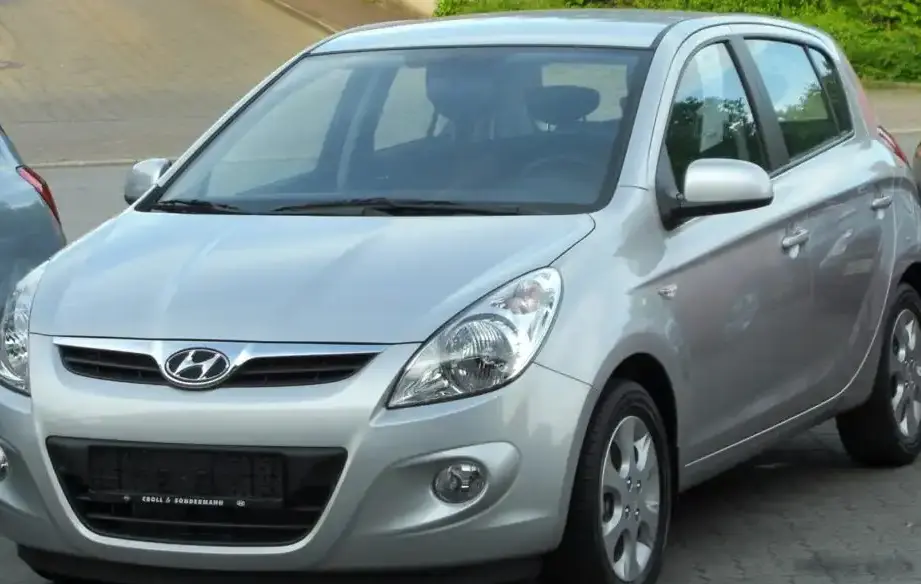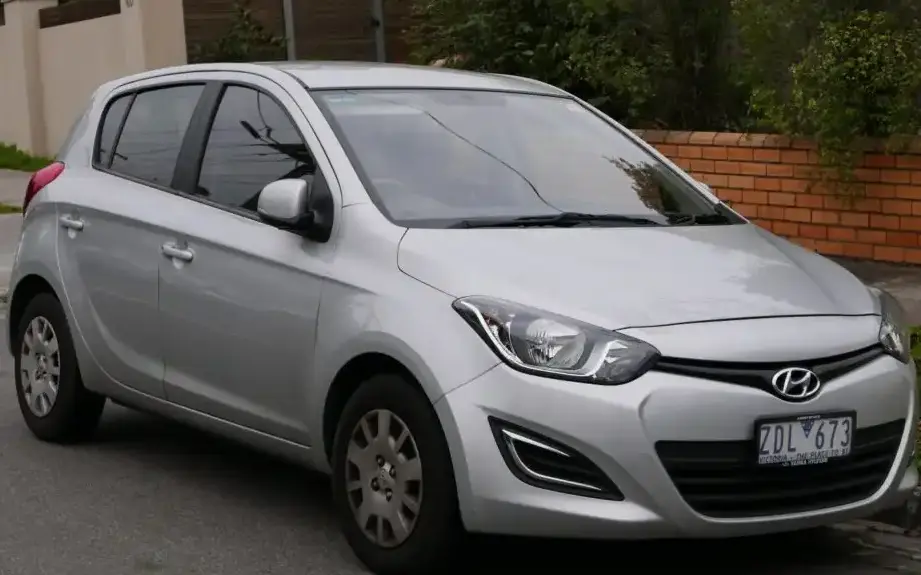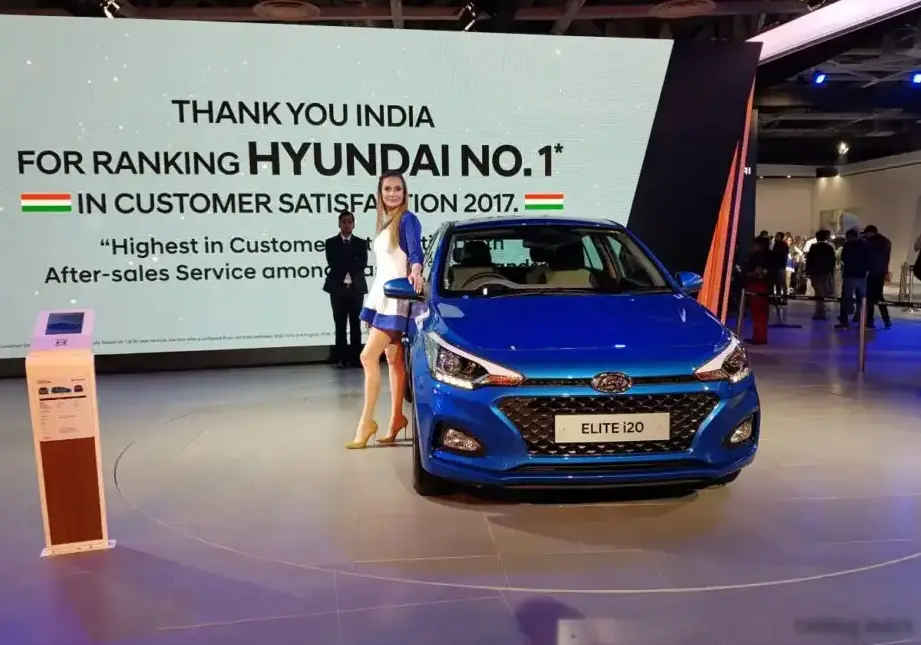
The Hyundai i20 II Elite (facelift 2018) 1.2 Kappa Dual, producing 83 horsepower, represents an entry-level offering within the second generation i20 range. Introduced in May 2018 and continuing through 2020, this variant was primarily aimed at budget-conscious buyers seeking a practical and fuel-efficient supermini. Positioned as the base engine option, it served as the gateway to the i20 lineup, offering a more affordable alternative to the higher-specification engines and trim levels. The facelift brought styling updates and minor equipment revisions to the i20, enhancing its appeal in the competitive European B-segment.
Technical Specifications
| Brand | Hyundai |
| Model | i20 |
| Generation | i20 II Elite (facelift 2018) |
| Type (Engine) | 1.2 Kappa Dual (83 Hp) |
| Start of production | May, 2018 |
| End of production | 2020 |
| Powertrain Architecture | Internal Combustion engine |
| Body type | Hatchback |
| Seats | 5 |
| Doors | 5 |
| Fuel Type | Petrol (Gasoline) |
| Power | 83 Hp @ 6000 rpm |
| Power per litre | 69.3 Hp/l |
| Torque | 115 Nm @ 4000 rpm (84.82 lb.-ft. @ 4000 rpm) |
| Engine layout | Front, Transverse |
| Engine Model/Code | G4LA |
| Engine displacement | 1197 cm3 (73.05 cu. in.) |
| Number of cylinders | 4 |
| Engine configuration | Inline |
| Number of valves per cylinder | 4 |
| Engine aspiration | Naturally aspirated engine |
| Valvetrain | DOHC, Dual VTVT |
| Engine oil capacity | 3.5 l (3.7 US qt | 3.08 UK qt) |
| Coolant | 4.3 l (4.54 US qt | 3.78 UK qt) |
| Fuel tank capacity | 40 l (10.57 US gal | 8.8 UK gal) |
| Length | 3985 mm (156.89 in) |
| Width | 1734 mm (68.27 in) |
| Height | 1505 mm (59.25 in) |
| Wheelbase | 2570 mm (101.18 in) |
| Drivetrain Architecture | The Internal combustion engine (ICE) drives the front wheels of the vehicle. |
| Drive wheel | Front wheel drive |
| Number of gears and type of gearbox | 5 gears, manual transmission |
| Front suspension | Independent, type McPherson with coil spring and anti-roll bar |
| Rear suspension | Torsion |
| Front brakes | Disc |
| Rear brakes | Drum |
| Assisting systems | ABS (Anti-lock braking system) |
| Tires size | 185/70 R14; 185/65 R15; 195/55 R16 |
| Wheel rims size | 14; 15; 16 |
Powertrain & Engine Architecture
The heart of this i20 variant is the Hyundai G4LA 1.2-liter Kappa Dual engine. This is a naturally aspirated, inline-four cylinder engine utilizing a dual variable timing system (Dual VTVT) for both intake and exhaust valves. This technology aims to improve efficiency and responsiveness across the engine’s operating range. The engine employs multi-point fuel injection, a relatively simple and reliable system. The Kappa engine family was designed to be lightweight and compact, contributing to the i20’s overall efficiency. The 83 horsepower output is achieved at 6000 rpm, while peak torque of 115 Nm (84.82 lb-ft) arrives at 4000 rpm. This engine is paired with a five-speed manual transmission, chosen for its simplicity and cost-effectiveness. The transmission’s gear ratios are tuned for fuel economy rather than outright performance.
Driving Characteristics
The 1.2 Kappa Dual engine, coupled with the five-speed manual gearbox, delivers modest performance. Acceleration is adequate for urban driving and highway merging requires planning. The engine feels somewhat strained when pushed hard, and the power delivery is linear but not particularly exciting. Compared to the more powerful 1.4-liter engine option available in some i20 models, this variant feels noticeably slower. The gear ratios are spaced to prioritize fuel efficiency, meaning the engine often needs to be revved to maintain speed, especially when carrying passengers or cargo. The light weight of the i20 helps mitigate the engine’s limitations, providing a reasonably nimble driving experience. Steering is light and precise, making it easy to maneuver in tight spaces.
Equipment & Trim Levels
The 1.2 Kappa Dual typically served as the entry point to the i20 Elite range. Standard equipment generally included air conditioning, central locking, electric front windows, and a basic audio system with USB connectivity. Safety features such as ABS and airbags were also standard. Higher trim levels, such as the Premium or Sport, added features like alloy wheels, a touchscreen infotainment system, rear parking sensors, and climate control. Interior upholstery was typically cloth, with a relatively simple dashboard design. Optional extras included a panoramic sunroof and a navigation system, but these were less common on the base 1.2-liter model.
Chassis & Braking
The i20 II Elite utilizes a front-wheel-drive layout with an independent McPherson strut suspension at the front and a torsion beam suspension at the rear. This setup provides a reasonable balance between ride comfort and handling. The front brakes are disc brakes, while the rear brakes are drum brakes – a cost-saving measure common in this segment. The steering is electrically assisted, providing light and easy steering feel. Stabilizer bars are fitted to both the front and rear axles to reduce body roll during cornering. The suspension tuning is geared towards comfort, absorbing bumps and imperfections in the road surface effectively.
Market Reception & Comparison
The Hyundai i20 II Elite 1.2 Kappa Dual was generally well-received as a practical and affordable supermini. Critics praised its fuel efficiency, comfortable ride, and spacious interior for its size. However, the engine’s lack of power was a common criticism. Compared to rivals like the Volkswagen Polo, Ford Fiesta, and Renault Clio, the i20 offered a competitive price point but lacked the same level of refinement or driving engagement. Fuel economy figures typically ranged from 5.5 to 6.0 liters per 100 kilometers (approximately 43 to 47 mpg), making it an attractive option for cost-conscious buyers. Reliability was generally good, with few reported issues specific to the 1.2-liter engine or manual transmission.
Legacy
The 1.2 Kappa Dual powertrain has proven to be relatively reliable in the long term. Common issues are generally minor and related to routine maintenance items such as spark plugs, air filters, and oil changes. The engine is known for its durability and relatively low running costs. In the used car market, this variant represents a particularly affordable entry point into i20 ownership. While it may not offer the performance or features of higher-specification models, its fuel efficiency and reliability make it a sensible choice for those seeking a dependable and economical supermini. The G4LA engine continued to be used in other Hyundai and Kia models, demonstrating its versatility and longevity.