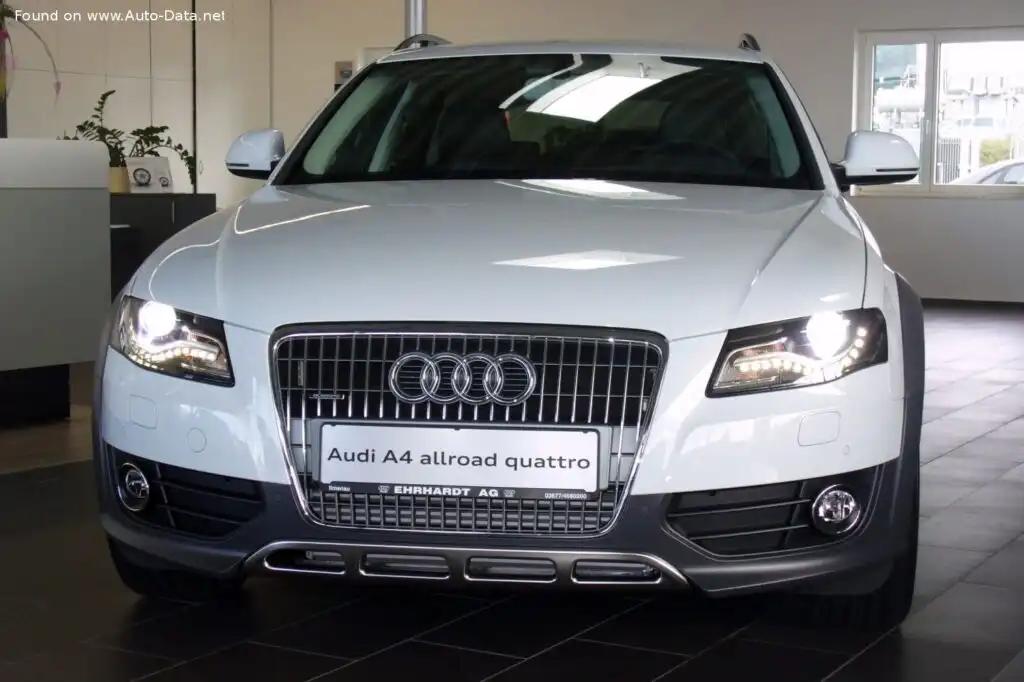
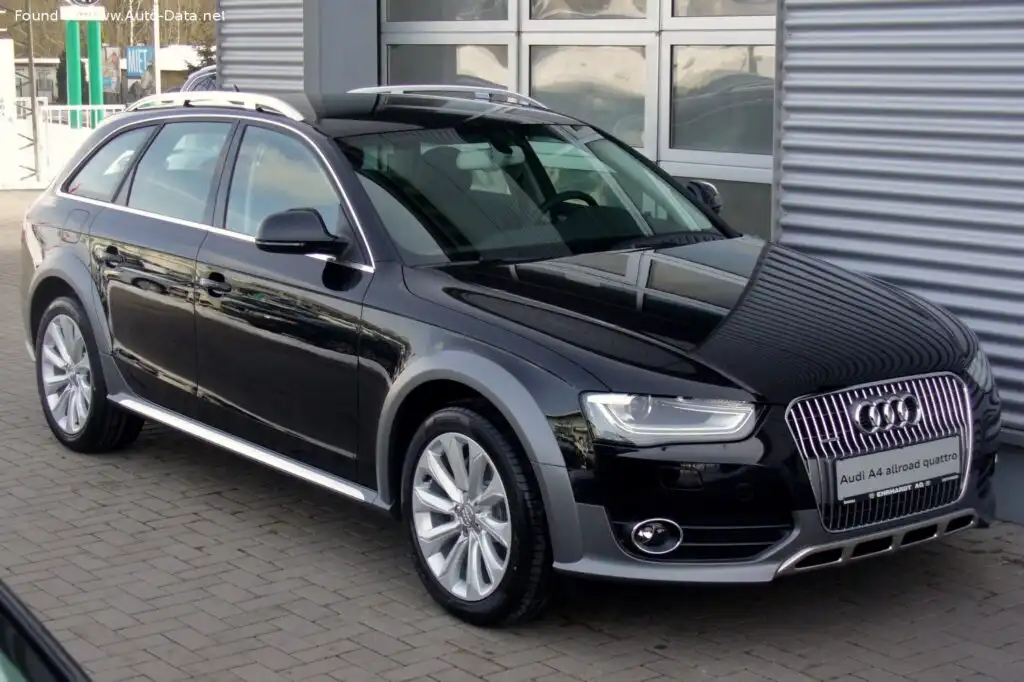
The Audi A4 Avant (B7 8E) 2.0 (130 hp) Multitronic, produced between 2004 and June 2008, represents a key variant within the B7 generation of Audi’s popular compact executive car. This model combined the practicality of the Avant (station wagon) body style with a fuel-efficient, though not overtly powerful, 2.0-liter inline-four engine and Audi’s continuously variable Multitronic transmission. Positioned as a mid-range offering, it aimed to balance affordability with the premium experience expected of the Audi brand, appealing to buyers prioritizing fuel economy and smooth driving over outright performance. It was a significant model for Audi in Europe, where wagons remain popular, and saw moderate sales in North America.
Technical Specifications
| Brand | Audi |
| Model | A4 |
| Generation | A4 Avant (B7 8E) |
| Type (Engine) | 2.0 (130 Hp) Multitronic |
| Start of production | 2004 |
| End of production | June, 2008 |
| Powertrain Architecture | Internal Combustion engine |
| Body type | Station wagon (estate) |
| Seats | 5 |
| Doors | 5 |
| Fuel consumption (urban) | 11 l/100 km (21.4 US mpg, 25.7 UK mpg, 9.1 km/l) |
| Fuel consumption (extra urban) | 6.3 l/100 km (37.3 US mpg, 44.8 UK mpg, 15.9 km/l) |
| Fuel consumption (combined) | 8 l/100 km (29.4 US mpg, 35.3 UK mpg, 12.5 km/l) |
| CO2 emissions | 192 g/km |
| Fuel Type | Petrol (Gasoline) |
| Acceleration 0 – 100 km/h | 10.4 sec |
| Acceleration 0 – 62 mph | 10.4 sec |
| Acceleration 0 – 60 mph | 9.9 sec |
| Maximum speed | 202 km/h (125.52 mph) |
| Emission standard | Euro 4 |
| Weight-to-power ratio | 11.2 kg/Hp, 89.7 Hp/tonne |
| Weight-to-torque ratio | 7.4 kg/Nm, 134.5 Nm/tonne |
| Power | 130 Hp @ 5700 rpm |
| Power per litre | 65.5 Hp/l |
| Torque | 195 Nm @ 3300 rpm (143.82 lb.-ft. @ 3300 rpm) |
| Engine layout | Front, Longitudinal |
| Engine Model/Code | ALT |
| Engine displacement | 1984 cm3 (121.07 cu. in.) |
| Number of cylinders | 4 |
| Engine configuration | Inline |
| Cylinder Bore | 82.5 mm (3.25 in.) |
| Piston Stroke | 92.8 mm (3.65 in.) |
| Compression ratio | 10.3:1 |
| Number of valves per cylinder | 5 |
| Fuel injection system | Multi-port manifold injection |
| Engine aspiration | Naturally aspirated engine |
| Valvetrain | DOHC |
| Engine oil capacity | 4.2 l (4.44 US qt | 3.7 UK qt) |
| Coolant | 8 l (8.45 US qt | 7.04 UK qt) |
| Kerb Weight | 1450 kg (3196.7 lbs.) |
| Max. weight | 2000 kg (4409.25 lbs.) |
| Max load | 550 kg (1212.54 lbs.) |
| Trunk (boot) space – minimum | 442 l (15.61 cu. ft.) |
| Trunk (boot) space – maximum | 1184 l (41.81 cu. ft.) |
| Fuel tank capacity | 70 l (18.49 US gal | 15.4 UK gal) |
| Max. roof load | 75 kg (165.35 lbs.) |
| Permitted trailer load with brakes (8%) | 1500 kg (3306.93 lbs.) |
| Permitted trailer load with brakes (12%) | 1300 kg (2866.01 lbs.) |
| Permitted trailer load without brakes | 750 kg (1653.47 lbs.) |
| Permitted towbar download | 80 kg (176.37 lbs.) |
| Length | 4586 mm (180.55 in.) |
| Width | 1772 mm (69.76 in.) |
| Width including mirrors | 1937 mm (76.26 in.) |
| Height | 1427 mm (56.18 in.) |
| Wheelbase | 2648 mm (104.25 in.) |
| Front track | 1522 mm (59.92 in.) |
| Rear (Back) track | 1522 mm (59.92 in.) |
| Ride height (ground clearance) | 106 mm (4.17 in.) |
| Drag coefficient (Cd) | 0.30 |
| Minimum turning circle (turning diameter) | 11.1 m (36.42 ft.) |
| Drivetrain Architecture | The Internal combustion engine (ICE) drives the front wheels of the vehicle. |
| Drive wheel | Front wheel drive |
| Number of gears and type of gearbox | automatic transmission Multitronic |
| Front suspension | Independent multi-link suspension |
| Rear suspension | Independent multi-link suspension |
| Front brakes | Ventilated discs |
| Rear brakes | Disc |
| Assisting systems | ABS (Anti-lock braking system) |
| Steering type | Steering rack and pinion |
| Power steering | Hydraulic Steering |
| Tires size | 205/55 R16 |
| Wheel rims size | 7J x 16 |
Powertrain & Engine Architecture
The A4 Avant 2.0 Multitronic utilized the Audi ALT engine code, a 1.984-liter (121.07 cubic inches) inline-four cylinder gasoline engine. This engine featured a naturally aspirated configuration with multi-port fuel injection and a double overhead camshaft (DOHC) valvetrain with five valves per cylinder. The 10.3:1 compression ratio helped extract a respectable 130 horsepower at 5700 rpm and 195 Nm (143.82 lb-ft) of torque at 3300 rpm. The engine’s longitudinal mounting allowed for front-wheel drive via a shaft to the transaxle. The key differentiating factor was the Multitronic transmission, a continuously variable transmission (CVT) offering smooth, stepless gear changes. Unlike traditional automatic transmissions with fixed gear ratios, the Multitronic used a chain-driven system to provide an infinite number of ratios within its operating range. This design prioritized fuel efficiency and comfort over outright acceleration.
Driving Characteristics
The 2.0-liter engine and Multitronic combination delivered a comfortable, if not particularly exhilarating, driving experience. Acceleration from 0-60 mph took approximately 9.9 seconds, and top speed was limited to 125.52 mph. The Multitronic transmission effectively masked any engine lag, providing a smooth and linear power delivery. However, compared to the more powerful 2.0T or 3.2-liter V6 variants, the 130 hp model felt noticeably slower, especially when fully loaded or tackling steep inclines. The Multitronic’s programming prioritized fuel economy, often holding lower gears for longer to maximize efficiency. While this contributed to good fuel consumption figures (around 29.4 US mpg combined), it could sometimes feel unresponsive during quick overtaking maneuvers. Manual shift modes were available, but lacked the immediacy of a traditional automatic or dual-clutch transmission.
Equipment & Trim Levels
The 2.0 Multitronic Avant typically came equipped with a respectable level of standard features. These included air conditioning, power windows and locks, a basic audio system, and alloy wheels. Interior upholstery was generally cloth, though leather options were available. Trim levels varied by market, but generally offered upgrades such as a sunroof, upgraded audio systems, automatic climate control, and parking sensors. Optional extras included navigation systems, heated seats, and xenon headlights. The interior design was typical of Audi at the time – functional, well-built, and understated, with a focus on ergonomics.
Chassis & Braking
The B7 A4 Avant featured an independent multi-link suspension system at both the front and rear, providing a comfortable ride and good handling characteristics. The front suspension utilized coil springs and shock absorbers, while the rear suspension incorporated a separate spring and damper arrangement. Brakes consisted of ventilated discs at the front and solid discs at the rear. Anti-lock Braking System (ABS) was standard. Stabilizer bars were fitted front and rear to reduce body roll during cornering. The chassis was tuned to prioritize comfort and stability over sporty handling, making it a pleasant companion for long journeys.
Market Reception & Comparison
The Audi A4 Avant 2.0 Multitronic was generally well-received by automotive critics as a practical and refined station wagon. It was praised for its comfortable ride, smooth transmission, and fuel efficiency. However, some reviewers noted its lack of outright performance compared to higher-powered variants. Compared to the 2.0T models, the 130 hp version offered significantly less power and acceleration, but at a lower price point. The 1.9 TDI diesel variant provided superior fuel economy and torque, but with a different driving character. The Multitronic transmission, while smooth, was sometimes criticized for its lack of engagement and occasional hesitation.
Legacy
The Audi A4 Avant (B7 8E) 2.0 Multitronic remains a relatively common sight on used car markets. The ALT engine is generally considered reliable, though regular maintenance is crucial. The Multitronic transmission, however, is known to be a potential weak point. Proper fluid changes are essential to prevent premature failure. Units with well-documented service histories are highly sought after. Today, these Avants offer a blend of practicality, comfort, and Audi refinement at an affordable price, making them a popular choice for buyers seeking a well-rounded and reliable station wagon.