
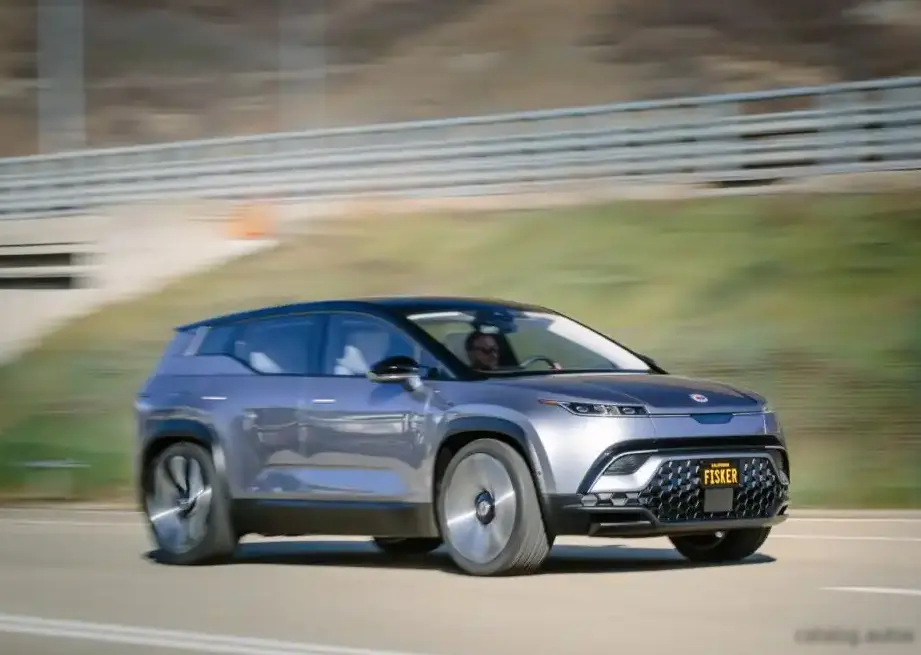
The Fisker Ocean Sport 75 kWh Touring Range, produced from February 2022 to 2024, represents the entry point into the Fisker Ocean lineup. Positioned as an accessible electric SUV, it aimed to deliver a balance of range, performance, and sustainability. The Ocean, as a whole, marked Fisker Inc.’s return to automotive manufacturing, building upon the initial concepts presented in 2019. The Sport trim, with its 75 kWh battery pack, was designed to appeal to buyers prioritizing value and everyday usability within the burgeoning electric vehicle market. It utilizes the Fisker Flexible Platform Architecture (FFPA), designed for modularity and scalability across future Fisker models.
Technical Specifications
| Brand | Fisker |
| Model | Ocean |
| Generation | Ocean |
| Type | Sport 75 kWh Touring Range (279 Hp) |
| Start of production | February, 2022 |
| End of production | 2024 |
| Powertrain Architecture | BEV (Electric Vehicle) |
| Body type | SUV |
| Seats | 5 |
| Doors | 5 |
| Fuel Type | Electricity |
| Acceleration 0 – 100 km/h | 7.4 sec |
| Acceleration 0 – 62 mph | 7.4 sec |
| Acceleration 0 – 60 mph | 6.9 sec |
| Gross battery capacity | 75 kWh |
| Battery technology | Lithium iron phosphate (LiFePO4) |
| Battery location | Below the floor |
| All-electric range (WLTP) | 440 km (273.4 mi) |
| All-electric range (EPA) | 442.6 km (275.02 mi) |
| Electric motor power | 279 Hp |
| Electric motor location | Front axle, Transverse |
| System power | 279 Hp |
| Permitted trailer load with brakes (12%) | 1090 kg (2403.04 lbs) |
| Length | 4775 mm (187.99 in) |
| Width | 1994 mm (78.5 in) |
| Height | 1631 mm (64.21 in) |
| Wheelbase | 2921 mm (115 in) |
| Drivetrain Architecture | One electric motor drives the front wheels. |
| Drive wheel | Front wheel drive |
| Number of gears and type of gearbox | 1 gears, automatic transmission |
| Front suspension | Independent type McPherson |
| Rear suspension | Independent multi-link suspension |
| Front brakes | Ventilated discs |
| Rear brakes | Ventilated discs |
| Assisting systems | ABS (Anti-lock braking system) |
| Steering type | Steering rack and pinion |
| Power steering | Electric Steering |
| Tires size | 255/50 R20 |
| Wheel rims size | 7.5J x 20 |
Powertrain & Engine Architecture
The Fisker Ocean Sport is powered by a single electric motor located on the front axle, delivering 279 horsepower. It utilizes a lithium iron phosphate (LiFePO4) battery pack with a gross capacity of 75 kWh, chosen for its cost-effectiveness, thermal stability, and longevity compared to nickel-based chemistries. The battery is mounted low in the vehicle’s chassis, contributing to a lower center of gravity and improved handling. The powertrain employs a single-speed automatic transmission, typical of most electric vehicles, providing seamless acceleration. The motor controller manages power delivery and regenerative braking, maximizing efficiency. The charging system supports both AC and DC fast charging, allowing for convenient replenishment at home or public charging stations.
Driving Characteristics
The front-wheel-drive configuration of the Sport trim results in a driving experience focused on efficiency and comfort. Acceleration from 0-60 mph takes approximately 6.9 seconds, which is competitive within its segment but noticeably slower than the all-wheel-drive versions of the Ocean. The single-speed transmission provides instant torque, characteristic of electric motors, but lacks the gear changes found in traditional internal combustion engine vehicles. Steering feel is generally light and precise, making it easy to maneuver in urban environments. The low center of gravity contributes to stable handling, although the front-wheel-drive setup can exhibit some torque steer under hard acceleration. Regenerative braking is adjustable, allowing drivers to customize the level of deceleration when lifting off the throttle.
Equipment & Trim Levels
The Fisker Ocean Sport comes standard with a 17.1-inch central touchscreen display, providing access to vehicle controls, navigation, and entertainment features. Interior upholstery consists of recycled materials, aligning with Fisker’s sustainability ethos. Standard safety features include automatic emergency braking, lane keep assist, and adaptive cruise control. Optional extras for the Sport trim included a panoramic sunroof, premium audio system, and various interior trim upgrades. The dashboard design is minimalist and modern, emphasizing the large central display. The Ocean Sport prioritizes essential features, offering a more affordable entry point into the Fisker lineup.
Chassis & Braking
The Fisker Ocean utilizes an independent McPherson strut suspension in the front and an independent multi-link suspension in the rear, providing a comfortable ride and responsive handling. Ventilated disc brakes are used on all four wheels, ensuring adequate stopping power. The electronic stability control system (ESC) works in conjunction with the anti-lock braking system (ABS) to maintain control in challenging driving conditions. The steering system employs an electric power steering (EPS) unit, providing precise and efficient steering assistance. The chassis is designed to maximize rigidity and minimize weight, contributing to improved handling and efficiency.
Market Reception & Comparison
The Fisker Ocean Sport received mixed reviews from automotive critics. Praised for its innovative design, sustainable materials, and competitive range, it was also criticized for some software glitches and build quality issues. Compared to other electric SUVs in its price range, such as the Tesla Model Y and Hyundai Ioniq 5, the Ocean Sport offered a unique aesthetic and a strong focus on sustainability. However, the Tesla Model Y generally offered superior performance and a more established charging infrastructure. The Hyundai Ioniq 5 provided a more refined interior and a faster charging speed. Fuel economy, expressed as MPGe (miles per gallon equivalent), was competitive with other electric SUVs, averaging around 114 MPGe combined.
Legacy
The Fisker Ocean Sport, while facing initial production challenges, represents a significant step in Fisker Inc.’s revival. The LiFePO4 battery technology, while offering cost advantages, has proven to be durable and reliable in real-world use. The Ocean’s innovative design and sustainable materials have resonated with environmentally conscious consumers. On the used car market, the Ocean Sport’s value is influenced by factors such as mileage, condition, and battery health. As Fisker continues to refine its manufacturing processes and address software issues, the Ocean platform is expected to serve as the foundation for future electric vehicle models.
