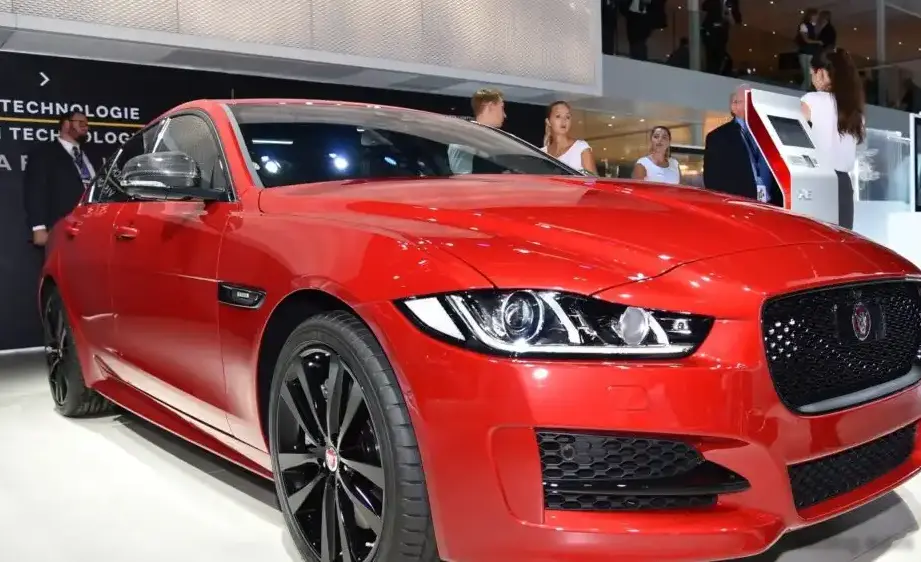
The Jaguar XE P300 Automatic, produced from February 2019 to October 2020, represents a mid-cycle refresh of the X760 generation Jaguar XE. Positioned as a performance-oriented variant within the XE lineup, the P300 offered a significant step up in power compared to the base models, targeting buyers seeking a more engaging driving experience without the outright cost of the higher-performance models. It served as a bridge between the entry-level 2.0L variants and the more exclusive, supercharged six-cylinder options. This model year saw Jaguar refine the XE’s styling and technology, aiming to improve its competitiveness in the compact executive sedan segment.
Technical Specifications
| Brand | Jaguar |
| Model | XE |
| Generation | XE (X760, facelift 2019) |
| Type (Engine) | P300 (300 Hp) Automatic |
| Start of production | February, 2019 |
| End of production | October, 2020 |
| Powertrain Architecture | Internal Combustion engine |
| Body type | Sedan |
| Seats | 5 |
| Doors | 4 |
| Fuel Type | Petrol (Gasoline) |
| Acceleration 0 – 100 km/h | 5.9 sec |
| Acceleration 0 – 62 mph | 5.9 sec |
| Acceleration 0 – 60 mph | 5.6 sec |
| Maximum speed | 250 km/h (155.34 mph) |
| Emission standard | Euro 6 |
| Weight-to-power ratio | 5.2 kg/Hp, 192.6 Hp/tonne |
| Weight-to-torque ratio | 3.9 kg/Nm, 256.7 Nm/tonne |
| Power | 300 Hp @ 5500 rpm |
| Power per litre | 150.2 Hp/l |
| Torque | 400 Nm @ 1500-4500 rpm (295.02 lb.-ft. @ 1500-4500 rpm) |
| Engine layout | Front, Longitudinal |
| Engine Model/Code | Ingenium / PT204 |
| Engine displacement | 1997 cm3 (121.86 cu. in.) |
| Number of cylinders | 4 |
| Engine configuration | Inline |
| Cylinder Bore | 83 mm (3.27 in.) |
| Piston Stroke | 92.3 mm (3.63 in.) |
| Compression ratio | 9.5:1 |
| Number of valves per cylinder | 4 |
| Fuel injection system | Direct injection |
| Engine aspiration | Turbocharger, Intercooler |
| Valvetrain | DOHC |
| Engine oil capacity | 7 l (7.4 US qt | 6.16 UK qt) |
| Coolant | 11.2 l (11.83 US qt | 9.85 UK qt) |
| Kerb Weight | 1558 kg (3434.8 lbs.) |
| Trunk (boot) space – minimum | 410 l (14.48 cu. ft.) |
| Fuel tank capacity | 63 l (16.64 US gal | 13.86 UK gal) |
| Max. roof load | 75 kg (165.35 lbs.) |
| Permitted trailer load with brakes (12%) | 1800 kg (3968.32 lbs.) |
| Permitted trailer load without brakes | 750 kg (1653.47 lbs.) |
| Permitted towbar download | 75 kg (165.35 lbs.) |
| Length | 4678 mm (184.17 in.) |
| Width with mirrors folded | 1967 mm (77.44 in.) |
| Width including mirrors | 2075 mm (81.69 in.) |
| Height | 1416 mm (55.75 in.) |
| Wheelbase | 2835 mm (111.61 in.) |
| Front track | 1602 mm (63.07 in.) |
| Rear (Back) track | 1585 mm (62.4 in.) |
| Front overhang | 841 mm (33.11 in.) |
| Rear overhang | 1002 mm (39.45 in.) |
| Ride height (ground clearance) | 125 mm (4.92 in.) |
| Drag coefficient (Cd) | 0.29 |
| Minimum turning circle (turning diameter) | 11.3 m (37.07 ft.) |
| Drivetrain Architecture | Rear wheel drive |
| Drive wheel | Rear wheel drive |
| Number of gears and type of gearbox | 8 gears, automatic transmission |
| Front suspension | Double wishbone |
| Rear suspension | Independent coil spring |
| Front brakes | Ventilated discs, 350 mm |
| Rear brakes | Ventilated discs, 325 mm |
| Assisting systems | ABS (Anti-lock braking system) |
| Steering type | Steering rack and pinion |
| Power steering | Electric Steering |
| Wheel rims size | 18; 19; 20 |
INTRODUCTION
The Jaguar XE P300 Automatic, launched in 2019 as part of the X760 facelift, aimed to inject more excitement into the XE range. Built on the Jaguar Land Rover iQ[+] platform (a derivative of the D7a architecture), the XE was Jaguar’s entry into the competitive compact executive sedan market, challenging established rivals like the BMW 3 Series, Audi A4, and Mercedes-Benz C-Class. The P300 variant specifically targeted drivers who desired a blend of performance and refinement, offering a more potent engine option than the base models while remaining more accessible than the higher-spec supercharged variants. The facelift brought revised styling, upgraded interior technology, and a focus on improving the overall driving experience.
Powertrain & Engine Architecture
At the heart of the XE P300 lies Jaguar Land Rover’s Ingenium engine family, specifically the PT204 2.0-liter turbocharged inline-four cylinder engine. This engine, designated as the Ingenium P300, produces 300 horsepower at 5500 rpm and 400 Nm (295 lb-ft) of torque between 1500 and 4500 rpm. The engine utilizes direct fuel injection and a single twin-scroll turbocharger with an intercooler to maximize efficiency and power output. The engine’s block is constructed from aluminum, contributing to weight savings. The P300 is paired exclusively with an 8-speed automatic transmission, developed in-house by Jaguar Land Rover. This transmission features a torque converter and offers smooth, responsive shifts. The transmission is calibrated to provide a balance between fuel efficiency and performance, with paddle shifters available for manual control.
Driving Characteristics
The XE P300 Automatic delivers a noticeably more spirited driving experience compared to the lower-powered XE variants. The 0-60 mph acceleration time of around 5.6 seconds is a testament to the engine’s output. The 8-speed automatic transmission is well-matched to the engine, providing quick and seamless gear changes. While not as raw or visceral as some of its German rivals, the XE P300 offers a refined and comfortable ride, with well-weighted steering and predictable handling. The rear-wheel-drive configuration contributes to a balanced feel, although it can be less forgiving in adverse weather conditions compared to all-wheel-drive competitors. The gear ratios are tuned for a blend of acceleration and highway cruising, with the eighth gear providing relaxed and efficient long-distance driving.
Equipment & Trim Levels
The XE P300 Automatic typically came well-equipped, although specific features varied depending on the optional packages selected. Standard equipment generally included leather upholstery, a touchscreen infotainment system with navigation, Apple CarPlay and Android Auto compatibility, automatic climate control, and a suite of driver-assistance features such as emergency braking and lane departure warning. Higher trim levels offered upgrades such as premium leather, a panoramic sunroof, a Meridian sound system, and adaptive cruise control. Optional extras included heated and ventilated front seats, a head-up display, and various cosmetic enhancements.
Chassis & Braking
The XE P300 utilizes a double wishbone front suspension and an independent coil spring rear suspension, providing a comfortable yet controlled ride. The suspension is tuned to balance handling and ride quality, offering a good compromise for everyday driving. Braking duties are handled by ventilated discs on all four wheels, with the front discs measuring 350mm and the rear discs measuring 325mm. The braking system is assisted by ABS (Anti-lock Braking System) and electronic brake-force distribution. The P300 typically featured larger wheels and tires compared to the base models, further enhancing grip and handling.
Market Reception & Comparison
The Jaguar XE P300 was generally well-received by automotive critics, who praised its powerful engine, refined ride, and stylish design. However, it faced stiff competition from established rivals like the BMW 330i and Audi A4 2.0T. Compared to the base XE models, the P300 offered a significant performance upgrade, making it a more compelling option for driving enthusiasts. Fuel economy was respectable, but not class-leading. Reliability proved to be a mixed bag, with some owners reporting issues with the infotainment system and electrical components.
Legacy
The Jaguar XE P300 Automatic represents a significant step forward for the XE model line, offering a compelling blend of performance, luxury, and technology. While the XE ultimately didn’t achieve the sales success of its German rivals, the P300 variant remains a desirable option in the used car market. The Ingenium engine has proven to be relatively reliable, although regular maintenance is crucial. As a used car, the XE P300 offers a good value proposition for buyers seeking a stylish and engaging compact executive sedan.