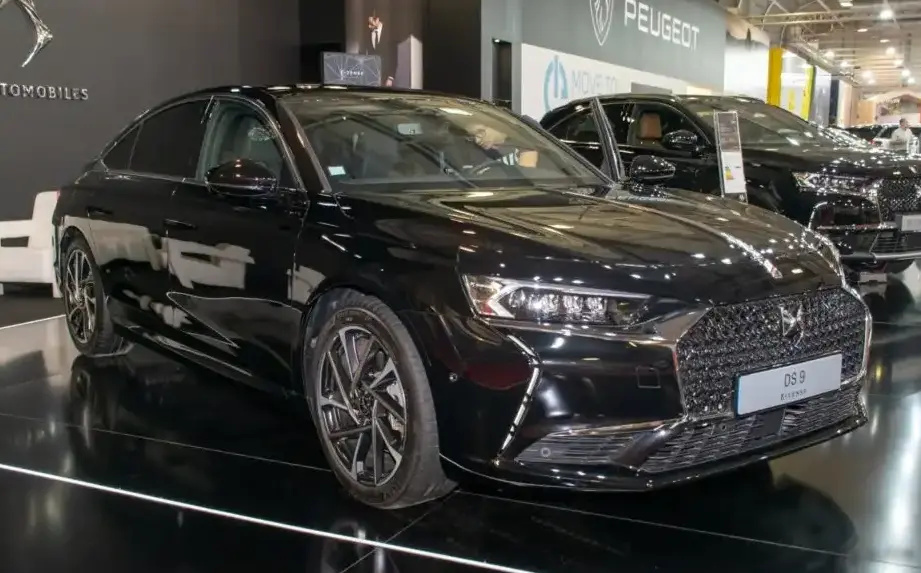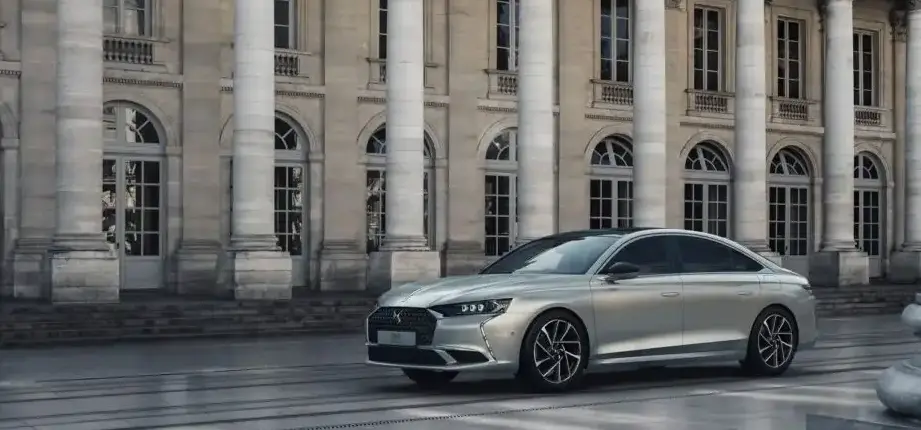
The DS 9 1.6 PureTech (225 Hp) Automatic, produced from November 2020 to August 2022, represents a significant entry in the DS Automobiles lineup, aiming to establish the brand as a premium alternative within the executive sedan segment. Positioned as a mid-range offering within the broader DS 9 range, this variant combined a potent turbocharged engine with an eight-speed automatic transmission, targeting buyers seeking a balance of performance, comfort, and technology. The DS 9 itself is built upon the EMP2 platform, shared with other Stellantis vehicles like the Peugeot 508 and Opel Insignia, but distinguished by its unique styling and focus on French luxury. This model aimed to recapture some of the prestige associated with the historic Citroën DS, upon which the DS Automobiles brand is based.
| Brand | DS |
| Model | 9 |
| Generation | 9 |
| Type (Engine) | 1.6 PureTech (225 Hp) Automatic |
| Start of production | November, 2020 |
| End of production | August, 2022 |
| Powertrain Architecture | Internal Combustion engine |
| Body type | Sedan |
| Seats | 5 |
| Doors | 4 |
| Fuel consumption at Low speed (WLTP) | 8.9-9 l/100 km (26.4 – 26.1 US mpg, 31.7 – 31.4 UK mpg, 11.2 – 11.1 km/l) |
| Fuel consumption at Medium speed (WLTP) | 6.9-7 l/100 km (34.1 – 33.6 US mpg, 40.9 – 40.4 UK mpg, 14.5 – 14.3 km/l) |
| Fuel consumption at high speed (WLTP) | 5.9-6 l/100 km (39.9 – 39.2 US mpg, 47.9 – 47.1 UK mpg, 16.9 – 16.7 km/l) |
| Fuel consumption at very high speed (WLTP) | 7-7.1 l/100 km (33.6 – 33.1 US mpg, 40.4 – 39.8 UK mpg, 14.3 – 14.1 km/l) |
| Combined fuel consumption (WLTP) | 6.9-7 l/100 km (34.1 – 33.6 US mpg, 40.9 – 40.4 UK mpg, 14.5 – 14.3 km/l) |
| CO2 emissions (WLTP) | 155-159 g/km |
| Fuel consumption (economy) – urban (NEDC) | 7 l/100 km (33.6 US mpg, 40.4 UK mpg, 14.3 km/l) |
| Fuel consumption (economy) – extra urban (NEDC) | 4.9 l/100 km (48 US mpg, 57.6 UK mpg, 20.4 km/l) |
| Fuel consumption (economy) – combined (NEDC) | 5.7 l/100 km (41.3 US mpg, 49.6 UK mpg, 17.5 km/l) |
| CO2 emissions (NEDC) | 130 g/km |
| Fuel Type | Petrol (Gasoline) |
| Acceleration 0 – 100 km/h | 8.1 sec |
| Acceleration 0 – 62 mph | 8.1 sec |
| Acceleration 0 – 60 mph | 7.7 sec |
| Maximum speed | 236 km/h (146.64 mph) |
| Emission standard | Euro 6.3 |
| Weight-to-power ratio | 6.8 kg/Hp, 146.1 Hp/tonne |
| Weight-to-torque ratio | 5.1 kg/Nm, 194.8 Nm/tonne |
| Power | 225 Hp @ 5500 rpm |
| Power per litre | 140.8 Hp/l |
| Torque | 300 Nm @ 1900 rpm (221.27 lb.-ft. @ 1900 rpm) |
| Engine layout | Front, Transverse |
| Engine Model/Code | 5GG EP6FADTX |
| Engine displacement | 1598 cm3 (97.52 cu. in.) |
| Number of cylinders | 4 |
| Engine configuration | Inline |
| Number of valves per cylinder | 4 |
| Fuel injection system | Direct injection |
| Engine aspiration | Twin-Turbo, Intercooler |
| Engine oil capacity | 4.25 l (4.49 US qt | 3.74 UK qt) |
| Kerb Weight | 1540 kg (3395.12 lbs.) |
| Max. weight | 2075 kg (4574.59 lbs.) |
| Max load | 535 kg (1179.47 lbs.) |
| Trunk (boot) space – minimum | 510 l (18.01 cu. ft.) |
| Fuel tank capacity | 60 l (15.85 US gal | 13.2 UK gal) |
| Permitted trailer load with brakes (12%) | 1500 kg (3306.93 lbs.) |
| Length | 4934 mm (194.25 in.) |
| Width | 1932 mm (76.06 in.) |
| Width including mirrors | 2079 mm (81.85 in.) |
| Height | 1460 mm (57.48 in.) |
| Wheelbase | 2895 mm (113.98 in.) |
| Front track | 1584 mm (62.36 in.) |
| Rear (Back) track | 1566 mm (61.65 in.) |
| Front overhang | 973 mm (38.31 in.) |
| Rear overhang | 1066 mm (41.97 in.) |
| Minimum turning circle (turning diameter) | 11 m (36.09 ft.) |
| Drivetrain Architecture | The Internal combustion engine (ICE) drives the front wheels of the vehicle. |
| Drive wheel | Front wheel drive |
| Number of gears and type of gearbox | 8 gears, automatic transmission |
| Front suspension | Independent, type McPherson with coil spring and anti-roll bar |
| Rear suspension | Independent multi-link spring suspension with stabilizer |
| Front brakes | Ventilated discs, 330×30 mm |
| Rear brakes | Disc, 290×12 mm |
| Assisting systems | ABS (Anti-lock braking system) |
| Steering type | Steering rack and pinion |
| Power steering | Electric Steering |
| Wheel rims size | 19; 20 |
Powertrain & Engine Architecture
At the heart of the DS 9 1.6 PureTech 225 Automatic lies the EP6FADTX engine, a 1.6-liter turbocharged inline-four cylinder gasoline engine. This engine is part of the PureTech family developed by the PSA Group (now Stellantis). The engine utilizes direct fuel injection, a twin-scroll turbocharger, and variable valve timing on both intake and exhaust sides to optimize performance and efficiency. The twin-scroll turbocharger design helps to reduce turbo lag and improve responsiveness. The engine produces 225 horsepower at 5500 rpm and 300 Nm (221 lb-ft) of torque at 1900 rpm. This power is then channeled through an Aisin-sourced eight-speed automatic transmission, known for its smooth shifting and responsiveness. The transmission is electronically controlled and features a Tiptronic-style manual shift mode. The engine also incorporates a Start & Stop system to further enhance fuel economy in urban driving conditions.
Driving Characteristics
The DS 9 1.6 PureTech 225 Automatic delivers a comfortable and refined driving experience. While not overtly sporty, the engine provides ample power for confident overtaking and highway cruising. The 0-60 mph acceleration time of around 7.7 seconds is respectable for a vehicle of this size and class. The eight-speed automatic transmission contributes to smooth gear changes, and the engine’s torque is readily available from low revs, making it easy to drive in everyday situations. Compared to the more powerful DS 9 E-Tense plug-in hybrid variant, the 1.6 PureTech offers a more traditional driving feel and lacks the instant torque of the electric motor. Against lower-powered DS 9 models, the 225 hp engine provides a noticeable performance upgrade, making it a more engaging option for drivers who prioritize responsiveness. The gear ratios are tuned for a balance between acceleration and fuel efficiency, with taller ratios in the higher gears for relaxed highway cruising.
Equipment & Trim Levels
The DS 9 1.6 PureTech 225 Automatic typically came well-equipped, reflecting its positioning as a premium sedan. Standard features often included leather upholstery, a touchscreen infotainment system with Apple CarPlay and Android Auto compatibility, a digital instrument cluster, automatic climate control, and a suite of advanced driver-assistance systems (ADAS) such as adaptive cruise control, lane-keeping assist, and automatic emergency braking. Optional extras could include a premium sound system, a panoramic sunroof, massaging front seats, and upgraded interior trim materials. Trim levels varied by market, but generally offered increasing levels of luxury and technology. The interior design emphasized a sense of sophistication and comfort, with high-quality materials and attention to detail.
Chassis & Braking
The DS 9 utilizes an independent suspension system on both the front and rear axles. The front suspension employs a McPherson strut design with a coil spring and anti-roll bar, while the rear suspension features a multi-link setup with a stabilizer bar. This configuration aims to provide a comfortable ride while maintaining good handling characteristics. The braking system consists of ventilated discs at the front and solid discs at the rear. ABS (Anti-lock Braking System) is standard, along with electronic brake-force distribution and emergency brake assist. The steering system is an electric power-assisted rack and pinion system, providing precise and responsive steering feel.
Market Reception & Comparison
The DS 9 1.6 PureTech 225 Automatic received mixed reviews from automotive critics. While praised for its stylish design, comfortable ride, and well-equipped interior, some reviewers noted that it didn’t quite match the dynamic capabilities of its German rivals. Fuel economy was generally considered to be reasonable, but not class-leading. Compared to the DS 9 E-Tense plug-in hybrid, the 1.6 PureTech offered a lower price point but lacked the environmental benefits and electric-only driving range. Against other gasoline-powered executive sedans, the DS 9 1.6 PureTech 225 Automatic offered a compelling alternative, particularly for buyers seeking a distinctive and luxurious vehicle.
Legacy
The DS 9 1.6 PureTech 225 Automatic, despite its relatively short production run, represents an important step in DS Automobiles’ efforts to establish itself as a premium brand. The 1.6 PureTech engine, while having experienced some reliability concerns in other Stellantis applications, has generally proven to be a durable and efficient powerplant when properly maintained. On the used car market, these models offer a good value proposition for buyers seeking a stylish and well-equipped executive sedan. Regular maintenance, including oil changes and adherence to the manufacturer’s recommended service intervals, is crucial to ensure the long-term reliability of this powertrain.