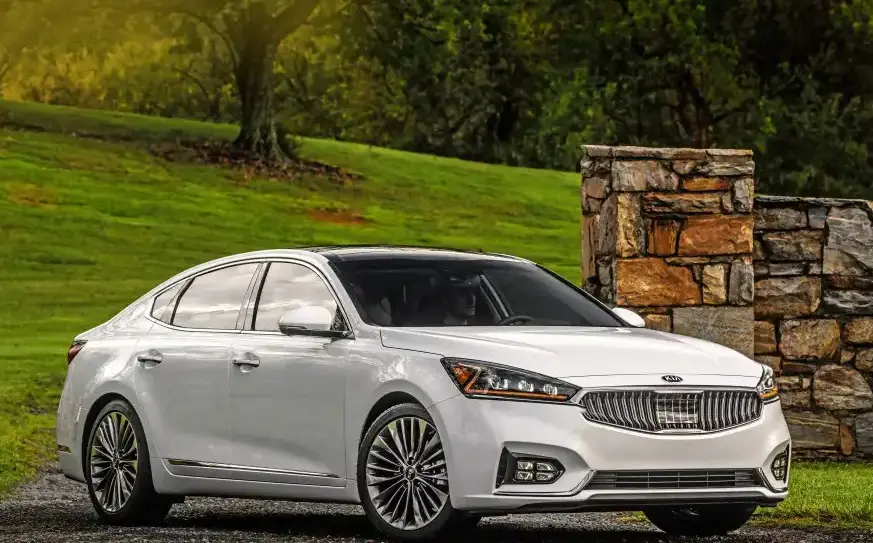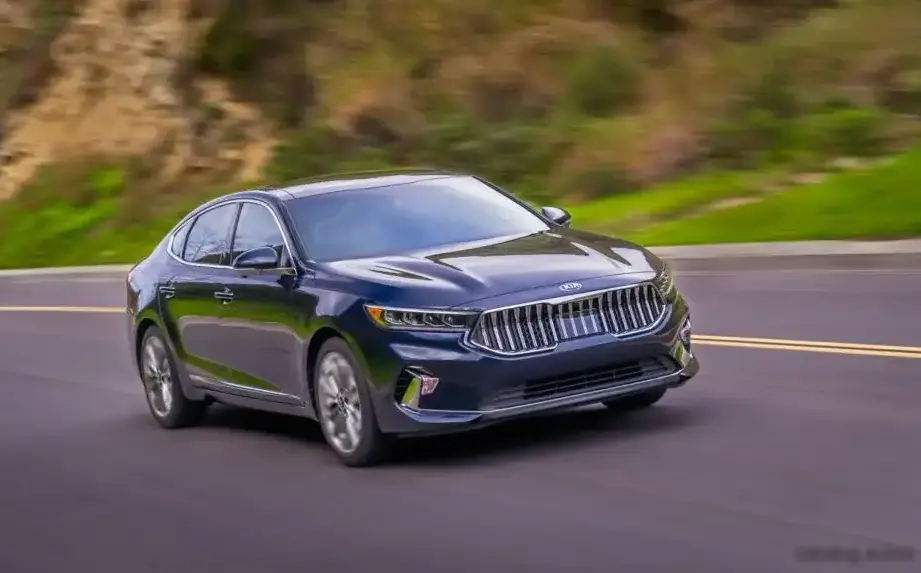
The Kia Cadenza, launched in 2010 for the North American market, represented Kia’s ambitious step into the full-size sedan segment. The first generation, designated the Cadenza I (VG), aimed to offer a more premium experience than Kia’s previous offerings, competing with established Japanese and American brands. The 3.5 V6 Automatic variant, produced from 2010 to 2013, served as the flagship trim, offering a balance of performance, comfort, and features. It was positioned as Kia’s answer to vehicles like the Toyota Avalon and Buick LaCrosse, offering a compelling value proposition with a longer warranty and a more modern design aesthetic.
Technical Specifications
| Brand | Kia |
| Model | Cadenza |
| Generation | Cadenza I |
| Type (Engine) | 3.5 V6 (290 Hp) Automatic |
| Start of production | 2010 |
| End of production | 2013 |
| Powertrain Architecture | Internal Combustion engine |
| Body type | Sedan |
| Seats | 5 |
| Doors | 4 |
| Fuel consumption (combined) | 9.4 l/100 km (25 US mpg) |
| CO2 emissions | 223 g/km |
| Fuel Type | Petrol (Gasoline) |
| Acceleration 0 – 100 km/h | 7.2 sec |
| Acceleration 0 – 62 mph | 7.2 sec |
| Acceleration 0 – 60 mph | 6.8 sec |
| Maximum speed | 230 km/h (142.92 mph) |
| Emission standard | Euro 2 |
| Weight-to-power ratio | 5.4 kg/Hp |
| Weight-to-torque ratio | 4.7 kg/Nm |
| Power | 290 Hp @ 6600 rpm |
| Torque | 338 Nm @ 5000 rpm (249.3 lb.-ft. @ 5000 rpm) |
| Engine layout | Front, Longitudinal |
| Engine Model/Code | Lambda II / G6DC |
| Engine displacement | 3470 cm3 (211.75 cu. in.) |
| Number of cylinders | 6 |
| Engine configuration | V-engine |
| Cylinder Bore | 92 mm (3.62 in.) |
| Piston Stroke | 87 mm (3.43 in.) |
| Compression ratio | 10.6:1 |
| Number of valves per cylinder | 4 |
| Fuel injection system | Multi-port manifold injection |
| Engine aspiration | Naturally aspirated engine |
| Valvetrain | DOHC |
| Engine oil capacity | 5.7 l (6.02 US qt | 5.02 UK qt) |
| Coolant | 8.4 l (8.88 US qt | 7.39 UK qt) |
| Kerb Weight | 1575 kg (3472.28 lbs.) |
| Max. weight | 2065 kg (4552.55 lbs.) |
| Max load | 490 kg (1080.27 lbs.) |
| Trunk (boot) space – minimum | 451 l (15.93 cu. ft.) |
| Fuel tank capacity | 70 l (18.49 US gal | 15.4 UK gal) |
| Length | 4965 mm (195.47 in.) |
| Width | 1850 mm (72.83 in.) |
| Height | 1475 mm (58.07 in.) |
| Wheelbase | 2845 mm (112.01 in.) |
| Front track | 1613 mm (63.5 in.) |
| Rear (Back) track | 1611 mm (63.43 in.) |
| Ride height (ground clearance) | 145 mm (5.71 in.) |
| Drag coefficient (Cd) | 0.29 |
| Minimum turning circle | 11.08 m (36.35 ft.) |
| Drivetrain Architecture | The Internal combustion engine (ICE) drives the front wheels of the vehicle. |
| Drive wheel | Front wheel drive |
| Number of gears and type of gearbox | 6 gears, automatic transmission |
| Front brakes | Ventilated discs |
| Rear brakes | Disc |
| Assisting systems | ABS (Anti-lock braking system) |
| Steering type | Steering rack and pinion |
| Tires size | 215/65 R16 |
| Wheel rims size | 16 |
Powertrain & Engine Architecture
The heart of the 2010-2013 Kia Cadenza 3.5 V6 Automatic is the Lambda II engine, specifically the G6DC variant. This 3.5-liter, naturally aspirated V6 engine utilizes a 60-degree V-angle configuration. It features a dual overhead camshaft (DOHC) valvetrain with four valves per cylinder, contributing to its respectable power output. The engine employs multi-port fuel injection, a common technology at the time, delivering fuel directly into the intake ports. The Lambda II engine was designed for smooth operation and relatively good fuel efficiency for its displacement. Paired with the engine is a six-speed automatic transmission, providing smooth shifts and adequate responsiveness for everyday driving. This transmission was a crucial component in delivering power to the front wheels.
Driving Characteristics
The Cadenza 3.5 V6 Automatic offered a comfortable and refined driving experience. With 290 horsepower and 249 lb-ft of torque, acceleration was brisk, achieving 0-60 mph in around 6.8 seconds. While not a sports sedan, the engine provided ample power for highway merging and passing maneuvers. The six-speed automatic transmission was tuned for comfort, with gear changes being largely imperceptible during normal driving. Compared to potential manual transmission variants (not widely available in the US market), the automatic offered convenience but sacrificed some driver engagement and potentially a slight improvement in fuel economy. The power delivery was linear, making it easy to modulate the throttle. The front-wheel-drive configuration provided predictable handling, although it lacked the dynamic capabilities of rear-wheel-drive competitors.
Equipment & Trim Levels
The 3.5 V6 Automatic trim was the top-of-the-line offering for the Cadenza I. Standard features included leather upholstery, heated front seats, a power-adjustable driver’s seat, a premium audio system, automatic climate control, and a sunroof. Safety features such as ABS, traction control, and multiple airbags were also standard. Optional extras included a navigation system, rear-view camera, and upgraded alloy wheels. The interior design focused on providing a spacious and comfortable cabin with a modern aesthetic. The dashboard layout was clean and intuitive, with easy-to-use controls.
Chassis & Braking
The Cadenza I utilized a front-wheel-drive platform with an independent suspension setup at all four corners. The front suspension consisted of MacPherson struts, while the rear employed a multi-link design. This configuration aimed to provide a balance between ride comfort and handling stability. Braking duties were handled by ventilated discs at the front and solid discs at the rear, equipped with an Anti-lock Braking System (ABS). The braking performance was adequate for the vehicle’s weight and power, providing confident stopping power in most driving situations. The suspension tuning prioritized comfort over sporty handling, resulting in a smooth ride quality, even on uneven road surfaces.
Market Reception & Comparison
The Kia Cadenza 3.5 V6 Automatic was generally well-received by automotive critics. It was praised for its spacious interior, comfortable ride, and generous standard features, especially considering its price point. Critics noted that it offered a compelling alternative to more established competitors like the Toyota Avalon and Buick LaCrosse. Fuel economy, at 25 mpg combined, was considered average for the segment. Reliability was also a strong point, backed by Kia’s industry-leading 10-year/100,000-mile powertrain warranty. Compared to lower trims, the 3.5 V6 offered a significant performance upgrade, justifying its higher price tag for buyers seeking more power and refinement.
Legacy
The Kia Cadenza I, particularly the 3.5 V6 Automatic variant, played a significant role in elevating Kia’s brand image in the United States. It demonstrated Kia’s ability to produce a competitive full-size sedan that could challenge established players. The Lambda II engine proved to be a reliable and durable powertrain, with many examples still on the road today. In the used car market, the Cadenza I 3.5 V6 Automatic remains an attractive option for buyers seeking a comfortable, well-equipped, and affordable full-size sedan. While not a collector’s item, it represents a pivotal moment in Kia’s history, showcasing the brand’s growing ambition and commitment to quality.