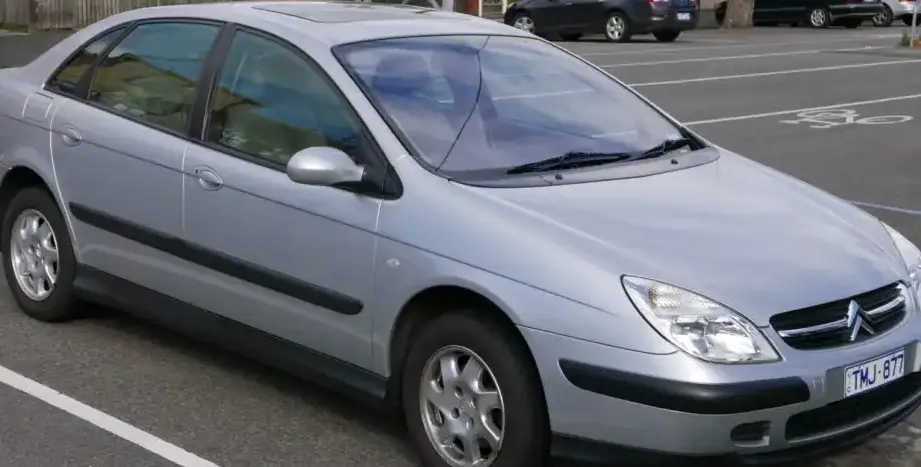
The Citroën C5 I, launched in 2000, represented a significant step forward for the French automaker, aiming to compete directly with established mid-size family cars like the Ford Mondeo and Volkswagen Passat. The first generation C5 (designated X10) offered a blend of comfort, practicality, and innovative technology, particularly with its Hydractive suspension system. Within the C5 range, the 1.8i 16V variant, producing 116 horsepower, served as a key entry point into the model line, appealing to buyers prioritizing affordability and reasonable running costs. Production of this specific configuration ran from 2000 to 2004, coinciding with the initial phase (Phase I) of the C5 I generation.
Technical Specifications
| Brand | Citroën |
| Model | C5 |
| Generation | C5 I (Phase I, 2000) |
| Type (Engine) | 1.8i 16V (116 Hp) |
| Start of production | 2000 |
| End of production | 2004 |
| Powertrain Architecture | Internal Combustion engine |
| Body type | Sedan |
| Seats | 5 |
| Doors | 4 |
| Fuel consumption (urban) | 10.6 l/100 km (22.2 US mpg, 26.6 UK mpg, 9.4 km/l) |
| Fuel consumption (extra urban) | 6 l/100 km (39.2 US mpg, 47.1 UK mpg, 16.7 km/l) |
| Fuel consumption (combined) | 7.7 l/100 km (30.5 US mpg, 36.7 UK mpg, 13 km/l) |
| CO2 emissions | 182 g/km |
| Fuel Type | Petrol (Gasoline) |
| Acceleration 0 – 100 km/h | 12.1 sec |
| Acceleration 0 – 62 mph | 12.1 sec |
| Acceleration 0 – 60 mph | 11.5 sec |
| Maximum speed | 196 km/h (121.79 mph) |
| Emission standard | Euro 3 |
| Weight-to-power ratio | 11.1 kg/Hp, 89.9 Hp/tonne |
| Weight-to-torque ratio | 8.1 kg/Nm, 124 Nm/tonne |
| Power | 116 Hp @ 5500 rpm |
| Power per litre | 66.3 Hp/l |
| Torque | 160 Nm @ 4000 rpm (118.01 lb.-ft. @ 4000 rpm) |
| Engine layout | Front, Transverse |
| Engine Model/Code | 6FZ EW7J4 |
| Engine displacement | 1749 cm3 (106.73 cu. in.) |
| Number of cylinders | 4 |
| Engine configuration | Inline |
| Cylinder Bore | 82.7 mm (3.26 in.) |
| Piston Stroke | 81.4 mm (3.2 in.) |
| Compression ratio | 10.8:1 |
| Number of valves per cylinder | 4 |
| Fuel injection system | Multi-port manifold injection |
| Engine aspiration | Naturally aspirated |
| Engine oil capacity | 4.3 l (4.54 US qt | 3.78 UK qt) |
| Coolant | 8 l (8.45 US qt | 7.04 UK qt) |
| Kerb Weight | 1290 kg (2843.96 lbs.) |
| Max. weight | 1810 kg (3990.37 lbs.) |
| Max load | 520 kg (1146.4 lbs.) |
| Trunk (boot) space – minimum | 456 l (16.1 cu. ft.) |
| Fuel tank capacity | 66 l (17.44 US gal | 14.52 UK gal) |
| Max. roof load | 75 kg (165.35 lbs.) |
| Permitted trailer load with brakes (8%) | 1550 kg (3417.17 lbs.) |
| Permitted trailer load with brakes (12%) | 1500 kg (3306.93 lbs.) |
| Permitted trailer load without brakes | 680 kg (1499.14 lbs.) |
| Permitted towbar download | 75 kg (165.35 lbs.) |
| Length | 4618 mm (181.81 in.) |
| Width | 1770 mm (69.69 in.) |
| Width including mirrors | 2100 mm (82.68 in.) |
| Height | 1476 mm (58.11 in.) |
| Wheelbase | 2750 mm (108.27 in.) |
| Front track | 1544 mm (60.79 in.) |
| Rear track | 1509 mm (59.41 in.) |
| Front overhang | 971 mm (38.23 in.) |
| Rear overhang | 897 mm (35.31 in.) |
| Minimum turning circle | 11.39 m (37.37 ft.) |
| Drivetrain Architecture | Front wheel drive |
| Drive wheel | Front wheel drive |
| Number of gears and type of gearbox | 5 gears, manual transmission |
| Front suspension | Independent type McPherson |
| Rear suspension | Semi-independent, coil spring |
| Front brakes | Ventilated discs |
| Rear brakes | Disc |
| Assisting systems | ABS (Anti-lock braking system) |
| Steering type | Steering rack and pinion |
| Power steering | Hydraulic Steering |
| Tires size | 195/65 R15 |
| Wheel rims size | 6J x 15 |
Powertrain & Engine Architecture
The C5 1.8i 16V was powered by the 6FZ (EW7J4) engine, a 1.8-liter inline-four cylinder gasoline engine. This engine was part of the EW series developed jointly by PSA (Peugeot Citroën) and Renault. It featured a cast iron block with an aluminum cylinder head, and utilized a multi-point fuel injection system. The 16-valve configuration (four valves per cylinder) contributed to improved breathing and higher-end power delivery. The engine’s 5500 rpm peak horsepower output and 160 Nm of torque at 4000 rpm were respectable for its displacement, but not particularly groundbreaking. The engine was typically paired with a five-speed manual transmission, though a four-speed automatic transmission was also available, and the focus of this article. The automatic transmission, while offering convenience, did impact acceleration and fuel economy compared to the manual version.
Driving Characteristics
The 1.8i 16V automatic C5 offered a comfortable, if not particularly sporty, driving experience. The automatic transmission, while smooth, was not known for its responsiveness. Acceleration from 0-60 mph took around 11.5 to 12.1 seconds, making it noticeably slower than the manual transmission variant or higher-powered C5 models like the 2.0i 16V or the V6. The gear ratios were tuned for fuel efficiency and relaxed cruising rather than outright performance. In typical driving conditions, the engine provided adequate power for everyday tasks, but overtaking maneuvers required careful planning. The C5’s renowned suspension, even in its standard form, helped to absorb bumps and provide a comfortable ride, mitigating some of the performance shortcomings.
Equipment & Trim Levels
The 1.8i 16V typically represented the entry-level trim in the C5 range. Standard equipment generally included power steering, central locking, electric front windows, and an AM/FM radio. Higher trim levels, such as the Exclusive, added features like alloy wheels, climate control, rear electric windows, and upgraded interior trim. The interior upholstery was typically cloth, with a functional and durable design. Optional extras included a sunroof, leather seats, and a more advanced audio system. Safety features, such as ABS and driver/passenger airbags, were standard across the range.
Chassis & Braking
The C5 I featured a McPherson strut front suspension and a semi-independent coil spring rear suspension. This setup provided a good balance between comfort and handling. The 1.8i models typically used ventilated disc brakes at the front and solid discs at the rear. The braking system was adequate for the car’s weight and performance, with ABS providing additional safety. The steering was a hydraulic power-assisted rack and pinion system, offering reasonable precision and feel.
Market Reception & Comparison
The C5 1.8i 16V automatic was generally well-received as a practical and comfortable family car. Critics praised its ride quality and spacious interior, but noted its relatively modest performance. Compared to the manual transmission version, the automatic suffered a slight penalty in fuel economy and acceleration. The 2.0i 16V offered a noticeable performance upgrade, while the V6 provided significantly more power but at a higher price point. The 1.8i 16V appealed to buyers who prioritized comfort and affordability over outright performance.
Legacy
The 6FZ (EW7J4) engine proved to be a relatively reliable unit, although regular maintenance is crucial. Common issues include oil leaks and occasional problems with the ignition system. The automatic transmission, while generally durable, can be prone to wear and tear with high mileage. Today, the C5 1.8i 16V can be found as an affordable used car, offering a comfortable and practical option for those seeking a spacious family saloon. Its relatively simple mechanicals make it a potentially attractive option for DIY mechanics. However, prospective buyers should be aware of the potential for age-related issues and ensure a thorough inspection before purchase.