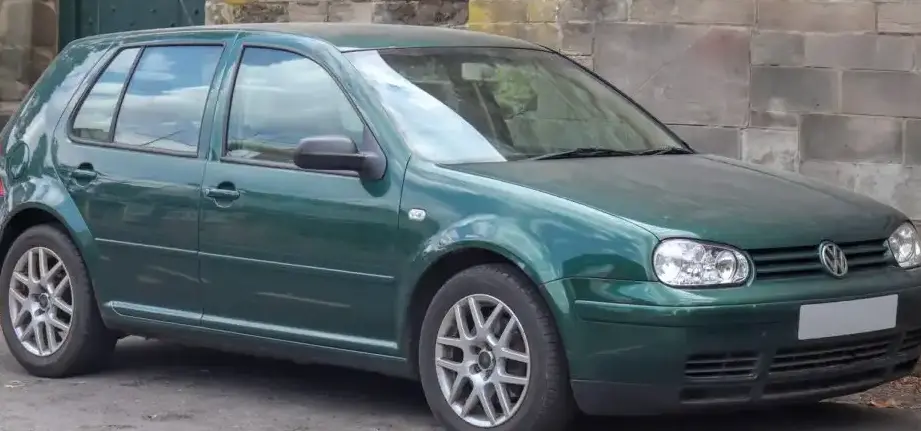
The Volkswagen Golf IV 1.6, producing 101 horsepower, was a mainstay of the fourth-generation Golf lineup produced between 1997 and 2003. Positioned as an entry-level offering, it provided a balance of affordability and Volkswagen’s renowned build quality. This variant played a significant role in the Golf IV’s success, particularly in European markets where fuel economy and practicality were highly valued. It was part of the 1HX0/A3 platform generation, known for its refinement and improvements over its predecessor.
Technical Specifications
| Brand | Volkswagen |
| Model | Golf |
| Generation | Golf IV |
| Type (Engine) | 1.6 (101 Hp) |
| Start of production | 1997 |
| End of production | 2003 |
| Powertrain Architecture | Internal Combustion engine |
| Body type | Hatchback |
| Seats | 5 |
| Doors | 5 |
| Fuel consumption (urban) | 10.3 l/100 km (22.8 US mpg, 27.4 UK mpg, 9.7 km/l) |
| Fuel consumption (extra urban) | 5.9 l/100 km (39.9 US mpg, 47.9 UK mpg, 16.9 km/l) |
| Fuel consumption (combined) | 7.5 l/100 km (31.4 US mpg, 37.7 UK mpg, 13.3 km/l) |
| Fuel Type | Petrol (Gasoline) |
| Acceleration 0 – 100 km/h | 10.9 sec |
| Acceleration 0 – 62 mph | 10.9 sec |
| Acceleration 0 – 60 mph | 10.4 sec |
| Maximum speed | 187 km/h (116.2 mph) |
| Emission standard | Euro 4 |
| Weight-to-power ratio | 10.8 kg/Hp, 92.5 Hp/tonne |
| Weight-to-torque ratio | 7.5 kg/Nm, 132.8 Nm/tonne |
| Power | 101 Hp @ 5600 rpm |
| Power per litre | 63.3 Hp/l |
| Torque | 145 Nm @ 3800 rpm (106.95 lb.-ft. @ 3800 rpm) |
| Engine layout | Front, Transverse |
| Engine Model/Code | AEH, APF, AKL |
| Engine displacement | 1595 cm3 (97.33 cu. in.) |
| Number of cylinders | 4 |
| Engine configuration | Inline |
| Cylinder Bore | 81 mm (3.19 in.) |
| Piston Stroke | 77.4 mm (3.05 in.) |
| Compression ratio | 10:1 |
| Number of valves per cylinder | 2 |
| Fuel injection system | Multi-port manifold injection |
| Engine aspiration | Naturally aspirated engine |
| Valvetrain | OHC |
| Engine oil capacity | 4.5 l (4.76 US qt | 3.96 UK qt) |
| Coolant | 5 l (5.28 US qt | 4.4 UK qt) |
| Kerb Weight | 1092 kg (2407.45 lbs.) |
| Max. weight | 1850 kg (4078.55 lbs.) |
| Max load | 758 kg (1671.1 lbs.) |
| Trunk (boot) space – minimum | 330 l (11.65 cu. ft.) |
| Fuel tank capacity | 55 l (14.53 US gal | 12.1 UK gal) |
| Drivetrain Architecture | The Internal combustion engine (ICE) drives the front wheels of the vehicle. |
| Drive wheel | Front wheel drive |
| Number of gears and type of gearbox | 5 gears, manual transmission |
| Front suspension | Independent type McPherson |
| Rear suspension | Spring Strut |
| Front brakes | Ventilated discs |
| Rear brakes | Disc |
| Assisting systems | ABS (Anti-lock braking system) |
| Tires size | 195/65 R15 |
| Wheel rims size | 15 |
Introduction
The Volkswagen Golf IV 1.6, launched in 1997, represented a significant step forward for Volkswagen’s best-selling model. It was a core component of the Golf IV range (Mk4), which debuted with a focus on improved refinement, safety, and technology. The 1.6-liter engine, while not the most powerful option, was designed to appeal to buyers prioritizing fuel efficiency and affordability. This variant was particularly popular in Europe, where smaller displacement engines were favored due to tax regulations and driving conditions. It served as the entry point into the Golf IV family, offering a practical and reliable hatchback for everyday use.
Powertrain & Engine Architecture
The Golf IV 1.6 utilized a 1.6-liter inline-four cylinder engine, available with engine codes AEH, APF, and AKL depending on the specific year and market. These engines were naturally aspirated and featured a single overhead camshaft (OHC) design with two valves per cylinder. Fuel delivery was managed by a multi-port fuel injection system, providing adequate, though not exceptional, performance. The engine’s relatively simple design contributed to its reliability and ease of maintenance. The 1.6-liter engine produced 101 horsepower at 5600 rpm and 145 Nm (106.95 lb-ft) of torque at 3800 rpm. The engine was transversely mounted, driving the front wheels. The standard transmission was a five-speed manual gearbox, although a four-speed automatic transmission was also available, albeit less common and impacting fuel economy and acceleration.
Driving Characteristics
The Golf IV 1.6 with the five-speed manual transmission offered a reasonably engaging driving experience, though it wasn’t particularly quick. Acceleration from 0 to 60 mph took around 10.4 seconds, and top speed was limited to 116.2 mph. The engine felt somewhat strained at higher speeds, requiring frequent downshifts for overtaking. The automatic transmission version further diminished performance, with slightly slower acceleration times. The gear ratios were tuned for fuel efficiency rather than outright performance. The Golf IV’s well-tuned suspension provided a comfortable ride, absorbing bumps and imperfections in the road effectively. Steering was precise and responsive, contributing to a confident feel behind the wheel. Compared to the more powerful 1.8 and 2.0-liter versions, the 1.6 felt noticeably less energetic, but it remained a capable and practical vehicle for daily commuting and urban driving.
Equipment & Trim Levels
The Golf IV 1.6 typically came with a modest level of standard equipment. Base models featured central locking, power steering, and an adjustable steering column. Interior upholstery was typically cloth, and the dashboard featured a simple, functional design. Optional extras included air conditioning, electric windows, alloy wheels, and a radio/cassette player. Higher trim levels, such as the ‘Trendline’ and ‘Comfortline’, added more features as standard, such as upgraded upholstery, additional airbags, and a more comprehensive audio system. The 1.6 was often seen as a blank canvas for buyers who wanted to add their own personal touches and upgrades.
Chassis & Braking
The Golf IV 1.6 utilized an independent McPherson strut suspension at the front and a spring strut rear suspension. This setup provided a good balance of ride comfort and handling. Brakes consisted of ventilated discs at the front and solid discs at the rear. Anti-lock Braking System (ABS) was standard, enhancing safety and control during emergency braking. The chassis was relatively lightweight, contributing to the car’s agility and fuel efficiency. Stabilizer bars were fitted to both the front and rear axles to reduce body roll during cornering.
Market Reception & Comparison
The Golf IV 1.6 was generally well-received by automotive critics as a sensible and practical choice. It was praised for its build quality, comfortable ride, and fuel efficiency. However, it was often criticized for its lack of outright performance compared to its more powerful siblings. Compared to the 1.8-liter and 2.0-liter Golf IV models, the 1.6 offered lower running costs but sacrificed acceleration and overall driving excitement. The 1.9 TDI diesel version provided superior fuel economy and torque, making it a popular alternative for those covering long distances. The 1.6’s affordability made it an attractive option for first-time buyers and those on a budget.
Legacy
The Golf IV 1.6 has proven to be a remarkably durable and reliable vehicle. The 1.6-liter engine, while not known for its blistering performance, is generally considered to be robust and long-lasting, provided it receives regular maintenance. Today, well-maintained examples of the Golf IV 1.6 are still relatively common on the used car market, offering an affordable and practical transportation option. Its simplicity and relatively low running costs continue to appeal to budget-conscious buyers. While not a collector’s item, the Golf IV 1.6 remains a testament to Volkswagen’s commitment to building quality, reliable vehicles.